November 7, 2026
|
5 min read


Blazingly fast way to build, track and deploy your models!
"What's the best LLM for coding?" is the wrong question, because it has no stable answer. The model that writes the cleanest 40-line function is not the one you want burning tokens across a 30-file refactor, and the model that nails a gnarly concurrency bug is overkill for autocompleting a getter. Benchmarks shuffle every few weeks. A team that hard-codes one model into its tooling in January is re-litigating the decision by April.
The better question is: for this class of coding task, at this budget, which model do I route to — and how do I keep spend and security under control when a hundred developers each answer that question differently? That is the question this post answers. We tour the contenders by what they are actually good at, give you a task-to-model decision framework that outlives any single benchmark, and then cover the part most teams skip: the routing and governance layer that makes model choice a configuration value instead of a code rewrite.
One accuracy note up front. Anthropic's Claude pricing below is verified as of November 2026. The competitor benchmark numbers are reported or aggregated figures; we attribute and date them, and you should re-verify against each vendor before you put money behind them.
Want per-developer cost tracking and guardrails across every coding model? Book a demo.
Before you can pick a model, you have to name the job. Most "best coding LLM" comparisons fail because they average across tasks that have opposite requirements. Break coding into four shapes and the choice gets much clearer.
Autocomplete / inline completion. The model predicts the next few lines as you type. Latency is everything — anything over roughly 300-500 ms breaks flow. Context is small (the current file plus a few neighbors). You are making thousands of these calls per developer per day, so unit cost dominates. You want a fast, cheap model, not the smartest one.
Agentic multi-file refactor. The model plans, reads many files, edits several, runs tests, and iterates — a loop that can run for minutes and consume hundreds of thousands of tokens in a single task. This is where reasoning depth, long-context coherence, and the ability to stay on-plan across many steps pay off. It is also where a weak model is most expensive, because it burns tokens flailing and then hands you a broken diff.
Deep debugging. One hard problem: a race condition, a memory leak, a heisenbug that only shows up under load. Volume is low, but the value of getting it right is high. You want maximum reasoning quality and are willing to pay for it on a per-incident basis.
High-volume codegen. Scaffolding, boilerplate, test stubs, migration scripts, docstrings — large quantities of straightforward code. Quality requirements are moderate; throughput and cost per generation dominate. A mid-tier model usually wins on total cost of ownership.
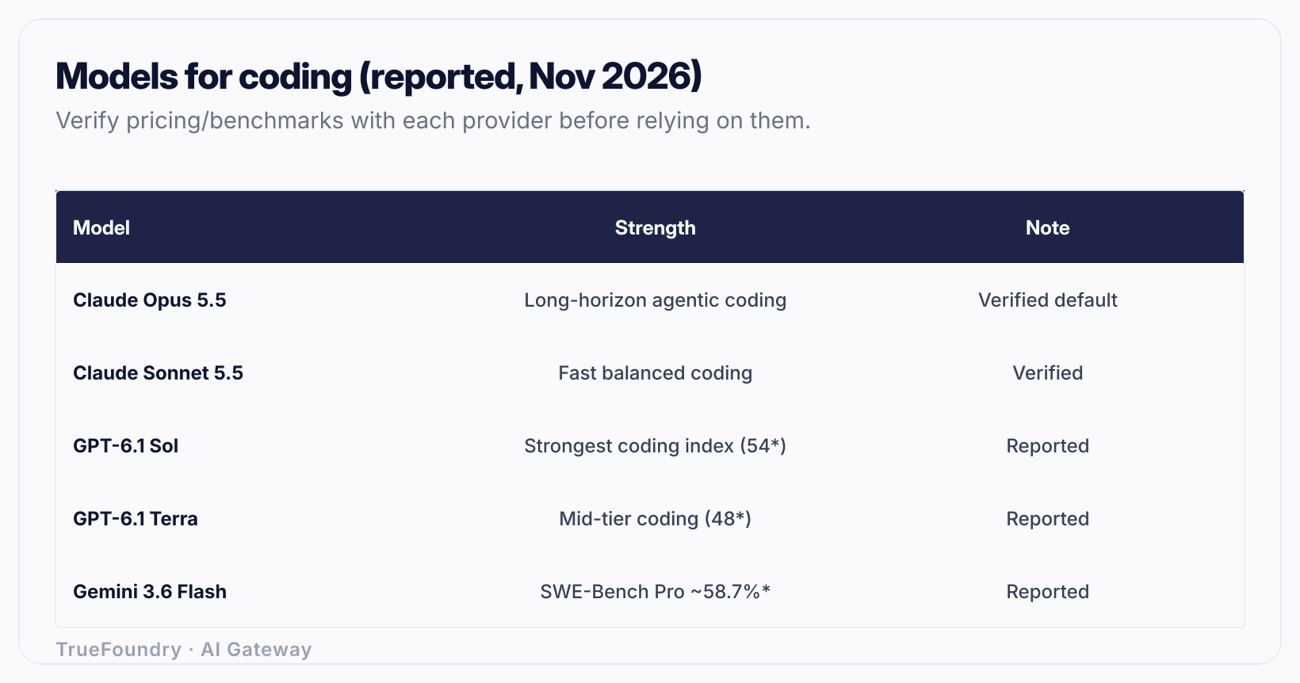
These four shapes rarely map to one model. The same developer, in the same hour, wants a fast cheap model for completions, a deep reasoning model for the bug they are stuck on, and a strong agentic model for the refactor they kicked off in the background. That is the structural reason single-model standardization fails.
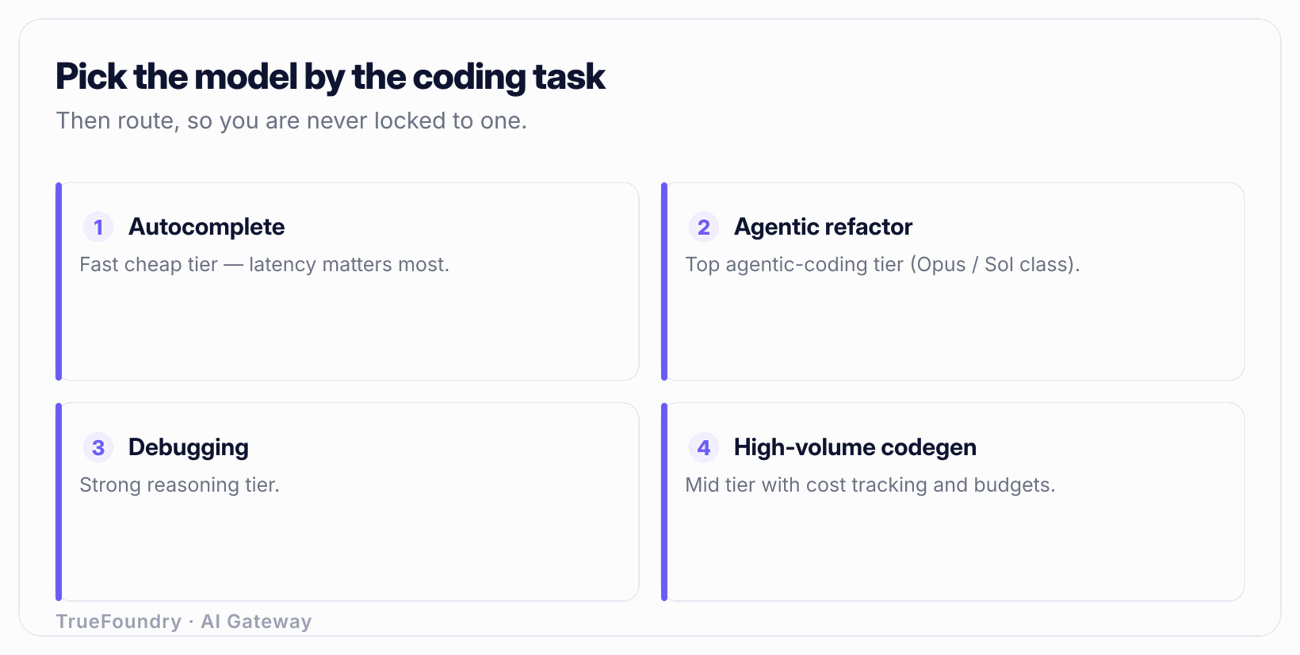
Here is the honest state of play as of November 2026. Pricing for Claude is verified; the rest is reported and should be re-checked.
Claude's 5.5 generation splits cleanly across the task shapes above:
The practical pattern is a tiering strategy within Claude alone — Haiku for completions and bulk, Sonnet for most agent work, Opus for the hard refactors and the stuck debugging sessions.
As of November 2026, reporting puts GPT-6.1 Sol at the top of general coding ability, with an aggregator "Coding Index" around 54, and GPT-6.1 Terra a step behind at roughly 48. Sol is positioned as a frontier coding model; Terra as a faster, cheaper tier. Treat the index numbers as directional — they come from third-party aggregation, not a single standardized harness, and OpenAI's own pricing and tier names should be confirmed on their site before you commit budget.
Gemini 3.6 Flash is reported at around 58.7% on SWE-Bench Pro, a benchmark that measures real pull-request-style fixes against actual repositories. If that figure holds, Flash is competitive on practical software-engineering tasks at a tier positioned for speed and cost. Again: reported, as of November 2026, verify with Google.
SWE-Bench and coding indices measure a model's ability to produce a correct patch on curated problems. They do not measure how a model behaves inside your agent, on your codebase, with your tools and context limits. A model that scores two points higher on a public benchmark can lose badly in practice if it is slower, has a smaller effective context window, or handles your language and framework worse. Use benchmarks to build a shortlist, then run your own eval on tasks that look like your real work.
Here is the reported landscape in one table. Read the caveat line below it before you quote any of these numbers.
| Model | Reported strength | Reported metric | Best for | Pricing |
|---|---|---|---|---|
| Claude Opus 5.5 | Long-horizon agentic coding | Vendor-stated frontier agentic | Multi-file refactors, autonomous agents | $4 / $20 (verified) |
| Claude Sonnet 5.5 | Balanced agentic + feature work | Vendor-stated | Everyday agent work, most PRs | $2 / $10 (verified) |
| Claude Haiku 5.5 | Fast, cheap, high volume | Vendor-stated | Autocomplete, bulk codegen | $0.10 / $0.50 (verified) |
| GPT-6.1 Sol | Top-ranked general coding | Coding Index ~54 (reported) | Hard general coding tasks | Verify on vendor site |
| GPT-6.1 Terra | Fast coding tier | Coding Index ~48 (reported) | Cost-sensitive general coding | Verify on vendor site |
| Gemini 3.6 Flash | Practical SWE tasks | SWE-Bench Pro ~58.7% (reported) | PR-style fixes at speed | Verify on vendor site |
Caveat: Claude prices are verified as of November 2026. All competitor figures are reported or aggregated third-party numbers as of November 2026 and are not directly comparable across different harnesses — re-verify specs, availability, and pricing with each vendor before relying on them.
Instead of picking "the best model," pick a default per task shape and an escalation path. This is the part that stays true when next month's leaderboard reshuffles.
| Coding task | Default model tier | Escalate to | Cost posture |
|---|---|---|---|
| Inline autocomplete | Cheapest fast tier (e.g. Haiku 5.5) | — (rarely worth escalating) | Minimize unit cost; thousands of calls/day |
| High-volume codegen | Mid tier (e.g. Sonnet 5.5) | Top tier only on failed tests | Optimize cost per accepted generation |
| Agentic multi-file refactor | Strong agentic tier (Sonnet 5.5) | Opus 5.5 for large or risky refactors | Pay for fewer, cleaner iterations |
| Deep debugging | Top reasoning tier (Opus 5.5 / Sol) | — (already at the top) | Per-incident; quality over unit cost |
The logic: start each task at the cheapest tier that reliably succeeds, and escalate only on a concrete signal — tests fail, the diff is too large, the agent is looping. A refactor that a mid-tier model would botch in ten expensive iterations is cheaper on a top-tier model that gets it in two. A completion that a top-tier model would nail is still the wrong place to spend, because you make that call ten thousand times a day.
Notice what this framework requires operationally: the ability to send different requests to different models based on task type and signals, without rewriting the application. That is routing, and it is where a gateway comes in. See cost- and quality-aware model selection for how this logic gets encoded, and what an LLM router is for the mechanics.
See how TrueFoundry routes coding traffic and caps spend per developer. Book a demo.
Picture a 200-developer org. Some live in Cursor, some in Claude Code, a few swear by Copilot in VS Code, and the data team calls models directly from notebooks. Each tool defaults to different models, and each developer has opinions. Even if you mandated one model today, a better one ships in six weeks and your best engineers route around the mandate.
This is not a failure of discipline. It is the correct end state. Different tasks want different models, different tools expose different models, and the frontier moves monthly. Fighting that fragmentation is a losing battle. The winning move is to stop trying to standardize the model and instead standardize the control point in front of the models.
Concretely, that means every coding agent in the org — Claude Code, Cursor, Copilot, homegrown scripts — points at one OpenAI-compatible endpoint instead of at each vendor's API directly. Behind that endpoint, you decide routing, you see every request, and you enforce policy. The model becomes a configuration value. Swapping Sonnet for a newer model, or adding GPT-6.1 Sol as a debugging escalation, is a config change, not a fleet-wide code migration.
An AI gateway sits between your coding agents and the model providers, exposing a unified OpenAI-compatible API. For coding specifically, four capabilities matter.
Cost attribution per developer, team, and model. Coding agents are token-hungry in ways that surprise finance. An agentic refactor can burn 300,000+ tokens in one task. Without attribution, you get one undifferentiated provider bill and no idea whether the spend is the platform team's refactors or one developer's runaway loop. The gateway tags every request with user, team, and model, so you can answer "who spent what on which model" down to the request. This is the foundation of cost attribution and team budgets and of FinOps for AI generally.
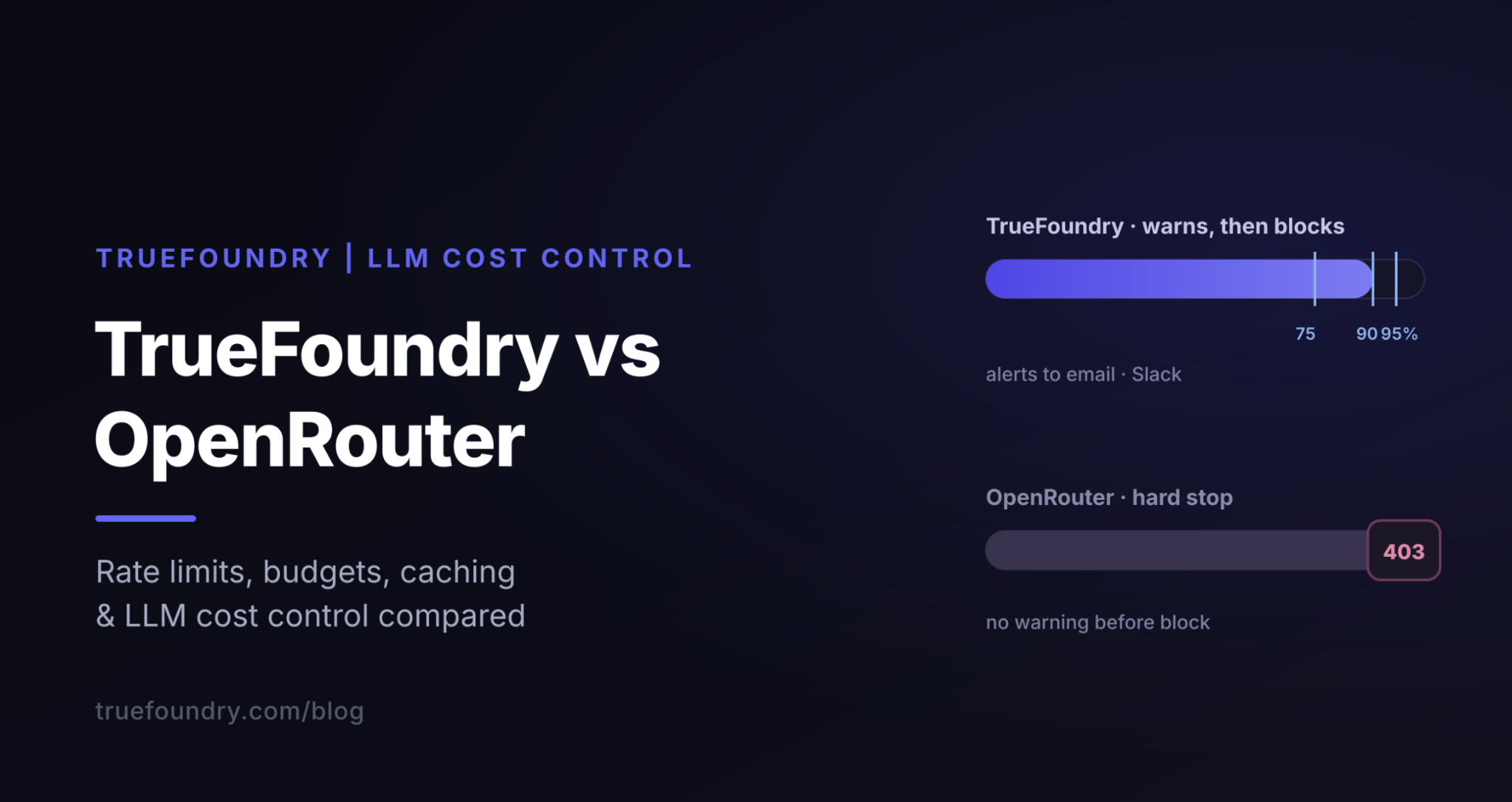
Budgets and rate limits per developer or team. Set a monthly dollar budget per team and a request rate limit per developer. When a limit is breached, the gateway returns HTTP 429 instead of silently running up the bill. This is what stops a misconfigured agent in a loop from turning into a five-figure overnight surprise. The mechanics are covered in token rate limiting and budgets.
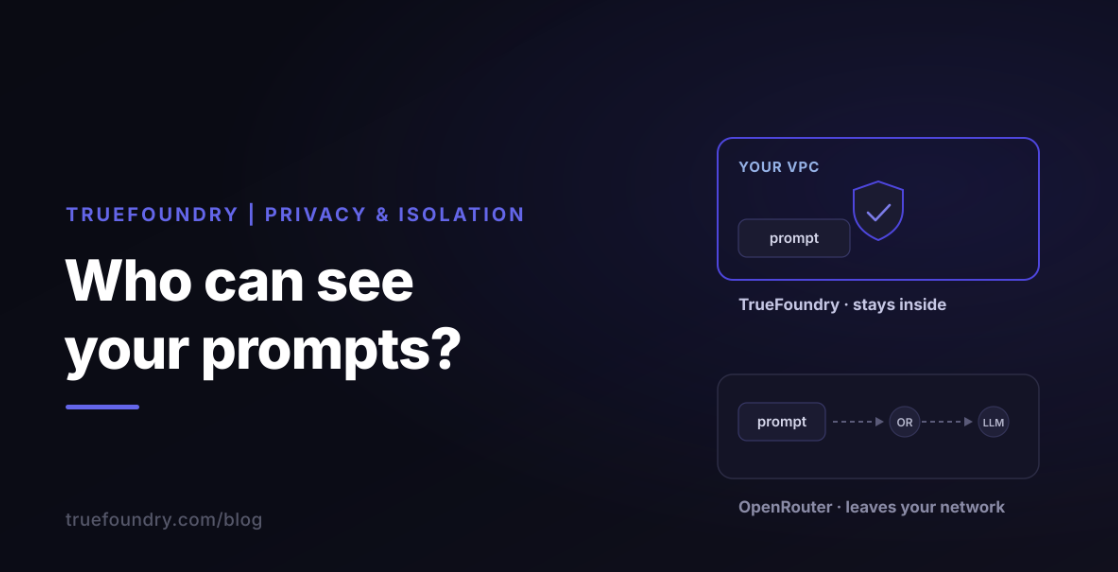
Guardrails against secret leakage. Coding agents read your source. Source contains hard-coded credentials, internal hostnames, customer data in fixtures, and PII in test files. Every one of those can get shipped to a model provider in a prompt. A gateway can scan outbound requests for secrets and PII and block or redact them before they leave your network. For a regulated org, this is often the difference between "approved" and "banned." See AI guardrails for the detection types.
Audit and observability. One trail of every request — who, which model, how many tokens, latency, cost, pass/fail on guardrails. When security asks "did any of our code leak to an external model last quarter," you have an answer instead of a shrug. Pair the gateway log with your LLM observability tooling for latency and quality tracking over time.
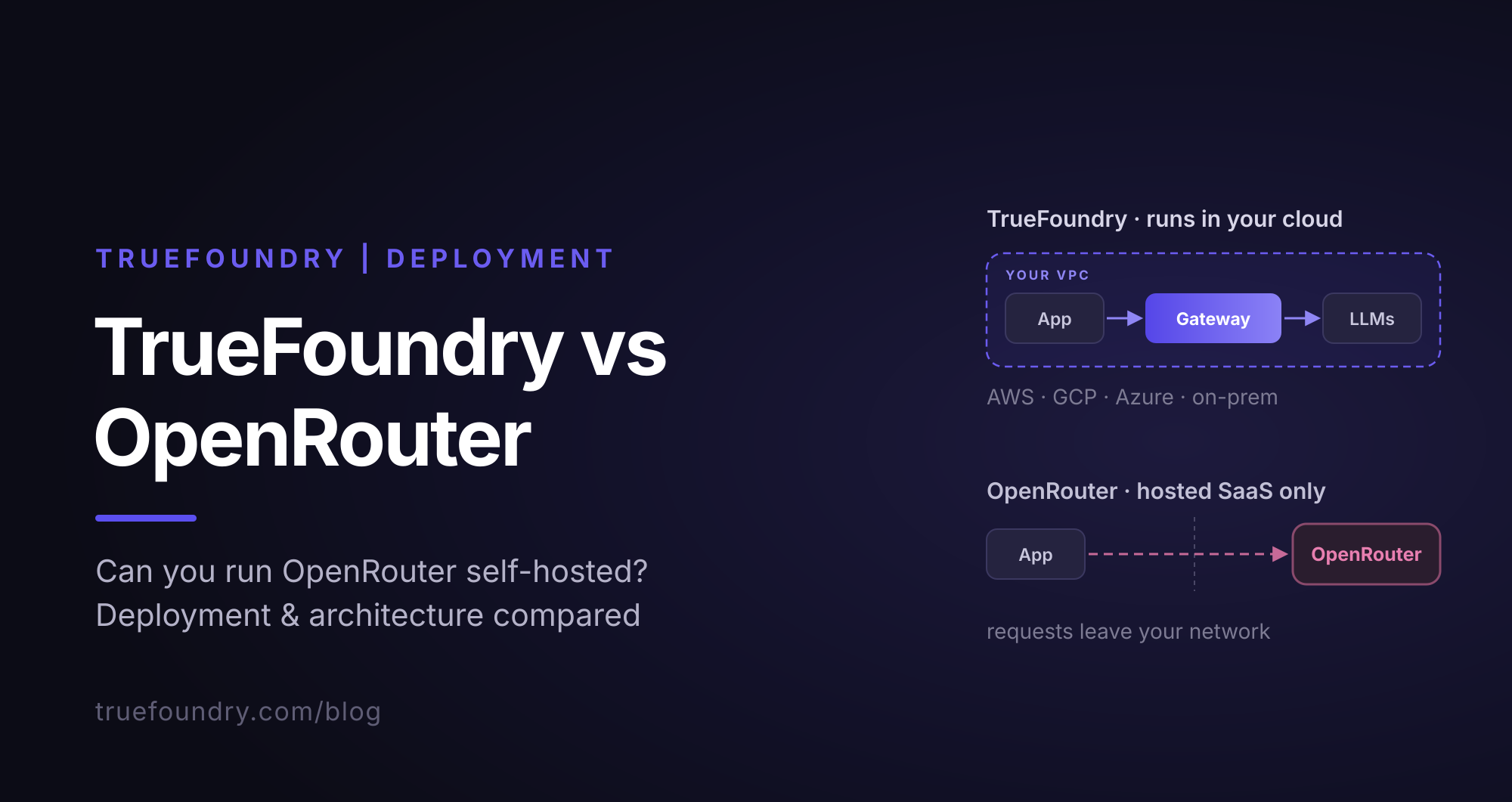
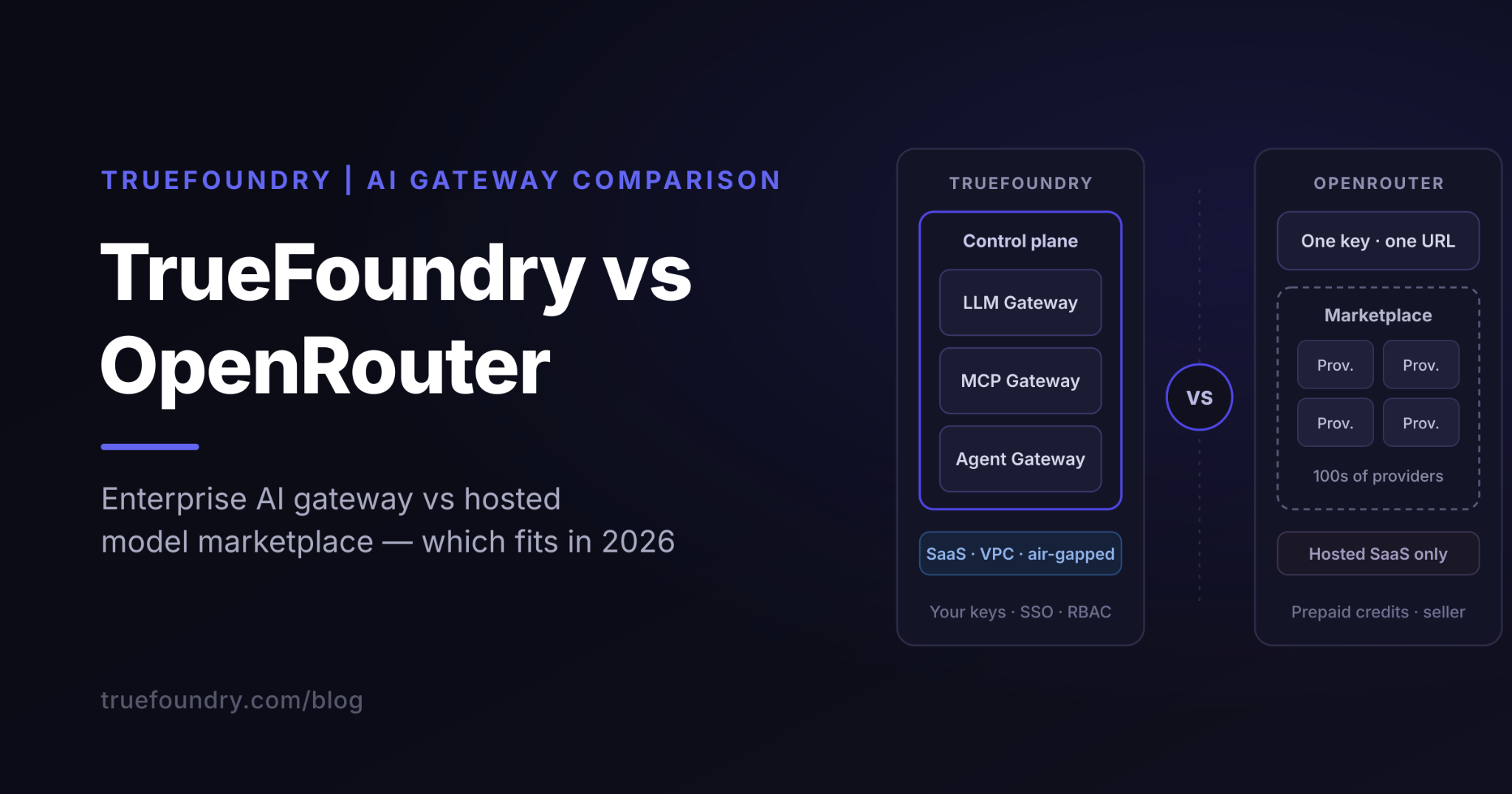
TrueFoundry's AI gateway provides exactly this control plane — a unified OpenAI-compatible API with latency/weight/priority routing, automatic fallback and in-request retries, exact and semantic caching, per-user/team/model budgets and rate limits, full per-request observability, and PII/secret/prompt-injection guardrails. It deploys as SaaS, in your VPC, on-prem, or air-gapped, so the data plane carrying your source code stays inside your network.
Make it concrete. Three developers, one week, different work:
Three developers, three task shapes, three tiers, and a combined weekly spend near $40 — with Dev C's deep refactor costing roughly 14x Dev A's completions. Now imagine 200 developers and no attribution: you see one bill and cannot tell signal from runaway. With the gateway, you see that Dev C's refactor was expensive and worth it, Dev A's completions are efficient, and if a fourth developer's agent starts looping at 2 a.m., the budget cap stops it at 429 before it matters.
The numbers above use verified Claude pricing and round figures for illustration; your real token counts will differ. The point is the structure: task shape drives tier, tier drives cost, and attribution is what turns a scary aggregate into a managed line item.
Chasing the leaderboard. Teams re-pick their "one coding model" every time a benchmark updates, rewiring tooling each time. The benchmark delta is usually smaller than the cost of the churn. Pick defaults per task shape, route, and let the gateway absorb model changes as config.
Routing everything to the top model. Using Opus 5.5 or GPT-6.1 Sol for autocomplete feels safe and is quietly ruinous — you are paying frontier prices on the highest-volume, lowest-value calls. Match the tier to the task. The cheapest model that reliably succeeds is the right one.
No cost attribution until the bill arrives. Many teams discover coding-agent spend only when finance escalates. By then they cannot tell which team or which behavior drove it. Attribution has to be in place before you scale seats, not after.
Ignoring secret and PII egress from code. The biggest risk of coding agents is not wrong code, it is the right code leaking. Source files carry credentials and customer data, and agents send them to third-party models. If you have no outbound guardrail, you are exfiltrating secrets and only finding out in an incident review.
Treating model choice as an application concern. Hard-coding model names and API keys into each tool and service means every model change is a deploy. Put the choice behind a gateway endpoint and model selection becomes a policy decision, made once, applied everywhere.
The "best LLM for coding" is a moving target, and chasing it is a treadmill. The durable strategy is to stop picking one model and start managing a portfolio: a cheap fast tier for completions and bulk, a balanced tier for everyday agent work, and a frontier tier for hard refactors and deep debugging — with a clear escalation signal between them. Claude's Opus/Sonnet/Haiku split maps almost one-to-one onto that framework today, and the reported GPT-6.1 and Gemini figures give you escalation and comparison options you can slot in as config.
What makes that portfolio governable is the layer in front of it. Route every coding agent through one AI gateway and model choice becomes a configuration value, cost becomes attributable per developer and team, budgets stop runaway spend at 429, and guardrails keep your source code's secrets from leaking to a provider. That is how you stay on the frontier without losing control of the bill or the blast radius.
Govern your coding agents' model usage from one gateway. Book a demo.
TrueFoundry AI Gateway delivers ~3–4 ms latency, handles 350+ RPS on 1 vCPU, scales horizontally with ease, and is production-ready, while LiteLLM suffers from high latency, struggles beyond moderate RPS, lacks built-in scaling, and is best for light or prototype workloads.




There is no single best model — it depends on the task. For long-horizon agentic coding, Claude Opus 5.5 is the verified strong pick; Sonnet 5.5 handles most everyday work and Haiku 5.5 is best for high-volume autocomplete. Reported figures put GPT-6.1 Sol at the top of general coding indices and Gemini 3.6 Flash strong on SWE-Bench Pro, as of November 2026 — verify with each vendor.
They lead in different ways as of late 2026. Claude Opus 5.5 is the verified choice for long-horizon, multi-file agentic coding, while GPT-6.1 Sol reportedly tops general coding indices. The honest answer for an enterprise is to route to both and pick per task, rather than standardizing on one.
It varies with task mix. A developer doing mostly autocomplete on a cheap tier might cost a few dollars a week; one running heavy Opus-tier refactors can cost $20+ in a week. Without per-developer cost attribution you cannot tell efficient spend from runaway spend.
Yes, and you almost certainly should. Different tools and tasks want different models. Route all of them through a single AI gateway so you get one endpoint, consistent budgets and guardrails, and unified cost attribution across every model and agent.
Put a gateway with guardrails between the agents and the providers. It scans outbound requests for secrets and PII and blocks or redacts them before they leave your network. Deploying the gateway in-VPC or on-prem keeps the data plane carrying your source code inside your own environment.



The latest news, articles, and resources sent to your inbox