


Institutional hurdles slowing AI adoption in government

Protection of Personal Data
Agencies must safeguard PII, preventing unauthorized use or disclosure of citizen information when applying AI to government records

Compliance Mandates
Agencies must align with federal security requirements like FISMA and privacy protection acts

Model & Tool Fragmentation
Different departments procure AI independently, leading to inconsistent access control, duplicated spend, and governance gaps across the organization.
Architected for boundary protections, auditability, and compliance
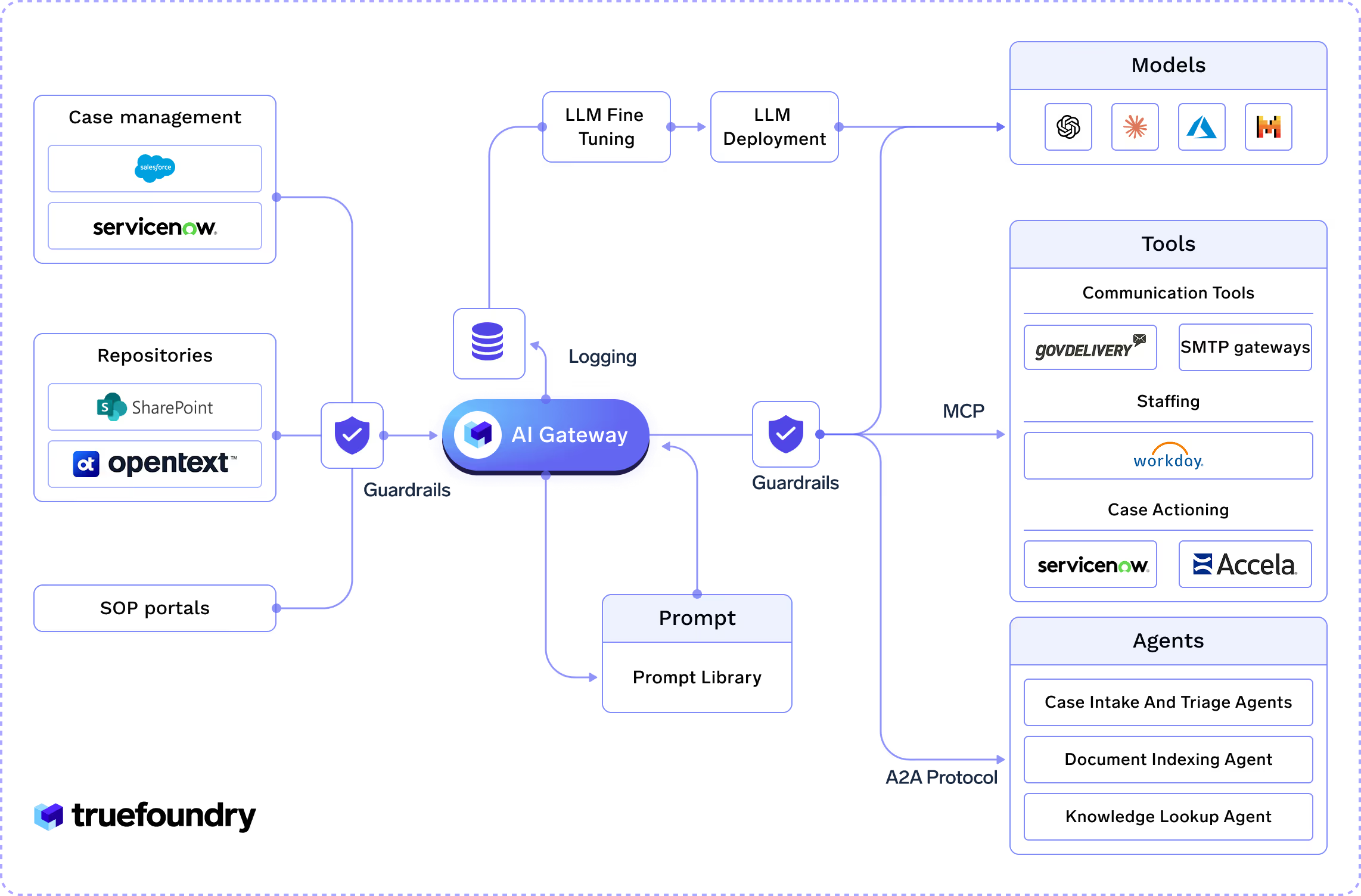
AI Gateway with identity and access control enforcement
.webp)
- Centralize AI access with enforced authentication, RBAC, and encrypted routing inside agency networks to help align with FISMA security requirements.
- Maintain detailed inference logs and usage visibility for continuous monitoring and security reviews expected in federal environments.

Control access to internal systems with a governed MCP Gateway
- Connect agents to case-management systems, document repositories, and internal records databases without exposing PII or controlled data, supporting Privacy Act obligations
- Enforce agency-approved permissions on every read/write action for accountability required in public-administration workflows.
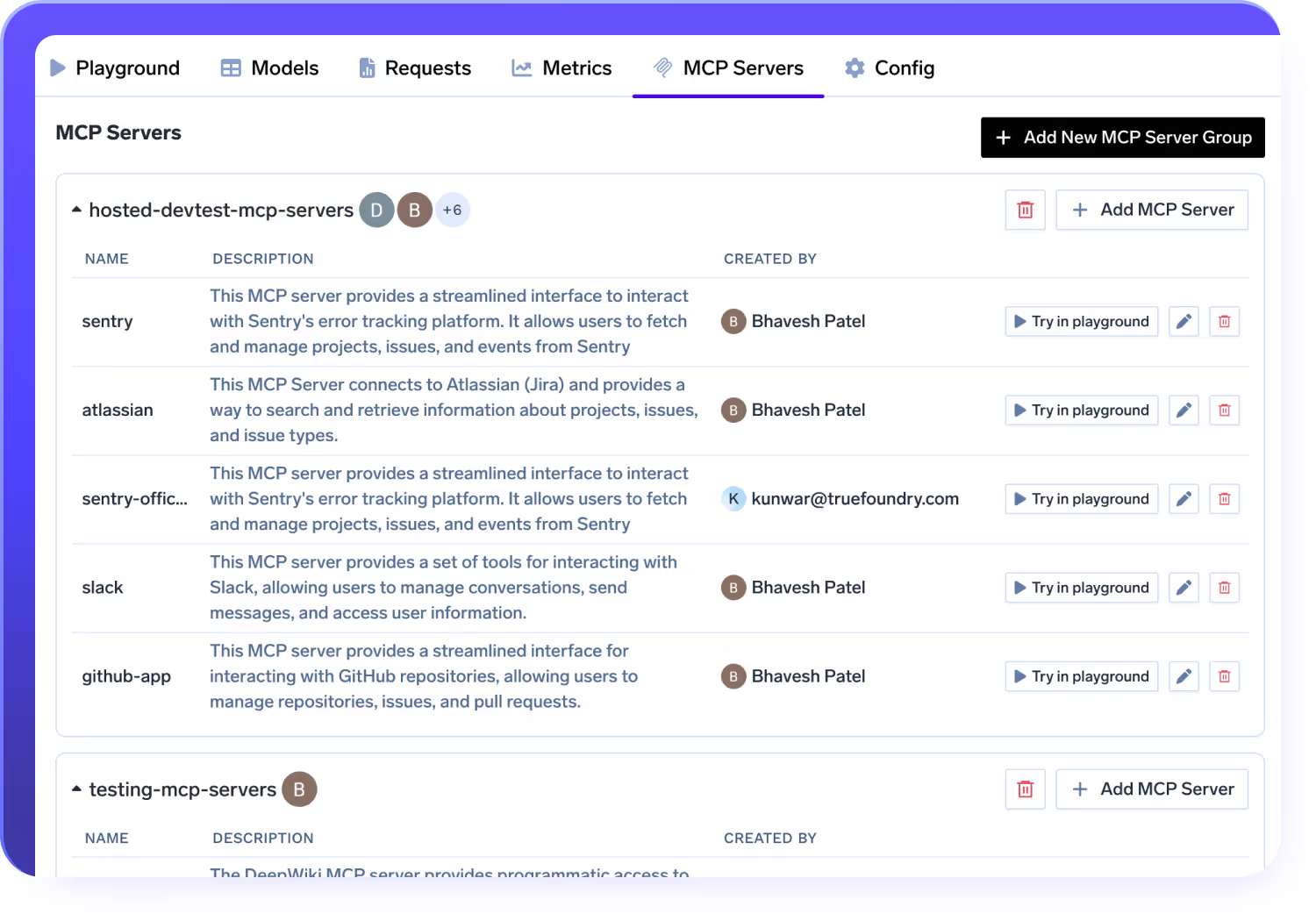
On-prem and VPC AI platform for secure deployments
- Deploy AI infrastructure inside government-owned facilities or isolated VPC environments to comply with mandates to keep data inside authorized boundaries and networks
- Log every agent action on regulated documents to support oversight, audit chains, and defensible disclosure for transparency laws such as FOIA

Deploy governed AI agents for high-volume administrative operations
Case intake and triage agents
Document indexing agent
Procurement documentation agent

Knowledge lookup agent

Workload routing agents

Compliance monitoring agents

The computing costs savings we achieved as a result of adopting TrueFoundry, were greater than the cost of the service (and that's without counting the time and headaches it saves us!)


GenAI infra- simple, faster, cheaper
Trusted by Government and public admin teams to scale GenAI





