


.png)
October 15, 2026
|
5 min read


Obtenha acesso instantâneo a um ambiente TrueFoundry ao vivo. Implante modelos, direcione o tráfego de LLM e explore a plataforma completa — seu sandbox estará pronto em segundos, sem necessidade de cartão de crédito.


Published: October 10, 2026
Blazingly fast way to build, track and deploy your models!
O mapa de Andrew Ng é um framework de habilidades, não uma arquitetura de produto. Este artigo aborda uma questão empresarial mais específica: quais mecanismos os engenheiros devem compreender e dominar, e quais primitivas repetíveis de tempo de execução, acesso, governança, reutilização e evidência uma plataforma pode padronizar sem substituir esse julgamento?
As quatro habilidades principais de Andrew Ng são enganosamente simples:
O sinal útil é aquilo que a lista se recusa a simplificar. A engenharia de IA não se resume a prompting; agentes de codificação não eliminam os fundamentos de software; a implantação é parte do ofício; e o julgamento de produto caminha lado a lado com a implementação. Portanto, o mapa trata a engenharia de IA como uma combinação de trabalho de sistemas, engenharia de software, desenvolvimento assistido por agentes e julgamento.
A maneira errada de usar o mapa de Ng seria desenhar quatro caixas e afirmar que uma plataforma "resolve" cada uma delas. Habilidades são capacidades humanas. Julgamento de produto, julgamento de arquitetura, capacidade de depuração, design de avaliação e compreensão do cliente não desaparecem só porque uma empresa compra infraestrutura.
A tradução empresarial mais útil é esta: padronizar os mecanismos repetíveis para que os engenheiros possam dedicar mais do seu escasso julgamento às partes que realmente exigem esse discernimento.
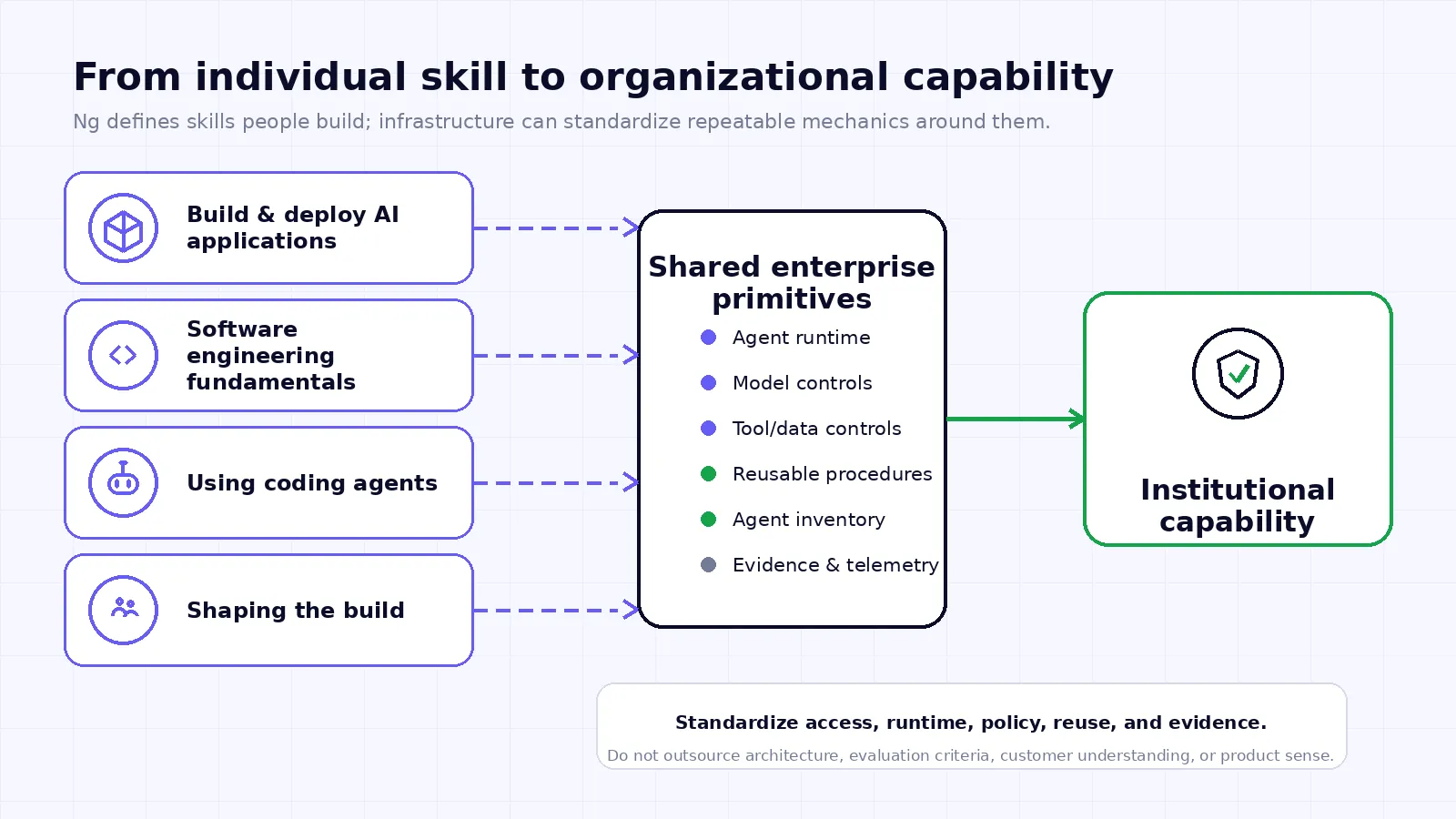
O acompanhamento de 21 de agosto de Ng divide a construção e implantação de aplicações de IA em seis capacidades: fundamentos de LLM, fundamentação de modelos com dados, construção de sistemas agenticos, desenvolvimento orientado por avaliação, operação em produção e fundamentos de aprendizado de máquina. O ponto importante é que estas são habilidades de engenharia, não categorias de fornecedores. Uma plataforma pode operacionalizar partes do trabalho; ela não pode substituir o conhecimento sobre por que uma determinada arquitetura, modelo, avaliador ou política de falhas é apropriada.
Os engenheiros ainda precisam entender o comportamento do modelo: janelas de contexto, cache, limites de conhecimento, amostragem, esforço de raciocínio, chamadas de ferramentas, latência, custo e comportamento específico do provedor. TrueFoundry AI Gateway pode padronizar como o tráfego de modelos roteados é acessado e governado — APIs unificadas, roteamento e fallbacks, RBAC, limites de taxa, orçamentos, guardrails e observabilidade compatível com OpenTelemetry — mas não elimina a necessidade de entender essas compensações dos modelos.
Ng trata a fundamentação como um menu arquitetural em vez de um sinônimo de busca vetorial: os engenheiros podem escolher contexto de prompt, recuperação, chamadas de ferramentas, índices vetoriais, grafos de conhecimento, camadas semânticas sobre dados estruturados ou combinações deles. Não existe um mapeamento universal de “fundamentação → MCP Gateway”. Quando uma aplicação expõe a recuperação ou o acesso a dados por meio de ferramentas MCP, MCP Gateway pode governar esse caminho de acesso por meio de descoberta, autenticação, permissões em nível de ferramenta, credenciais downstream, guardrails, aprovações, observabilidade e auditoria. Se a fundamentação ocorrer diretamente dentro da aplicação ou por meio de um armazenamento vetorial, grafo de conhecimento ou camada semântica que não atravesse o MCP, esse caminho permanece fora do MCP Gateway.
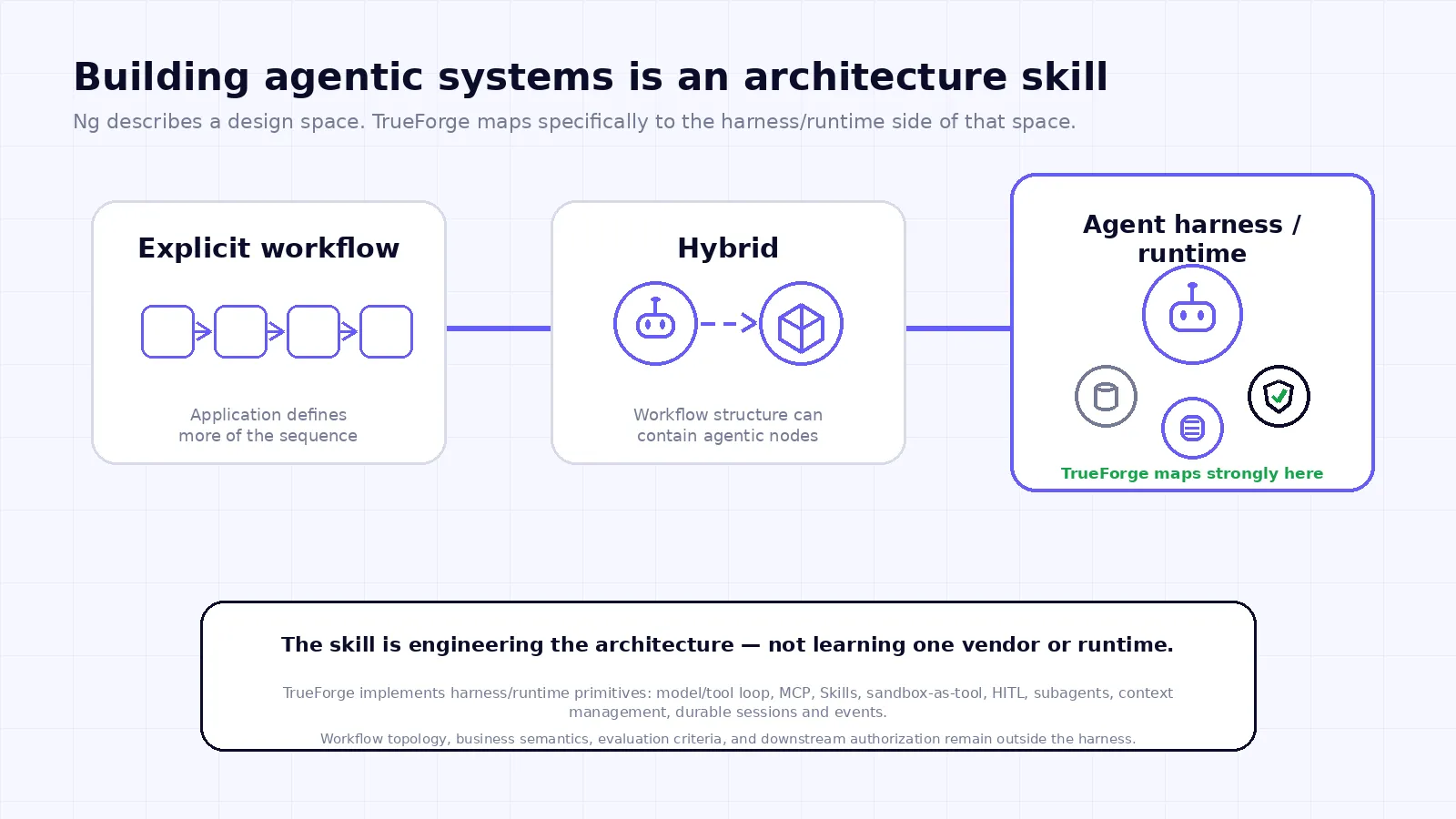
A expansão de 21 de agosto de Ng trata os sistemas agentivos como um espectro arquitetural, e não como uma escolha única de framework. Em uma extremidade, uma aplicação pode executar um fluxo de trabalho comparativamente explícito de chamadas de modelo. Na extremidade mais aberta, um harness de agente permite que o modelo escolha repetidamente seu próximo passo, enquanto o runtime ao redor gerencia ferramentas, contexto, execução, limites de segurança e continuação. Entre eles, existem sistemas híbridos que combinam estrutura de fluxo de trabalho explícita com nós agentivos.
Isso significa que a habilidade subjacente é julgamento arquitetural: decidir o que deve ser determinístico, o que deve ser delegado a um modelo, o que pode ser executado em paralelo, quais ferramentas o sistema pode chamar, como a memória e o contexto de sessões longas devem funcionar, quando múltiplos agentes ajudam e quais fallbacks, guardrails e governança são necessários.
TrueForge mapeia fortemente para a ramificação de harness/runtime desse espaço de design. Sua documentação define um harness de agente de código aberto que executa o loop de modelo/ferramenta, conecta-se a servidores MCP, gerencia o contexto de tarefas longas, trata a execução em sandbox isolado como uma ferramenta, pausa para aprovação humana, suporta subagentes e persiste sessões entre reconexões e reinicializações.
O mapeamento torna-se concreto no AgentSpec. Uma definição de agente reutilizável pode especificar o modelo e parâmetros, instruções, servidores MCP e filtros de ferramentas, política de aprovação, Skills, comportamento de sandbox, gerenciamento de contexto, formato de resposta e limite de iteração. Essas são escolhas de runtime que um engenheiro pode precisar ao implementar uma arquitetura de harness de agente.
Ng trata a avaliação disciplinada e a análise de erros como uma competência central da engenharia de IA. A implicação para a plataforma não é "comprar um avaliador". É que as avaliações precisam de evidências confiáveis sobre o que realmente aconteceu: prompts e respostas retidos, escolhas de modelos/ferramentas, etapas intermediárias, falhas, latência, custo e o contexto da tarefa ao redor.
O TrueForge torna sua estrutura de tempo de execução explícita por meio de um Agente → Sessão → Turno → Evento → Delta modelo. A documentação distingue esses objetos com precisão:
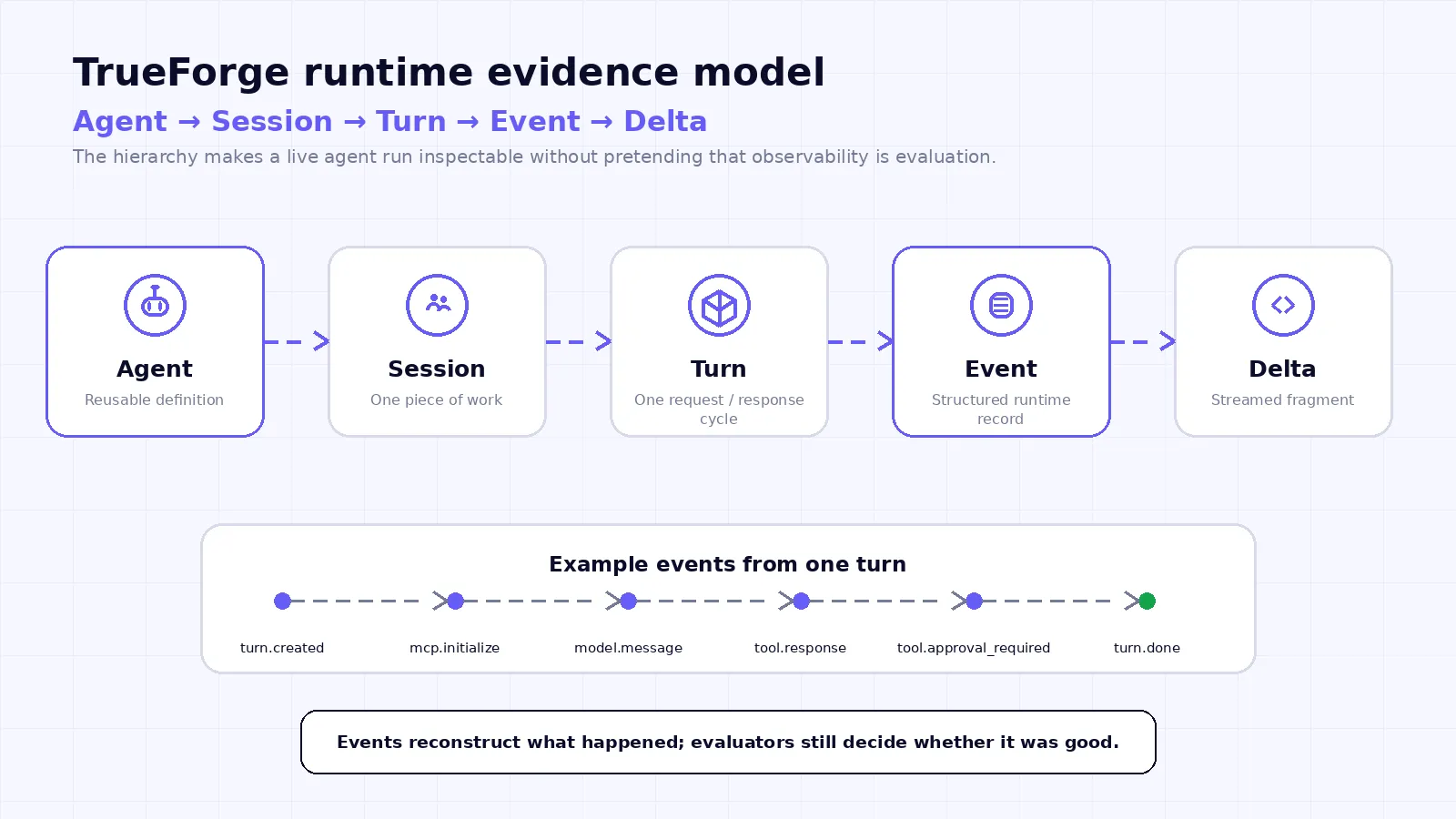
O modelo de Evento é tecnicamente útil porque a documentação também especifica um ID de evento, um thread_id que distingue o agente raiz das threads de subagentes, e informações de sequência usadas ao retomar após uma desconexão. Isso fornece evidências de execução estruturadas em vez de uma única resposta final opaca.
Para o tráfego roteado por meio dos Gateways TrueFoundry, rastreamentos e métricas de limites de modelo e MCP adicionam outra camada de evidência. Mas o limite permanece importante: eventos e rastreamentos não determinam se uma resposta estava correta, se uma ação de ferramenta foi apropriada ou se um resultado de negócio foi bem-sucedido. A aplicação ainda precisa de conjuntos de dados específicos da tarefa, asserções determinísticas, juízes de LLM quando apropriado, revisão humana ou outra lógica de avaliação.
A vertente de produção de Ng inclui observabilidade, falhas, segurança, testes de regressão e compensações de custo/latência. Aqui, o mapeamento da TrueFoundry é mais forte quando expresso como controles operacionais compartilhados, não como um substituto para a engenharia de produção.
Gateway de IA documenta acesso unificado a modelos, controle de acesso refinado, limitação de taxa, balanceamento de carga de modelos virtuais com novas tentativas/fallbacks, limitação de orçamento, guardrails e métricas/logs compatíveis com OpenTelemetry para o tráfego de modelos roteado por ele. MCP Gateway adiciona visibilidade centralizada e políticas em torno do tráfego de ferramentas MCP, incluindo guardrails pré/pós-ferramenta, fluxos de trabalho de aprovação e registros de auditoria. Registro de Agentes fornece um catálogo, além de métricas e rastreamentos centralizados para agentes registrados, incluindo agentes remotos.
Essas capacidades podem reduzir a duplicação de infraestrutura operacional entre as equipes. Elas não definem os SLOs da aplicação, política de incidentes, semântica de reversão, estratégia de idempotência, requisitos de retenção de dados ou tratamento de falhas específico do negócio.
Não há, intencionalmente, nenhuma substituição de produto aqui. Compreender viés/variância, qualidade de dados, avaliação, trade-offs de modelos e dinâmicas de aprendizado continua sendo uma habilidade humana. A infraestrutura pode dar suporte ao fluxo de trabalho, mas não pode substituir os modelos mentais necessários para raciocinar sobre resultados incertos.
O acompanhamento de Ng em 28 de agosto torna explícita a relação com agentes de codificação: os fundamentos de software continuam essenciais porque os engenheiros ainda precisam reconhecer e gerenciar trade-offs que o agente não consegue inferir apenas a partir do contexto de negócios. Ele organiza este ramo em torno de construção de aplicações full-stack, gerenciamento de dados, design de arquiteturas de sistemas, tornar sistemas seguros e confiáveis, e escalar e operar em produção.
O mapeamento da TrueFoundry aqui é intencionalmente indireto. Uma plataforma pode padronizar alguns primitivos de implementação — autenticação e autorização em limites compartilhados, políticas de acesso a modelos/ferramentas, controles de orçamento/taxa, isolamento em sandbox, estado persistente de tempo de execução do agente e telemetria — mas não pode fornecer ao engenheiro a compreensão de modelos de dados, consistência, testes, domínios de falha, design de segurança ou arquitetura de sistemas.
O princípio é simples: agentes de codificação podem acelerar a implementação, mas a arquitetura ainda determina a forma da falha.
Ng torna o uso de agentes de codificação uma habilidade de nível superior separada. No Mapa de Habilidades original, trata-se da própria habilidade operacional do desenvolvedor: ter um modelo mental útil de como os agentes de codificação funcionam e falham, gerenciar seu contexto, decidir quanta autonomia conceder, fornecer verificadores ou avaliações, saber quando intervir e atualizar continuamente o fluxo de trabalho à medida que as ferramentas mudam.
Isso não é algo que a TrueFoundry possa substituir. O mapeamento natural do produto é apenas para partes do ambiente ao redor dos agentes de codificação. Para clientes de codificação compatíveis que usam MCP, MCP Gateway pode centralizar a descoberta de servidores, autenticação de entrada, controle de acesso em nível de ferramenta, credenciais downstream, guardrails, aprovações e auditoria. Isso pode tornar a interface da ferramenta mais consistente e governável entre usuários e clientes.
Registro de Habilidades aborda um problema diferente: conhecimento procedimental reutilizável. A TrueFoundry documenta Habilidades como artefatos versionados que podem ser publicados uma vez e reutilizados em Agentes TrueFoundry, Claude Code e Cursor, herdando RBAC de repositório, histórico de versões e logs de auditoria.
O quarto ramo é o lugar menos apropriado para a promoção de produtos. A estrutura de Ng move-se a montante da implementação em direção ao senso de produto, contexto de negócios, objetivos do cliente, propriedade, seleção de problemas que valem a pena e julgamento sobre quando lançar um MVP versus quando o risco ou a qualidade exigem uma construção mais cuidadosa.
Nenhum gateway, harness, registro ou painel fornece esse julgamento. A infraestrutura pode melhorar o ciclo de feedback: o tráfego de gateway roteado pode expor uso, latência, falhas e gastos; o Registro de Agentes pode centralizar métricas e rastreamentos para agentes registrados; controles de orçamento podem limitar experimentos. Esses são subsídios para o julgamento, não substitutos para decidir o que deve ser construído ou qual resultado é importante.
Esta é a interpretação do mapa voltada para a empresa: padronizar mecânicas indiferenciadas para que os engenheiros possam dedicar mais tempo à arquitetura, avaliação, compreensão do cliente e decisões de produto que não podem ser centralizadas.
Se o mapa de Ng descreve o engenheiro moderno, uma plataforma de IA corporativa deve responder a uma pergunta paralela: o que todo engenheiro deve receber por padrão?
A consequência corporativa mais importante do mapa de habilidades de Ng pode ser o fato de que a engenharia de IA está se tornando ampla demais para ser operacionalizada por meio de heroísmos individuais.
Um excelente engenheiro pode entender de modelos, RAG, agentes, avaliações, sistemas distribuídos, segurança, agentes de codificação, trade-offs de produto e operações. Mas, se cada engenheiro também precisar reconstruir adaptadores de modelo, gerenciamento de credenciais, descoberta de MCP, autorização de ferramentas, estado de aprovação, contabilidade de custos e rastreamento dentro de cada projeto, a organização estará desperdiçando essa experiência em infraestrutura indiferenciada.
Uma divisão de trabalho mais sólida é:
Divulgação editorial: Andrew Ng e a DeepLearning.AI não são afiliados a este artigo e não endossam a TrueFoundry. O seu AI Engineering Skills Map é utilizado como uma estrutura externa; todos os mapeamentos de infraestrutura são análises editoriais da TrueFoundry. As capacidades do produto foram verificadas novamente com base na documentação pública da TrueFoundry e do TrueForge disponível em 31 de agosto de 2026.
TrueFoundry AI Gateway delivers ~3–4 ms latency, handles 350+ RPS on 1 vCPU, scales horizontally with ease, and is production-ready, while LiteLLM suffers from high latency, struggles beyond moderate RPS, lacks built-in scaling, and is best for light or prototype workloads.





As últimas notícias, artigos e recursos enviados para sua caixa de entrada
.png)
.webp)
.png)
.png)
.png)

.png)
.png)
.png)
.png)


