


What Is OpenTelemetry and How Does It Work?


Govern, Deploy and Trace AI in Your Own Infrastructure
Frequently Asked Questions
What is OpenTelemetry in simple terms?
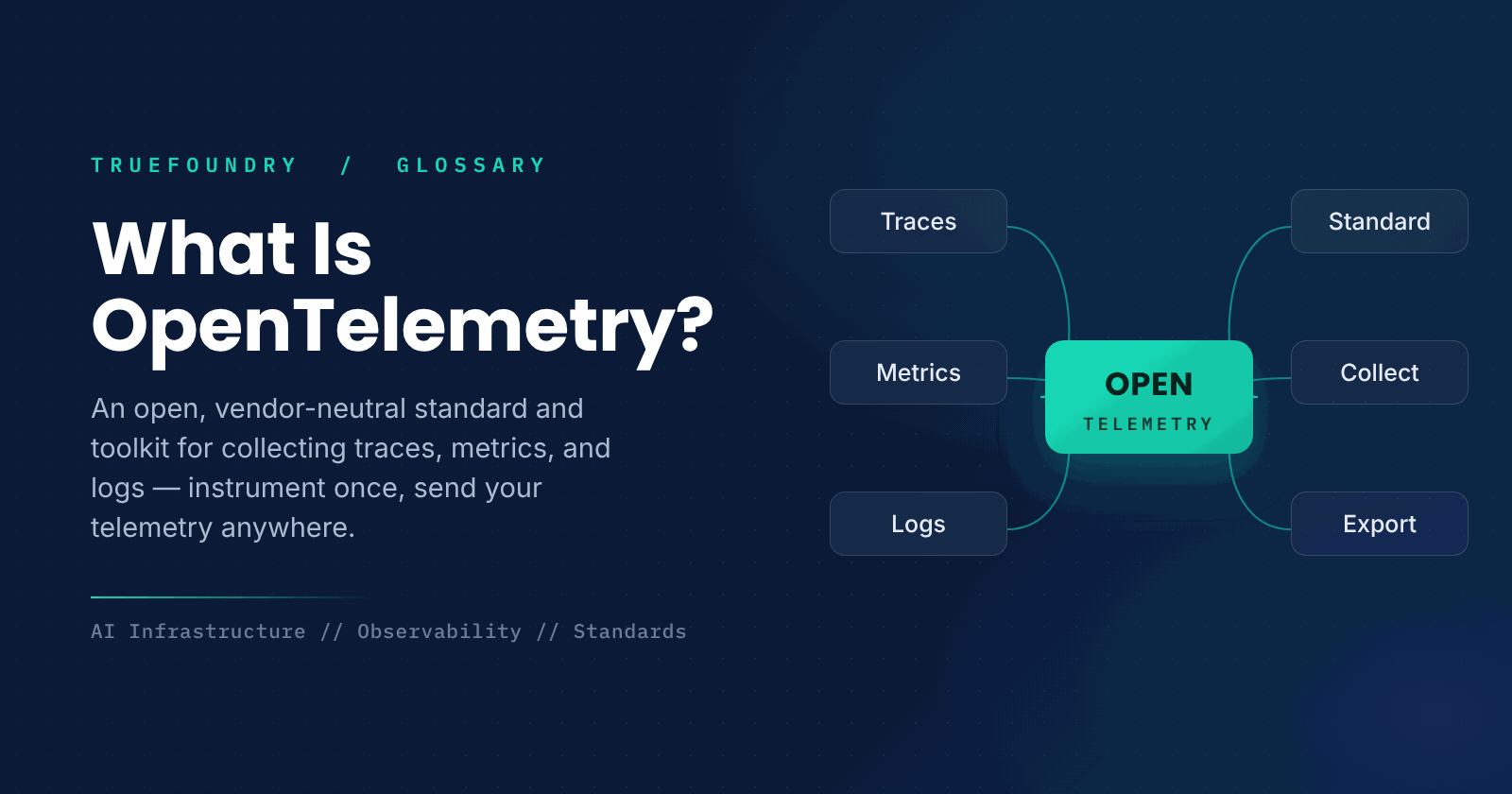
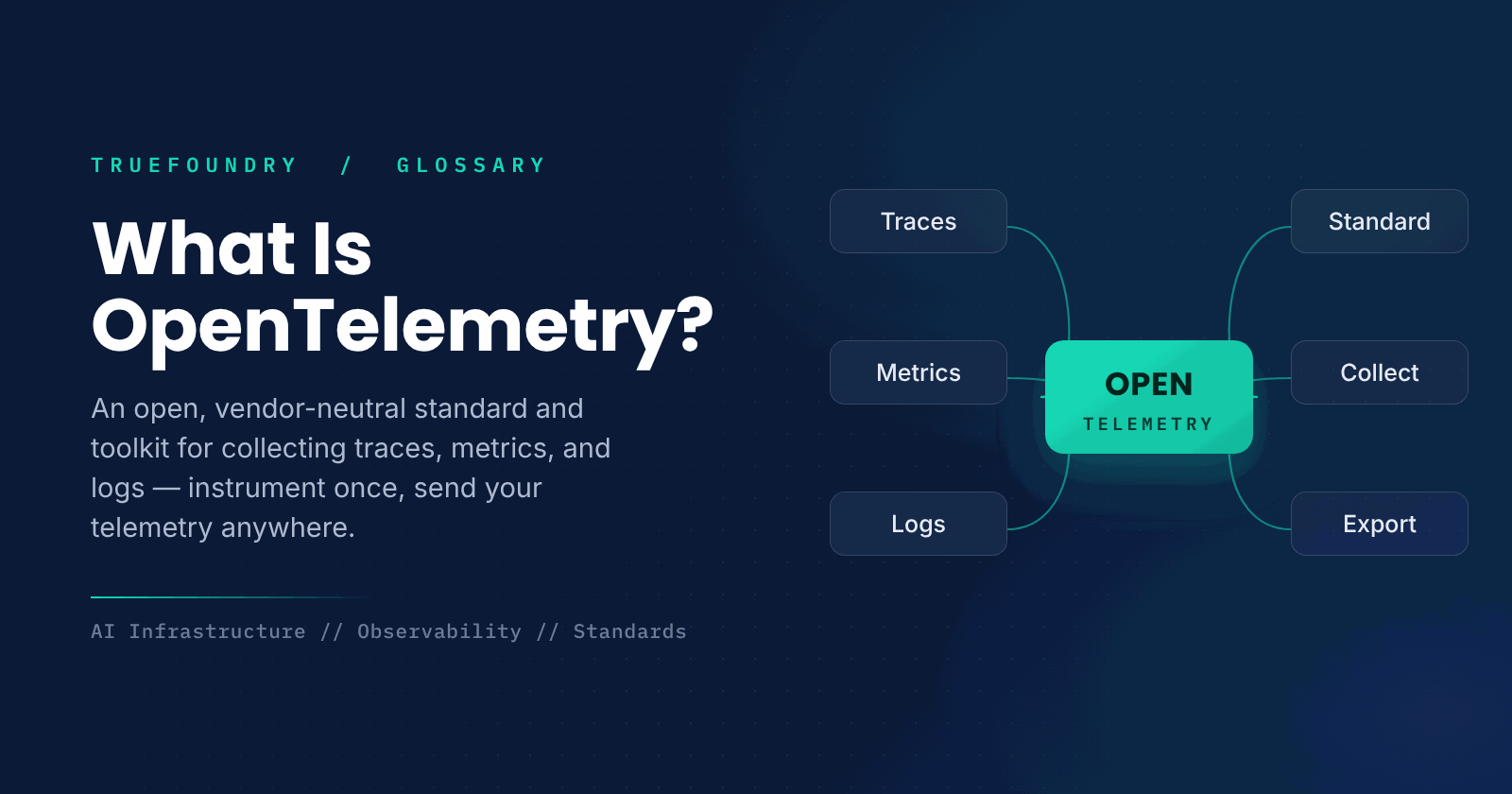
It is an open standard and framework for gathering telemetry, traces, metrics, and logs, from your software. Your application only needs to be instrumented once, and then you can send the data to any observability tool that supports OpenTelemetry.
What are the three signals in OpenTelemetry?
Traces, which bind together the steps of a request; metrics, which are statistical aggregates such as latency and error rate; and logs, which are detailed records of events. OpenTelemetry is a standardized way of collecting and exporting all three.
Why is OpenTelemetry vendor-neutral?
Because it decouples telemetry generation from telemetry analysis. Your instrumentation follows the open standard, and the collector can export to any backend, so you can change or combine observability tools without re-instrumenting your application.
What is the OpenTelemetry Collector?
It is a component that receives telemetry from your application, processes it, and forwards it to one or more backends. Since it sits between your application and your tooling, you can filter, sample, and route data without re-instrumenting.
Can OpenTelemetry be used for LLM observability?
Yes. OpenTelemetry increasingly supports LLM use cases, providing traces of requests plus additional signals such as token usage and cost, so model observability can integrate with the rest of the observability in your infrastructure.





