


September 21, 2026
|
5 min de lecture


Accédez instantanément à un environnement TrueFoundry en direct. Déployez des modèles, acheminez le trafic LLM et explorez la plateforme complète : votre sandbox est prête en quelques secondes, aucune carte de crédit n'est requise.



Published: September 21, 2026
.png)
Une méthode incroyablement rapide pour créer, suivre et déployer vos modèles !
TrueFoundry AI Gateway offre une latence d'environ 3 à 4 ms, gère plus de 350 RPS sur 1 processeur virtuel, évolue horizontalement facilement et est prête pour la production, tandis que LiteLM souffre d'une latence élevée, peine à dépasser un RPS modéré, ne dispose pas d'une mise à l'échelle intégrée et convient parfaitement aux charges de travail légères ou aux prototypes.




RBAC grants permissions to named roles and assigns subjects to those roles, so a decision is a lookup against the subject’s role bindings. ABAC evaluates a policy at request time over attributes of the subject, resource, action, and environment, so a decision is a computation. RBAC is easier to audit; ABAC is more expressive. The difference bites when someone asks who can access a resource: RBAC answers from a table, ABAC requires evaluating the policy.
On paper, yes — an agent’s appropriate authority varies with which tool it calls, which data it touches, and who it acts for. In practice most teams ship RBAC with resource-scoped bindings, because the attributes an agent policy would need are either unavailable at decision time or better answered by delegating to the upstream system through per-user credentials. The auditability loss also lands hardest on agents, which is what security review scrutinises most.
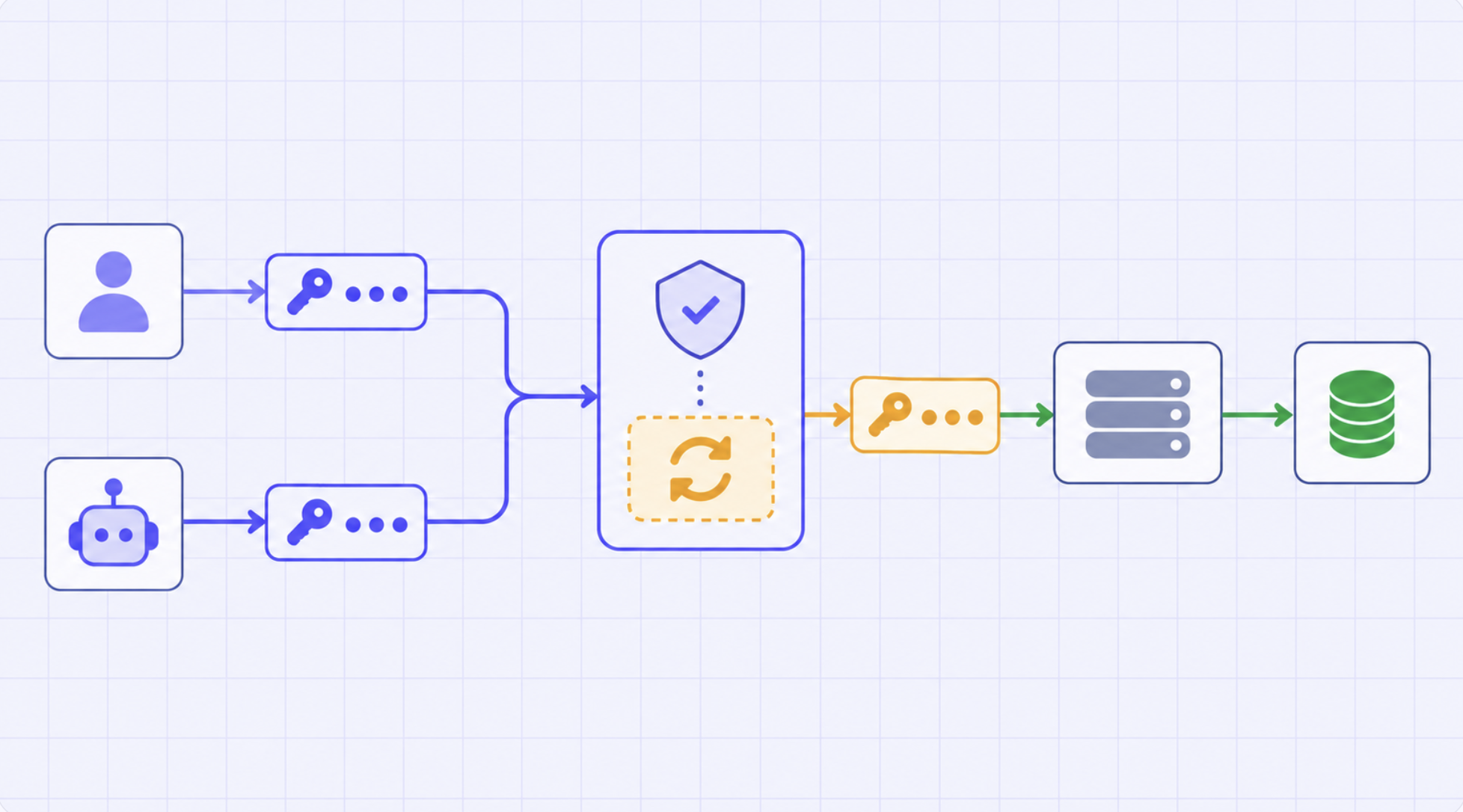
Yes, and it is the most common real deployment. Roles form the backbone and a few conditions apply where warranted. TrueFoundry’s version is RBAC role bindings plus four gates: per-resource scoping, per-user OAuth so upstream permissions apply, per-tool enable and disable, and human approval on sensitive tool calls. That is deliberately not a policy engine.
Yes. TrueFoundry runs in your VPC, on-prem, air-gapped, or hybrid, so prompts and responses never leave your domain even as you route across many providers.
Yes. It includes an MCP Gateway, an Agent Gateway, and an MCP & Agents Registry with tool-level access control. Agents on LangGraph, CrewAI, AutoGen, or a custom framework can all be governed centrally.
Oui. La passerelle est compatible OpenTelemetry et s'intègre à Grafana, Datadog, Prometheus, ou à votre pile technologique préférée. Elle trace chaque requête, du prompt à l'exécution de l'outil et du modèle, vous offrant ainsi une journalisation unifiée sans avoir à remplacer ce que vous utilisez déjà.



Les dernières nouvelles, articles et ressources envoyés dans votre boîte de réception
.png)
.png)
.png)
.png)
.png)
.png)
.png)
.png)


