September 15, 2026
|
5 minutos de lectura


Obtenga acceso instantáneo a un entorno TrueFoundry en vivo. Implemente modelos, dirija el tráfico de LLM y explore la plataforma completa: su sandbox estará listo en segundos, sin necesidad de tarjeta de crédito.



Published: September 15, 2026
¡Una forma increíblemente rápida de crear, rastrear e implementar sus modelos!
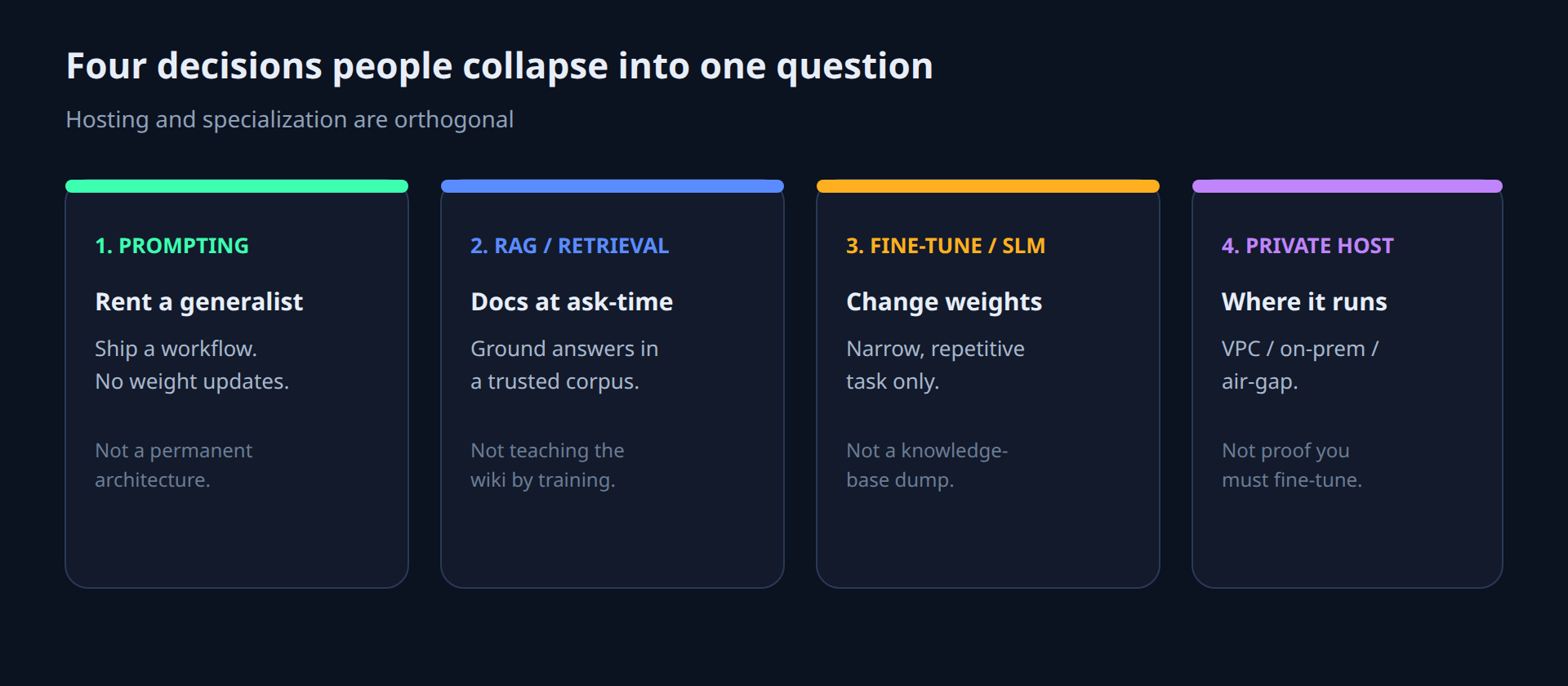
Teams often ask "SLM or LLM?" as if that answers the product. It doesn't. Four different decisions get mashed together:
You can prompt a private LLM. You can fine-tune and still call a public API for the open-ended parts. Hosting and specialization are orthogonal. Mixing them up is how regulated teams stall for a quarter on GPUs when the real blocker was a missing doc index.
For how teams keep model choice and spend under control once traffic is live, see what an LLM gateway is (https://www.truefoundry.com/blog/llm-gateway). The gateway question comes after you know which track you are on.
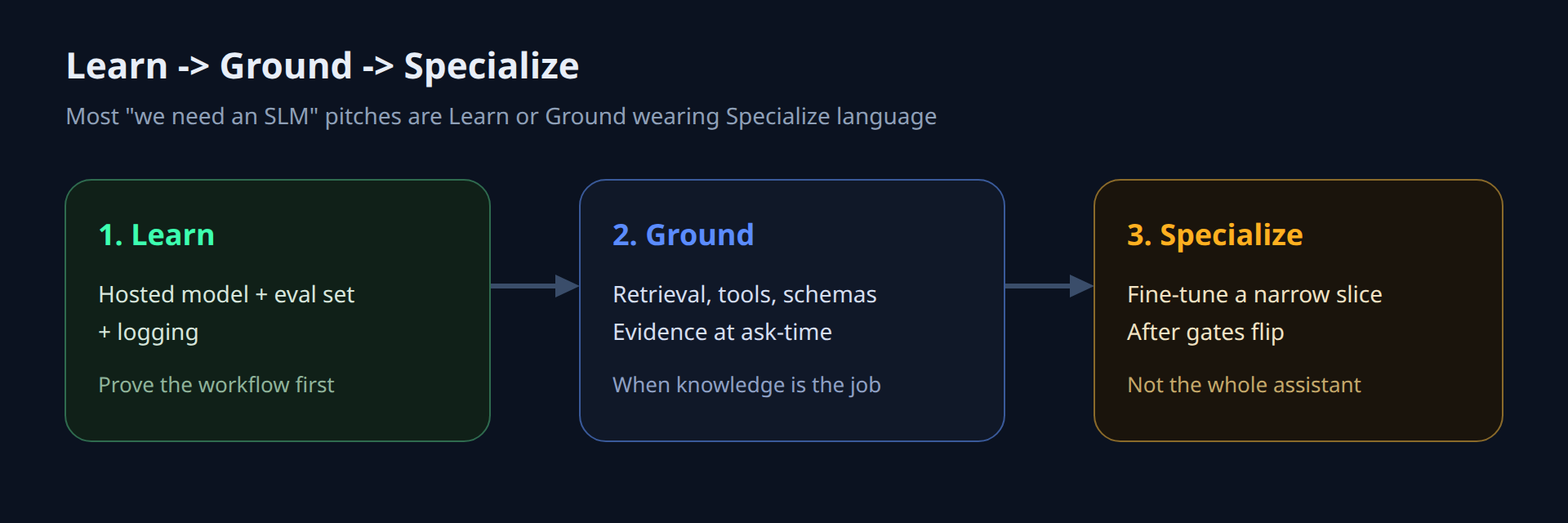
Once you separate those four decisions, the roadmap collapses into three tracks:
Most "we need an SLM" pitches are really Learn or Ground problems wearing Specialize language.
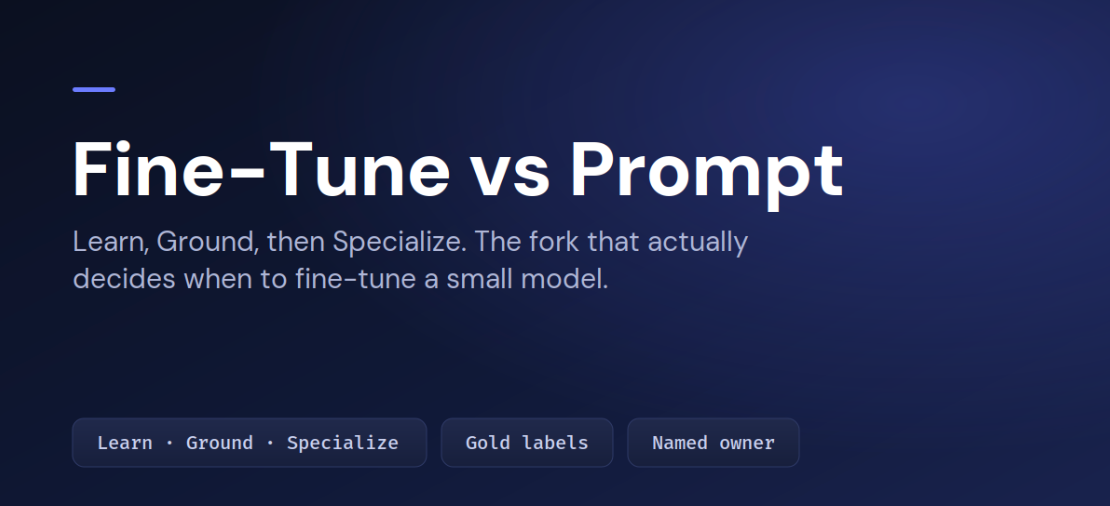
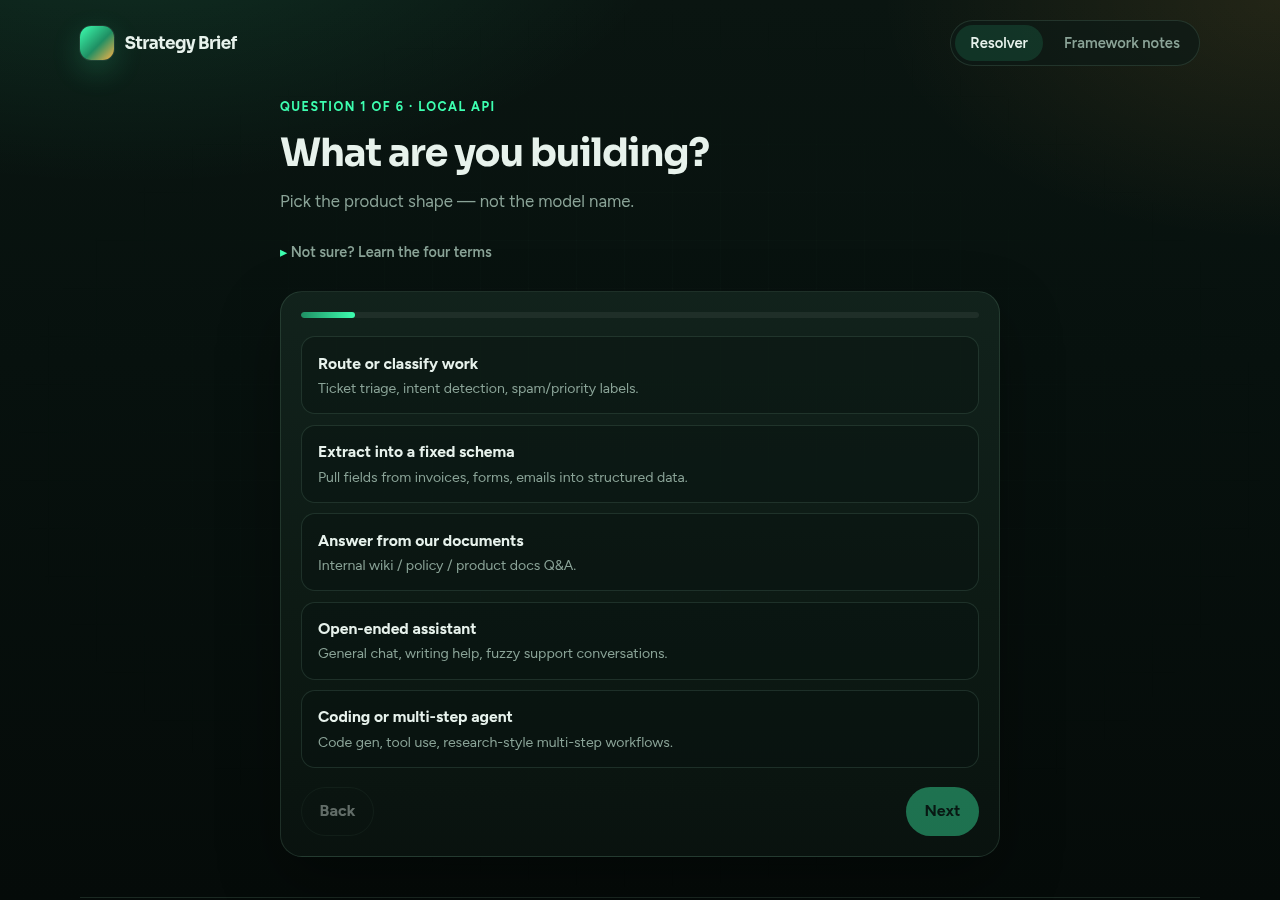
We built a small fine-tuning vs prompting resolver (https://benchmark-accelerators.ml.tfy-eo.truefoundry.cloud/fine-tuning-vs-slm) around that framing. Answer a handful of product questions and it returns a diagnosis, locked vs current tracks, and a copy-paste memo. Same rubric every time, so PM, eng, and security argue from one sheet.
----------------------------------------
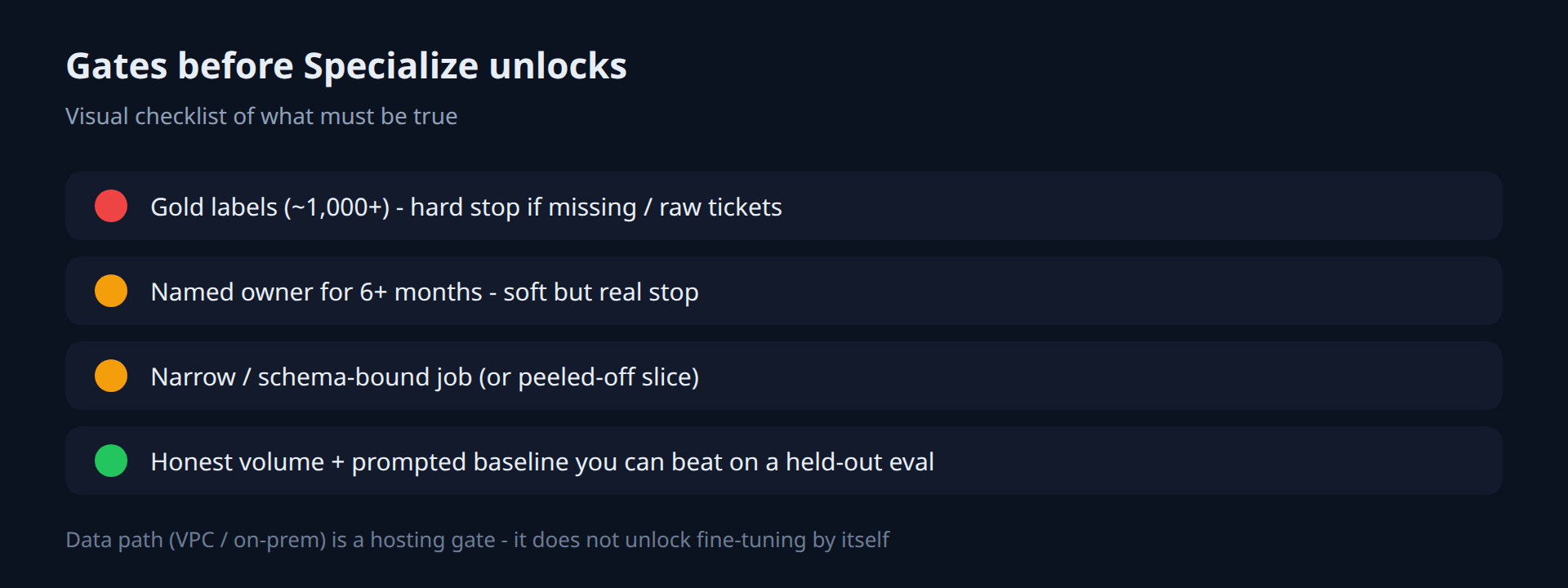
Gates before Specialize unlocks
Developer enthusiasm matters. Vendor demos matter less. Neither replaces gates.
Is this ticket triage, field extraction, docs Q&A, open chat, or a multi-step agent?
Closed or schema-bound work can specialize later. Open-ended assistants and coding agents almost never should be fine-tuned first. If you can peel off a narrow sub-task (classify, then draft), specialize only that slice.
Internal / low risk can start on a public API with normal vendor review. Customer PII needs a privacy review. Regulated data (PHI, finance residency, air-gap) forces VPC or on-prem.
That decision is hosting. It does not unlock fine-tuning by itself. For spend and latency once volume grows, LLM cost optimization (https://www.truefoundry.com/blog/llm-cost-optimization) is the parallel conversation, not a substitute for labels.
Historical tickets and chat logs are not a training set until someone marks the correct output. Dumping a CSV into LoRA mostly memorizes noise.
TrueFoundry AI Gateway ofrece una latencia de entre 3 y 4 ms, gestiona más de 350 RPS en una vCPU, se escala horizontalmente con facilidad y está listo para la producción, mientras que LitellM presenta una latencia alta, tiene dificultades para superar un RPS moderado, carece de escalado integrado y es ideal para cargas de trabajo ligeras o de prototipos.




When the job is narrow and repetitive, you have ~1,000+ clean labeled examples, a named owner for evals and redeploys, enough volume that unit cost or latency hurts, and a prompted baseline you can beat on a held-out set. If any of those are missing, keep prompting (and add RAG if the job is knowledge).
Fine-tuning changes model weights for a specialist behavior. RAG retrieves trusted docs at ask-time so answers stay grounded and fresh. Private hosting is where inference runs. You can combine them in any order; picking VPC hosting does not mean you must fine-tune.
Usually one of: no held-out eval, labels that were raw tickets, an open-ended job that should not have been specialized, or no owner to keep the specialist from drifting. Specialize without a scoreboard is guessing.
Route traffic through an AI gateway. Set default models. Gate premium access. Expose per-team spend. TrueFoundry's AI Gateway gives engineering leads usage and cost visibility across 1,000+ LLMs behind one OpenAI-compatible API, so model choices do not pile into billing surprises while you are still proving the product.
Yes. TrueFoundry runs in your VPC, on-prem, air-gapped, or hybrid, so prompts and responses never leave your domain even as you route across many providers.



Las últimas noticias, artículos y recursos enviados a tu bandeja de entrada
.webp)
.webp)
.webp)
.webp)