november 24, 2026
|
5 min leestijd


Krijg direct toegang tot een live TrueFoundry-omgeving. Implementeer modellen, stuur LLM-verkeer aan en verken het volledige platform — je sandbox is binnen enkele seconden klaar, creditcard niet vereist.



De razendsnelle manier om je modellen te bouwen, volgen en implementeren!
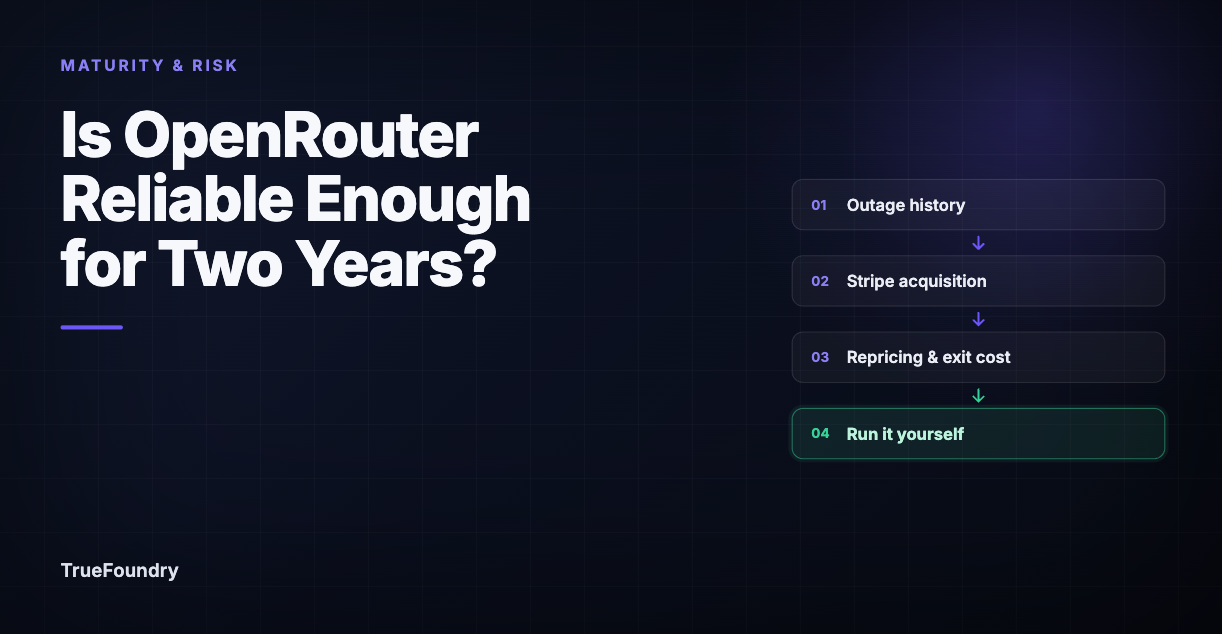
Which one among TrueFoundry vs OpenRouter is reliable? It is the question nobody answers in comparison content, which is exactly why procurement asks it, so this post answers it head-on. It covers the maturity and risk heading of our TrueFoundry vs OpenRouter series: availability and outage history, the Stripe OpenRouter acquisition and what it changes, repricing history versus release cadence, licence and open-source posture, support model, adoption evidence, roadmap transparency and exit cost. Both products are proprietary, so the relicensing risk that haunts open-core vendors is off the table for both; what remains is ordinary vendor risk on one side and commercial plus architectural risk on the other. Every claim is drawn from public documentation, OpenRouter's own engineering and announcement blog, and the acquisition record.
Searches for OpenRouter status and OpenRouter down land on a status page that monitors ten components and shows active incidents. It does not publish historical incident data or maintenance schedules, so a buyer cannot reconstruct a year of availability from it, and third-party monitors disagree in emphasis: one reports roughly 99.97% uptime over a rolling 30 days, another counts roughly 48 outages since February 2025 (status page, PulsAPI). The most useful evidence is OpenRouter's own: its engineering blog records a roughly 50-minute database OpenRouter outage in August 2025 that took the routing layer down, and draws the right conclusion itself, that aggregate uptime beats any single provider integrated directly, but the routing layer has its own single points of failure. That is the architectural fact underneath the reliability question. Control plane and data plane are the same hosted system, there is no customer-operated fallback, and an OpenRouter outage removes access to every provider simultaneously, the failure mode a multi-provider router is adopted to avoid. In our own testing across roughly 4,300 requests, failures were confined to transport-level errors on large payloads that were retried and recovered, with no 4xx or 5xx responses; we offer that as a data point, not an uptime figure. With no published SLA below Enterprise and no published incident history, a buyer cannot independently assess reliability, and that is itself a maturity finding.
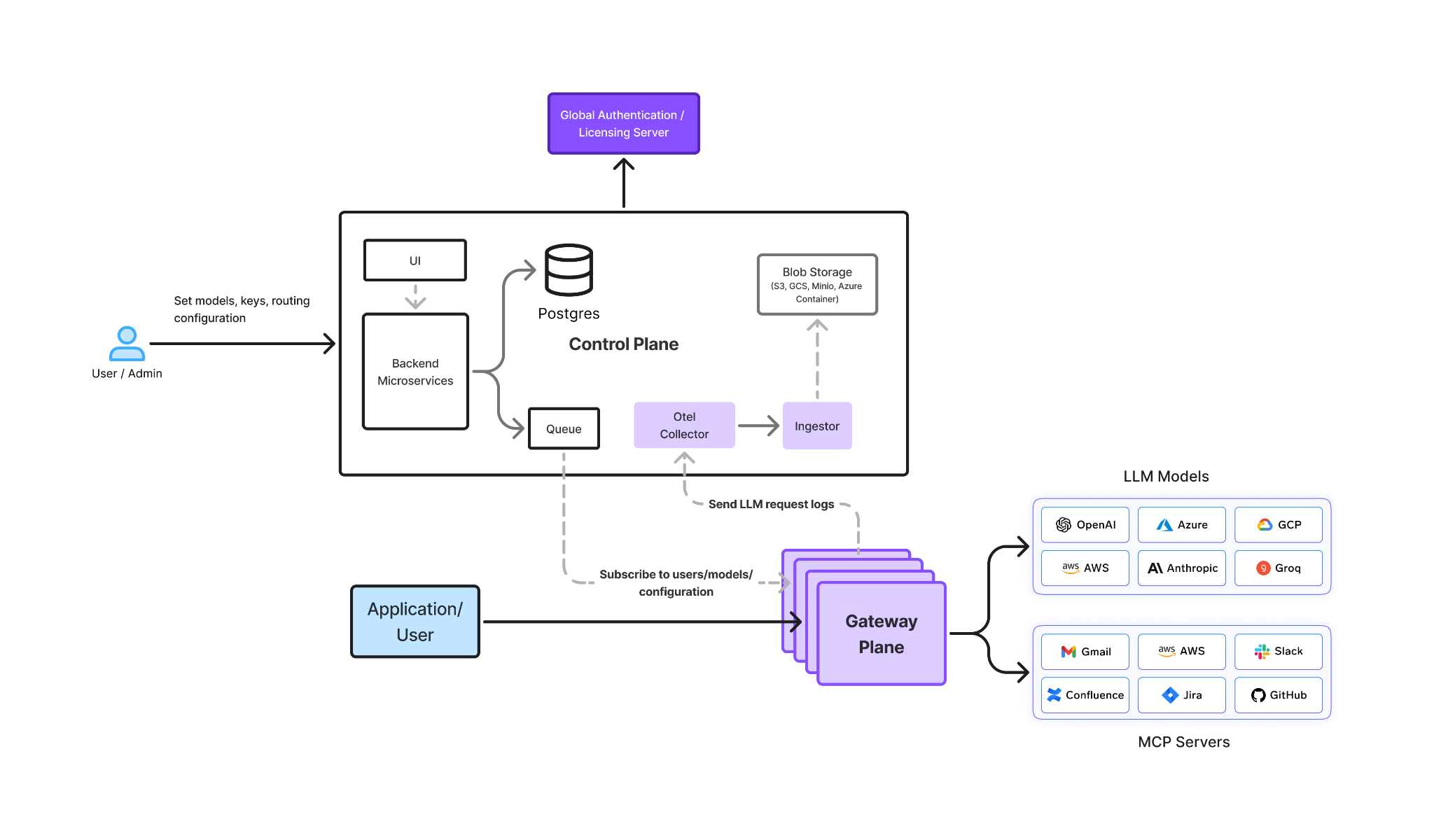
TrueFoundry answers the concentration question architecturally rather than statistically. The gateway plane holds its configuration in memory and keeps serving if the control plane is unreachable, and in hybrid or self-hosted mode the plane runs in your own VPC, so a vendor-side outage does not remove your access to providers (gateway plane architecture). The plane itself adds ~3–4 ms of latency and serves 350+ requests per second per vCPU, so the resilience does not come at a throughput cost. The open item on our side, stated plainly: control-plane disaster recovery across regions is not documented, and in a self-hosted deployment that plan is yours to write. How the deployment modes differ is covered in our post on whether OpenRouter can be self-hosted, and how provider failover works inside the gateway in our guide to LLM load balancing.
The OpenRouter acquisition is no longer a report. OpenRouter announced on 19 August 2026 that it was joining Stripe, subject to closing conditions, promising the same mission, name, product and roadmap, unchanged integrations, and a neutrality commitment that "doesn't bend to any model, any provider, or any parent company" (Stripe newsroom). Stripe confirmed completion in early November 2026; the price is undisclosed, with Bloomberg reporting more than $7 billion, roughly 5.4× the May 2026 Series B valuation of about $1.3 billion. Stripe's Patrick Collison has said OpenRouter now serves about 125% more tokens per week than at announcement and that Stripe has "a lot of ideas" for combining the platforms, without details.
We take the neutrality pledge at face value and still think three things follow for anyone making a two-year bet. First, the pricing model is now a payments company's to set, and the 5.5% fee on credit purchases is precisely the kind of payment-processing economics a payments company would revisit, in either direction. Second, the roadmap is no longer independent, however sincere the "same roadmap" statement is on the day of the deal. Third, integration risk now applies to a product whose current strength is that it works out of the box. None of these is a prediction of harm; they are the reasons a buyer who asked "is OpenRouter safe to standardise on" in July 2026 should ask it again now.
The distinction worth carrying through this whole heading: a self-hosted vendor's breaking change requires you to act, while a hosted vendor's commercial change alters your bill without you doing anything. OpenRouter's API-level change process deserves credit. The OpenRouter changelog is generated automatically from OpenAPI specification diffs on every release, breaking changes are reviewed by a human before publication, and a separate API Versioning page defines what counts as breaking and how deprecations are announced; observed practice is deprecated aliases kept alongside renamed fields with a sunset date announced in advance. The commercial change process has no equivalent documentation, and it is the more consequential category. On 9 June 2025 the credit-purchase fee was restructured to a flat 5.5% with a $0.80 minimum, raising the cost of small top-ups, and the same post signalled that the 5% BYOK usage fee will eventually be replaced by a fixed monthly subscription with pricing "TBD". On 14 July 2026 the BYOK free allowance was re-based from request count to list-price dollars. The current four-tier structure (Free, Standard, Business, Enterprise) charges the platform fee on credit purchases, never per request, at 5.5% on Standard and 8% on Business per the pricing page (OpenRouter pricing). Given that BYOK is cheaper than credits at every volume today, a move to subscription pricing would change that conclusion, and it is a known pending change with an owner who has not yet spoken.
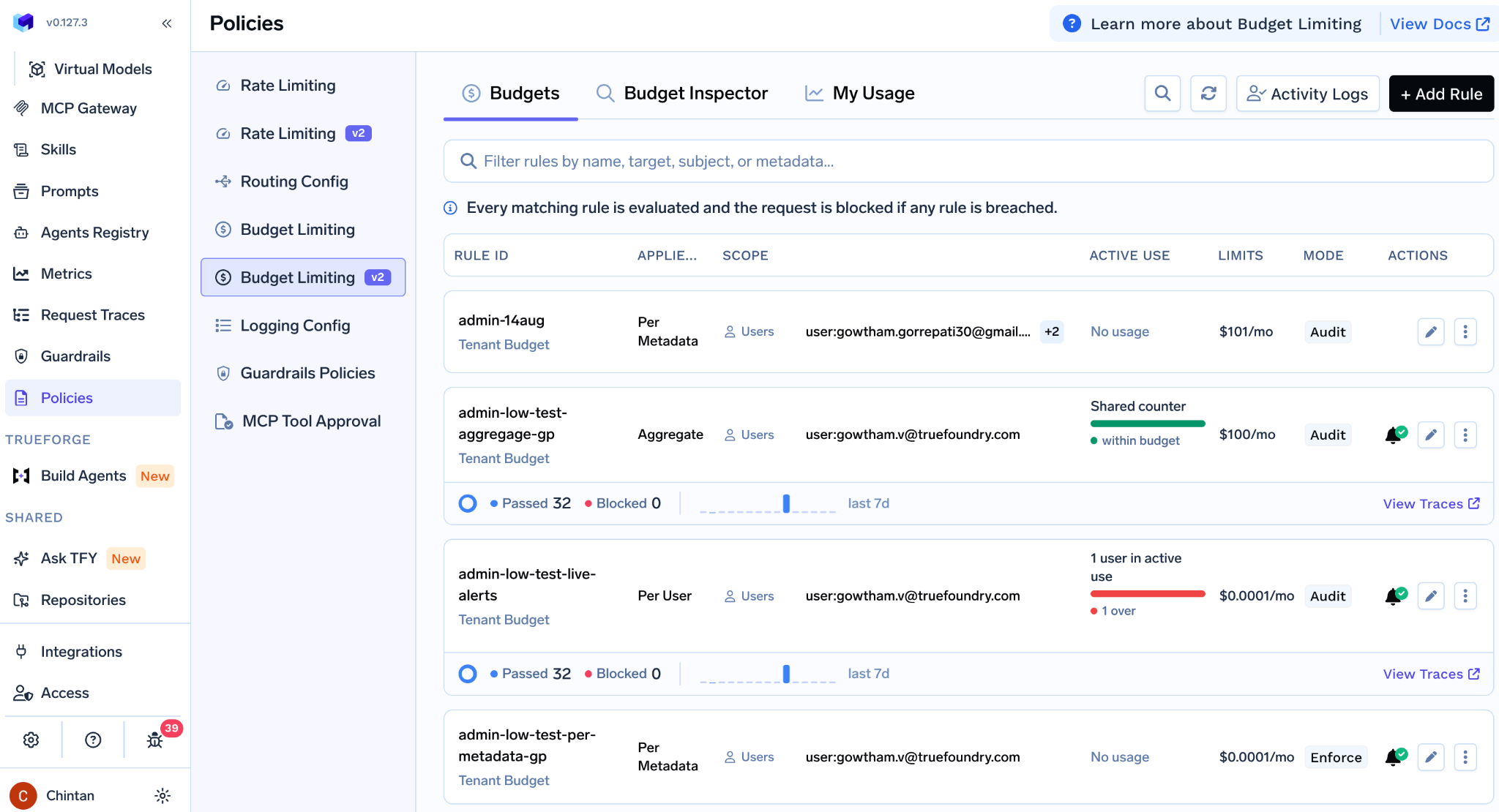
TrueFoundry documents a dual release channel: Stable, one designated release per quarter, maintained for six months, with P0/P1 bugs and Critical/High CVEs patched on demand against your Stable version; and Rolling, for the latest (control plane upgrade). Our breaking-change history, recorded as plainly as the other side's: the Budget Limiting V1 to V2 migration and the rate-limit rule-ID format change, both with migration documentation (budget limiting v2; TrueFoundry vs OpenRouter: Rate Limits, Budgets, Caching). Two documented breaks with migration paths is a defensible record. Commercial changes to self-serve tiers: none documented.
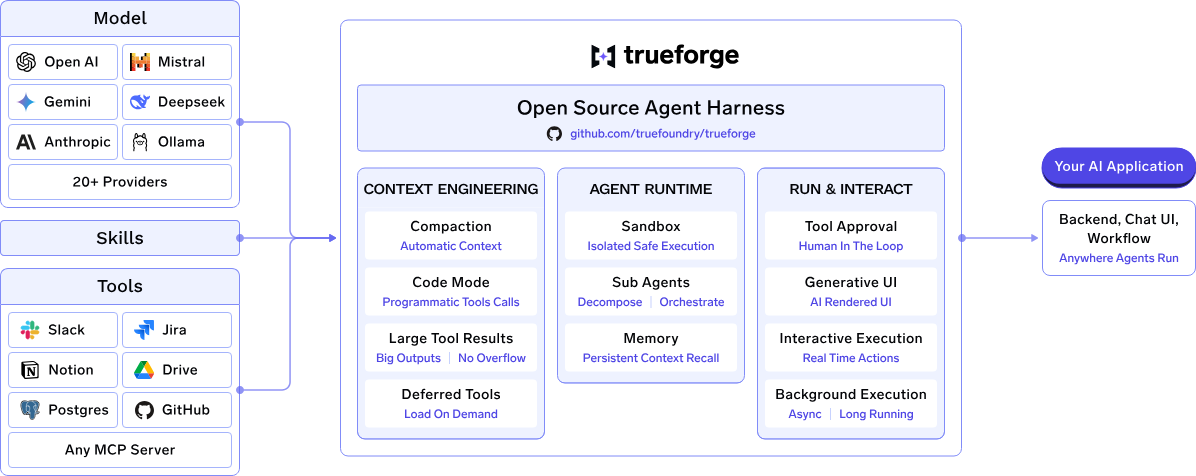
This row is short because it is symmetrical. TrueFoundry's gateway and platform are proprietary and commercial, so there is no licence to change and BSL-style relicensing risk is structurally zero; nothing was promised free. The open-source periphery is permissively licensed: TrueForge, our vendor-neutral agent harness, is MIT with roughly 6.5k GitHub stars, alongside a custom-guardrails template, integration repos, Helm charts, KubeElasti and Cognita (TrueForge). OpenRouter is a proprietary hosted service with open documentation, a skills repo and beta client SDKs in TypeScript, Python and Go on GitHub. Closed core, open tooling, no open-core ambiguity, on both sides. The only licence-shaped risk either carries is the ordinary kind.
TrueFoundry publishes its tiers: Community support on Developer; Production Support with a standard SLA of 24–48 hour response on Pro and Pro Plus; and Priority support, dedicated onboarding and a customisable Enterprise-grade SLA at the top (TrueFoundry pricing). Named customer-success contacts are referenced in our docs (CVEs are reported to your Customer Support Manager); the formal named-contact commitment per tier is one for our GTM team to confirm.
OpenRouter enterprise support is a contractual SLA with priority support and dedicated channels, negotiated rather than published, and the Enterprise Onboarding Journey references a forward-deployed engineer working through setup. Below that: community support on Free, email on Standard and Business, Discord for bug reports and change requests, a Zendesk help centre for written articles, and no published uptime commitment at any self-serve tier. One process detail that stretches evaluation timelines: Trust Portal access requests are handled by a separate team from support, take one to two business days and cannot be expedited, which we covered in our post on OpenRouter security.
OpenRouter's adoption numbers are the company's own and they do not agree with each other: the acquisition announcement cites more than 10 million developers and companies and more than 10 trillion tokens per day; the Series B coverage cited 8 million users; the homepage has stated 4.2 million users and 250,000+ applications. None is audited, and no named enterprise production users have surfaced as case studies. The verifiable artifact is OpenRouter's public rankings page, which names applications by token volume through App Attribution and is independently checkable. That evidence supports a developer-adoption motion; named enterprise references with scale figures are the gap for a two-year platform bet. TrueFoundry's adoption claims are deliberately not graded here, because a vendor grading its own references is not evidence. Ask us for named references in your industry and deployment mode, and ask OpenRouter for the same.
On the roadmap, TrueFoundry maintains a public changelog and surfaces forward items in the docs (anomaly alerts are listed as "coming soon" in agent governance, for example), none of which we count as capabilities in this series. OpenRouter publishes no forward roadmap; the API changelog is retrospective, and the one forward commercial statement on record, the BYOK subscription, now sits under new ownership.
Both products are OpenAI-compatible, so moving traffic off either is a base-URL and key change with no proprietary inference SDK to unwind. The difference is everything behind the request path. On TrueFoundry, what is proprietary is your configuration: policy rules (budgets, logging configs, guardrail attachments), virtual models and MCP registrations, and the tenancy and RBAC structure, all re-expressible in a competitor but hand-migrated, with no export-to-standard-format documented. Logs are Parquet in your own bucket, so the data is already with you. Hours to move traffic, weeks to rebuild governance.
On OpenRouter the exit is higher than it first appears, and the OpenAI-compatibility story obscures it. Model identifiers are namespaced (provider/model), so every model string in the codebase changes. You must open and contract with each provider you had been reaching through OpenRouter, which is procurement and vendor review per provider rather than an afternoon. Guardrails, workspaces, presets, Custom Classifiers, saved analytics views, plugin configuration and Broadcast destinations are proprietary config with no documented export. Private Models arrangements were manually onboarded by OpenRouter and must be re-established elsewhere. And OpenRouter credits expire 365 days after purchase, with an OpenRouter refund available only within 24 hours of the transaction, so an unused balance is a stranded cost at exit. Hours to move traffic, weeks to rebuild the provider relationships it was standing in for. If an exit is on the table, our survey of OpenRouter alternatives is the place to start.
TrueFoundry capabilities are from our documentation; OpenRouter capabilities reflect its publicly documented functionality and public record at the time of writing.
So, which one is reliable — TrueFoundry or OpenRouter? As a service, reasonably; as a two-year bet, the honest answer is that the most important variables are no longer OpenRouter's to control. Neither vendor carries licence risk, and both make traffic migration cheap and everything-else migration expensive. The difference is what can change without you: on TrueFoundry the product, on a published quarterly channel with migration guides; on OpenRouter the bill and the owner, with two repricings behind it, a subscription change ahead of it, and Stripe now holding the pen. Add a single hosted point of failure with no published incident history, and an organisation standardising for two years should weigh the platform it can run itself.
To see the Stable release channel, the support tiers and the hybrid architecture that keeps serving when the control plane is away, explore the TrueFoundry AI Gateway, or book a demo if a vendor-risk review is already on the calendar.
TrueFoundry AI Gateway levert een latentie van ~3–4 ms, verwerkt 350+ RPS op 1 vCPU, schaalt moeiteloos horizontaal en is klaar voor productie, terwijl LiteLLM last heeft van hoge latentie, moeite heeft boven een gemiddeld aantal RPS, geen ingebouwde schaling heeft en het meest geschikt is voor lichte workloads of prototypes.



Ja. TrueFoundry draait in uw VPC, on-prem, air-gapped of hybride, dus prompts en responsen verlaten nooit uw domein, zelfs niet wanneer u routet langs meerdere providers.



Het laatste nieuws, artikelen en bronnen in je inbox