



September 24, 2026
|
5 min read


Obtenha acesso instantâneo a um ambiente TrueFoundry ao vivo. Implante modelos, direcione o tráfego de LLM e explore a plataforma completa — seu sandbox estará pronto em segundos, sem necessidade de cartão de crédito.



Published: June 26, 2026
.webp)
Blazingly fast way to build, track and deploy your models!
OpenRouter reviews divide along one clear line: stage. Founders and developers praise the platform for multi-model access and developer experience. Paying customers who face account issues, rate limits, or support delays often describe a different experience.
Both groups can be accurate because they use the same product at different stages of maturity. Early teams value a unified API, a single API key, a single endpoint, and quick access to many AI models. Production teams care more about support, cost controls, security, and governance.
The positive case comes mainly from feedback from Product Hunt's founder. The limitations come from Trustpilot OpenRouter customer reviews, where complaints cluster around support, account security, and unchecked agentic spending. This guide provides a grounded overview of what OpenRouter delivers in 2026.
It also explains where OpenRouter reviews suggest the platform works best. Teams exploring OpenRouter models, comparing LLMs, or testing a new use case may gain speed. Enterprises using governed AI applications usually need controls beyond routing and billing convenience.
OpenRouter is a model routing layer. It sits between an app and the underlying LLM providers, normalizes the API format, and handles provider selection, fallbacks, and load balancing. The application does not need to see every provider difference.
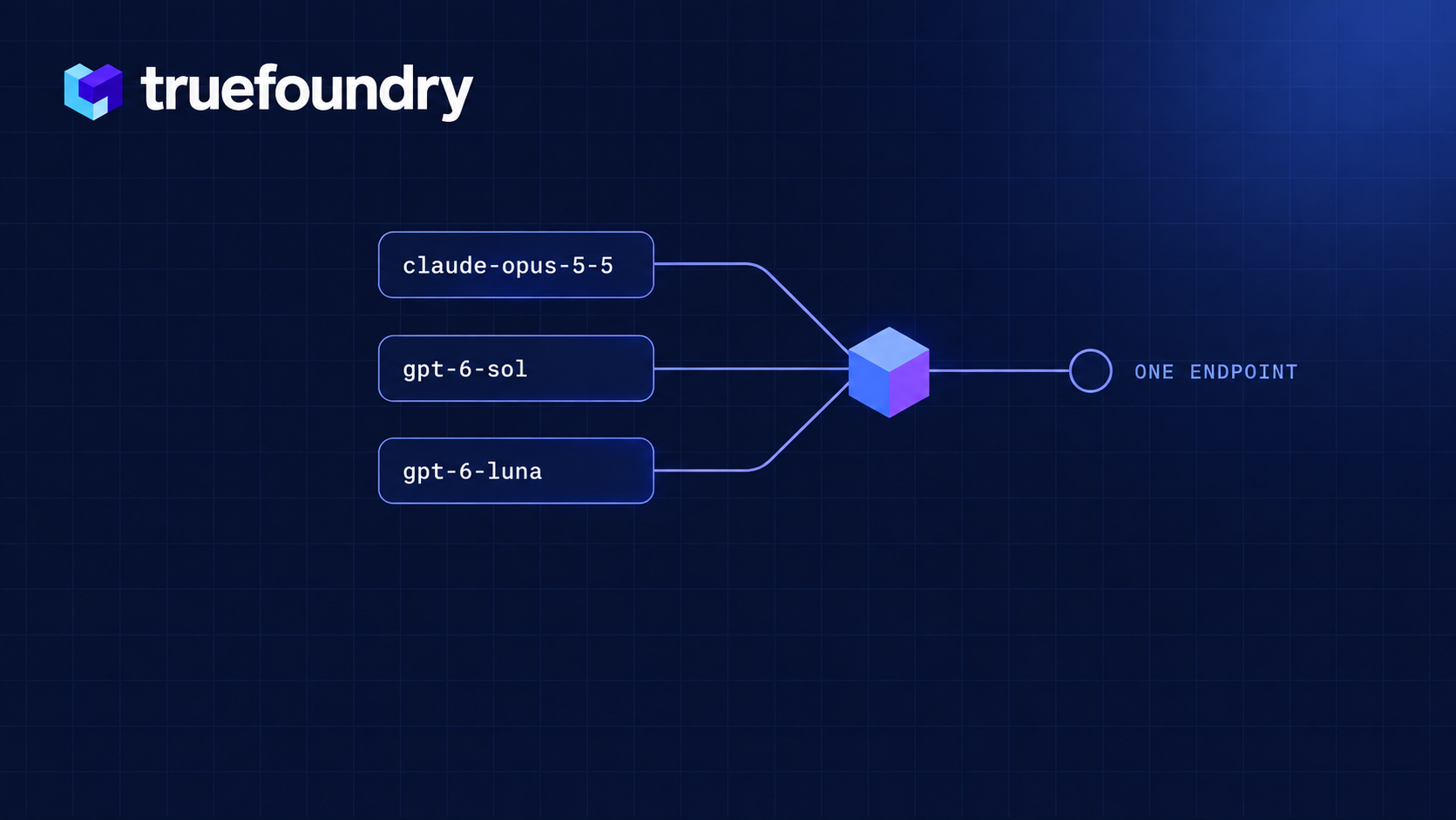
The core pitch is straightforward. Integrate once with an OpenAI API compatible interface, access a large model catalog, and manage a single account instead of several provider setups. Teams can use one OpenRouter API key instead of separate keys for OpenAI, Anthropic, Google, Claude, Mistral, Llama, and other providers.
OpenRouter bills paid models per token at provider rates, while a platform fee applies when users buy credits. The platform also supports Bring Your Own Key, where traffic routes through a customer’s own provider key. Teams should still review pricing, usage, and model-level limits before scaling.
The audience is clear from the product design. Startups, small AI teams, and developers evaluating large language models gain from fast setup. The platform helps teams compare latency, parameters, modalities, completions, and chat behavior across providers through one router. Enterprise teams should still evaluate governance, support, and budget enforcement before routing production workloads through any shared gateway layer.
Favorable OpenRouter reviews cluster around Product Hunt. Most positive comments come from founders and builders who used OpenRouter during product development. Read in volume, the praise centers on lower integration effort, fast model switching, and easier provider experimentation.
The most common positive theme is reduced engineering overhead. Teams that once managed separate keys, SDKs, provider accounts, and invoices describe OpenRouter as collapsing that work into one layer. A single API helps smaller teams move faster.
One endpoint, one request shape, and one dashboard simplify model testing. Teams can try a specific model without having to restructure application code each time. This matters during early product discovery, where switching speed can matter more than procurement depth.
Several founders highlight automatic fallback as a reliability improvement over direct provider integration. When a provider returns an error or hits a limit, OpenRouter can route to an alternative. Developers avoid writing custom retry and fallback logic for every provider.
There is a caveat. Failover handles transport failure, not output correctness. If a provider returns a confident wrong answer with a 200 response, fallback will not fix that. Teams still need evaluation, observability, performance metrics, and quality checks.
Teams still deciding which model fits a workload value can fast-switch. Changing a model parameter can run the same prompt against several options. This compresses evaluation across Claude, OpenAI, Google, Anthropic, Mistral, Llama, and newer models.
This supports early cost optimization by enabling teams to compare quality against spend. Models such as the Hunter Alpha and other new releases are easier to test. Teams can also evaluate prompt caching, lower latency, and response quality before committing.
The pattern across positive OpenRouter user reviews is consistent. Developers like the catalog, model switching, and less key management. Those reviews rarely address support, account security, hard budgets, or enterprise governance because many teams had not reached that stage.
.webp)
The critical reviews come from a different source and a different kind of user. On Trustpilot, OpenRouter holds a TrustScore of 1.7 out of 5 across 41 reviews as of May 2026, with 79% of them rated one star. The complaints are not scattered. They concentrate on a few specific failures that matter most at the production scale.
The dominant complaint is poor responsiveness from support. Reviewers describe filing requests and waiting weeks for replies. Several mention Discord as the primary support channel, rather than a structured ticketing process suited to urgent production issues.
Some complaints involve account access or financial exposure. In those cases, slow support becomes more than an inconvenience. A platform handling credits, model access, and production workloads needs a reliable escalation path for customer support and account recovery.
A subset of Trustpilot reviewers describe account compromise or unauthorized account changes. Some also mention charges tied to a stored card. The concern is not only that incidents occurred, because security incidents can affect many companies.
The concern is the response process. Reviewers describe limited communication during active financial exposure. For enterprise buyers, that matters because security incidents require clear escalation, reliable ownership, and a support process that can withstand production pressure.
One review is especially relevant for enterprise evaluation. A developer using OpenRouter via an IDE coding assistant described a single agentic session that issued many sequential calls. The session consumed credits quickly, without a warning or active stop.
This matters because agentic workloads can expand context across steps. A retry loop can append more context, increase token consumption, and keep running until credits are gone. A balance cap is not the same as a request-path budget.
Paid models do not rely on OpenRouter platform-level rate limiting in the same way free models do. That makes application-side controls critical. Without hard budgets, a coding agent, browser-based assistant, or Python workflow can turn a bug into a cost event.
At that stage, the platform fee, support model, and limited request-path governance deserve closer evaluation. Teams also need direct control over provider contracts, sensitive data, budgets, and compliance workflows. That is where a governed AI gateway becomes more relevant than a model router alone.
Free models attract steady developer frustration. OpenRouter lists free variants, then returns 429 errors once users cross limits. There is no queuing layer that gracefully waits for the client until quota becomes available again.
The published limits explain the issue. Free model variants support 20 requests per minute. Accounts with less than $10 in credits receive 50 free-model requests per day, while accounts with at least $10 receive 1,000 daily requests.
Reviewers want clearer reset timing and quota visibility. This becomes more important when teams use OpenRouter inside an IDE, browser, or development workflow. Unexpected 429 errors interrupt experimentation, especially when testing PDFs, coding tasks, or multimodal workloads.
A longer-term technical OpenRouter review reaches a measured verdict. OpenRouter is most useful when teams are still choosing models. Its value weakens when a team settles on primary models and starts pushing production volume.
At that stage, the platform fee, support model, and limited request-path governance deserve closer evaluation. Teams also need direct control over provider contracts, sensitive data, budgets, and compliance workflows. That is where an enterprise gateway becomes more relevant.
.webp)
The review evidence describes a platform with real value for exploration and real limits beyond it. Holding both points together is the fairest reading. OpenRouter reviews are positive when the user need is faster access to many models.
Founders praise the unified API, provider fallbacks, and fast model switching. Those are genuine developer benefits. They help teams test different models, compare analytics, and move quickly while building early AI features.
Paying customers describe issues when support, billing, and agentic workloads become serious. The supplied Trustpilot screenshot shows a low-rated profile and repeated complaints about support delays. That evidence should matter for buyers planning production use.
For enterprise teams, two structural gaps emerge across OpenRouter AI gateway reviews and limitation patterns:
The final read is simple. OpenRouter fits model exploration and moderate workloads well. It becomes less complete when teams need private deployment, hard budgets, RBAC, audit trails, and governed tool access across enterprise systems.
TrueFoundry gives enterprise teams the model access convenience users like in OpenRouter, with stronger governance on the request path. The focus is not only routing. It is controlling who can call which model, how much they can spend, and where data is allowed to move.
This matters once AI workloads move from experimentation into production. OpenRouter can simplify model access, fallback, and provider switching. TrueFoundry is better suited when teams need private deployment, hard budgets, RBAC, audit trails, and governance before inference runs.
TrueFoundry is especially useful when teams need:
For teams running autonomous agents, request-path governance becomes more important. TrueFoundry supports agent controls that help manage runtime policies, circuit breakers, and user-attributed audit trails before actions execute.
.webp)
The practical takeaway is simple. OpenRouter is useful when teams need faster access to models and provider experimentation. TrueFoundry becomes relevant when those workloads require stronger governance, private deployment, cost enforcement, and compliance-ready audit trails.
Book a demo to see TrueFoundry govern models, agents, budgets, and audit logs securely.
TrueFoundry AI Gateway delivers ~3–4 ms latency, handles 350+ RPS on 1 vCPU, scales horizontally with ease, and is production-ready, while LiteLLM suffers from high latency, struggles beyond moderate RPS, lacks built-in scaling, and is best for light or prototype workloads.





As últimas notícias, artigos e recursos enviados para sua caixa de entrada
.webp)
.webp)
.webp)
.webp)
.webp)
.png)
.png)
.png)
.png)
.png)
.png)
.png)


