


September 22, 2026
|
5 min read


Published: September 22, 2026
.png)
Blazingly fast way to build, track and deploy your models!
Hermes Agent is an autonomous AI agent built by Nous Research and released as open source under the MIT licence. Nous describes it as “the self-improving AI agent” and “the only agent with a built-in learning loop — it creates skills from experience, improves them during use, nudges itself to persist knowledge, and builds a deepening model of who you are across sessions” (Hermes Agent docs, accessed September 2026).
The framing matters. Hermes is not a coding copilot bolted into an IDE, and it is not a chat wrapper around one API key. It is a process you start and leave running. Nous’s own documentation puts it plainly: it “lives wherever you put it — a $5 VPS, a GPU cluster, or serverless infrastructure (Daytona, Modal) that costs nearly nothing when idle. Talk to it from Telegram while it works on a cloud VM you never SSH into yourself.”
The clearest way to understand what you are getting is to compare it to the thing most teams already have.
That last row is not a typo. It is the whole trade.
Nous Research is an AI research lab best known for the Hermes family of open-weight models and for distributed-training work such as Psyche. Hermes Agent is their agent project, and the adoption curve has been unusually steep for an open-source release.
It also holds the #1 slot in OpenRouter’s Productivity, Coding Agents, Personal Agents and CLI Agents categories as of the same date. TechCrunch reported in July 2026 that Nous Research was in talks for funding at a $1.5B valuation — in talks, not closed.
Read honestly, those numbers say Hermes is one of the most-used open source AI agent projects in the world, not a curiosity.
[SCREENSHOT: Hermes Agent — the desktop app home screen showing an active conversation, from hermes-agent.nousresearch.com]
“Self-improving” is a phrase that usually means nothing. In Hermes it maps to two concrete subsystems that write files to disk, and it is worth being precise about both, because their limits are where the interesting engineering decisions live.
Hermes keeps two stores in the profile directory: MEMORY.md for environment facts, conventions and lessons learned, and USER.md for who you are and how you like to be spoken to. The agent writes to them itself using a memory tool with add, replace and remove actions — there is no read action, because memory is injected into the system prompt at session start.
Three details in the memory documentation matter more than the marketing:
Older context is recovered through session_search, an FTS5 full-text search across past sessions with LLM summarisation on top.
Skills are where the “grows with you” claim earns its keep. Per the skills documentation, a skill is a SKILL.md file with frontmatter and a fixed section order — When to Use, Procedure, Pitfalls, Verification — that the agent can author itself after it works something out.
Loading is deliberately tiered, which is the part worth stealing even if you never run Hermes:
Level 0: skills_list() -> name, description, category (~3k tokens)
Level 1: skill_view(name) -> full skill content
Level 2: skill_view(name, path) -> a specific reference file
Only Level 0 is always in context. The agent pays for the rest on demand. There is also a /learn command that turns a directory, a URL, a PDF or “the workflow you just walked the agent through in this conversation” into a skill, and for large sources it builds a knowledge-base skill with an index plus per-topic files under references/ rather than one bloated file. Skills follow the open agentskills.io standard, so they are portable between agents.
[SCREENSHOT: Hermes Agent — the Skills page in the dashboard, showing installed skills and the “Learn a skill” panel]
The value of any agent harness is measured in what you no longer have to write. As of September 2026 the Hermes docs list:
That last bullet is genuinely more than most open-source agents ship with, and it deserves credit.
Three paths, all documented on the Nous Research site:
After install, hermes setup --portal runs a single OAuth that covers a model plus the hosted tool gateway (web search, image generation, TTS, browser).
Models are your choice: Nous Portal, OpenRouter, OpenAI, or any compatible endpoint. Portal tiers as published in September 2026 are Free ($0, free models only), Plus ($20/mo, $22 credits), Super ($100/mo, $110 credits) and Ultra ($200/mo, $220 credits), each with access to 200+ models. The agent itself costs nothing.
[SCREENSHOT: Hermes Agent — the terminal install and first-run setup flow on Linux]
Four failure modes come up repeatedly once a Hermes agent stops being a weekend project.
Always-on is a billing model, not just an architecture. A stateless agent costs money when you call it. An always-on agent with cron jobs, subagents and a messaging gateway costs money whenever it decides to do something. Nous’s own docs flag the compaction cost of long-lived gateway sessions. Without per-agent spend visibility, your first signal is the invoice.
The memory system has sharp edges. A 2,200-character budget and a snapshot frozen at session start are reasonable engineering choices, but they produce behaviour that looks like the agent lying to you. Small local models in particular will say “I’ve saved that” without ever calling the memory tool — the docs call this out directly.
Approvals are per-machine, not per-organisation. approvals.mode lives in one YAML file on one host, and a /yolo toggle or HERMES_YOLO_MODE bypasses every prompt for a session. For one developer that is sensible. For twelve, your safety posture is whatever each of them last typed, and nobody can audit it centrally.
One agent is easy; twenty is a platform problem. Every Hermes instance holds its own credentials, model keys, MCP connections and memory on its own disk. There is no shared identity model, no central budget, no cross-agent trace view. That is not a criticism — Hermes is a single-agent tool and a very good one. It is a description of what sits outside its scope.
Being fair to a good project includes being clear about its edges:
If you are one developer who wants a capable open source AI agent that gets better at your specific work, Hermes is a strong default. If you are a platform team, keep reading.
There are two distinct layers here, and conflating them is why agent projects stall at pilot.
An agent harness controls how an agent works: the loop, tools, state, sandbox. An AI gateway controls how that agent reaches models and tools: access, budgets, routing, policy, traces. Hermes is an excellent harness. It is not a gateway, and it does not claim to be.
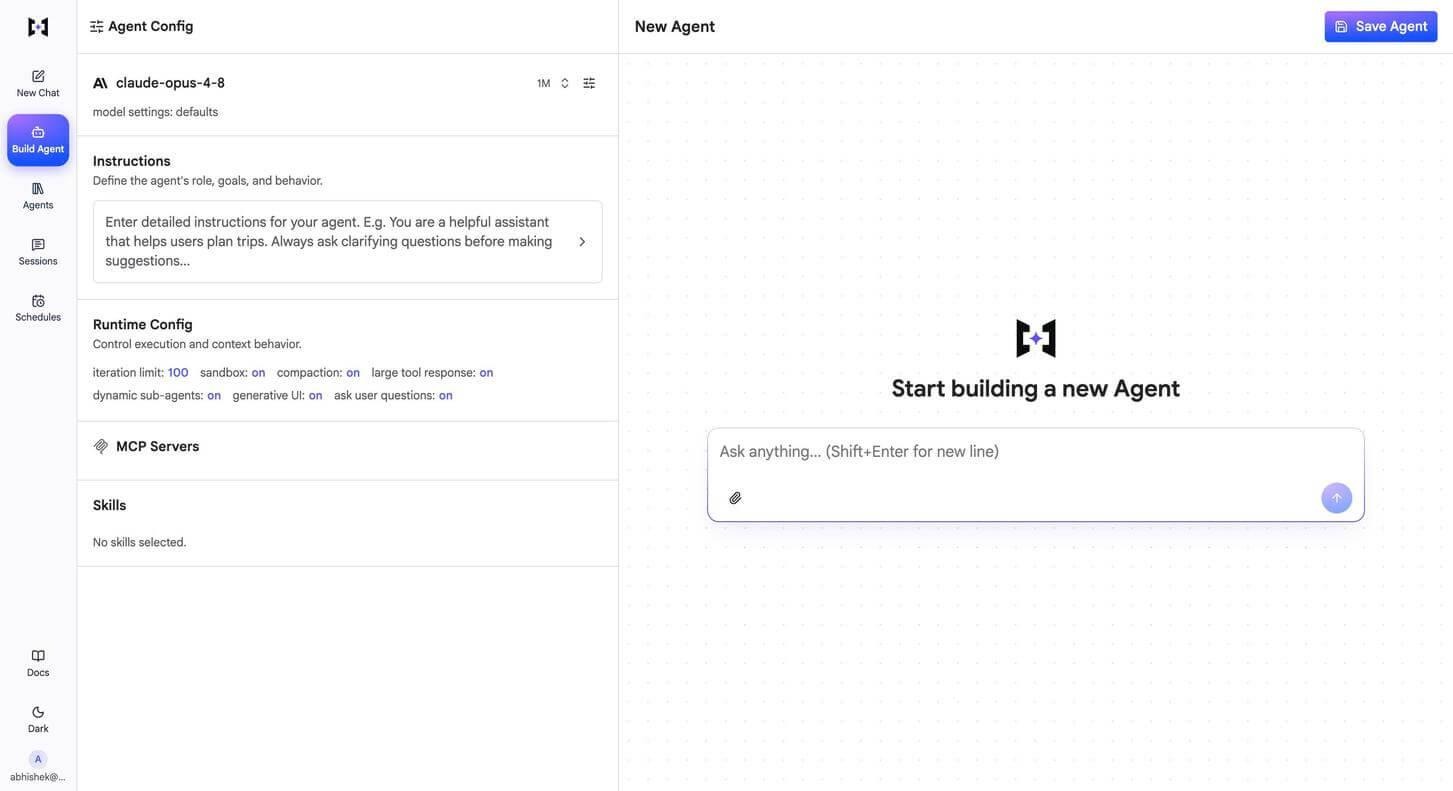
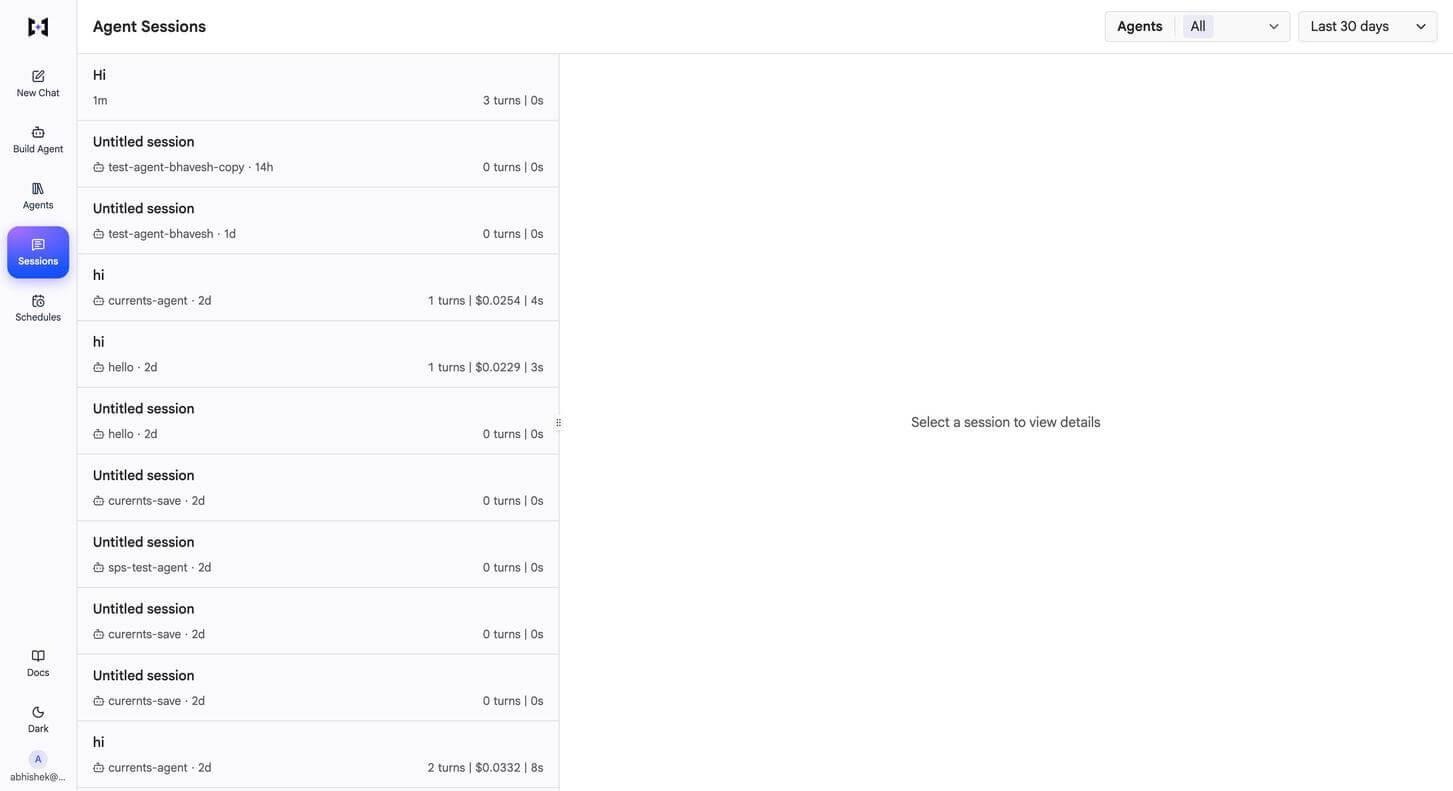
TrueForge is TrueFoundry’s open-source, MIT-licensed, model-neutral agent harness (github.com/truefoundry/trueforge). Like Hermes it handles the agent loop, tool execution, context management and sandboxing. Unlike a single self-hosted agent, it ships the surrounding control plane: centralised MCP access and credentials, human-in-the-loop approvals, sandboxed execution, observability and governance across teams and environments. Run it locally with npx @truefoundry/trueforge, or deploy it for a team with Docker Compose or Helm.
In TrueFoundry’s benchmark against Claude Managed Agents, TrueForge reached roughly the same task accuracy on far fewer tokens.
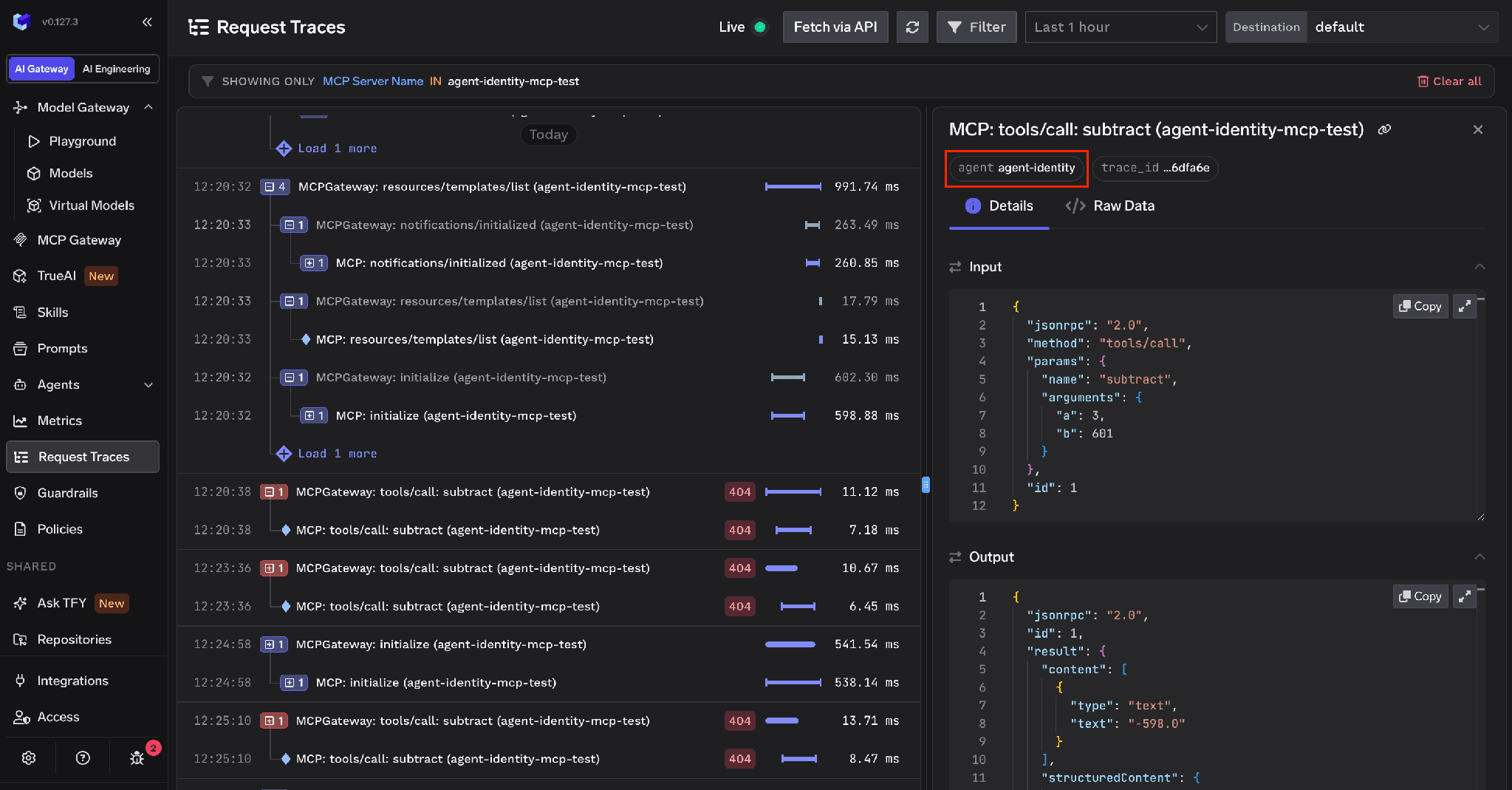
This is the part that applies whether you run Hermes, TrueForge, or both. The harness decision does not have to be the governance decision.
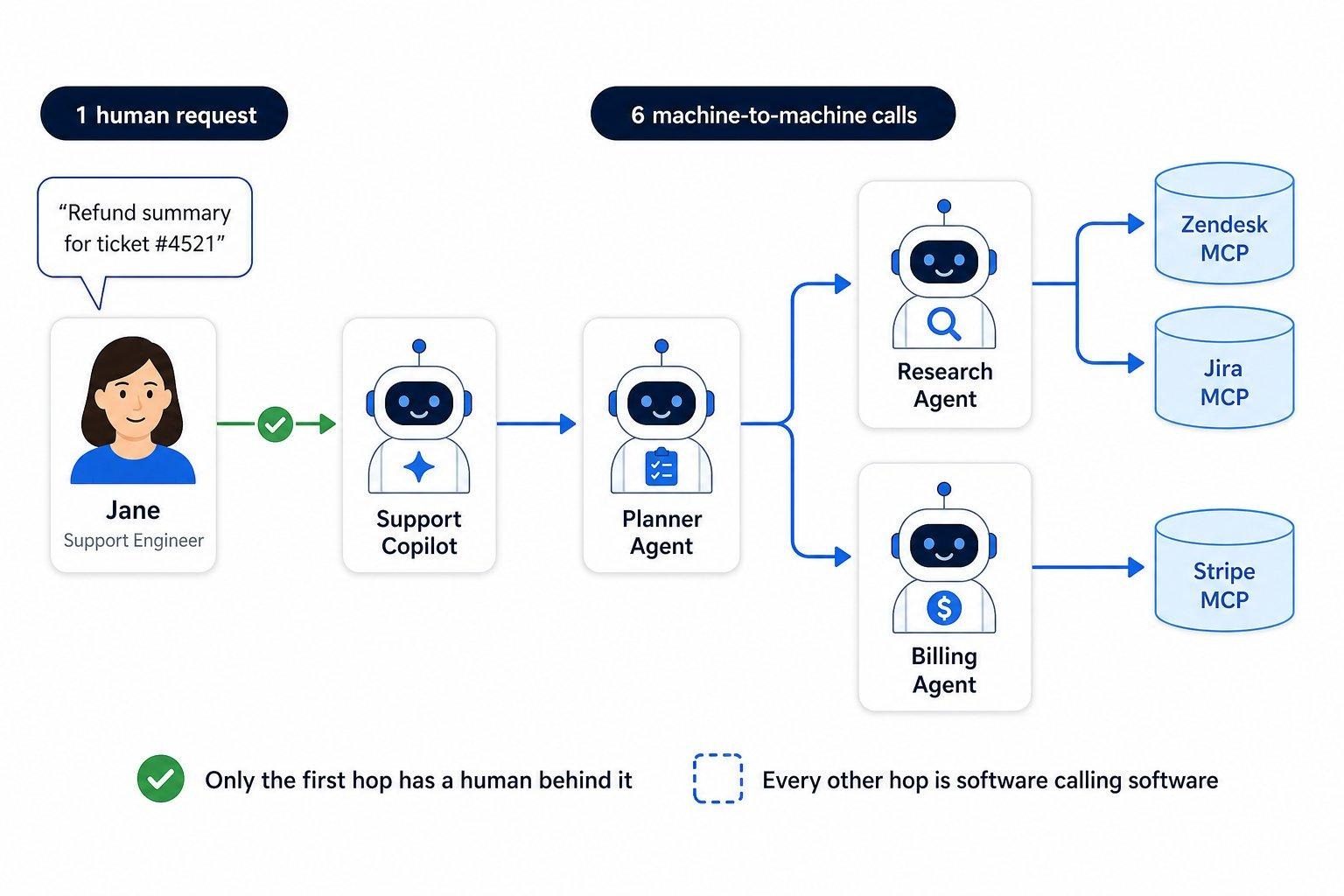
Because Hermes talks to “any compatible endpoint,” you can point it at a gateway instead of directly at providers. TrueFoundry’s AI Gateway then sits in front of every model and MCP call the agent makes: centralised model access, per-team budgets, rate limits, guardrails, credential management and unified traces. It supports 1,000+ LLMs through one OpenAI-compatible API, adds roughly 3-4 ms of overhead and handles 350+ RPS on a single vCPU, so it can sit in the hot path of a long-running agent without becoming the bottleneck. It runs in your own VPC, on-prem or air-gapped.
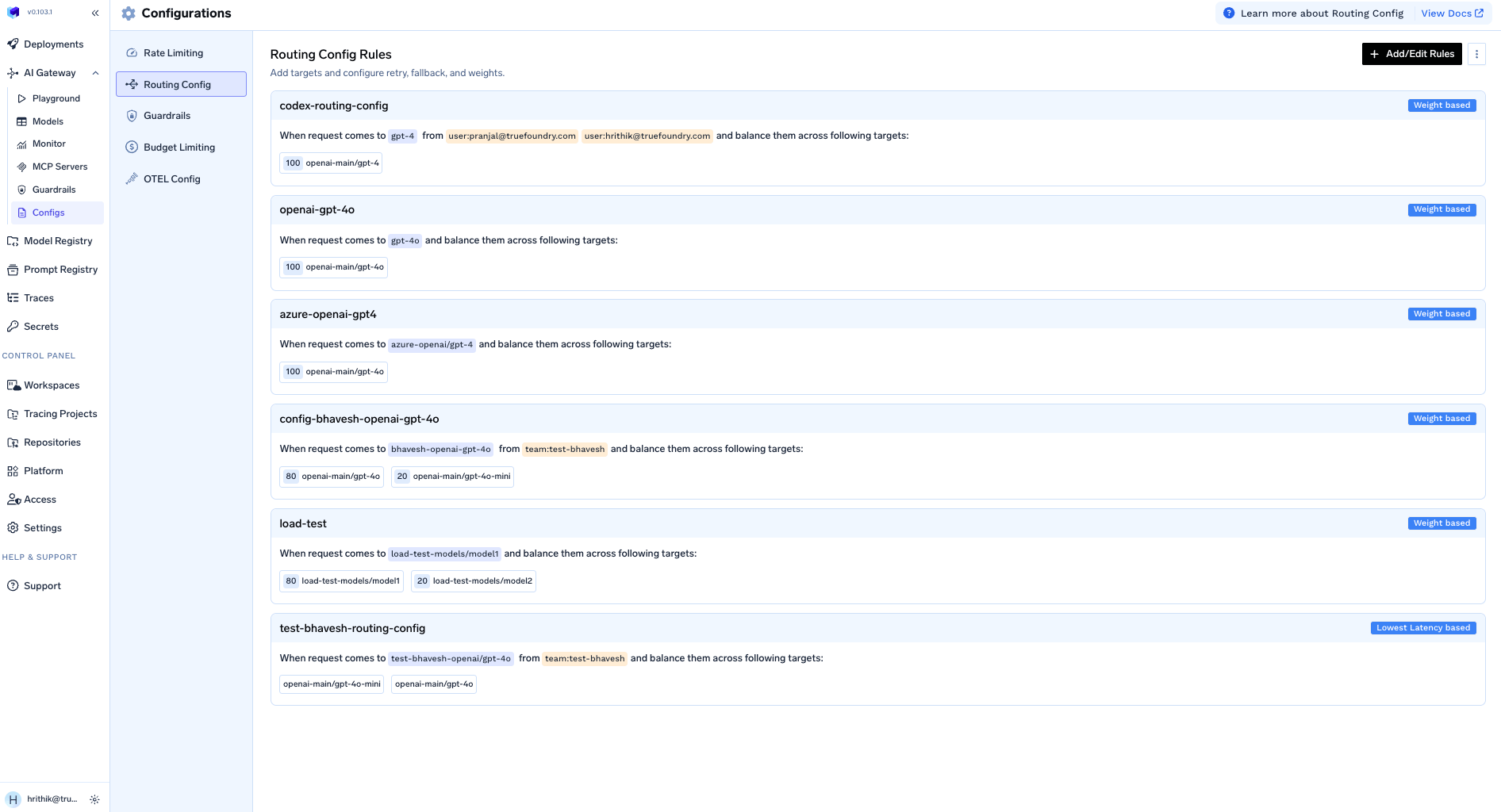
It is also the answer to the always-on cost problem. In TrueFoundry’s Auto Routing benchmark across 550 prompts, classifying requests by complexity and routing across model tiers cut cost 69% while retaining 98% of baseline quality, with mean latency dropping from 7.6s to 4.0s. On production-shaped traffic the reduction reached 80%. An agent that runs unattended all day does not need a frontier model for every turn.
Keeping these separate is what lets you change models, or change harnesses, without redesigning either.
Hermes Agent is the most convincing argument yet that a personal, self-hosted, self-improving agent is a real category rather than a demo. The memory and skills design is thoughtful, the documentation is honest about its own failure modes, and the adoption numbers are not marketing — 51.7 trillion tokens and the #1 daily rank on OpenRouter as of September 2026 are what genuine usage looks like.
What it does not do is govern a fleet. Every instance is its own island: its own credentials, its own approval settings, its own spend, its own memory on its own disk. That is exactly right for one person and one machine, and exactly wrong for twenty engineers and an auditor.
So the question is not “Hermes or something else.” It is what you want to own. Own the agent, and Hermes is a fine choice. Own the fleet, and you need a harness with a control plane around it and a gateway in front of the models — which is the problem TrueForge and TrueFoundry’s AI Gateway were built for.
TrueFoundry AI Gateway delivers ~3–4 ms latency, handles 350+ RPS on 1 vCPU, scales horizontally with ease, and is production-ready, while LiteLLM suffers from high latency, struggles beyond moderate RPS, lacks built-in scaling, and is best for light or prototype workloads.




Hermes Agent is Nous Research’s open-source, MIT-licensed autonomous AI agent, publicly released in late February 2026. You self-host it on a laptop, a VPS or serverless infrastructure and interact with it from the CLI, a desktop app, or 20+ chat platforms including Telegram, Discord and Slack. Its defining feature is a closed learning loop: persistent memory across sessions plus skills the agent writes and refines itself.
The software is free and MIT licensed. You pay for model inference and for whatever infrastructure you run it on. Nous Portal offers optional paid tiers ($20, $100 and $200 per month as of September 2026) that bundle model credits and hosted tools, but you can use your own provider instead.
Two mechanisms. Memory: the agent curates MEMORY.md and USER.md inside a character budget, injected into the system prompt at each session start, with full-text search over past sessions for anything older. Skills: when it works something out, it can write a SKILL.md file with procedure and pitfalls, then load it on demand later through tiered disclosure so unused skills cost almost no context.
Yes. Hermes works with Nous Portal, OpenRouter, OpenAI or any compatible endpoint, so pointing it at an OpenAI-compatible gateway is a configuration change. That gives you per-team budgets, model routing, guardrails and unified traces without modifying the agent.
Yes. TrueFoundry runs in your VPC, on-prem, air-gapped, or hybrid, so prompts and responses never leave your domain even as you route across many providers.
Yes. It includes an MCP Gateway, an Agent Gateway, and an MCP and Agents Registry with tool-level access control, so agents from LangGraph, CrewAI, AutoGen, or a custom framework can be governed centrally.



The latest news, articles, and resources sent to your inbox



.png)
.png)
.png)
.png)
.png)
.png)
.png)
.png)
.png)
.png)


