


October 1, 2026
|
5 min read


احصل على وصول فوري إلى بيئة TrueFoundry مباشرة. انشر النماذج، ووجّه حركة مرور LLM، واستكشف المنصة بالكامل — بيئة الاختبار الخاصة بك جاهزة في ثوانٍ، ولا يلزم وجود بطاقة ائتمان.



Published: August 3, 2026
.webp)
Blazingly fast way to build, track and deploy your models!
مع انتقال الذكاء الاصطناعي من مرحلة الاختبار إلى الاستخدام في الإنتاج، يتضح أمر مهم وهو:
أن تحدي توفير الوصول إلى الأدوات كان يُنظر إليه سابقًا على أنه مجرد مشكلة تكامل، ولكنه يُنظر إليه الآن على أنه مشكلة بنية تحتية.
وقد أتاح هذا الفرصة لظهور بروتوكول سياق النموذج (MCP)، الذي يحدد مجموعة من المعايير حول كيفية اتصال الوكلاء بالأدوات الخارجية. تقوم عدة شركات ببناء هذه البروتوكولات (مثل Mint MCP)، والتي توفر للفرق طرقًا للتحكم في استخدام الوكلاء للأدوات الخارجية وتأمينها وإدارتها (بما في ذلك عمليات النشر السحابية والمحلية والمختلطة).
لكن Mint MCP ليس الخيار الوحيد.
اعتمادًا على متطلباتك (حالة الاستخدام الخاصة بك) — مثل الأداء، والإنتاجية، وهندسة النشر، وقابلية التوسع، وما إلى ذلك — قد تجد أن بوابات MCP الأخرى تلبي احتياجاتك بشكل أكثر فعالية من Mint MCP.
في هذا الدليل، سنتناول:
ما هو Mint MCP؟
أصدرت MintMCP للتو منصة حوكمة للمؤسسات لوكلاء الذكاء الاصطناعي وخوادم MCP، مما يمنح الفرق الأدوات التي تحتاجها لتنفيذ وإدارة وتأمين البنية التحتية لوكلاء الذكاء الاصطناعي على مستوى العالم. باستخدام منصة حوكمة الموردين، يمكن للمؤسسات نشر وإدارة وكلاء الذكاء الاصطناعي على نطاق واسع مع الحفاظ على سجلات تدقيق شاملة ودعم السياسات.
ما هو MCP (بروتوكول سياق النموذج)؟
MCP (بروتوكول سياق النموذج) هو إطار عمل وضعته Anthropic يسمح لـ Claude Code بالتواصل خارجيًا مع الأنظمة بطريقة منظمة.
يكمل MCP استخدام منطق الأدوات (Tool Logic) من خلال توفير طبقة وسيطة موحدة. يسمح لـ Claude باستخدام تنسيق قياسي عند استدعاء أداة، وعند هذه النقطة، سيقوم مزود MCP بمحاكاة الطلب وتنفيذه على النظام الحقيقي الكامن وراءه (أي، قاعدة بيانات، واجهة برمجة تطبيقات داخلية، خدمة سحابية، أو نظام إدارة تذاكر).
لماذا تستكشف الفرق بدائل Mint MCP؟
بينما يضع MINT MCP الإطار لحوكمة الأدوات القائمة على الذكاء الاصطناعي، إلا أن له سلبيات للمؤسسات التي لديها احتياجات أمنية صارمة.
افتراضات الثقة
يعتمد MINT MCP على تطبيق سياسات الوصول على مستوى البوابة ولكنه يتطلب الحصول الآمن على كل خادم Mint MCP خلفي. يُعد خادم الأداة الذي تم تكوينه بشكل غير صحيح أو غير المصرح به بشكل غير سليم نقطة ضعف محتملة لا يمكن للبوابة وحدها معالجتها.
تخصيص محدود
MINT MCP هو منتج متاح تجارياً ومغلق المصدر. قد تشعر الفرق بالقلق من الارتباط بالمورد ونقص الشفافية، وإذا كانت تتطلب تخصيصاً واسع النطاق، أو تدقيقاً ذاتياً، أو خيارات تحكم إضافية في الوصول تتجاوز ما يدعمه المورد، فإن MINT MCP لا يوفر ذلك على الإطلاق، حتى عند استخدام النسخة المستضافة ذاتياً.
<INSERT MCP CHECKLIST BANNER HERE>
فجوات الحوكمة
يتضمن MINT MCP تسجيل الدخول الموحد (SSO)، والتحكم في الوصول المستند إلى الأدوار (RBAC)، ومستوى معيناً من تسجيل التدقيق. ومع ذلك، بالنسبة لمعظم المنظمات الخاضعة لتنظيمات صارمة، مثل تلك التي تقع تحت الإشراف التنظيمي، فإن الحوكمة الأساسية التي يوفرها MINT MCP (مثل SSO و RBAC) ليست كافية ببساطة، ويتطلبون سير عمل موافقة مخصصاً إضافياً، وتدقيقاً محتملاً للمحتوى في الوقت الفعلي، و/أو التكامل مع إدارة أسرارهم الداخلية بطريقة لا توفرها المنتجات القياسية (الجاهزة) عادةً بشكل افتراضي.
العبء التشغيلي
تؤدي إضافة MINT MCP إلى بيئتك إلى إنشاء جزء إضافي وحاسم من البنية التحتية يتطلب الإدارة والصيانة، بالإضافة إلى الثقة بمنصتك. تفضل العديد من المنظمات ذات الأمان العالي (البنوك، الحكومات) إدارة توجيه هذه الأنواع من الأدوات من خلال أنظمتها الخاصة بدلاً من مورد خارجي. لذلك، تميل المنظمات ذات متطلبات الأمان والثقة العالية إلى البحث عن بدائل مفتوحة المصدر ومحايدة للموردين لهذه الأدوات.
لأغراض عملية، قمنا بتقييم الأدوات عبر ستة أبعاد:
دعم بروتوكول MCP
الأمن والامتثال
الأداء
مرونة النشر
إدارة موحدة لـ LLM + MCP
النظام البيئي والتكاملات
بدائل Mint MCP في لمحة سريعة
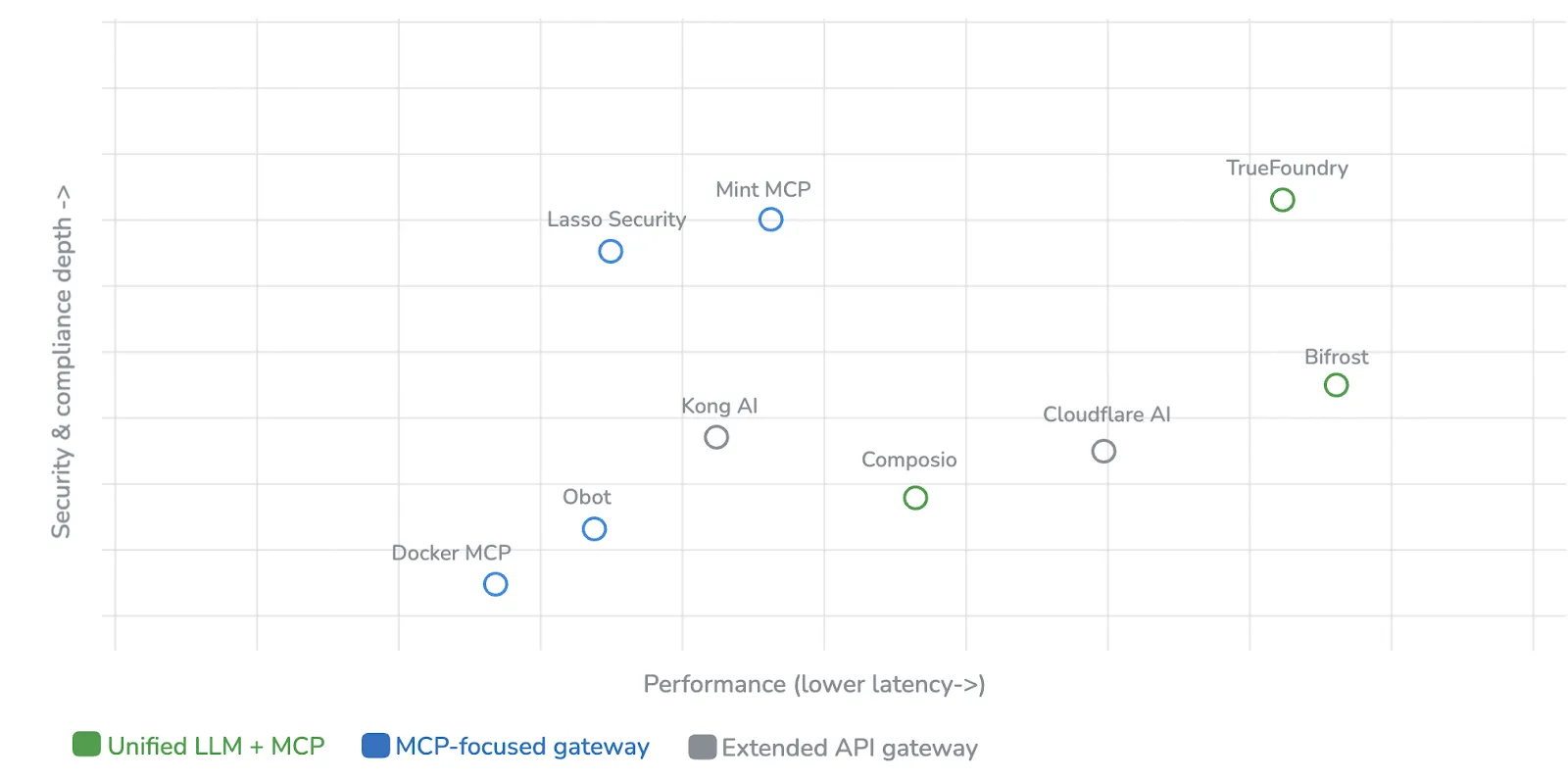
منصة بنية تحتية للذكاء الاصطناعي للمؤسسات تجمع بين توجيه نماذج اللغة الكبيرة (LLM)، وحوكمة أدوات MCP، وتقديم النماذج في مستوى تحكم واحد — قابلة للنشر في شبكات VPC الخاصة بك، أو في أماكن العمل، أو في بيئات معزولة عن الشبكة. تم تسميتها بائعًا ممثلاً في دليل سوق غارتنر لعام 2025 لبوابات الذكاء الاصطناعي.
الميزات الرئيسية:
الأفضل لـ:
فريق هندسة المنصات على مستوى المؤسسة الذي يحتاج إلى طبقة بنية تحتية للذكاء الاصطناعي محكومة وعالية الأداء لاستدلال LLM، وأدوات MCP، وتنسيق الوكلاء في بيئة محكومة أو متعددة السحابات.
منصة MCP موجهة للمطورين لتمكين عمليات التكامل والتكرار السريعة.
الميزات الرئيسية:
المزايا:
العيوب:
الأفضل لـ:
المجموعات التي تبحث عن أدوات سريعة وسهلة الاستخدام بدلاً من الوصول إلى البنية التحتية.
بوابة مفتوحة المصدر تدعم أعباء عمل متعددة (MCC + LLM).
الميزات الرئيسية:
Pros:
Cons:
Best for:
Teams that require high performance and full control.
Docker's open-source gateway is used for orchestrating MCP servers. Each server is built and run inside an isolated container, using limited privileges, network and resource limits of the container. The gateway can be accessed through a command-line interface (CLI) (docker mcp), and integrates with Docker Desktop/Compose, creating profiles to define the scope of which tools are available to the client. Designed for use with MCP only — no routing to LLMs.
Pros:
Overall, user experience is similar to the Docker workflow, so those familiar with Docker will use the same tools with Kubernetes, Swarm and existing CI/CD systems.
Cons:
Robust and proven API gateway (open source Core, using Apache 2.0 Licensed) extended with over 60 different AI specific plugins, can route LLMs (OpenAI, Anthropic, Bedrock, Gemini, etc.) and govern traffic to MCP (when travelling to the gateway).
Pros:
Cons:
Also Read: Kong vs LiteLLM
Lasso Security is a security-first Gateway for GeneAI that uses OpenSource, Plugin-Based Proxy, also known as NAC, to provide a real-time threat detection system by detecting prompt injections, data exfiltration, memory poisoning, misuse of tools, and governance/compliance.
Pros:
Cons:
An Edge Native AI Proxy built on top of Cloudflare with built-in analytics, caching, automatic request retry, and rate limiting. It allows for monitoring LLM providers like OpenAI, Anthropic, and Bedrock.
Pros:
Cons:
The Obot platform is part of the open-sourced and self-hosted MCP software suite built by ACORN Labs. The platform covers the entire infrastructure required for building, deploying, and managing an MCP environment: hosting, registry, gateway, and a built-in chat client that is fully compliant with all MCP requirements. The platform can be run on either Docker or Kubernetes.
Pros:
Cons:
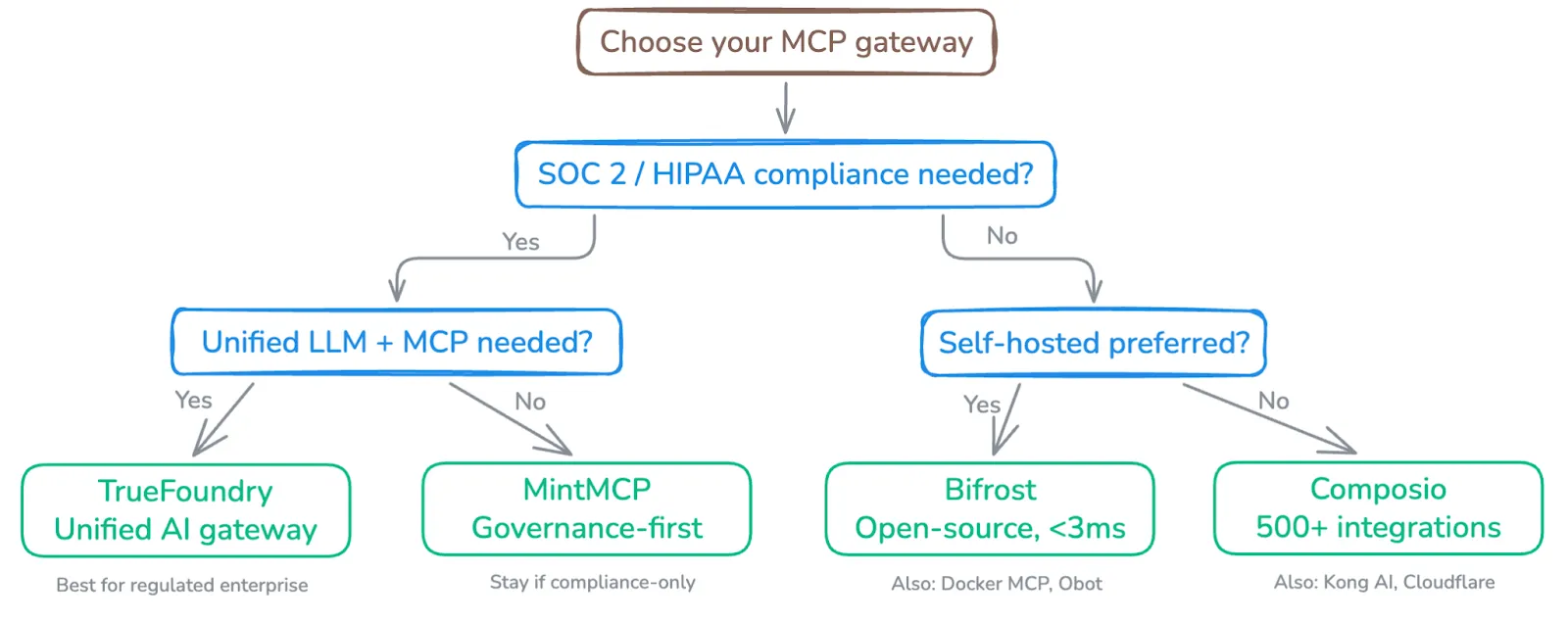
Structured as scenario-based guidance (paragraphs, not bullets in the body — but can use a small decision table):
What is Mint MCP used for?
Mint MCP is an MCP gateway focused on governance, compliance and security when accessing services/tools for Artificial Intelligence (AI) agents. Mint MCP provides OAuth wrapping, audit logging, and SOC 2 type II certification.
Are MCP gateways a requirement for production AI agents?
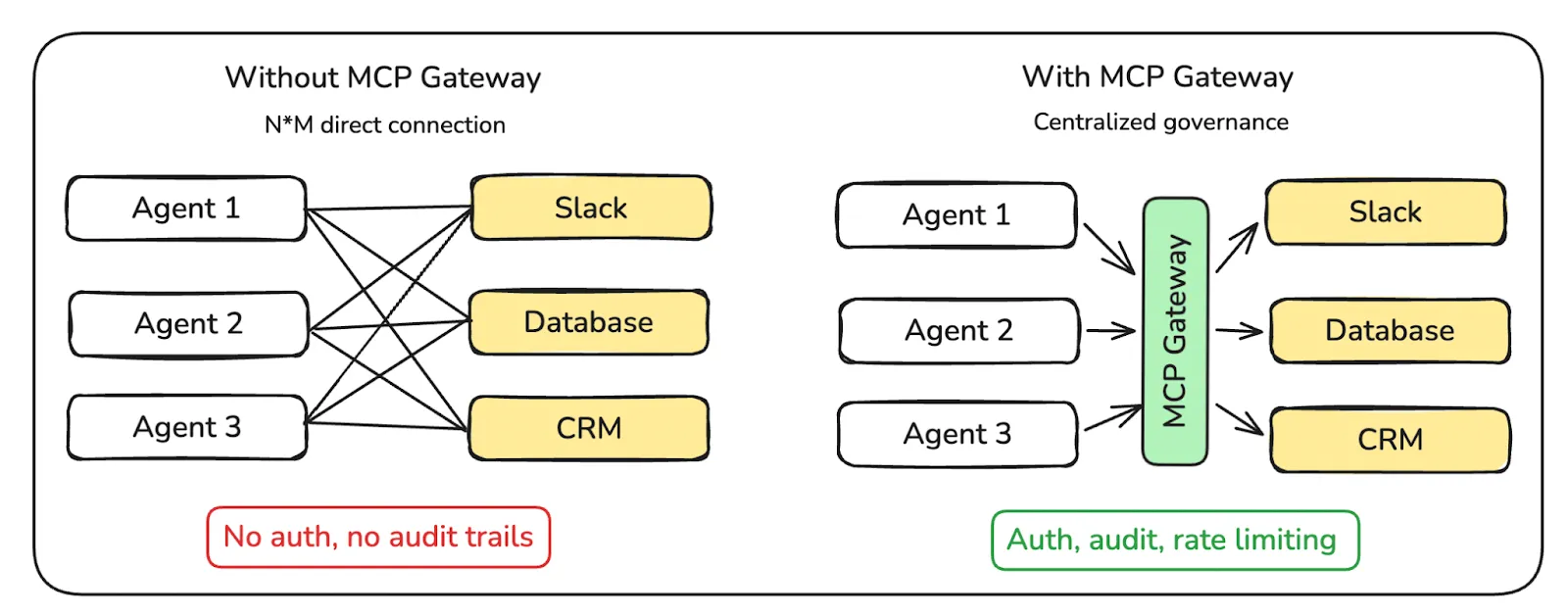
Yes, MCP gateways are a requirement for deploying agents into production. Without a gateway, teams can expect:
Inability to rotate credentials because the credentials are scattered across multiple sources
No visibility into the way agents interact with the tools used by the agents
Exposure to the possibility of data leakage from agents having unmanaged access
No audit capabilities to meet regulatory compliance, such as SOC 2, HIPAA, or EU AI Act.
No rate limiting, which can lead to runaway costs associated with APIs.
Why do teams seek alternatives to Mint MCP?
Generally speaking, teams who are looking for alternative solutions to using Mint MCP have several factors such as needing a more unified LLM+MCP management system across their organization, needing a lower latency through the use of technology, preferring an open-source/self-hosted solution, requiring a more comprehensive integration ecosystem, having a better compatibility with existing infrastructure like Kong, Docker or K8s and many others.
How do MCP tools compare to the traditional API Gateway?
In short, traditional API Gateways like Kong and Envoy are HTTP-based.
However, MCP Gateways work as a layer (protocol) in between the agents and tools. They provide functionality around agent discovery, credential management, RBAC by tool, as well as allowing for audit logs that can be associated with the agent. Additionally, there are tools that provide functionality to bridge both of these worlds – Kong and TrueFoundry – acting as where traditional API Gateways meet MCP Gateways.
What makes TrueFoundry the best Mint MCP alternative for enterprise teams?
- Unified Control Plane - TrueFoundry combines LLM routing and MCP tool governance into one dashboard. Mint only offers MCP governance.
- Sub-5ms latency - TrueFoundry can provide one of the fastest gateways to any form of cloud computing with the ability to process over 350 requests per second (RPS) on a single virtual CPU.
- VPC Native Deployment - TrueFoundry runs within your own cloud and does not require you to leave your data behind.
- SOC 2 and HIPAA - TrueFoundry is rated as being SOC 2 compliant and HIPAA compliant. In addition, it provides users with role-based access control and virtual MCP Servers.
- TrueFoundry has more than 25 different agent frameworks that can connect natively with LangChain, CrewAI, AutoGen, and many more
TrueFoundry serves as the path for teams who want more than just black-box audit trails and OAuth security for compliance requirements.
- Mint MCP is the ideal option for organizations that require compliance-driven governance solutions; however, as of 2026, many organizations will look to leverage multiple features outside those offered by Mint.
- No single tool will serve all teams equally. Choose based on compliance needs, deployment/architecture location and performance targets.
- As such, TrueFoundry is the best-in-class solution for enterprise team collaboration by offering LLM and Mint governance; delivering sub 5ms latencies; natively hosting the solution in a user’s VPC, and integrating through 25+ different agent framework solutions, all from a single unified control plane.
TrueFoundry AI Gateway delivers ~3–4 ms latency, handles 350+ RPS on 1 vCPU, scales horizontally with ease, and is production-ready, while LiteLLM suffers from high latency, struggles beyond moderate RPS, lacks built-in scaling, and is best for light or prototype workloads.





أحدث الأخبار والمقالات والموارد تصلك مباشرة إلى بريدك الوارد
.png)
.png)
.png)
.png)
.png)
.png)
.png)
.png)
.png)
.png)
.png)


