September 28, 2026
|
5 min read


احصل على وصول فوري إلى بيئة TrueFoundry مباشرة. انشر النماذج، ووجّه حركة مرور LLM، واستكشف المنصة بالكامل — بيئة الاختبار الخاصة بك جاهزة في ثوانٍ، ولا يلزم وجود بطاقة ائتمان.



Published: September 28, 2026
.png)
Blazingly fast way to build, track and deploy your models!
Langfuse is not a bad product. Four things send people looking, and each has evidence behind it.
The self-hosting footprint is heavy. The documented stack is Web and Worker containers plus four stores: Postgres, ClickHouse, Redis/Valkey and S3-compatible blob (self-hosting docs). Docker Compose is described there as a “Single VM without high availability, scaling, or backups.” Issue #6572 (benm5678, 23 April 2025, the highest-reaction issue on the topic) names the regression: ClickHouse “consumes a lot of CPU frequently even if there’s no usage of Langfuse,” and where v2 ran in local Docker Desktop for developers, v3 does not.
The dependency deepened, then ClickHouse bought the company. v3 (December 2024) replaced a Postgres-only deployment with one new container and three new storage systems. Issue #11523 (jamiekasulis, 13 January 2026) reports the migration “stuck in the active state for over 12 hours”; #10533 (peterghaddad, 18 November 2025) reports that “even with a powerful ClickHouse cluster, we consistently see ingestion failures.” v4 (17 August 2026) rebuilt traces onto one immutable ClickHouse table — faster, and more ClickHouse, not less.
ClickHouse acquired Langfuse, announced 16 January 2026, deal value not disclosed, alongside ClickHouse’s $400M Series D (announcement). Langfuse says the project “stays open source and self-hostable” with “no planned changes to licensing.” On the Hacker News thread (220 points, 96 comments), amai argued that ClickHouse’s US headquarters means “the langfuse cloud is no longer GDPR compliant” — a contested legal opinion, not a fact — and deaux replied “Correct! Will be moving away immediately for this reason.” The concrete change is commercial: supported self-hosted Enterprise is now “Bundled with ClickHouse Cloud, ClickHouse BYOC, or ClickHouse Private,” and “Langfuse pricing is additive to your ClickHouse commercial plan” (self-host pricing).
Cost at scale is a unit-definition problem. Langfuse bills “units” = traces + observations + scores (docs). Its worked example totals 140,131 units from 20,070 traces — roughly seven per trace — and evals bill too: any score “created by Langfuse features such as LLM-as-a-Judge, Annotation Queues, or experiments” counts. A team needing SSO enforcement and fine-grained RBAC pays Pro ($199) plus Teams ($300) = $499/month before any usage.
You need something a tracing tool does not do. Langfuse’s own gateway is honest about the boundary: the Rust ai-gateway/ component is a two-provider capture relay that “does not retry, follow redirects, or accept client routing overrides” (repo) — no load balancing, failover or budget enforcement.
For balance, the same threads have defenders. 7thpower: “I love langfuse, it is my goto.” spmurrayzzz found the data model “cumbersome and unintuitive” — then says it “ended up being the observability tool I went with instead over the one I built.” Both are one user’s view.
Langfuse is real open core: MIT, with only ee/, web/src/ee/ and worker/src/ee/ commercially licensed — project-level RBAC roles, protected prompt labels, retention policies, audit logs, server-side masking, UI customisation, org creators, SCIM. Crucially, Enterprise SSO and organisation-level RBAC are free in the OSS self-hosted build, more generous than most open-core peers and than Langfuse Cloud, where SSO costs $300/month. Langfuse states there are “no scalability limitations between the different versions.”
It has ~35,000 GitHub stars, 100+ integrations across ~40 frameworks and 31 model providers — including nine competing gateways, TrueFoundry among them — three cloud regions plus a HIPAA-ready one, and a fully air-gappable self-host. Prompt management is deep: versioning, release labels, composability, caching, webhooks. If none of the four drivers apply, staying is right.
[SCREENSHOT: Langfuse — a trace detail view with nested observations and scores]
A full tracing, evaluation and prompt-management platform from Comet, self-hostable or Comet-hosted. Licence: Apache-2.0 across the entire platform, 22,230 stars on comet-ml/opik — no ee/ carve-out, nothing behind a licence key in self-host.
Pricing: Free Cloud $0 (25k spans/month, 10 members, 60-day); Pro Cloud $19/month (100k spans, 50 members); Enterprise custom (SOC 2, ISO 27001/9001, HIPAA, GDPR, SSO).
Best at: the closest like-for-like Langfuse replacement, with a cleaner licence.
Main limit: SSO, service accounts and flexible deployment are Enterprise-only — the no-gating advantage is about the code licence, not the hosted tiers. Opik also bills all spans.
[SCREENSHOT: Comet Opik — the trace view and eval scores side by side]
Phoenix is the local-first OSS tracing and evaluation tool; AX is the managed platform.
Licence — the fact most roundups get wrong: Phoenix is Elastic License 2.0, source-available, not OSI open source. The GitHub API returns NOASSERTION for Arize-ai/phoenix (11,606 stars). ELv2 says you “may not provide the software to third parties as a hosted or managed service” and “may not move, change, disable, or circumvent the license key functionality.” If you are leaving Langfuse for MIT-style freedom, Phoenix is a step sideways.
Pricing: AX Free $0 (25k spans/month, 1 GB, 15-day, unlimited users and unlimited evals); AX Pro $50/month (50k spans, 10 GB, 30-day); Enterprise custom. Overage above Pro is unpublished. [VERIFY: Arize AX span overage rate]
Best at: the cheapest credible paid tier, with unlimited users and evals on every plan.
Main limit: the licence, plus strategic uncertainty. Dynatrace announced a signed definitive agreement on 13 August 2026 to acquire Arize for $915M, expected to close “later this quarter or early in Dynatrace’s third quarter, subject to regulatory reviews” (Dynatrace IR). As of 25 September 2026 there is no closing announcement — an agreed deal, not a completed acquisition — and it commits to nothing about Phoenix’s licence. [VERIFY: post-close Phoenix OSS statement]
[SCREENSHOT: Arize Phoenix — the local trace explorer running in a notebook]
LangChain’s observability, evaluation and agent-deployment platform. Licence: closed — only langsmith-sdk is MIT (1,062 stars), and self-hosted or hybrid deployment is Enterprise-tier only.
Pricing: Developer $0 (5k base traces/month, 1 seat) → Plus $39/seat/month (10k base traces) → Enterprise custom, plus abstract units: 1 LangChain Compute Unit = $1.50, 1 Storage Unit = $1.00. Base traces carry 14-day retention; extended traces 400 days for a fee.
Best at: the deepest native LangChain and LangGraph integration, and the only vendor here bundling agent deployment — Serverless and Dedicated runtimes, Studio, Assistants API, cron, MCP-server exposure — with observability, plus a gateway with fallbacks and PII redaction.
Main limit: no self-host below Enterprise, and no published per-trace overage rate — the page says only “pay as you go thereafter,” while their calculator warns that “actual LCU/LSU consumption varies with the work your agents perform.”
An evaluation-first platform where scores, not spans, are the organising unit. Licence: closed — braintrust-proxy is MIT (412 stars) and agentbehavior Apache-2.0 (345).
Pricing: Starter $0 ($10 credits, 1 GB, 10k scores, 14-day, unlimited users); Pro $249/month ($100 credits, 5 GB, 50k scores, 30-day). Overage $3-4/GB, $1.50-2.50 per 1k scores.
Best at: evaluation as a first-class primitive. Scores are the billing unit, and Loop — their agent that runs evals and iterates prompts — makes the eval loop the product.
Main limit: the highest entry price here, $249 against Langfuse’s $29. No self-host or SSO below Enterprise, and RBAC is “Basic roles” even on Pro — see Braintrust alternatives.
[SCREENSHOT: Braintrust — an experiment comparison with score deltas]
DeepEval is an open-source LLM evaluation framework structured like pytest; Confident AI is the hosted platform. Licence: Apache-2.0 framework — deepeval 18,436 stars, deepteam (red teaming) 2,948 — closed platform.
Pricing: Free $0 (2 seats, 1 project, 5 test runs per week, 1 GB-month of spans, extras dropped); Starter $200/month (unlimited seats, 5 projects, 5 GB-months, then $1/GB-month); Team $2,000/month.
Best at: evaluation as a testing discipline — nothing else here treats evals as unit and regression tests this natively.
Main limit: steep tier jumps — $0 to $200 to $2,000 — plus hard free throttles: five test runs a week, spans silently dropped past 1 GB-month.
An observability tool that is also a working gateway — 100+ models behind one key, caching, rate limits, fallbacks. Licence: Apache-2.0, 6,175 stars.
Pricing: Hobby $0 (10k requests/month, 1 GB, 1 seat, 7-day); Pro $79/month; Team $799/month. The per-request overage rate is not on the card, only in a calculator. [VERIFY: Helicone per-request rate]
Best at: the axis Langfuse does not cover — a real gateway as well as a recorder.
Main limit: Mintlify announced its acquisition of Helicone on 3 March 2026. In Helicone’s own post that day, the team wrote that services “will remain live for the foreseeable future in maintenance mode. This means security updates, new models, bug and performance fixes all keep shipping.” That characterisation is theirs, not ours — and the commit record fits: per the GitHub participation API over the 52 weeks to 25 September 2026, 603 commits in the first 26 weeks against 19 in the last 26, recent ones exclusively security and bug fixes. The repo is not archived and Apache-2.0 makes a fork viable, but it is not a multi-year bet. See Helicone alternatives.
Datadog’s LLM and agent tracing product, renamed from “LLM Observability” to “Agent Observability” during 2026 — /product/llm-observability/ now 301-redirects to /products/ai/agent-observability/. Licence: proprietary, no self-host.
Pricing: Free $0 (40k LLM spans/month, 15-day); Pro $160/month annual for the first 100k LLM spans, then $3.50 per additional 10k ($200 month-to-month, $240 on-demand). Note the favourable unit: Datadog bills only LLM spans — tool, workflow, retrieval, embedding, task and agent spans are free.
Best at: correlation. If you already run Datadog for APM, infra and logs, agent traces land in the same platform, alerting and on-call.
Main limit: no open source, no self-host, no free escape beyond 40k spans, 15-day retention on both public tiers. Real-time guardrails are a separate, unpriced SKU, AI Guard.
Two more worth knowing. W&B Weave (Apache-2.0 library, 1,130 stars; closed platform; CoreWeave completed its Weights & Biases acquisition on 5 May 2025) is the only option unifying classical ML tracking with LLM tracing, from $60/month — but ingestion overage is $0.10/MB, roughly $100/GB, against 1-1.5 GB included. [VERIFY: W&B’s FAQ contradicts its pricing page, stating Pro includes 25 GB/month] HoneyHive has the most generous free full feature set here — 10,000 events/month, 5 users, 30-day retention, automated and human evals — but is closed (SDKs only, largest repo 19 stars), has no self-host, and publishes no paid price.
All figures verified 25 September 2026; stars from the GitHub API.
ClickHouse operations are eating your week. Opik is the shortest path — Apache-2.0 end to end, no licence-key gating, no four-datastore prerequisite. Phoenix works if ELv2 is fine.
You want MIT-style licence freedom specifically. Opik and Helicone are the only full platforms here that give it without carve-outs. Phoenix does not.
Price is the trigger at $499/month for Pro plus Teams. Opik at $19, Arize AX at $50 and Datadog at $160 are the comparisons — but model your trace shape first. One agent run with four LLM calls and three tool calls is 1 LangSmith trace, ~8 Langfuse units, ~8 Opik spans, 4 Datadog LLM spans.
Evaluation is the real job. Braintrust for an eval-first product; DeepEval for evals as CI tests.
LangChain shop → LangSmith. Already on Datadog → Agent Observability, for the correlation alone. Classical ML tracking too → W&B Weave, watching the ingestion overage.
You need to stop something happening, not just see it later. None of the above do that.
TrueFoundry is not a drop-in Langfuse replacement. If you want tracing and evals and nothing else, pick one of the seven. Our eval tooling is less developed than Braintrust’s or DeepEval’s, and without a proxy in the request path most of the platform is inert.
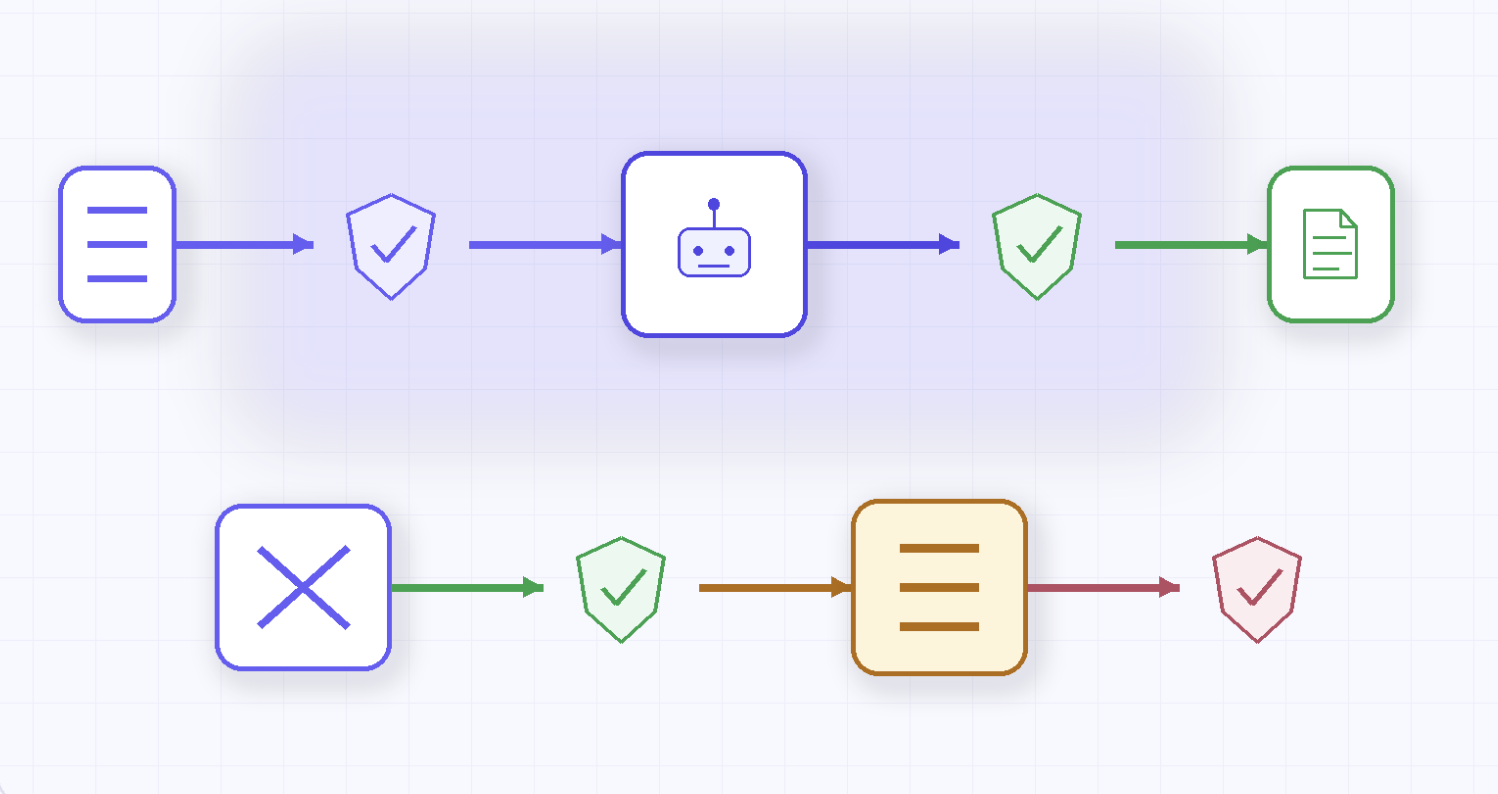
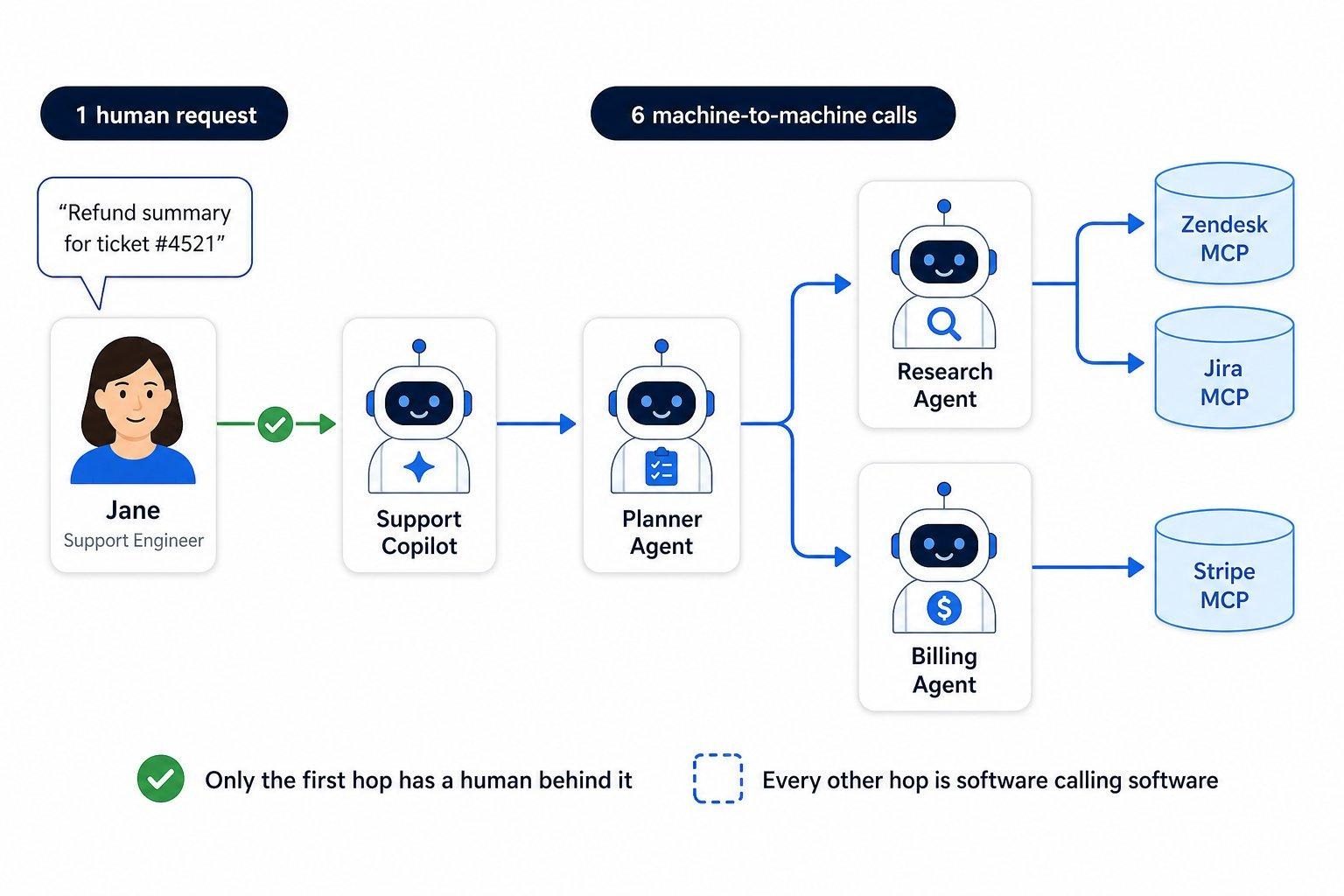
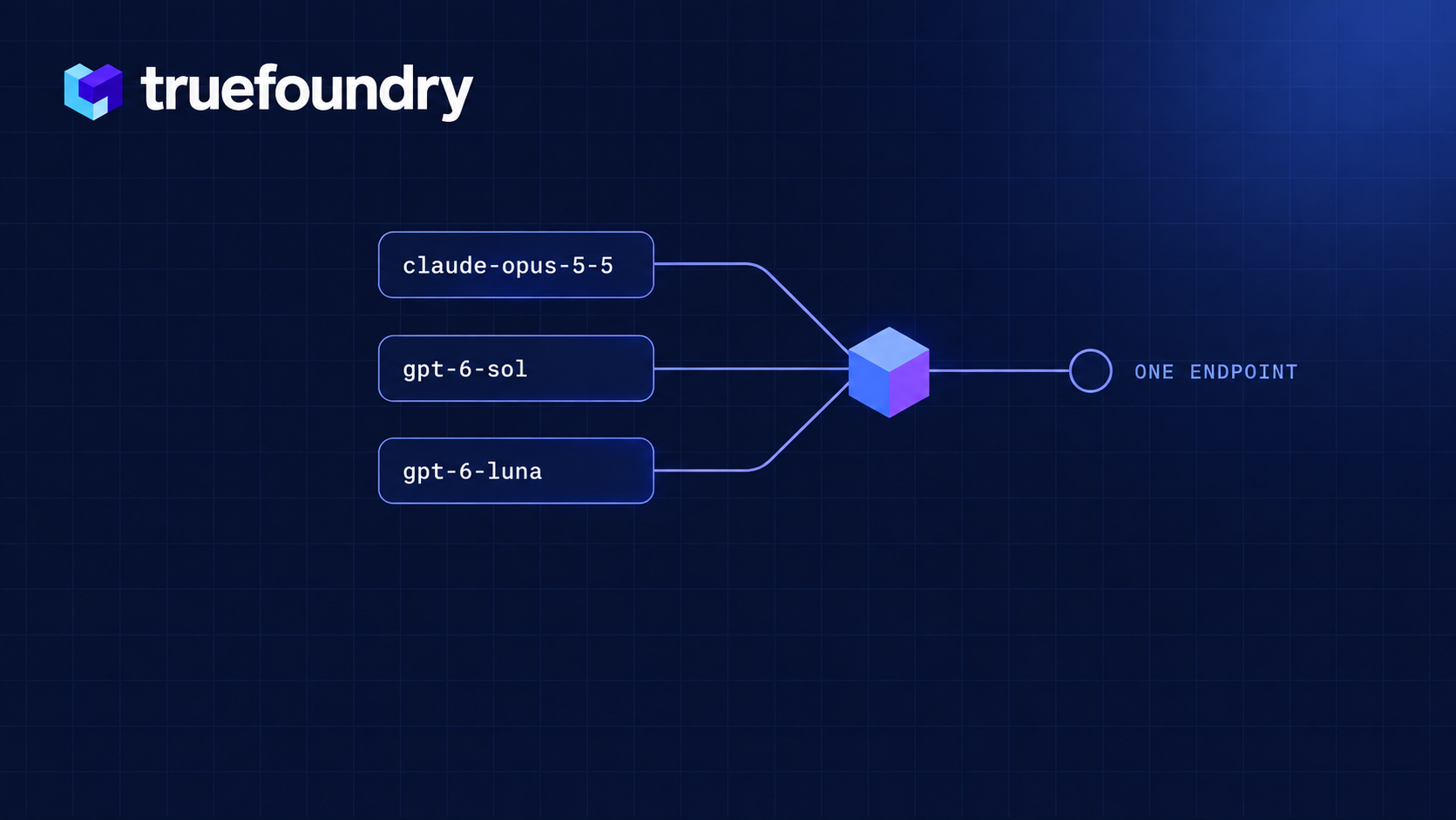
Per the docs it is “the proxy layer that sits between your applications and the LLM providers and MCP Servers” — the inverse of Langfuse. Langfuse observes calls your app already made; a gateway sits in the path and can change what happens: enforce a budget, block a prompt injection, fail over, deny an MCP tool call.
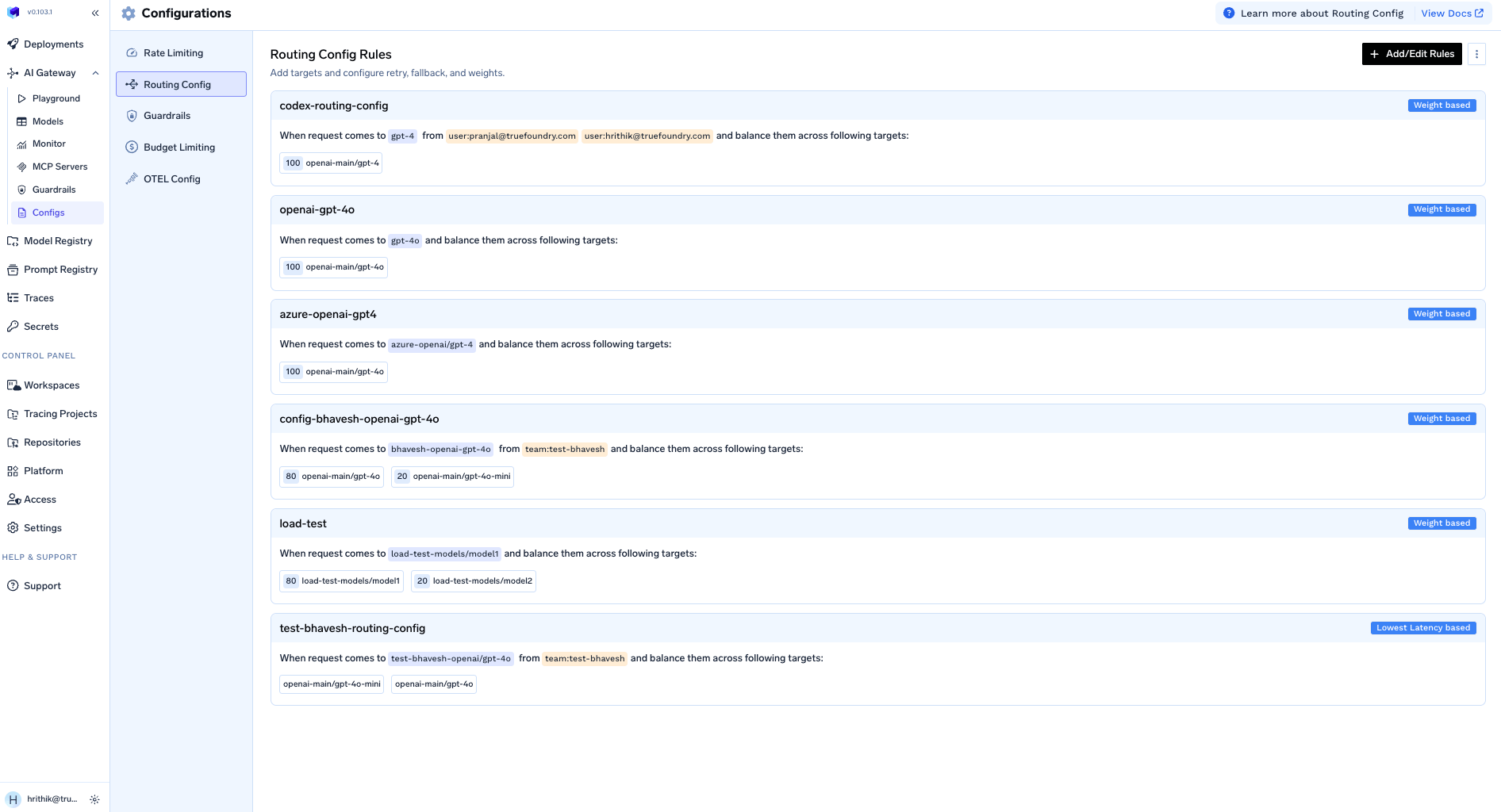
The AI Gateway fronts 1,000+ LLMs behind one OpenAI-compatible API, adds roughly 3-4 ms of latency and handles 350+ RPS on 1 vCPU — cheap enough to front everything. Fallbacks, semantic caching, rate limits, enforced budgets, guardrails, RBAC and scoped keys, plus an MCP Gateway and Agent Gateway, sit on top.
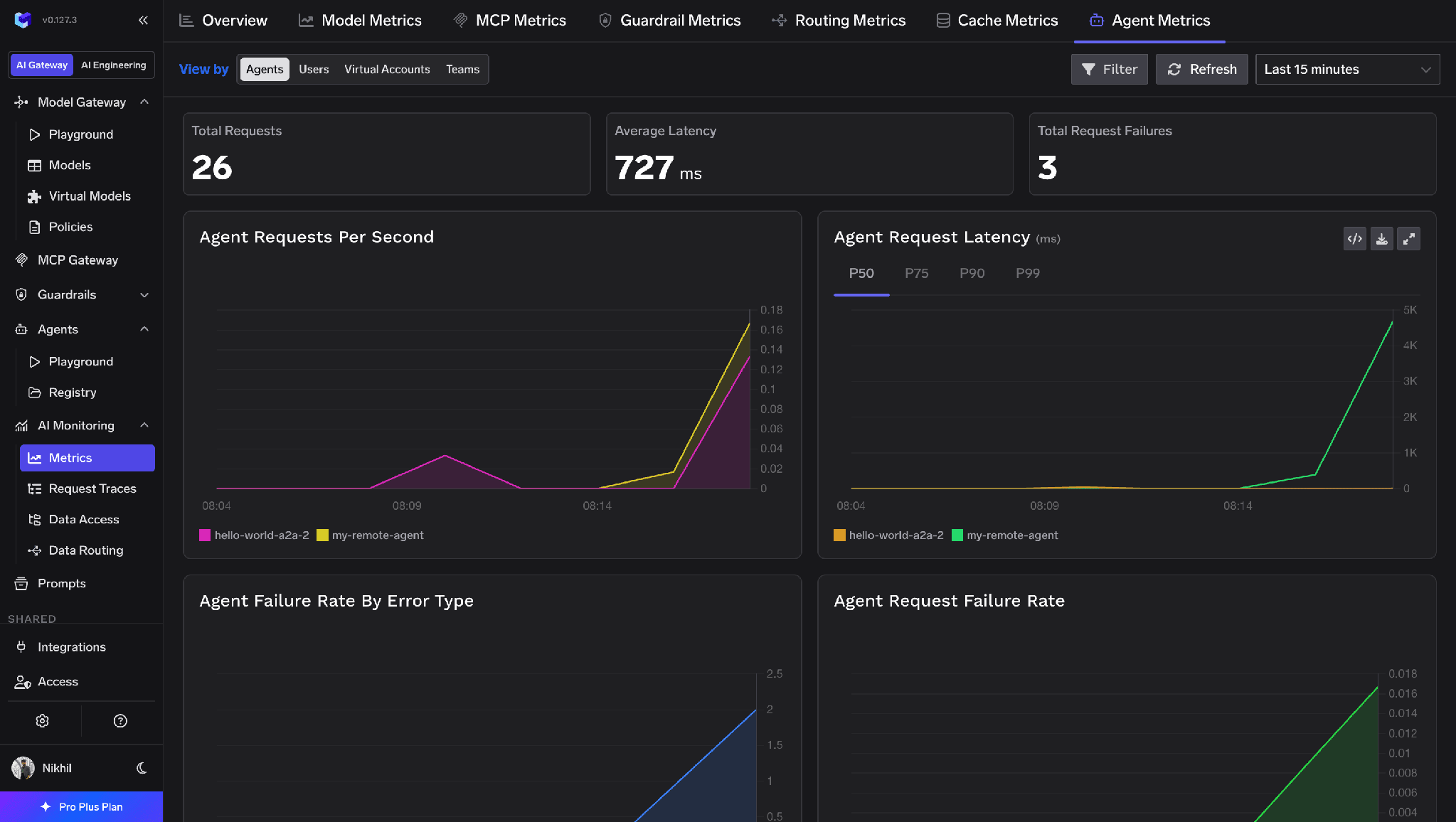
Observability is a by-product of governance: OpenTelemetry-compliant metrics, traces and request logs from that proxy layer. Traces export over OTLP to whichever platform you chose above — we publish guides for Opik, LangSmith, Braintrust, Arize, HoneyHive, SigNoz and Honeycomb, and Langfuse lists TrueFoundry among its gateway integrations. A layering decision, not a replacement.
Pricing is published: Developer $0 (3 users, 10k gateway requests per user per month); Pro $25/user/month (unlimited users, 20k requests per user pooled, then +$20 per 100k, SSO, audit logs, custom roles); Enterprise custom for VPC, on-prem and air-gapped. Its worked example: 7 users plus 1M requests = $355/month.
Most people searching “Langfuse alternatives” will read a comparison and stay, and that is a reasonable outcome. The MIT core is real, the integration breadth is real, and free org-level SSO and RBAC in self-host are more generous than almost anyone else’s.
The reasons to move are specific. If ClickHouse operations are the problem, Opik removes that dependency and the licence gating with it. If the unit multiplier has made the bill unpredictable, model your trace shape before assuming anything is cheaper. If ELv2 is acceptable, Phoenix is capable and cheap — just do not call it open source. And if you needed somewhere to enforce a budget or block a bad request, no observability tool here gives you that.
Weigh ownership hardest. Langfuse belongs to ClickHouse, Helicone to Mintlify, W&B to CoreWeave, and Arize has an agreed deal with Dynatrace that has not closed. Pick something whose licence and export path you would still accept if the logo on the pricing page changed next quarter.
TrueFoundry AI Gateway delivers ~3–4 ms latency, handles 350+ RPS on 1 vCPU, scales horizontally with ease, and is production-ready, while LiteLLM suffers from high latency, struggles beyond moderate RPS, lacks built-in scaling, and is best for light or prototype workloads.



Comet Opik for a like-for-like open-source swap — Apache-2.0 across the whole platform, $19/month. Arize AX at $50/month for the cheapest capable paid tier, accepting that Phoenix is Elastic License 2.0 rather than OSI open source. LangSmith for LangChain shops, Braintrust or DeepEval for eval-first teams, Datadog at $160/month if you already run it.
It depends on your trace shape. Core is $29/month for 100k units, which looks cheap — but units are traces plus observations plus scores, roughly seven per trace in Langfuse’s own example, and evals bill too. The band that pushes teams to shop around is Pro ($199) plus Teams ($300) = $499/month before usage.
Comet Opik and Helicone are Apache-2.0 across the platform. Langfuse is genuine open core — MIT except three ee/ directories, SSO and org-level RBAC free in self-host. Arize Phoenix is Elastic License 2.0: source-available, not OSI open source. W&B Weave and DeepEval open the library, not the platform.
Yes, announced 16 January 2026, deal value not disclosed, alongside ClickHouse’s $400M Series D. Langfuse says the project stays open source and self-hostable with no planned licensing changes. The concrete change is commercial: supported self-hosted Enterprise is now bundled with a ClickHouse plan.
No. It is a gateway and control plane that produces traces and metrics as a by-product of governing traffic. For offline evaluation, datasets and annotation workflows, keep an observability tool and export traces to it over OTLP.



أحدث الأخبار والمقالات والموارد تصلك مباشرة إلى بريدك الوارد
.png)
.png)
.png)
.png)
.png)
.webp)
.webp)
.webp)
.webp)
.webp)