


September 22, 2026
|
5 min read


Obtenha acesso instantâneo a um ambiente TrueFoundry ao vivo. Implante modelos, direcione o tráfego de LLM e explore a plataforma completa — seu sandbox estará pronto em segundos, sem necessidade de cartão de crédito.



Published: September 22, 2026
.png)
Blazingly fast way to build, track and deploy your models!
Muse Spark is the first model family from Meta Superintelligence Labs, introduced on 8 April 2026 as a replacement for the Llama line (Meta AI). Version 1.3 is the third iteration and, per Meta’s docs, the recommended default for new work.
The specifications, from the Meta Model API models page and pricing page, as of September 2026:
Three details are worth pulling out.
It is not an open-weight model. This is the first thing most people get wrong, partly because Meta spent years being the open-weights company. Muse Spark 1.3 is served over an API and nothing else. Meta’s own release note closes with a roadmap line naming “the Muse Spark open weights release” as a future item — a clear statement that it has not happened yet. If you need Meta weights you can download today, the model is Muse Glimmer: 30B parameters, dense multimodal, 128K default context, Apache 2.0, distilled from Muse Spark (Muse Glimmer docs). Genuinely permissive licence, much smaller model. Do not conflate the two.
Audio is degraded on 1.3 specifically. Meta’s models page footnotes that audio understanding in 1.3 “is currently not fully supported” and that response quality may suffer, recommending 1.2 or the dedicated Muse Voice Transcribe model instead. That is an unusual regression to admit in a point release, and it matters if your pipeline sends audio.
The context window is flat-priced. 1,048,576 tokens with, in Meta’s words, no long-context premium — the same per-token rate whether the window is nearly empty or nearly full. Most providers charge a step-up above some threshold. This one does not.
[SCREENSHOT: Meta Model API — the dev.meta.ai dashboard showing the muse-spark-1.3 model entry and tier selection]
Meta frames 1.3 as a usability release rather than a capability jump, and the published deltas support that reading.
Source: Introducing Muse Spark 1.3, Meta AI Research, 2 September 2026.
The efficiency numbers carry the direct commercial consequence: a 25% token reduction on identical work is a 25% cut in the line item, before any routing decision. But read the provenance — this is Meta’s internal engineering comparison, not a third-party reproduction. The direction is almost certainly right; the magnitude on your workload is yours to measure.
The behavioural changes are quietly the more interesting half. A model that asks before doing something irreversible, and admits when it is stuck, is a different operational proposition from one that plows ahead confidently. For long-horizon agent runs where a bad tool call costs real money, that is worth more than a benchmark point.
Meta publishes a benchmark scorecard comparing Muse Spark 1.3 against Muse Spark 1.2, GPT-5.6 Sol and Claude Opus 5 across agentic, coding, instruction-following and long-context evaluations. The suite, per Meta’s evaluation methodology report:
The individual scores are [VERIFY]. Meta publishes them only inside a rendered image on the release post, not as machine-readable text, so this post will not transcribe numbers it cannot cite precisely. Pull them from the scorecard on Meta’s page before quoting any figure.
What the methodology report does say in text is more useful than the scores anyway, and three caveats deserve to travel with any number you do quote.
Comparisons were run at different effort levels. Muse Spark 1.3, Opus 5 and GPT-5.6 Sol were evaluated at max reasoning effort; Muse Spark 1.2 at xhigh. Part of any 1.2-to-1.3 delta is therefore a settings difference, not purely a model difference.
The OSWorld comparison is not version-matched. Every model was evaluated on OSWorld 2.0 version 08.08 except Muse Spark 1.2, which ran on version 06.24. Meta discloses this plainly, which is to its credit, but it does mean that particular row is not apples-to-apples.
Scores are best-of-source. Meta reports “the highest comparable primary-metric value available from our evaluation, the official leaderboard, or the model provider’s self-reported results.” Taking the best available number for every model in every row is a defensible method, but it is not a single controlled run.
Meta is also unusually candid about the limits of its own competitor testing, noting that its runs “may not be tuned for proprietary models and may not reflect their best provider-optimized performance.” That is an honest disclaimer, and a good reason to treat every vendor scorecard — including this one — as a starting hypothesis rather than a result. The only benchmark that settles a routing decision is your traffic on your prompts, which is the argument for running your own evaluation before you commit.
Meta runs two tiers, and the gap between them is the most consequential fact in this entire post.
Source: Meta Model API pricing and rate limits, September 2026.
The Contributor tier is 92% cheaper on input and 95% cheaper on output. Meta is completely transparent about the trade: heavily discounted tokens “in exchange for permission to use your prompts and completions to train future Meta models.” Model IDs are distinct — muse-spark-1.3-contributor rather than muse-spark-1.3 — so the choice is explicit at call time, not buried in an account setting.
That transparency is good practice. It also creates a specific operational hazard, which we will come back to.
Two further pricing notes. Web search grounding costs $2.50 per 1,000 queries on top of token cost, so anything using the web_search tool has a second meter running. And max reasoning is Standard-tier only — the cheap tier cannot reach the mode that produces the headline benchmarks.
Four failure modes are specific to this release rather than generic to model adoption.
The Contributor tier is one config line away from a data incident. A 92% discount is exactly the kind of saving an engineer applies during a cost review without reading the second half of the sentence, and the two model IDs differ by one suffix. If a developer points a production service at muse-spark-1.3-contributor to hit a budget target, customer prompts become Meta training data and nothing in the application looks different. That has to be enforced somewhere central, because it will not reliably be enforced in every repository.
Rate limits are per team, not per key. Meta is explicit: all keys in one team share the 3,000 RPM and 4M TPM budget. Issuing a key per service does not partition capacity, so one badly behaved batch job can starve an interactive product. Meta’s advice is to read the x-ratelimit-remaining-tokens header and slow down before hitting the wall — which means something in your stack has to actually do that.
Closed weights mean the residency conversation ends early. With an open-weight model you can argue about where to run it. Here there is one answer: prompts go to Meta’s API. Your counsel decides what is acceptable; the point is that the self-hosting escape hatch that exists for Muse Glimmer does not exist for Muse Spark.
Version churn is fast. Three versions between April and September 2026, roughly four weeks between 1.2 and 1.3, and a documented audio regression in a point release. Any integration that hardcodes a model string will need revisiting sooner than the planning cycle assumes — which is what virtual model names and staged cutovers are for.
A closed model changes what a gateway is for. With an open-weight release the gateway’s job is portability. Here it is control, attribution and the ability to change your mind.
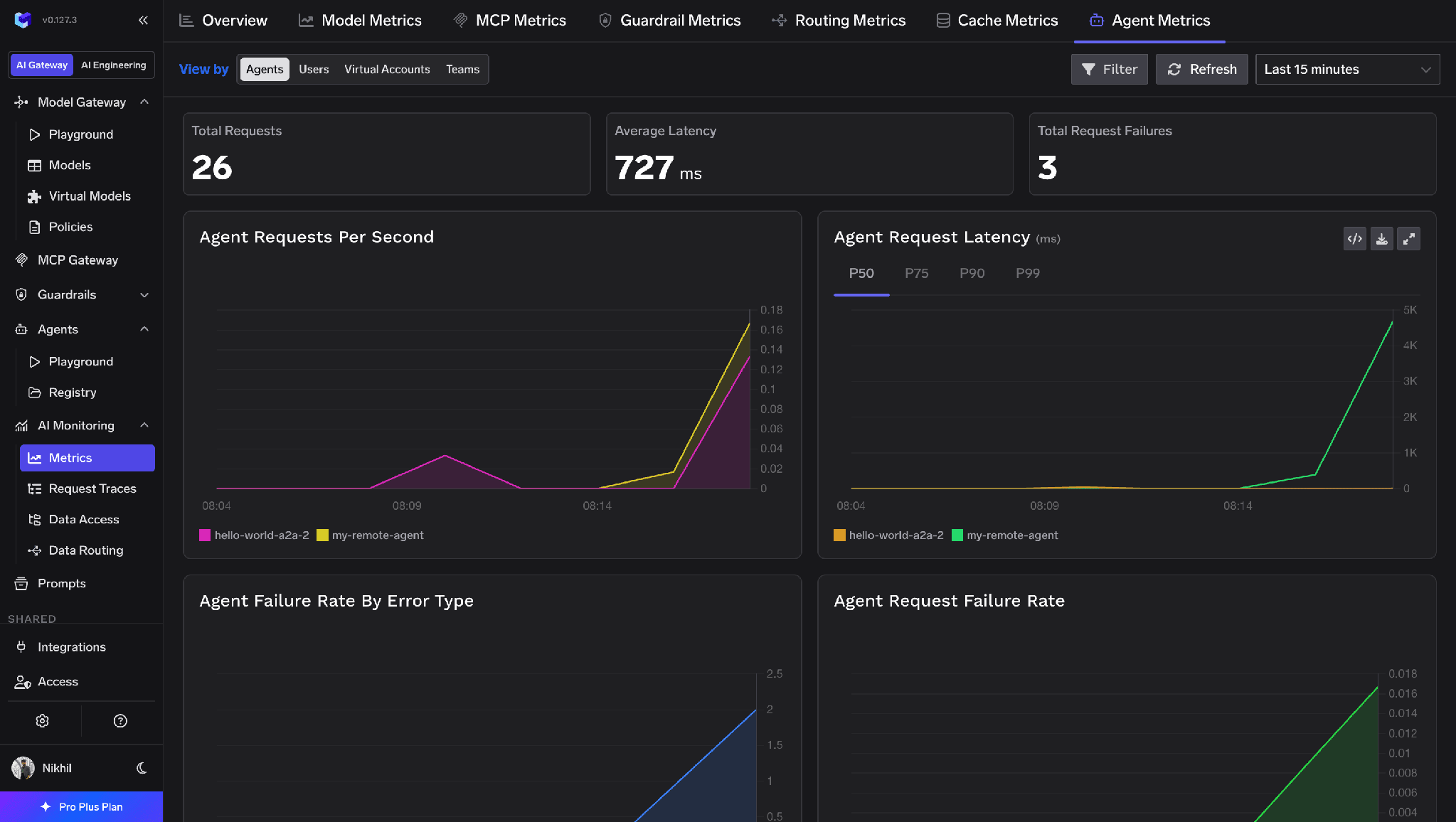
Make the tier a policy, not a preference. The Contributor decision should be made once, by the people accountable for it, and then enforced. Gateway-level policy enforcement lets you expose muse-spark-1.3 to production services and restrict the contributor variant to a sandbox — or block it entirely. Applications request a model name; the gateway decides what that resolves to.
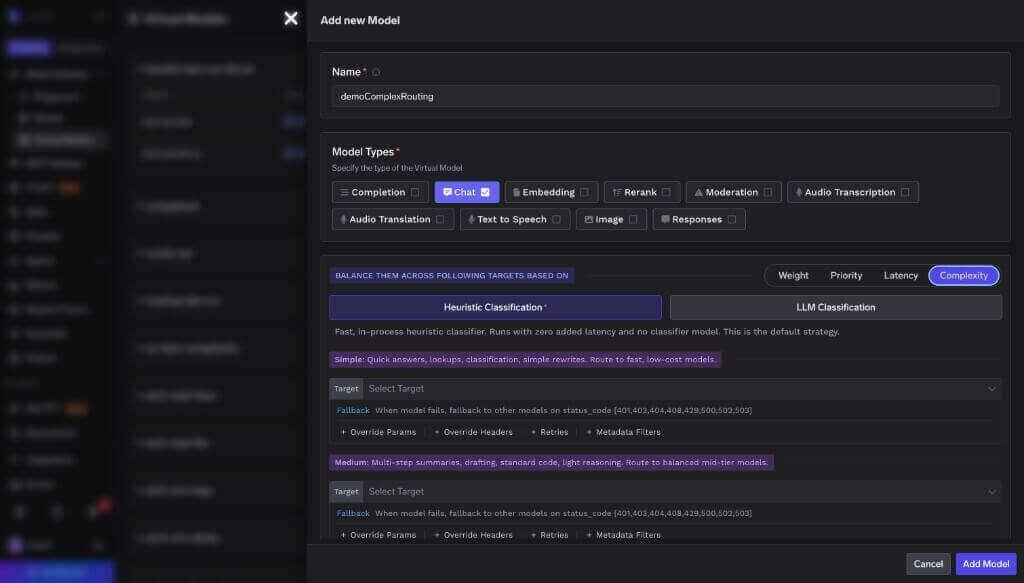
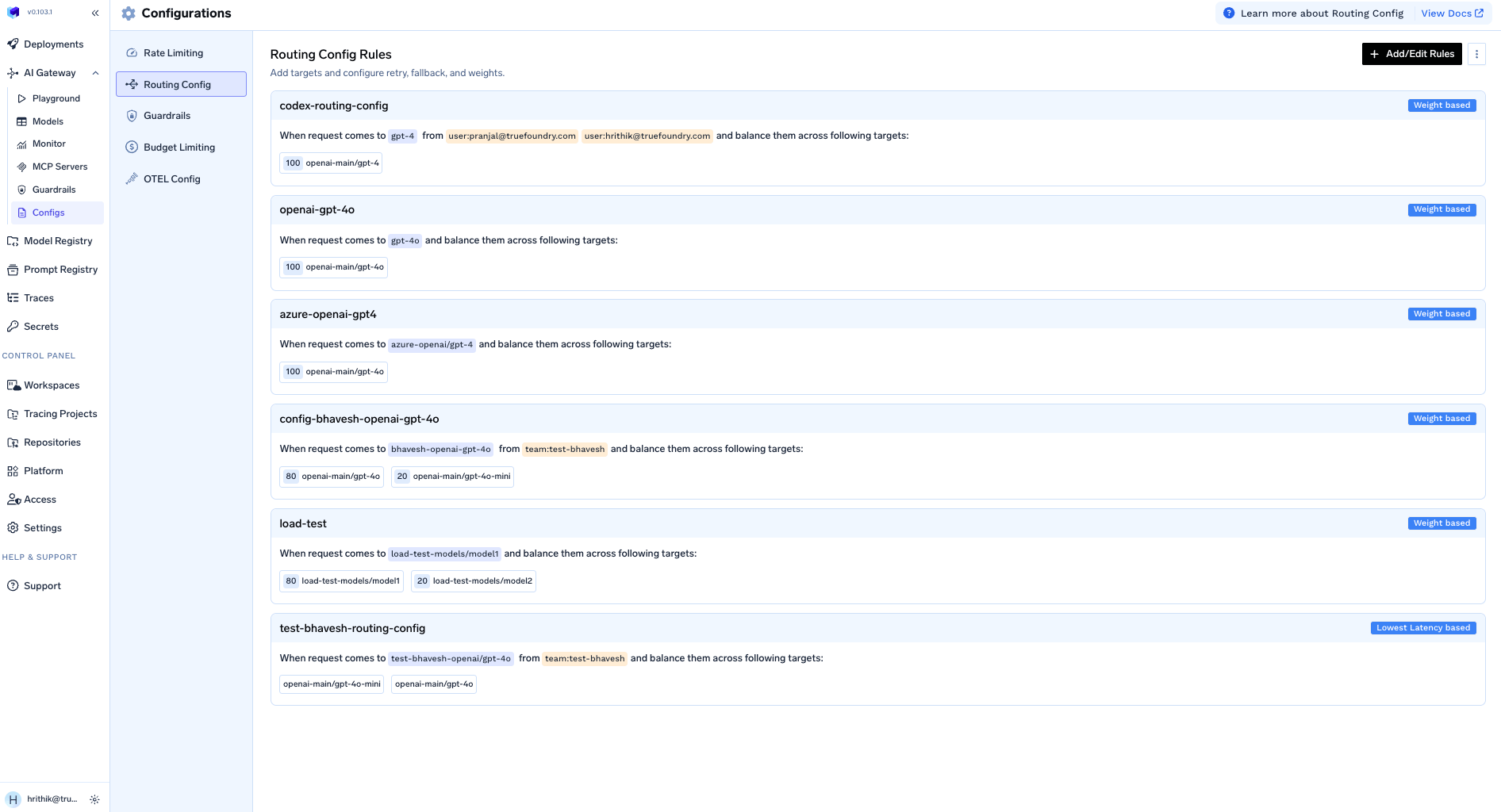
Route by task, not by vendor loyalty. Meta’s own scorecard positions 1.3 against Opus 5 and GPT-5.6 Sol rather than claiming to beat them everywhere, which is an argument for a mixed fleet. Long-horizon agent runs and million-token context work go to Muse Spark; other work goes where it does better. In TrueFoundry’s Auto Routing benchmark across 550 prompts, tiering requests this way cut cost 69% while retaining 98% of baseline quality, with mean latency dropping from 7.6s to 4.0s; on production-shaped traffic the reduction reached 80%.
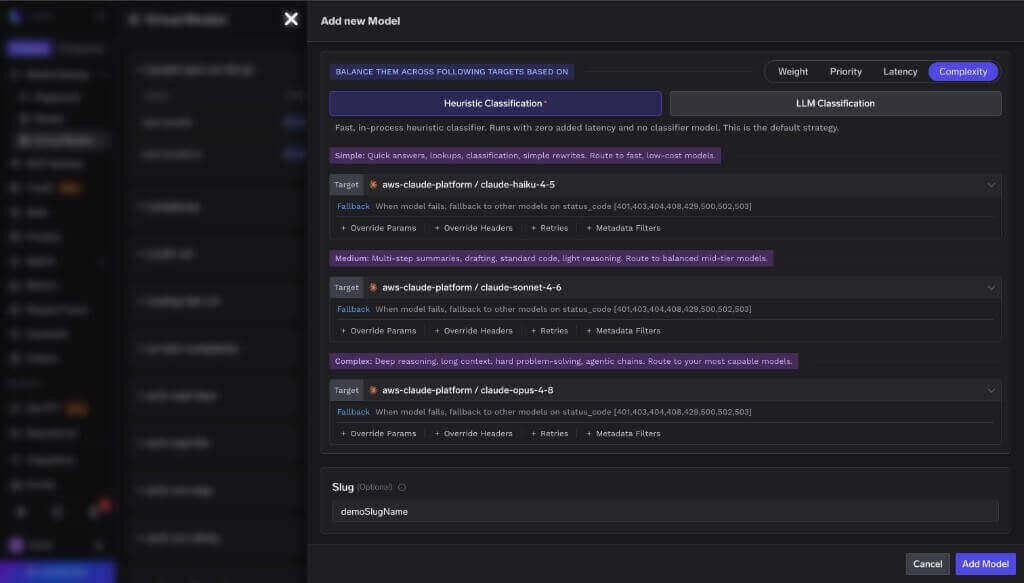
Absorb the shared rate limit. Because Meta’s quota is per team, the gateway is the natural place to hold it: rate limiting per consuming team, queueing, and failover to another provider when Meta returns a 429. One shared budget needs one place that understands it.
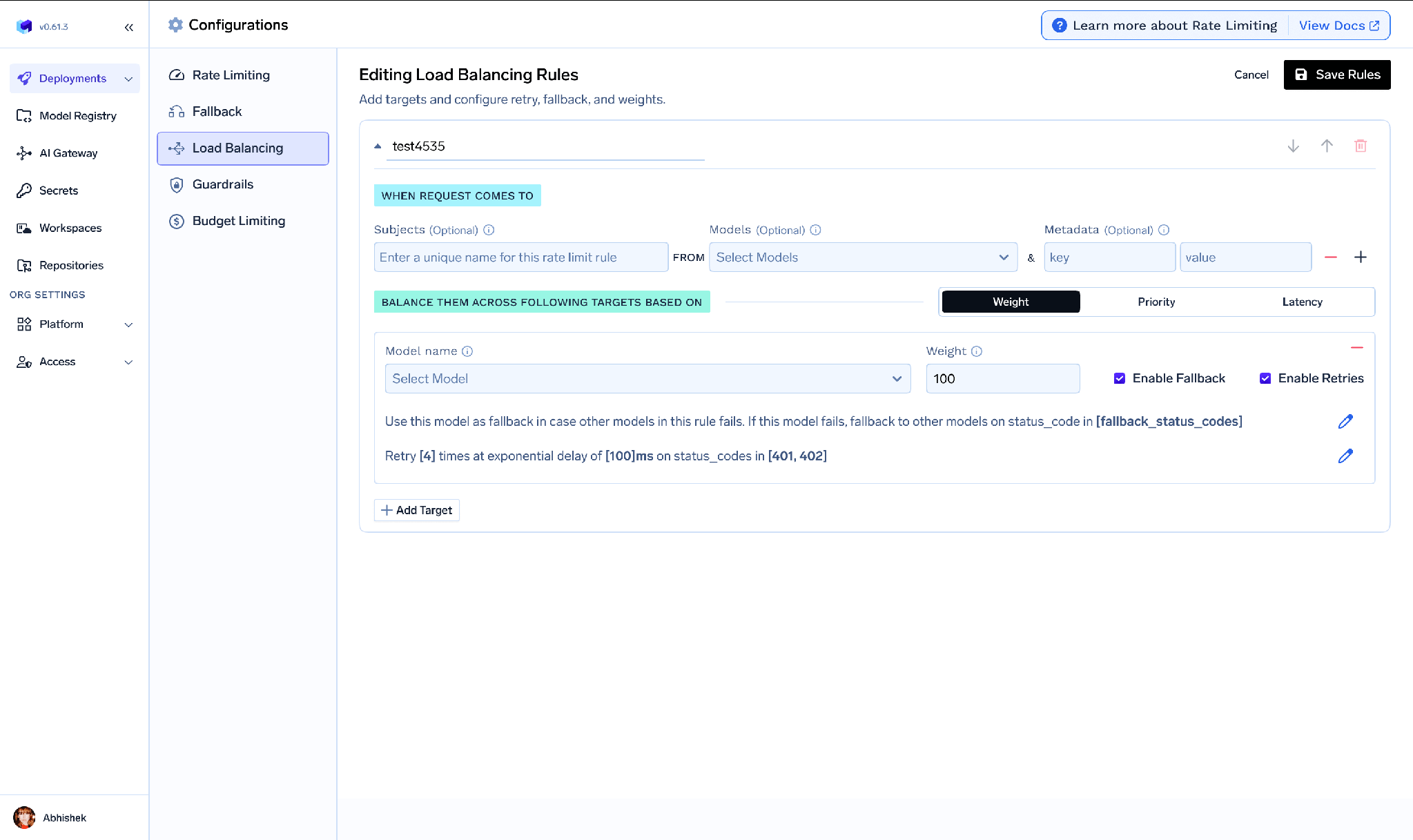
Keep your own guardrails. Meta reports improved prompt-injection resistance in 1.3, which is welcome and is not a control you own. Gateway guardrails run on the request and response path regardless of which provider answers, so your policy does not change when your model does.
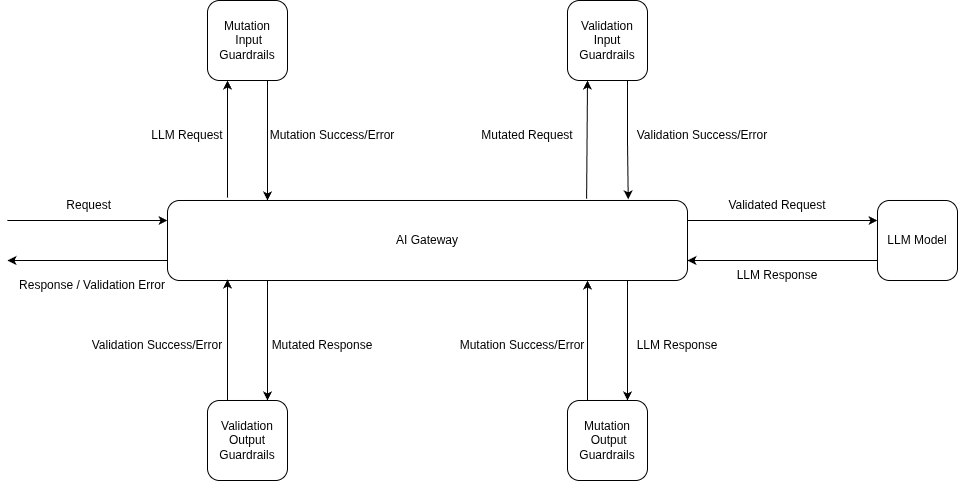
Measure the efficiency claim. Meta says 1.3 uses ~25% fewer tokens than 1.2. Per-request cost and token attribution by team is how you confirm that on your traffic instead of taking it on trust.
The short version, as of September 2026:
[SCREENSHOT: Muse Code — terminal session showing an agentic run on Muse Spark 1.3]
Muse Spark 1.3 is a competent, unglamorous release, and the unglamorous part is the point. Meta did not claim a new frontier. It claimed fewer tool calls, fewer tokens, better behaviour in long threads and better judgement about irreversible actions — the things that decide whether an agent run finishes cleanly or burns an afternoon. For a team already routing across several providers, that makes it a credible fourth option for long-horizon agentic work, with a flat-priced million-token window as the differentiator.
Be clear-eyed about where it loses. The weights are closed, so the portability and residency arguments that make an open-weight model interesting do not apply — and if you came looking for Meta’s open model, that is Muse Glimmer, a much smaller one. Audio went backwards in this release. The headline scores are published as an image, measured partly at mismatched settings, and taken as best-of-source. And the cheapest way to run it costs you your prompts.
Which is the honest close: this comes down to what you want to own. If you want Meta’s best model, you rent it, on Meta’s terms, and the interesting decision is not whether to adopt it but where the tier policy lives and who can change it. Put that decision behind a gateway before the first team wires it in directly, and adding Muse Spark 1.3 to the rotation costs you a config change instead of a migration.
TrueFoundry AI Gateway delivers ~3–4 ms latency, handles 350+ RPS on 1 vCPU, scales horizontally with ease, and is production-ready, while LiteLLM suffers from high latency, struggles beyond moderate RPS, lacks built-in scaling, and is best for light or prototype workloads.



Muse Spark is the model family from Meta Superintelligence Labs, introduced on 8 April 2026 and now the successor to Meta’s Llama line. Muse Spark 1.3, released 2 September 2026, is the current version, with a 1,048,576-token context window and text, image, video and PDF input.
No. Muse Spark 1.3 is closed and API-only. Meta’s release post lists an open-weights release as a future roadmap item. Meta’s open-weight model available today is Muse Glimmer — 30B parameters, Apache 2.0, distilled from Muse Spark, with a 128K default context window.
On the Standard tier, $1.25 per million input tokens, $0.15 for cached input and $4.25 per million output tokens, with no long-context premium. The Contributor tier is $0.10 input and $0.20 output, in exchange for permission to train on your prompts and completions.
Meta evaluates 1.3 against Muse Spark 1.2, Claude Opus 5 and GPT-5.6 Sol on GDPVal-AA v2, JobBench, OSWorld 2.0, DeepSearchQA, AutomationBench, DeepSWE v1.1, SWE-Atlas Codebase QnA, Terminal-Bench 2.1, MRCR v2 and an internal instruction-following index. Individual scores are published only in an image on Meta’s release post — read them there rather than from secondary coverage.
TrueFoundry’s AI Gateway adds roughly 3-4 ms and sustains 350+ RPS on 1 vCPU, which is immaterial next to multi-second generation times.
No, and the benchmark spread above is the argument against it. Routing by task type across open and closed models is usually cheaper and better than standardising on one.



As últimas notícias, artigos e recursos enviados para sua caixa de entrada



.png)
.png)
.png)
.png)
.png)
.png)
.png)
.png)
.png)
.png)


