


.webp)
October 21, 2026
|
5 min read


Obtenha acesso instantâneo a um ambiente TrueFoundry ao vivo. Implante modelos, direcione o tráfego de LLM e explore a plataforma completa — seu sandbox estará pronto em segundos, sem necessidade de cartão de crédito.



Blazingly fast way to build, track and deploy your models!
A 2026 application doesn't talk to one model — it talks to a menu of them, spanning frontier, mid-tier, cheap, and self-hosted. Routing is the policy that picks one per request, navigating three goals that pull against each other: cost, latency, and quality. This post walks the routing strategies from static rules to semantic routing and model cascades, the hard problem of measuring the quality you want to route on, why routing is not failover, and the instrumentation that keeps a router from quietly betraying you.
Tuesday at Northwind. Omar, a platform engineer, had spent the quarter proud of one number: a 41% drop in the company's LLM bill. He'd built a router. Simple classification and intent-detection calls went to a cheap model; only the genuinely hard requests — multi-step reasoning, code generation — reached the frontier model. It worked. Finance noticed.
Then the second week's bill came in at three times the first week's, with no traffic increase. Omar traced it. His cascade had a verifier — the cheap model's output was schema-checked, and on a failed check the request escalated to the frontier model. A provider-side update had subtly changed the cheap model's output formatting, the schema check started failing on most responses, and the router had quietly escalated about 90% of traffic to the most expensive model. Nothing errored. Nothing alerted. The router did exactly what it was told; it just stopped doing what Omar meant. The escalation rate had been climbing for nine days, and nobody was watching it.
Routing is often one of the highest-leverage cost levers in an LLM stack and one of the easiest to get quietly wrong. This post is the strategies, their tradeoffs, and the instrumentation that keeps a router honest.
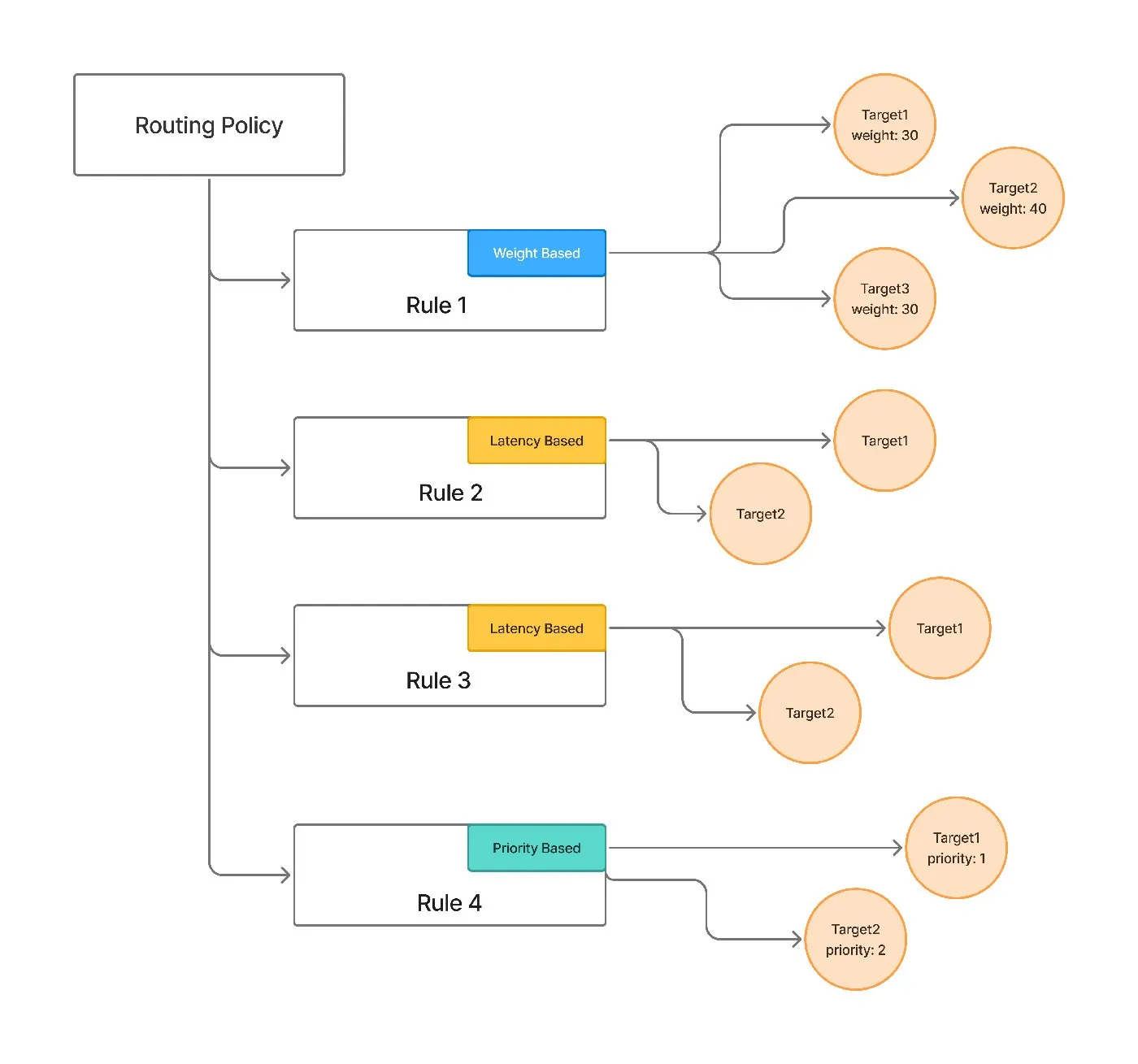
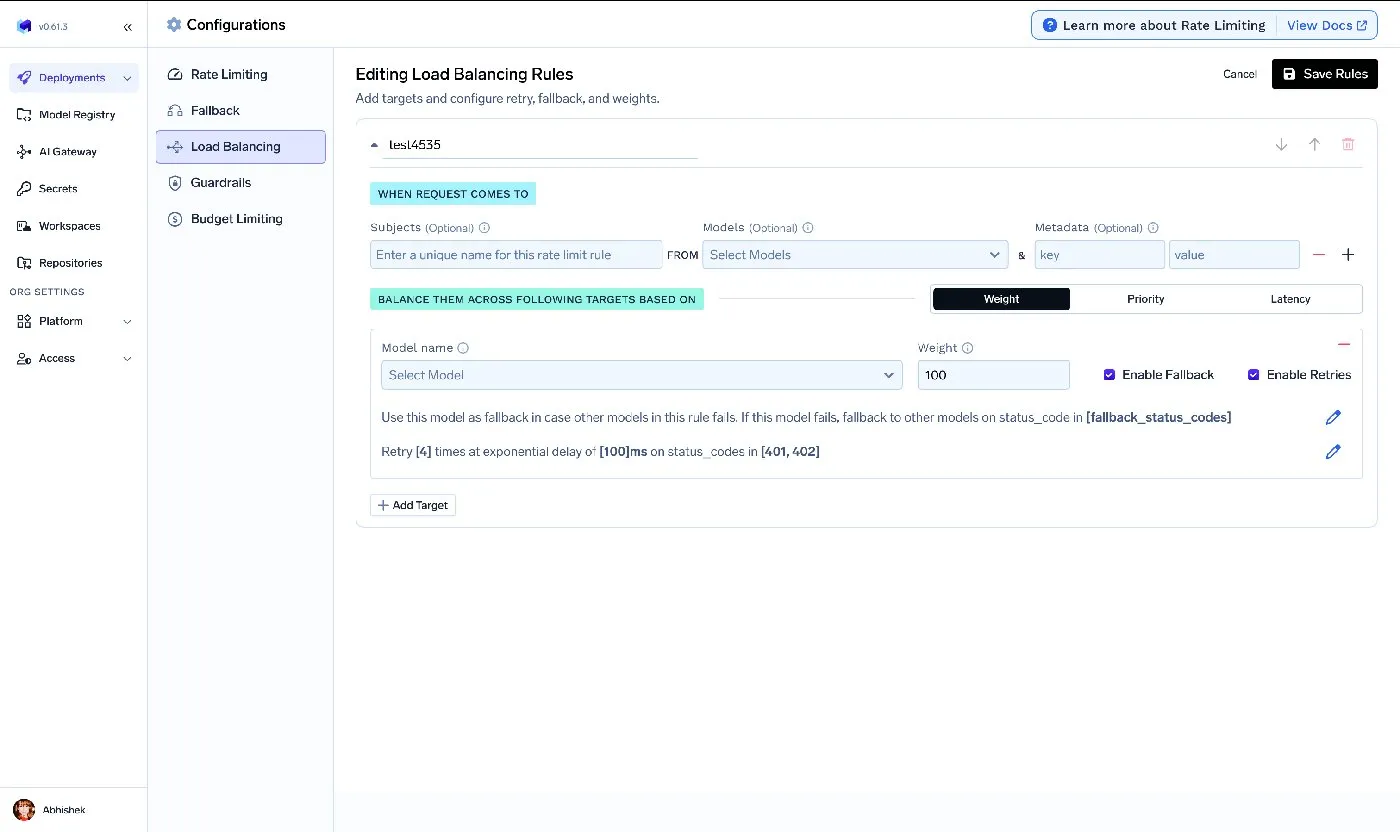
The routing strategies in this post aren't abstractions — they're how TrueFoundry's AI Gateway is configured. Its routing configuration matches each request by model, by subject (user, team, or virtual account), or by an X-TFY-METADATA header, evaluates rules top-to-bottom with first-match-wins, and sends the request to a target model — all as YAML applied at the gateway rather than branching logic in the app.
The three strategies map onto the ladder in section 2: weight-based for splits and canaries, latency-based to favor the lowest-latency healthy target, and priority-based for ordered preference with fallback. Per-target overrides also cover the model-specific-prompt problem this post raises — you can attach a different prompt_version_fqn per target so each model gets a prompt tuned for it — alongside per-target retries and fallback. (For new setups the docs recommend Virtual Models, which package the same strategies, retries, and fallbacks with clearer per-model ownership and access control.)
TrueFoundry AI Gateway delivers ~3–4 ms latency, handles 350+ RPS on 1 vCPU, scales horizontally with ease, and is production-ready, while LiteLLM suffers from high latency, struggles beyond moderate RPS, lacks built-in scaling, and is best for light or prototype workloads.





As últimas notícias, artigos e recursos enviados para sua caixa de entrada


.png)
.png)
.png)
.png)
.png)
.png)
.png)
.png)
.png)
.png)
.png)


