


Erhalten Sie sofortigen Zugriff auf eine TrueFoundry-Live-Umgebung. Stellen Sie Modelle bereit, leiten Sie den LLM-Verkehr weiter und erkunden Sie die gesamte Plattform — Ihre Sandbox ist in Sekundenschnelle einsatzbereit, ohne dass eine Kreditkarte erforderlich ist.


What is vibe coding? How does it work?

Vibe coding is an approach to software development where developers use plain language instructions to guide an AI coding tool to generate code or modify software. Instead of writing code line by line, the developer focuses more on describing the desired outcome, while the AI handles parts of code generation and implementation. Vibe coding typically relies on generative AI and large language models to interpret instructions and produce code.
As AI coding tools become more capable and accessible, more developers and non-developers are exploring vibe coding. Vibe coding speeds up prototyping, but AI-generated code still needs testing, security checks, and human review before it is used in production.
This article explains what vibe coding is, how it works, different approaches, how it is different from traditional programming, its benefits, and limitations.
What is vibe coding?
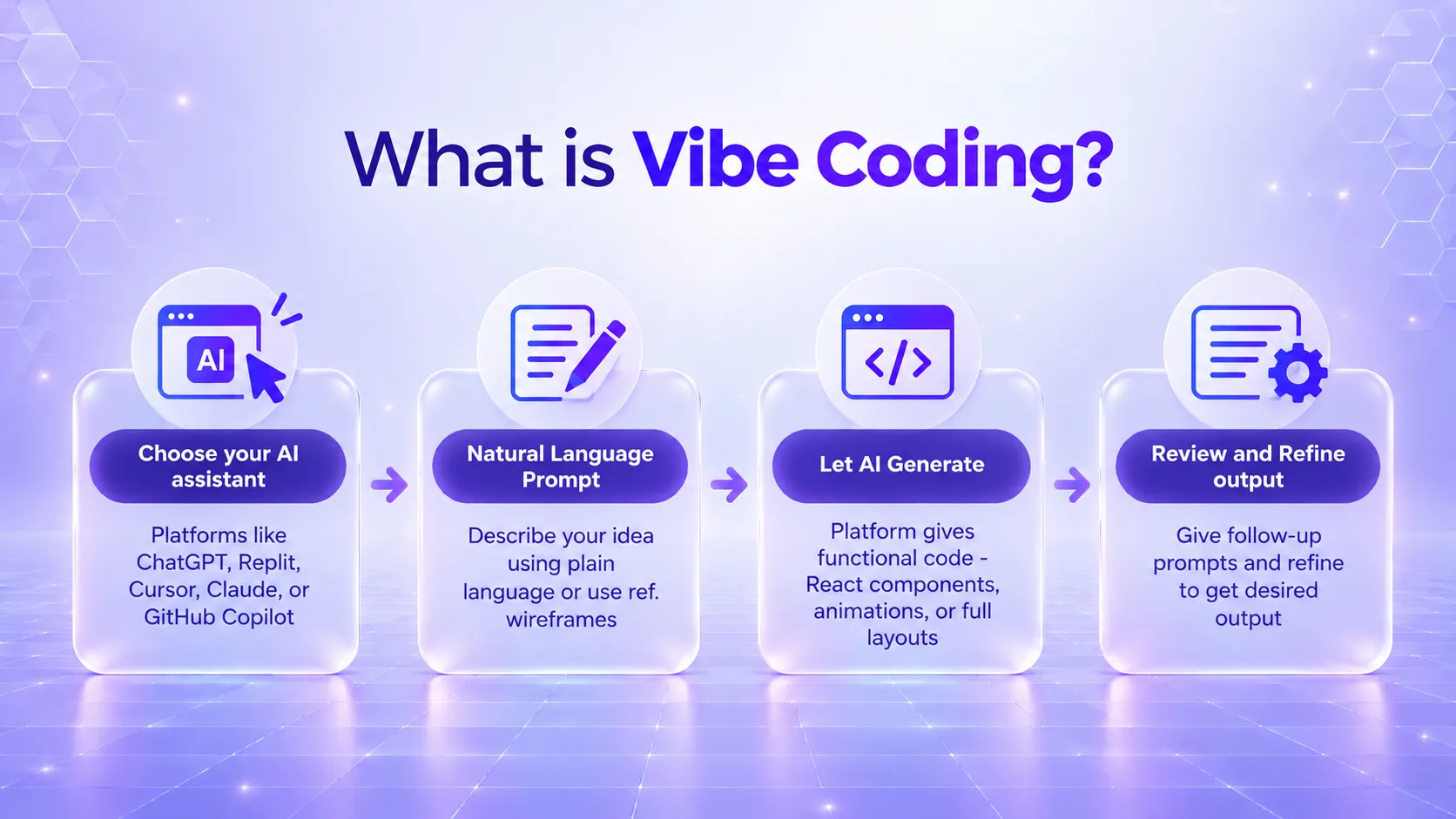
Vibe coding is a form of AI-assisted software development where natural-language instructions are used to guide an artificial intelligence system to generate code or modify existing code.
A developer might describe an application's functionality, ask the AI to create a particular feature, generate code snippets, or provide an error and ask it to suggest a fix. The AI generates code based on the instructions and the context available to it.
For example, a developer could ask an AI coding tool to create an expense tracker with a dashboard, category filters, and CSV export. Once the initial application is generated, the developer can ask the tool to change the layout, add authentication, or fix an error without manually implementing every change.
The developer doesn't need to specify every line of code or understand implementation details before the first generation is created. Instead, AI provides a starting point to test, review, and refine. The technical expertise required depends on the application's complexity and how much responsibility the AI system is given.
The term is used broadly, but vibe coding generally refers to a more AI-driven approach where the developer focuses on describing the desired result and directing the AI output rather than manually writing most of the code. It was popularized by AI researcher Andrej Karpathy, who used it to describe a style of programming centered on communicating with AI coding systems in natural language.
How does vibe coding work?
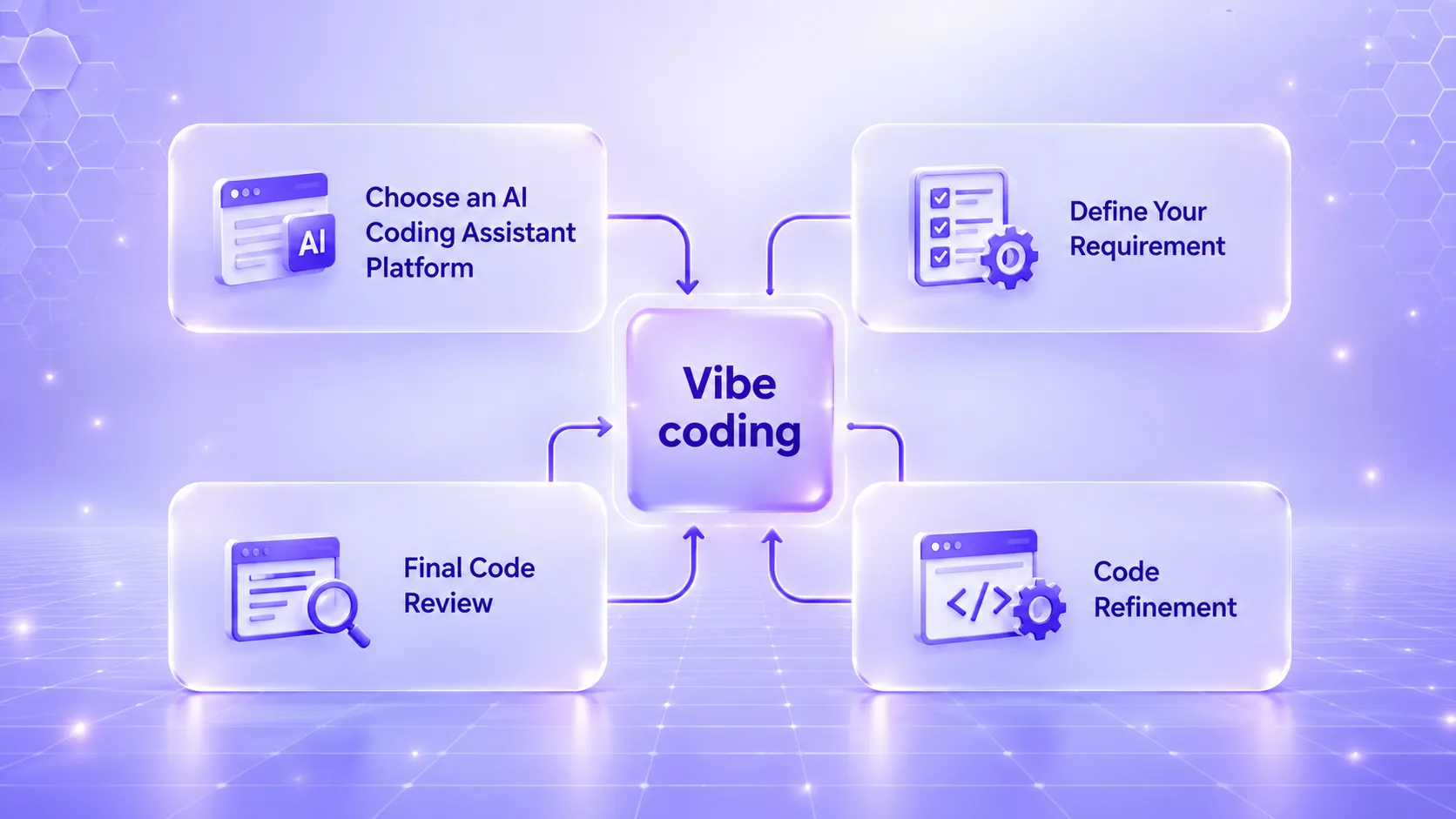
Vibe coding changes how developers interact with a code editor, AI coding tools, and other development tools. Instead of manually implementing every part, developers describe what the software should do and use AI to generate or modify the code.
What is the vibe coding process?
A typical workflow begins with an idea, requirement, or problem that needs to be addressed. The developer describes the desired functionality and gives the AI enough information to work on the task.
The AI coding tool performs code generation, modifies relevant files, and may produce functional code that the developer can run and evaluate. The developer then runs the application, inspects the result, and provides feedback. If something does not work as expected, the developer identifies the problem and asks the AI to make another change.
This workflow can be useful for use cases involving repetitive tasks such as creating boilerplate code, writing simple components, generating tests, or adapting existing code snippets. AI can also work across several programming languages, although the quality of the output depends on the model, the available context, and the complexity of the task.
What role do natural language prompts play?
Natural language is the main way to communicate requirements to an AI coding tool. Clear, specific instructions can help the tool generate code that matches the intended function. Explicit instructions can also reduce ambiguity about the required behavior, constraints, and necessary code.
For example, "build a dashboard" leaves many implementation decisions to the AI. A more useful instruction could explain who will use the dashboard, what information it should display, how users should interact with it, and which technical constraints it must follow.
Not every prompt needs to describe every technical detail. The detail should match the task. A simple change may need only a short request, while a larger feature may require information about data handling, expected inputs and outputs, dependencies, and existing application behavior.
This connects vibe coding with prompt engineering, where prompts are structured and refined to communicate requirements more clearly and improve consistency of AI-generated outputs.
Why does context engineering matter in vibe coding?
An AI coding tool needs more than an individual instruction when working on an existing application. It may also need access to information about the project's files, dependencies, architecture, coding conventions, previous changes, and current tasks.
Context engineering is therefore important when working with larger codebases, where the AI needs relevant project information to make changes. Giving the right project information can help AI make changes that fit the existing application instead of treating every request as an isolated coding task, and can reduce the risk of random changes that conflict with the existing codebase.
What are the different approaches to vibe coding?
Vibe coding can take different forms depending on the responsibility an AI system has. It can involve different levels of human involvement, from largely AI-generated development to close collaboration between a developer and an AI system.
Full vibe coding
Full vibe coding gives the AI most of the implementation responsibility. The developer describes the desired application or feature, reviews the result, and continues providing instructions as the software develops. The AI produces much of the implementation, while the developer focuses on the outcome and subsequent corrections.
This approach can work well for simple projects and prototypes, but relying heavily on generated code without adequate review can create problems when the software becomes more complex.
Human-led vibe coding
Human-led vibe coding keeps the developer responsible for architecture, technical decisions, testing, and reviewing the generated code.
The AI handles implementation tasks such as generating functions or components, while the developer decides what should be built and evaluates the generated code.
AI-first collaborative coding
In an AI-first workflow, the AI produces or modifies most of the code throughout development rather than being used only for occasional assistance, but the developer still initiates and approves each step. The human stays in the loop on every change, even though the AI is doing the bulk of the writing.
For example, a developer might ask the AI to explore an existing codebase, suggest an implementation, write the code, create tests, and revise the implementation based on test results.
Agentic vibe coding
Agentic vibe coding gives an AI system autonomy over multi-step work. Rather than being prompted for each individual change, an AI agent can inspect files, use development tools, execute commands, run tests, and modify multiple files on its own to reach a stated goal.
AI agents are therefore relevant to modern coding workflows because they can work toward a broader objective rather than responding to one code-generation request at a time.
How is vibe coding different from traditional programming?
Traditional coding generally involves translating requirements into a technical design and manually writing code, testing, debugging, and maintaining it as part of a broader software engineering process. Software engineers typically work directly with programming languages, frameworks, libraries, and implementation details throughout the development lifecycle.
Vibe coding moves more of the implementation process to an AI system, while the developer focuses on defining the desired outcome, directing the AI, and evaluating the result.
The distinction is not simply whether AI is a part of the development process. Developers have long used AI-assisted tools for autocomplete, code suggestions, debugging, and documentation. Vibe coding puts AI much closer to the center of the development process and can involve generating substantial parts of an application.
Vibe coding and conventional software engineering can also be combined. A development team may use vibe coding to create a prototype quickly and then apply traditional methods and established engineering practices to improve its architecture, security, testing, and maintainability before production deployment.
How can teams implement vibe coding?
Code generation is merely the starting point. Teams also require robust infrastructure to deploy AI-driven software, manage models, and observe performance in production.
Step 1: Select an AI coding platform
Choose an AI coding assistant, AI development environment, or coding agent that suits the project requirements. Consider its ability to understand larger codebases, work with the project’s languages and frameworks, and integrate with existing development tools.
Step 2: Describe the intent and context
Describe what the application or feature should do and provide the relevant information the AI needs. Include the application's purpose, expected behavior, technical requirements, existing architecture, and relevant project files where necessary.
Clear context helps reduce incorrect assumptions and unnecessary iterations.
Step 3: Generate the initial application code
Give the AI a focused task and review the generated code. For a new project, the task could involve generating the application structure and core functionality. For an existing application, the developer can ask the AI to implement one feature or change at a time.
Step 4: Iteratively refine the generated software
Run the application and check whether it behaves as expected. Describe errors or required changes to the AI and let it modify the implementation.
Keeping changes focused makes it easier to understand what has changed and identify the cause when something breaks.
Step 5: Validate, secure, and deploy
AI-generated code still needs standard software engineering checks. Run tests, review dependencies, check for security vulnerabilities, verify authentication and authorization, and make sure sensitive information has not been exposed.
If the resulting application includes AI models or AI-powered functionality, teams also need visibility into its behavior. AI observability can help teams monitor performance, failures, and other signals across AI applications.
Moving from AI-generated code to production?

What are the benefits of vibe coding?
Vibe coding improves productivity by reducing repetitive work while allowing developers to focus on technical direction and review.
- Rapid prototyping and faster development cycles: AI can generate code quickly, making it easier to turn an idea into a working prototype or build simple internal tools.
- Lowering the barrier to software creation: People with limited programming experience can describe an application in natural language and create simple functional software without manually writing every part of the implementation.
- Boosting developer productivity: Developers can use AI to handle repetitive implementation tasks, generate boilerplate, explain code, and explore possible solutions more quickly.
What are the limitations of vibe coding?
- Code quality and security risks: AI-generated code can contain bugs, insecure patterns, incorrect dependencies, or vulnerabilities. Generated code therefore needs proper review and security testing before use.
- Technical debt and code maintainability: Rapid changes can lead to duplicated logic, unnecessary dependencies, or inconsistent architecture if the codebase is not regularly reviewed.
- Challenges with debugging AI-generated code: AI tools can suggest multiple fixes without identifying the actual cause of a complex problem. Developers still need enough technical understanding of the application and its dependencies to diagnose difficult failures.
- Task complexity limitations: Vibe coding can be useful for prototypes and smaller applications, but complex systems with strict reliability, security, or performance requirements need stronger engineering oversight.
- Open-source licensing and dependency risks: AI-generated code may introduce dependencies or patterns without sufficient understanding of their licenses, maintenance status, or security implications. Teams should review dependencies and their licenses before using generated code in production.
Vibe coding in practice
Vibe coding speeds up software development by shifting more coding tasks to AI while keeping developers responsible for providing guidance, assessing the results, and making technical decisions. However, vibe coding is not simply a matter of replacing programmers with AI. Production software still needs testing, code review, security checks, and technical decision-making.
As AI coding systems become more capable, teams will need to balance development speed with code quality, security, maintainability, and human oversight. The value of vibe coding depends not only on how quickly AI can create software, but also on how well teams can validate and manage the resulting code.
Steuern, implementieren und verfolgen Sie KI in Ihrer eigenen Infrastruktur

GenAI infra- einfach, schneller, günstiger
Top-Teams vertrauen uns bei der Skalierung von GenAI

- © 2022 ENSEMBLE Technologies



Abonnieren Sie unseren Newsletter
Die neuesten Nachrichten, Artikel und Ressourcen werden in Ihren Posteingang gesendet


