October 31, 2026
|
5 min read


Blazingly fast way to build, track and deploy your models!
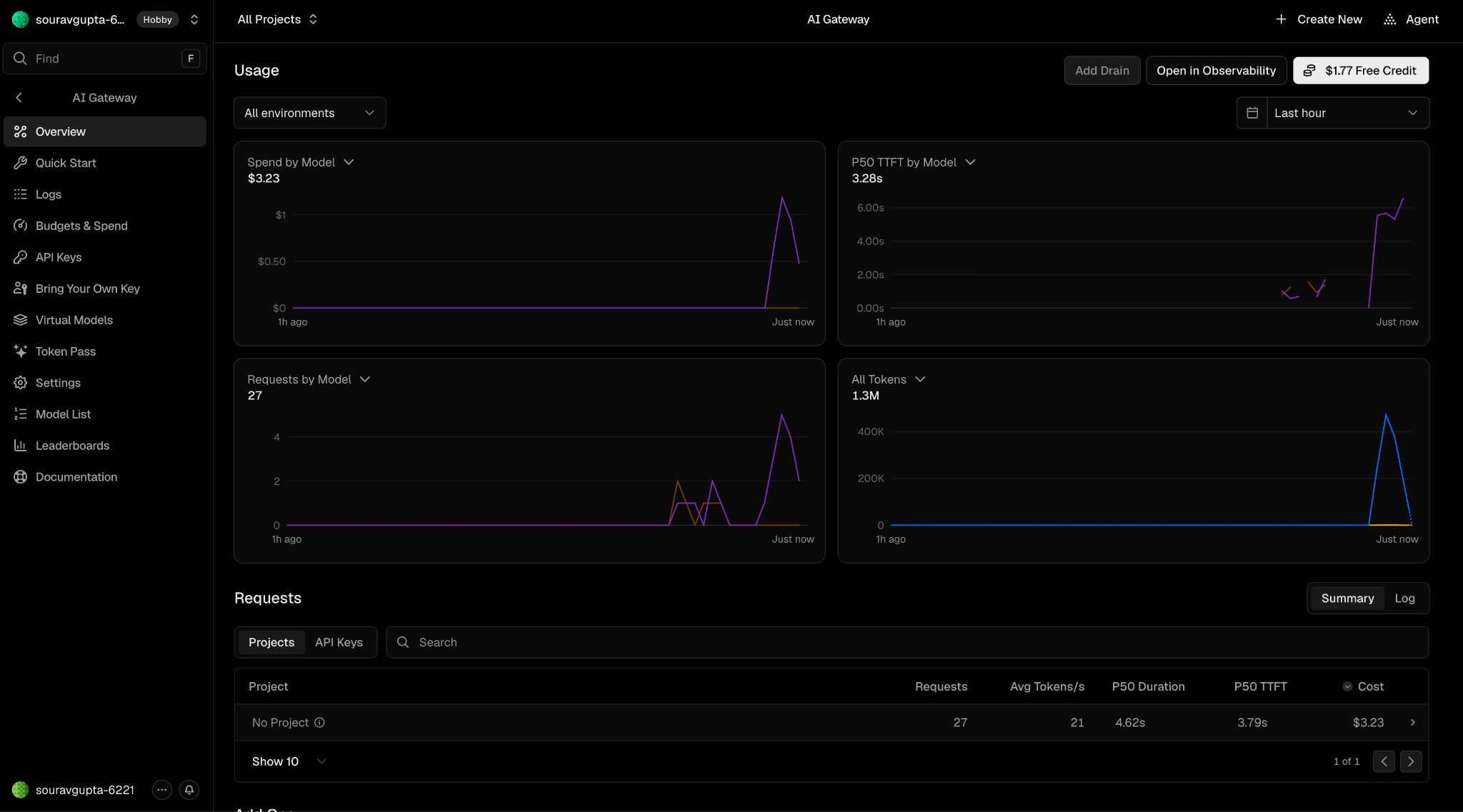
Vercel AI Gateway is a capable managed router, and for plenty of teams it is enterprise-ready today. For others it is not, and the line between the two is specific rather than vague. If your requirements fit a hosted service and the governance controls you need sit in Vercel's paid tiers, it holds up. If you need prompts to stay inside your own network, customer-selectable data residency, native content guardrails, or tool-level agent governance, you will run into gaps that are structural rather than roadmap details.
This is a review for the people who actually sign off on an AI gateway: platform engineering, security, and compliance. It works through the questions those teams ask during procurement, which are deployment and data path, identity and access governance, compliance certifications, data residency and retention, observability and audit, and maturity. Everything here comes from Vercel's public documentation as of September 2026, with screenshots from a live account. Where the docs do not establish something, we say "not documented" rather than claim the feature is missing, because those are different statements. If you want the category background first, our primer on what an LLM gateway is sets it up.
The phrase gets used loosely, so here is the bar this review holds Vercel to. An enterprise-ready gateway lets you control where prompts travel, proves who can do what with real identity and access controls, carries the certifications your auditors ask for, gives you answers on data residency and retention, produces an audit trail, and comes with support and maturity you can plan around. Provider coverage and an OpenAI-compatible API do not make a gateway enterprise-ready. Every serious product has those now. The scorecard below summarizes how Vercel AI Gateway does on the dimensions that decide a security review.
Enterprise-readiness at a glance. Green is ready, amber is partial, red is a gap.
Vercel documents the building blocks of access control. SAML single sign-on is available as a paid add-on on Pro or through Enterprise, while automatic directory provisioning through SCIM requires Enterprise. Workloads authenticate with team API keys or project OIDC tokens, and local OIDC validity is documented at 12 hours. Key lifecycle is reasonable: keys carry an expiry, deletion invalidates a key immediately, and keys created by a departing team member are deactivated. The team security settings expose token revocation across personal access tokens, app tokens, and API Gateway keys.
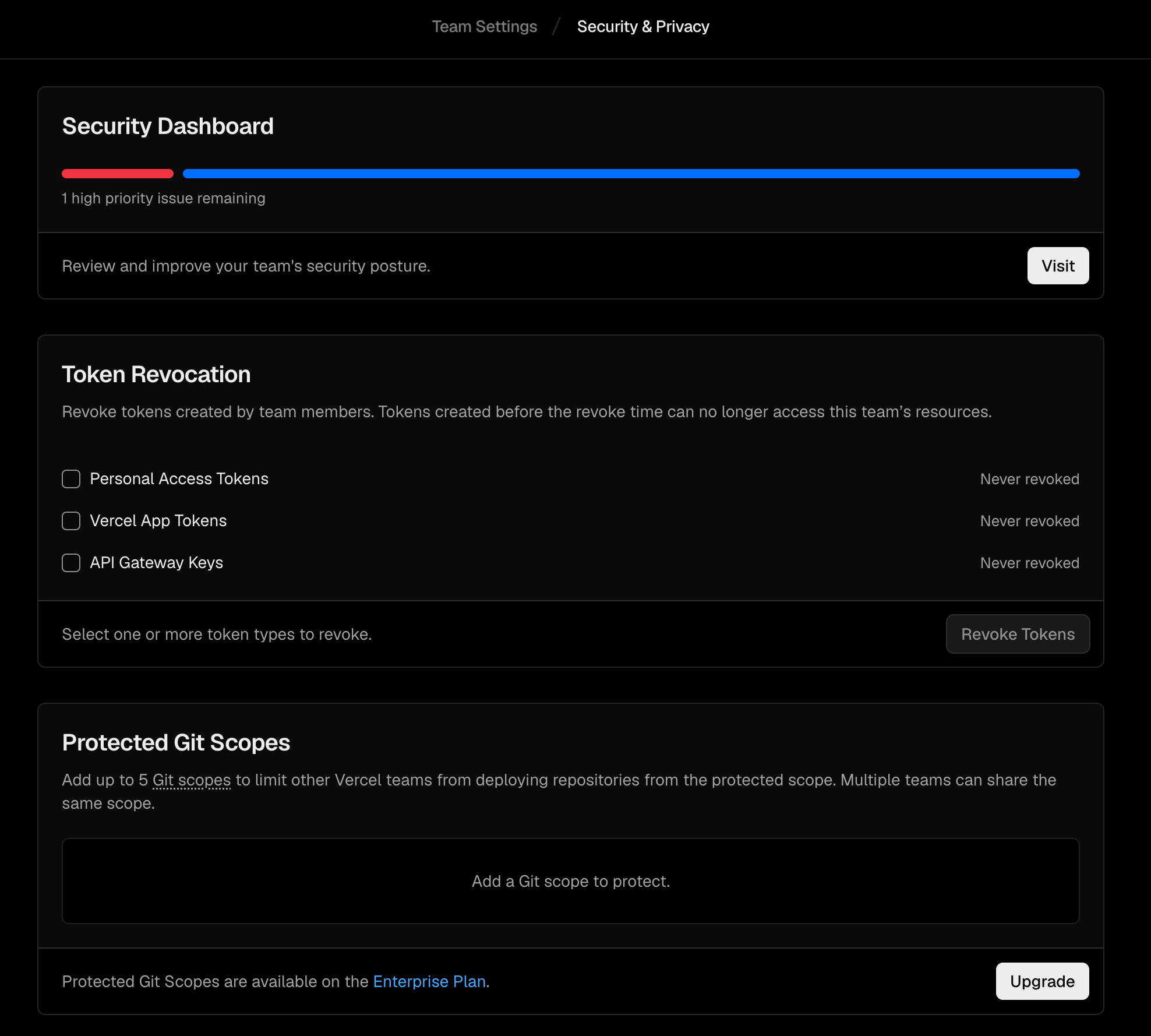
The gaps show up in granularity. Team roles and model or provider policy exist, but parameter-level attribute-based access control and per-key model scopes are not established in the documentation. For agent governance specifically, a unified tool-authorization layer inside the Gateway is not documented. Vercel Connect provides delegated API access, but that is an adjacent service rather than a Gateway MCP policy engine, so if your plan is to let agents call tools under centrally enforced policy, this is the area to test before you commit.
A related procurement point is which controls sit behind which plan, because several governance features are not available on lower tiers:
Teams contain projects, and Gateway keys belong to teams, so the logical scoping most organizations need is there. What the docs do not establish is physical dedicated isolation or noisy-neighbor guarantees, which matters if your security model requires tenant separation below the logical layer. There is also a nuance worth catching in budgets: project budgets apply to deployment OIDC requests rather than API-key spending, so project association and spend attribution answer different questions. A native approval workflow for key or tenant creation is not documented either, so self-service governance may need to be built around the product rather than inside it.
Vercel documents SOC 2 Type 2 and ISO 27001 at the platform level, HIPAA BAAs for eligible Pro and Enterprise customers, and a DPA. That covers a lot of standard procurement checklists. Two things need care. First, the exact Gateway and provider BAA coverage, and FedRAMP status, are not established in the public docs, so a regulated buyer should get those scoped in writing rather than inferred from the platform certifications. Second, Vercel's own security bulletin records an April 2026 incident involving unauthorized access to internal systems and exposure of some customers' environment variables that were not marked sensitive. That is platform history, and the source does not establish a Gateway-specific compromise, but it belongs in an honest enterprise assessment alongside the certifications. Vercel publishes a responsible-disclosure contact and penetration-test documentation through its Trust Center.
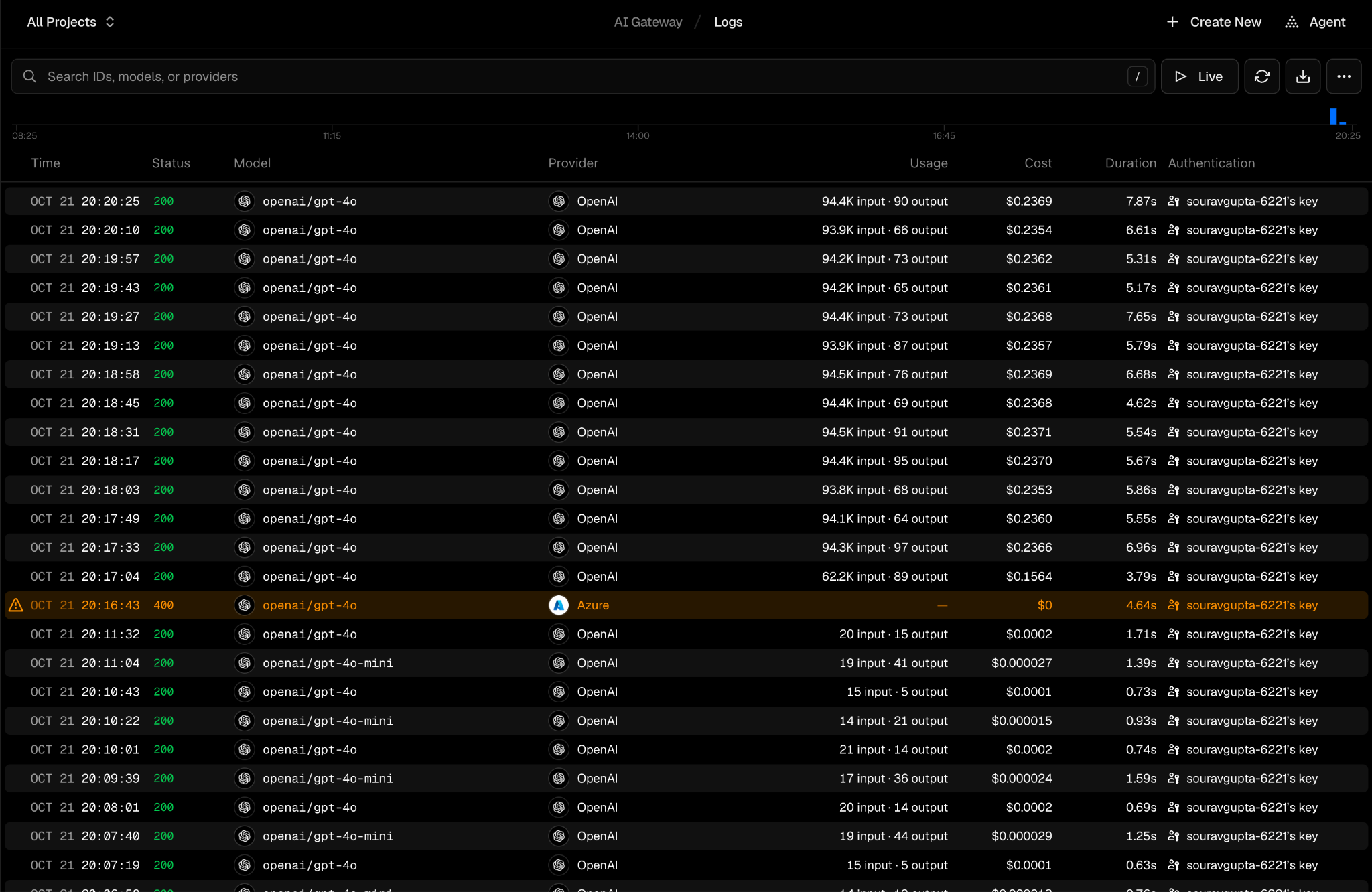
This is the section that tends to decide regulated deployments, and it is mixed. On the positive side, the Gateway does not capture prompt and completion bodies, deleting request content after completion, which is a genuine privacy advantage over gateways that log everything by default. You can see this in the request logs: each row carries model, provider, token usage, cost, duration, and the authenticating key, but no prompt or response content.
An inferenceRegion setting can pin provider inference and associated storage to the US or EU when the provider supports it, and the request fails rather than silently falling back if the region cannot be honored. The limits are equally concrete, and they are easier to read as a table:
A native configurable PII redaction engine is not documented, and built-in content guardrails or jailbreak defense for the Gateway are not established, so those controls would live in your application or a separate tool. Zero data retention is available as a paid, team-wide option, but Vercel is explicit that ZDR is not a no-egress architecture, prompts still traverse Vercel and the selected provider. Per-tenant metadata retention and deletion APIs are not established. If your compliance posture requires that prompts never leave your network, a hosted gateway cannot satisfy that by design, and this is where many regulated teams look at a deployable alternative.
Vercel's cost model is transparent, which helps enterprise planning. The Gateway charges a 0% token markup, including on your own provider keys, and budgets can be scoped to a team, an OIDC project, an API key, or a user, with daily, weekly, or monthly resets.
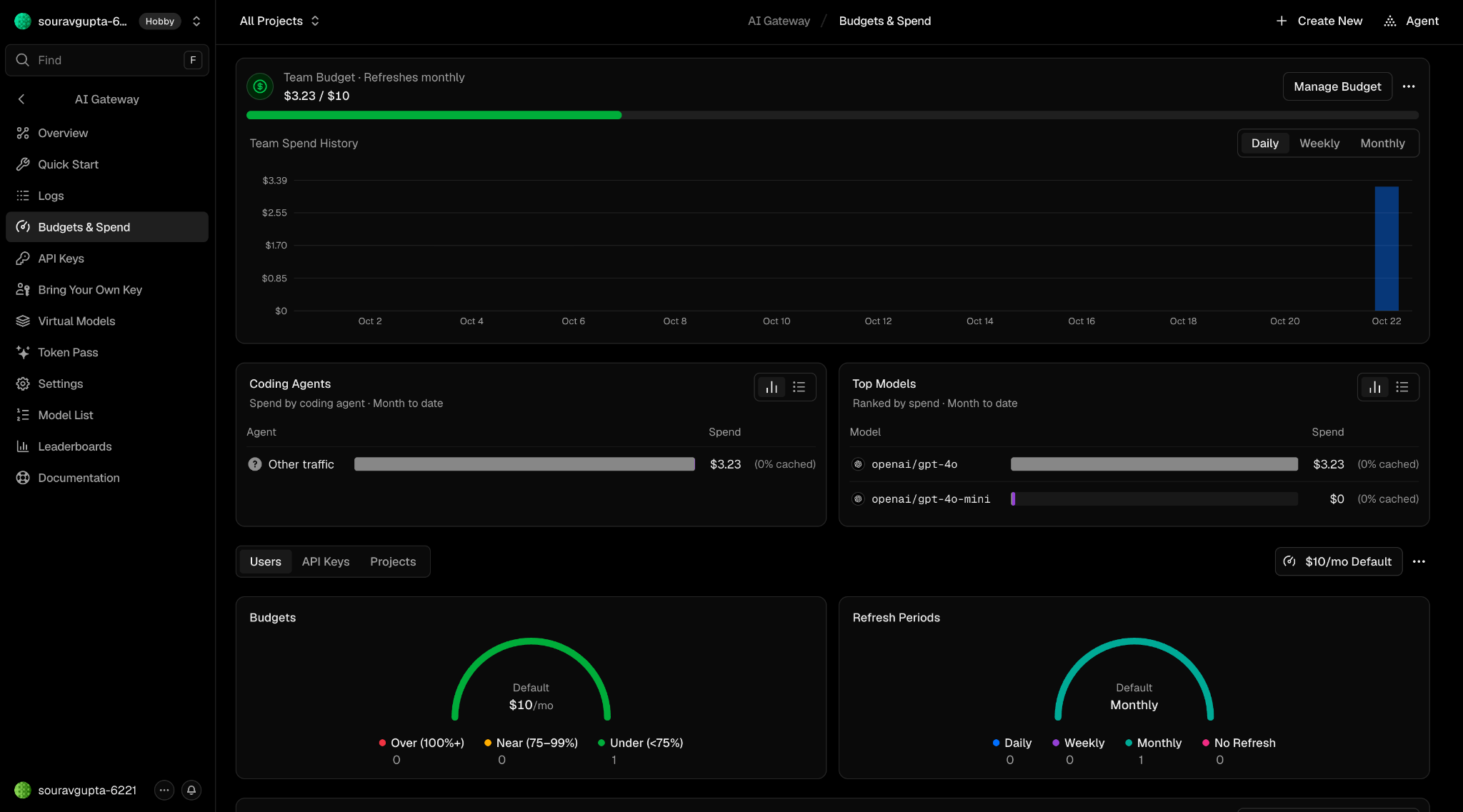
The thing to model is that governance is metered. Model and provider restrictions cost 0.10 USD per 1,000 successful requests, team-wide ZDR the same, reporting writes 0.075 USD per 1,000, reporting queries 5 USD per 1,000, and trace drains 0.05 USD per 1,000 plus egress. Platform subscriptions sit on top: Pro at 20 USD per month plus 20 USD per seat, SAML at 300 USD per month, and a HIPAA BAA at 350 USD per month on eligible plans, with Enterprise on a custom contract. Routing is cheap; the controls a security team will want to turn on are the line items to forecast.
Native metrics cover request volume, token usage, spend, duration, time to first token, routing, and errors, and traces export over OTLP/HTTP, though not gRPC. Logs and traces hold metadata rather than prompt or completion bodies, which is consistent with the privacy default but also means you cannot build a captured-body evaluation dataset from the Gateway itself. Retention has ceilings: the logs UI looks back at most 36 days and detailed routing attempts are retained 30 days. Custom queries are the clearest example of tiering, the query builder is read-only until you move to Observability Plus on Pro.
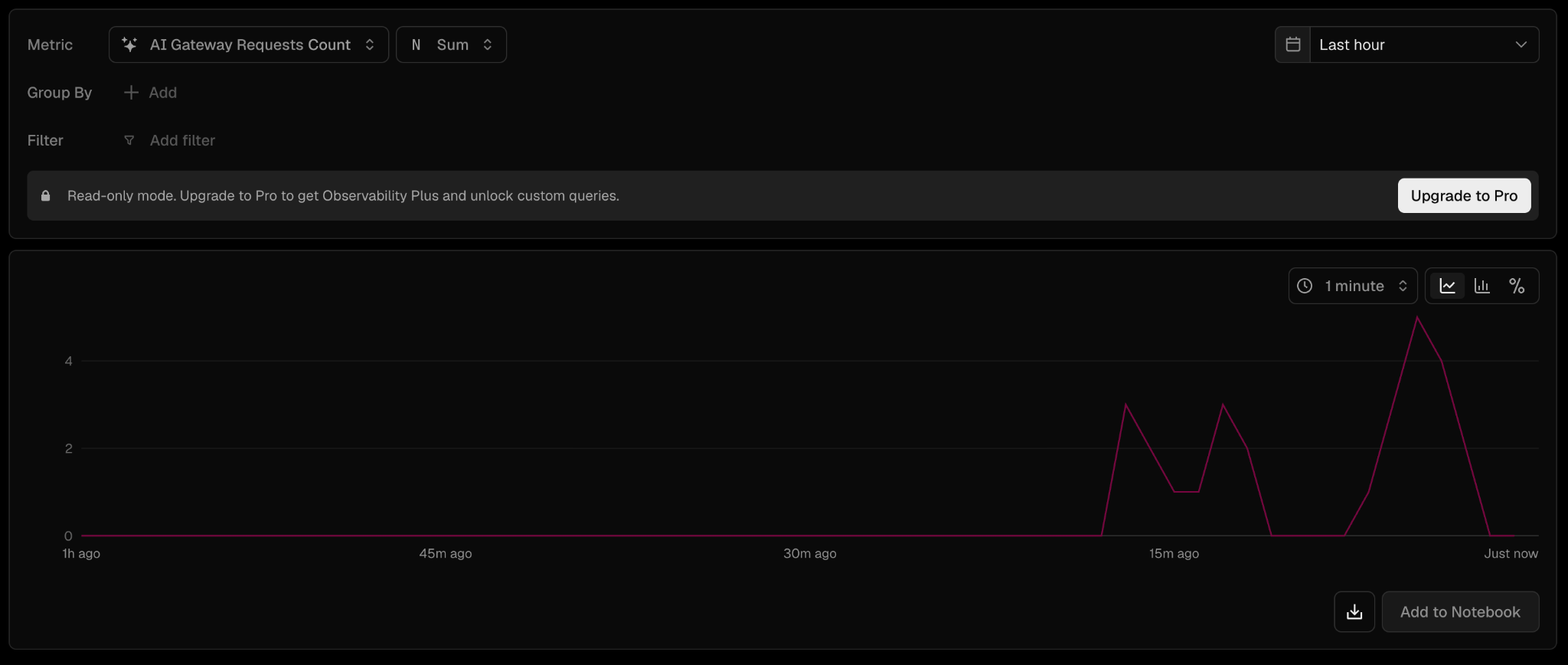
Configuration audit export exists on Enterprise, though exact coverage of budget, allowlist, key, and routing events is not established.
Vercel AI Gateway reached general availability in August 2025, and Vercel is a well-funded company, with a Series F that valued it at 9.3 billion USD in September 2025. Vercel says the Gateway powers v0, its own product, which is a reasonable signal of real usage, treated as a vendor claim. On the caution side, several API features remain in beta, and a Gateway-specific contractual uptime or response-time SLA is not established in the public docs, so support expectations should be confirmed in your contract rather than assumed.
Is Vercel AI Gateway enterprise-ready? For a team whose requirements fit a managed service, whose certifications needs are met by SOC 2 and ISO 27001, and whose governance controls are available in the paid tiers, yes. It is a well-built router with transparent pricing and a privacy-forward default. Look elsewhere if prompts cannot leave your network, if you need air-gapped or customer-controlled deployment, if you require native PII redaction and content guardrails inside the gateway, or if agents need tool-level governance with enforced policy. Those are not small teams' concerns, they are exactly the requirements that define regulated and platform-governed environments.
The gaps above are the specific places a deployable gateway closes. TrueFoundry runs the same unified OpenAI-compatible gateway, with 1,000+ models behind one API, but you choose where it runs: fully managed SaaS, managed SaaS with your own data storage, a hybrid where the gateway data plane sits in your VPC, or a fully self-hosted install including air-gapped. In the VPC modes, prompts never leave your network, which answers the data-sovereignty question that a hosted-only service cannot. The gateway adds roughly 3 to 4 ms of overhead and sustains 350+ RPS on a single vCPU.
On the governance gaps specifically, TrueFoundry includes an MCP gateway and agent gateway with tool-level RBAC and pre- and post-tool guardrails, built-in guardrails for content and PII, and model deployment in the same control plane so a self-hosted vLLM, TGI, or Triton endpoint is a first-class route. SOC 2, HIPAA, and GDPR support, SSO, RBAC, and audit logging are built in. If you are weighing gateways the way this review does, our TrueFoundry vs Portkey comparison applies the same lens to another vendor. If you are evaluating for a regulated or platform-governed deployment, book a demo and we will walk through your specific governance and residency requirements.
Enterprise-ready is not one line, it is a checklist, and Vercel AI Gateway passes a good part of it. It is a capable managed router with real certifications, transparent pricing, and a default that keeps prompt bodies out of its logs. The parts it does not cover are the ones that define regulated and data-sovereign deployments: running the gateway inside your own network, customer-controlled residency, native guardrails, and tool-level agent governance. If those are on your checklist, evaluate a gateway you can deploy where your compliance requires, and book a demo to see how TrueFoundry handles them.
TrueFoundry AI Gateway delivers ~3–4 ms latency, handles 350+ RPS on 1 vCPU, scales horizontally with ease, and is production-ready, while LiteLLM suffers from high latency, struggles beyond moderate RPS, lacks built-in scaling, and is best for light or prototype workloads.

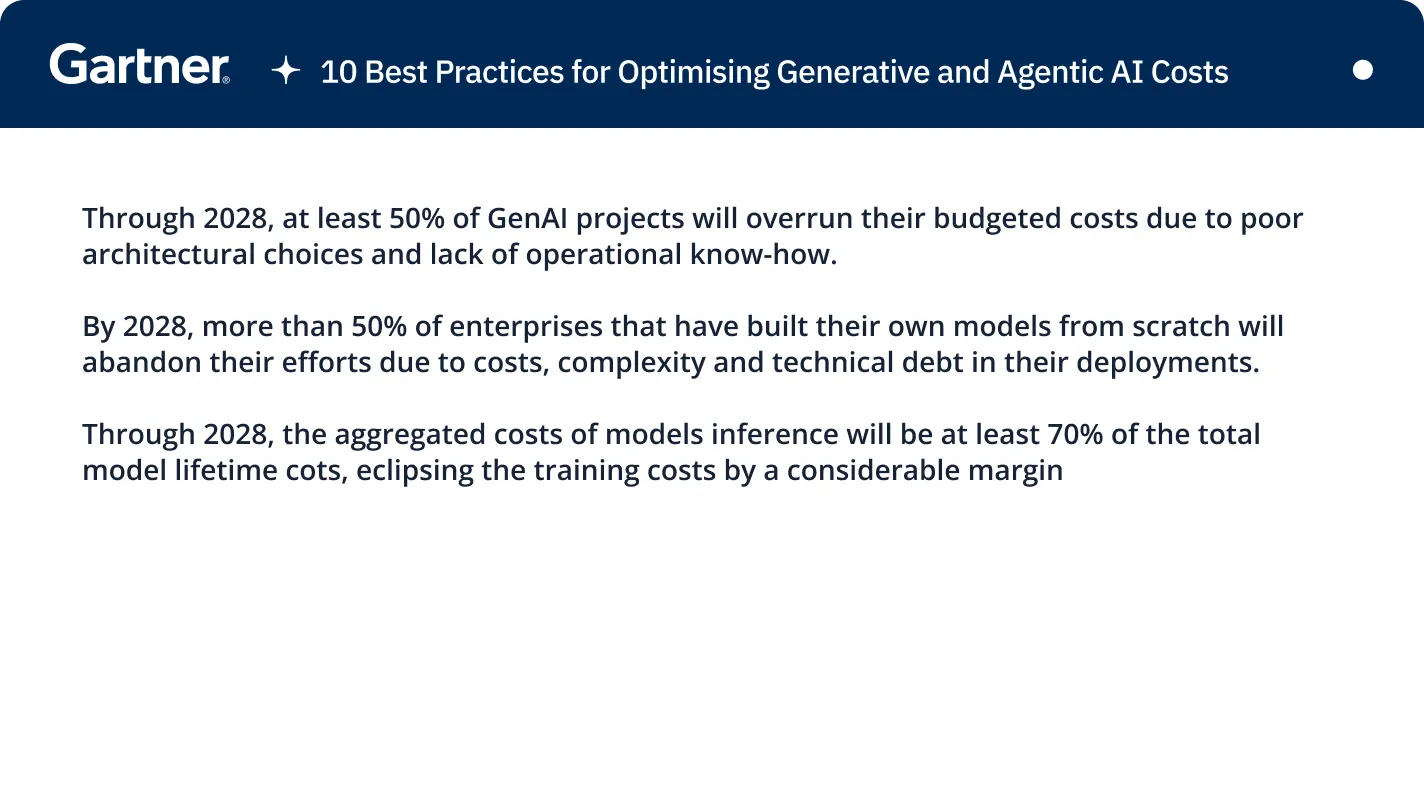

For teams that fit a managed service and whose governance needs sit in Vercel's paid tiers, yes. It carries SOC 2 Type 2 and ISO 27001 and offers SSO, budgets, and a privacy-forward default. Teams that need in-network deployment, customer-controlled data residency, native guardrails, or tool-level agent governance will find those harder to satisfy with a SaaS-only gateway.
Vercel documents SOC 2 Type 2 and ISO 27001 at the platform level and HIPAA BAAs for eligible Pro and Enterprise customers. Exact Gateway and provider BAA coverage, and FedRAMP status, are not established in the public docs, so a regulated buyer should get those scoped in the contract.
The Gateway does not capture prompt or completion bodies and deletes request content after completion. For telemetry, the logs UI looks back at most 36 days and detailed routing attempts are retained 30 days, with longer retention requiring a separately priced tier. Customer-selectable at-rest location for Gateway metadata is not established.
Yes. TrueFoundry runs in your VPC, on-prem, air-gapped, or hybrid, and no data leaves your domain. This is a core reason regulated teams choose it over SaaS-only gateways.
Yes. It includes an MCP Gateway, an Agent Gateway, and an MCP and Agents Registry with tool-level access control, so agents from LangGraph, CrewAI, AutoGen, or a custom framework can be governed centrally.



The latest news, articles, and resources sent to your inbox