October 31, 2026
|
5 min read


Blazingly fast way to build, track and deploy your models!
Both tools install as a CLI, sit in your terminal, and work agentically: they assemble context from the repository, plan, call tools (shell, MCP servers, web search) and write changes back. The difference a developer feels day to day is the model family and the surrounding ergonomics; the difference a platform team feels is where configuration and credentials live.
Claude Code runs on Anthropic’s current models — Opus 5.5, Sonnet 5.5 and Haiku 5.5 — with extended thinking on by default and a model picker (/model) to trade cost for capability. It reads a hierarchy of CLAUDE.md instruction files (enterprise, project and user scope) and settings.json, ships an IDE extension alongside the terminal, and exposes subagents, skills and hooks. Codex CLI runs on OpenAI’s Codex-family models, is open source, and is driven by a ~/.codex/config.toml that names a model provider; it reads an AGENTS.md for repo-level instructions and runs edits inside a sandbox with an approval policy. In both, the agent holds a long-lived credential, reads whole files, and spends per token — the three properties that make a coding agent the hardest thing in your estate to govern.
The two agents converge on the same loop — context in, plan, tool calls, diff out — but the way each handles context, tools and safety is where the day-to-day feel diverges.
Claude’s models carry a context window of roughly 200,000 tokens (larger in preview on some tiers), and Claude Code manages it actively: it compacts earlier turns as the window fills, lets you steer scope through CLAUDE.md, and treats prompt caching as a cost lever — on a subscription the cache lifetime is about one hour, on the API or a cloud provider around five minutes, and cached reads land roughly ten times cheaper than fresh input. Codex CLI assembles context from the working tree and AGENTS.md and relies on its model’s window plus summarisation. The upshot is the same for both: the more context you feed, the more each turn costs, so context discipline is a spend decision, not just ergonomics. For the arithmetic, see the Claude prompt-caching cost math.
Both agents speak the Model Context Protocol, so the same MCP servers — a database reader, a ticketing bridge, an internal API — plug into either. Claude Code defers MCP tool definitions by default (not loaded into context until needed) and layers subagents and on-demand skills on top, which keeps the token overhead of a large tool catalogue down. Codex CLI is an MCP client too and can itself be exposed as an MCP server. The governance consequence is identical and easy to miss: an MCP server is a second credential and data path the agent’s managed config does not police, so tool allowlisting is a separate control for both. We cover that surface in the best MCP gateway for Claude Code.
Codex CLI leans on an explicit sandbox with modes from read-only to workspace-write to full access, plus an approval policy for when the agent may act without asking. Claude Code gates shell and file actions through permission prompts and hooks that can veto a tool call before it runs. Both put a human in the loop by default and both can be loosened to run unattended — and an unattended agent with a shared key is exactly the configuration that erases attribution, which is where the gateway earns its place.
On pure coding, both are strong and the gap narrows with every release; benchmark leads trade back and forth. For most teams the choice is not which model is two points higher this month — it is which one your developers prefer and whether you can govern it. We cover the tool-level comparison with Cursor in Cursor vs Claude Code.
The billing models are shaped differently, which matters more than the headline rates when you multiply across a team.
Claude Code’s subscription allowance is shared across Claude Code, Claude chat and Cowork on a five-hour and weekly window; Codex usage draws on the developer’s ChatGPT seat or an API key. Auth itself is the governance fork in the road: a subscription or a personal sign-in ties usage to an individual but hides it inside a seat, while a single shared API key is cheap to set up and impossible to attribute. For the full Claude Code breakdown, see Claude Code pricing explained; for what coding agents cost in general, AI coding agent pricing.
Both agents live on endpoints you do not own, so the only durable control is an admin-owned config read at higher precedence than the developer’s, a file lock, and short-lived credentials. The path and shape differ. Claude Code reads a managed settings.json that your MDM writes to a system location the developer cannot edit — on macOS under Application Support, on Linux under /etc — and that layer outranks the user’s own settings. Codex enforces through a managed config whose path, schema and precedence change by operating system and CLI version — a sharper edge that has caught fleets out when a release moved the precedence. We go deep on the Codex side in OpenAI Codex governance, and on the Claude side in Claude Code governance with an AI gateway.
The three controls that actually hold, for either agent:
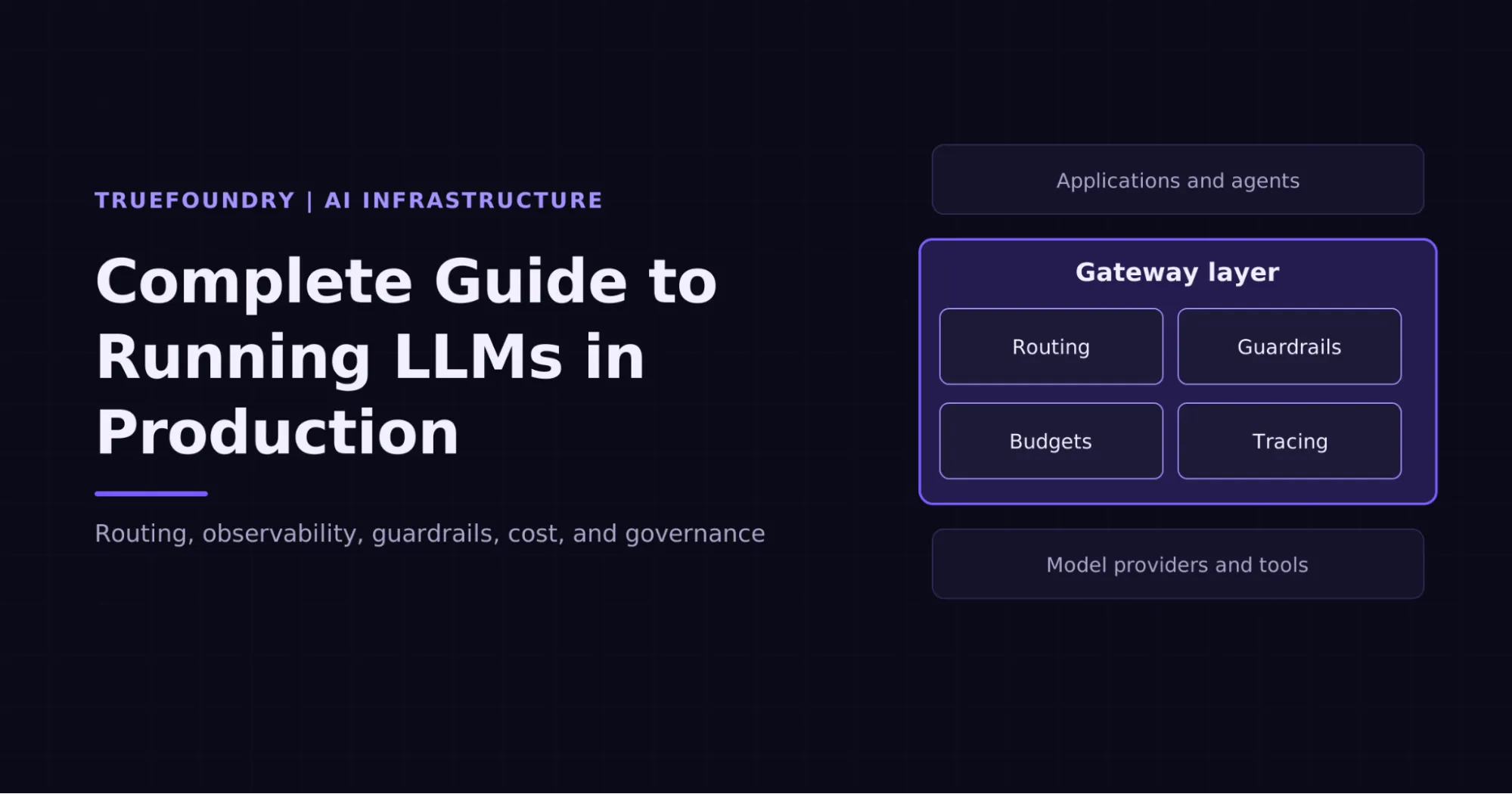
The point both agents share: enforcement that depends on the developer not editing a file is not enforcement. What makes it real is a control point on the network path — which is the gateway, adding only a few milliseconds of overhead and emitting OpenTelemetry so your existing observability sees both agents the same way. For the token-accounting side, see Claude observability and token accounting.
If you are forced to lead with one agent, the signal is rarely the benchmark — it is the surrounding stack, the auth model you can live with, and where your developers already are. This matrix captures the usual deciders.
Note the last row. For most enterprises the honest answer is that the decision is close enough that standardising on one costs more in developer friction than it saves in simplicity — which is the case for running both.
Developer preference is real and not worth fighting. Some engineers are faster in Claude Code, others in Codex, and a year from now the leader may have flipped. Routing both through the TrueFoundry AI Gateway makes the choice reversible: each request resolves to an individual, you set which models each tool may reach, spend is attributed per developer, and audit is produced on the path rather than requested from a laptop. You get one cost view across Claude Code, Cursor and Codex instead of three.
Fifty engineers, split roughly evenly between the two agents. Instead of standardising on one and forcing the other half to switch, the platform team points both at the gateway: Claude Code and Codex each get a managed config over MDM that targets the gateway base URL, a model policy that keeps the most expensive tier a deliberate choice, and short-lived tokens refreshed on a schedule. Security gets one audit trail with the real developer on every request; finance gets one per-team number; developers keep the tool they like. The verdict stops being Claude Code or Codex and becomes a routing decision you can change without touching a laptop.
Whether you are moving a fleet from one agent to the other or deliberately keeping both, the gateway turns a disruptive migration into a routing change. A practical sequence:
The same sequence works for coexistence: never force step five. Both agents run side by side behind one control plane, and the organisation stops caring which one any given engineer opened this morning.
Claude Code vs OpenAI Codex CLI is a genuine toss-up on coding, and that is exactly why standardising on one is the wrong instinct. The models will keep leapfrogging, and your developers already have preferences. What does not change is the need for identity, model policy, spend attribution and audit on every request — and none of those belong in a TOML or JSON file on a laptop.
Pick the agent your developers like. Then make the choice reversible by putting it behind a control plane, so switching is a routing change and not a migration.
TrueFoundry AI Gateway delivers ~3–4 ms latency, handles 350+ RPS on 1 vCPU, scales horizontally with ease, and is production-ready, while LiteLLM suffers from high latency, struggles beyond moderate RPS, lacks built-in scaling, and is best for light or prototype workloads.


Both are strong terminal coding agents and benchmark leads trade back and forth, so “better” depends on your developers’ preference and your stack. For an enterprise, the more useful question is which you can govern — and the answer is both, if you route them through one gateway.
Claude Code runs on Anthropic’s models (Opus 5.5, Sonnet 5.5, Haiku 5.5), ships an IDE extension alongside the CLI, and reads a CLAUDE.md hierarchy; Codex CLI is open source, runs on OpenAI’s Codex-family models, is driven by a TOML config and reads AGENTS.md. Both are agentic, speak MCP, read your repo and enforce over MDM, but the config schema and governance edges differ.
Claude Code is bundled into Pro ($20/mo), Max ($100–$200/mo), Team and Enterprise seats, or billed per token. Codex is tied to ChatGPT subscriptions or the OpenAI API. Underneath, cost tracks model choice and context size for both — budget around $150–250 per developer per month as a starting point, with most users under $30 on a typical day.
Yes, and many teams do. Routing both through an AI gateway gives you one identity, model-policy, spend and audit plane across them, so developer preference stops being an operational cost.
Both require an admin-owned managed config plus a file lock and short-lived tokens. Codex’s enforcement is more version- and OS-sensitive, so it needs tighter version gating. A gateway equalises them by moving the real control onto the network path.
Yes. Both Claude Code and Codex CLI are MCP clients, so the same servers work with either. But an MCP server is a separate credential and data path that the agent’s managed config does not police, so you allowlist and route MCP traffic as its own control — ideally through the same gateway.
If both already route through a gateway, switching is a routing change, not a migration: identity, model policy, spend and audit stay on the network path while the developer swaps the tool in front. Put the gateway in place first and the move becomes almost free.
Yes. The TrueFoundry AI Gateway deploys in your VPC, on-prem or hybrid, so traffic from either agent stays in your environment while still getting per-developer attribution and policy.



The latest news, articles, and resources sent to your inbox