August 26, 2026
|
5 min read


Published: May 29, 2026

Blazingly fast way to build, track and deploy your models!
Agentic AI is reshaping enterprise operations, bringing in efficiency, speed and improved reliability with control. Agentic AI in Banking is one such use case that shows impressive possibilities but feels like a double-edged sword.
Every day, billions of people swipe cards, transfer money, receive salaries, or send money across borders. We expect these transactions to work instantly and quietly in the background but the reality is it’s quite complex with a global bank processing millions of financial transactions per hour. Many of these are initiated across countries and need daily reconciliation across geographies, currencies, and regulatory regimes.
Systems flag alerts even if there’s a tiny fraction of suspicious activity and if something goes wrong, accounts get frozen, regulators have to step in and more complexities arise. This complexity of operations brings global banks to a difficult decision point in the world of adopting Agentic AI for improving it:
Can Agentic AI also be trusted to run parts of core banking operations — or is the risk too high?
The primary reason for this internal conflict is that most of these institutions run some of the world’s most latency sensitive, regulation-heavy workloads. Choosing “no” feels safe.
But choosing “no” also means accepting slower systems, higher costs, human fatigue, and operational risk at a scale that will only grow.
So what would it actually take for a global bank to confidently say yes?
In this blog, we walk through a realistic use case where Agentic AI can significantly improve reliability and efficiency without breaking latency, privacy, or regulatory constraints. This is the first in a series on how complex, regulated industries can adopt Agentic AI safely — and how platforms like TrueFoundry’s Agent Gateway make this possible in practice.
One of the most demanding environments for this is Anti-Money Laundering (AML) in a Global bank. They sit at the intersection of scale, complexity, and regulation helping detect, triage and fix cases around false transactions.
Consider such a Bank that operates in the US, EU and India, processing ~1 Bn transaction per month. Imagine the amount of time that the AML teams spend manually on the function even with assisted traditional rule based and AI systems.
Global banks face a staggering operational burden when managing Anti-Money Laundering (AML) compliance across multiple geographies. Traditional rule-based systems generate millions of alerts, the vast majority of which are false positives requiring intense manual review.
The following table breaks down the current manual bottlenecks against the projected efficiency gains using an Agentic AI system:
Implementing an Agentic AI in banking systems allows investigators to move away from repetitive data stitching. Instead, teams can focus on high-impact decisions and proactive financial oversight while the system maintains a full audit trail for regulators.
Traditional banking operations have long relied on Robotic Process Automation (RPA) and rigid, rule-based systems to manage compliance. While these systems are excellent for "if-then" logic, they struggle with the nuance of modern financial crime. In Anti-Money Laundering (AML) specifically, rule-based systems typically flag transactions, but a significant portion of these are false positives that require manual intervention.
This creates a massive operational bottleneck where investigators spend hours stitching together customer profiles and transaction histories just to dismiss a "suspicious" alert.
Agentic AI platforms represent a fundamental shift from these linear scripts to adaptive reasoning. Unlike traditional automation, these autonomous systems can process unstructured data in natural language, allowing them to understand context rather than just triggers.
Implementing this intelligence requires four critical components working in orchestration:
By assembling these components, the bank creates a foundation that can handle unstructured data at scale while maintaining the "air-gap" security required by global financial regulators.
Building at this level of volume requires more than just a model wrapper. Explore our deep dive on LLM in enterprise.
Because this agent sat on the critical path of transactions, the system had to meet extremely strict requirements. These constraints mirror the broader challenges of agentic AI in enterprise deployments across regulated industries.
It’s very important that any AI inference used in Anti-money laundering decisions must execute within the originating region. This immediately invalidates any centralized GenAI architectures.
The bank operates in the US, EU, and India, where transaction data cannot leave the originating geography due to strict data localisation laws and also face other regulatory requirements -
While data residency is the first hurdle, maintaining a compliant posture across regions is a continuous effort. Read more in our guide to AI governance.
Global banks cannot accept latency added by cross-geographical transfers. The scale of transaction volumes was huge - Billions of transactions per month and in order to flag a request and then analyse and investigate it, the system needed to be able to process things at massive scale over huge amounts of transaction data, while having the ability to handle traffic spikes during regional business hours and peak events.
The design of the Agent itself will need local specific constraints and data also cannot move across borders.
AML depends on the local data, customer profiles and Regulator specific AML rules. For example, each region has different output formats approved by regulators (FinCEN, AMLD, FIU-IND). So a global RAG system also doesn’t work as there would need to be separate RAG indexes per region as it will be a core component of the agent.
Implementing localized retrieval requires a robust infrastructure to manage diverse vector databases. See our technical guide to deploying RAG in production.
Have the ability to plug-in different local models for corresponding regions.
At the same time, some of the regions have localised region-approved models/private models, which can only be accessible to the AML agent in that region.
Centralize only MetaData for global leadership decisions and analytics, No prompts, completions, or customer data and still provide Full observability without regulatory risk
For banks needing to fine-tune specific regional models for better compliance accuracy, training and fine-tuning capabilities are essential to maintain the quality of investigation narratives.
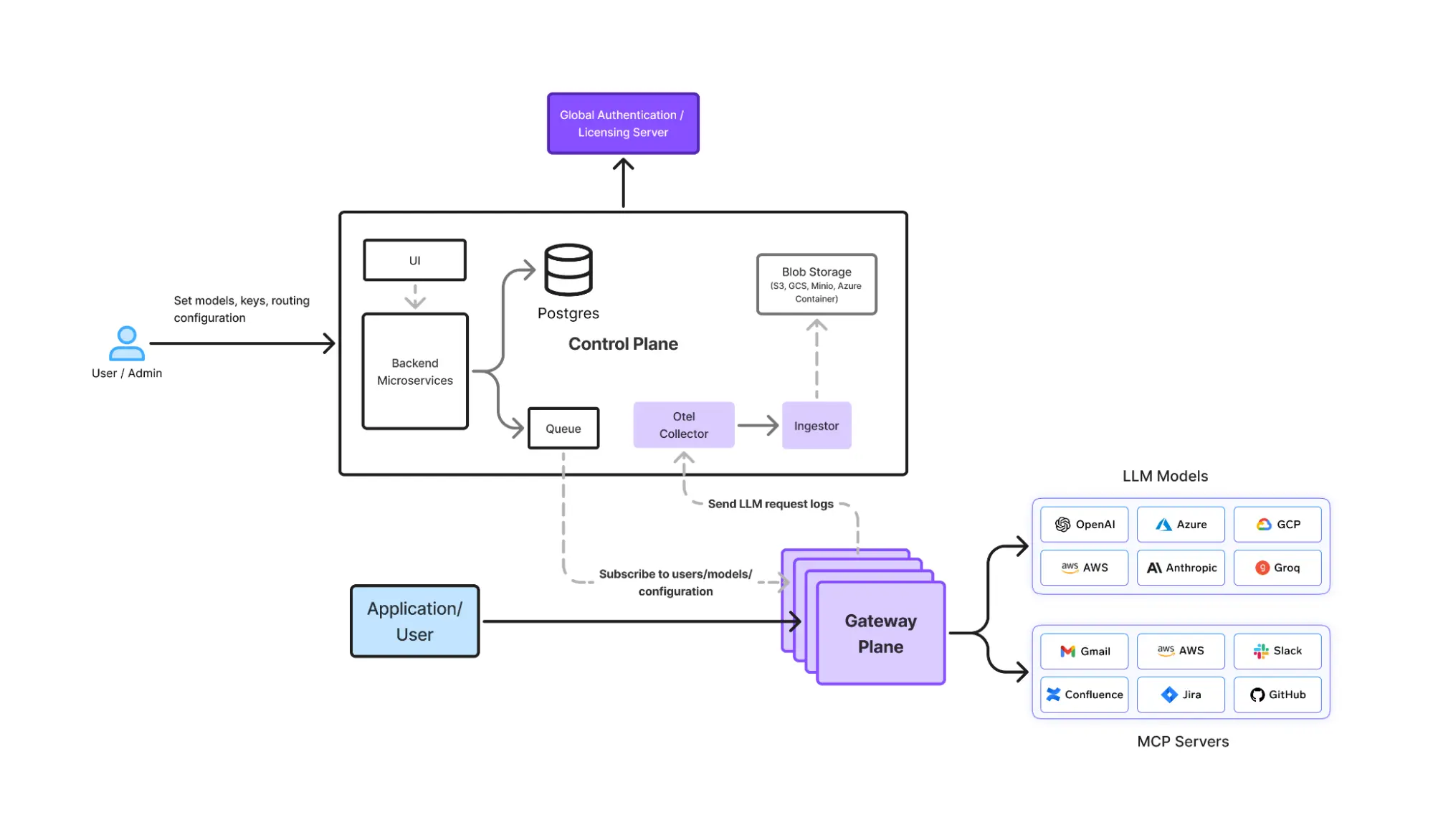
The solution from an Agent building perspective would be a Single Global Agent Design that is deployed separately in each region with in-region LLM endpoints, but with the control that metadata and performance metrics flow to a central Control plane.
When we look at all the above constraints, it warrants a system where the AI agent is sitting close to the data as well as the model and the agent are in the same geography. So the first expected solution is to:
Deploy the AML agent independently in each geography and Use local data and local LLMs.
However, this introduces a lot of new problems - Duplicate Engineering Effort, Inconsistent investigation quality if each agent is separately built and no global visibility into performance for the AML and the Bank leadership teams. The Bank didn’t want 3 different AML systems. They wanted 1 global intelligence System, executed locally. This adds the 5th Constraint.
The agent design follows a Core Orchestrator Agent which Controls the investigation flow, Coordinates sub-agents and Produces final outputs. The Core Orchestrator Agent Logic is the same across regions but it uses specific specialised Sub-agents as follows:
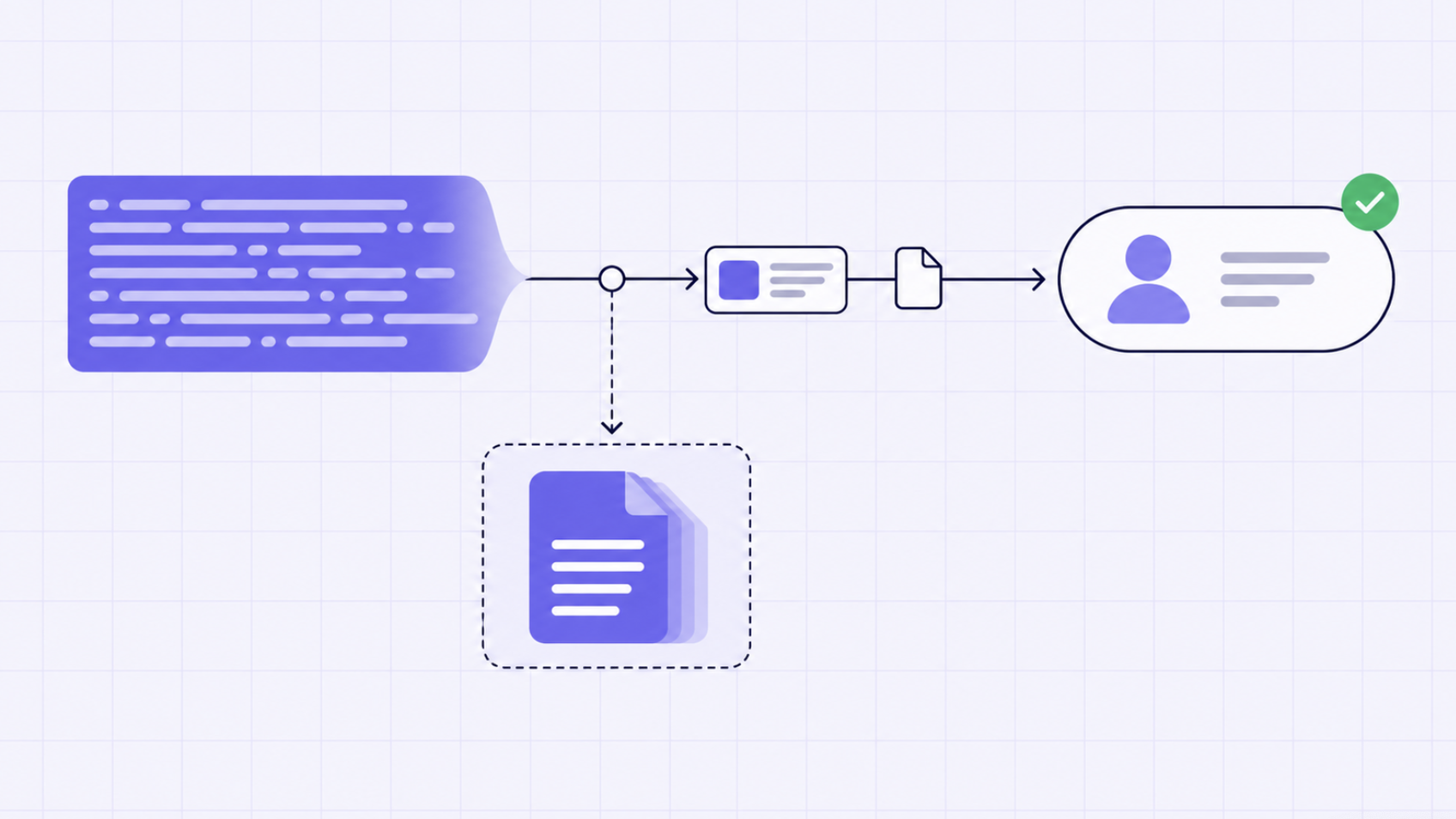
The final agent for each geography retrieves only local transaction data, customer profiles, and regulator-specific AML rules via region-scoped RAG, which is connected to data sources in that region..It collaborates with sub-agents to summarize alerts as to why the transaction was flagged(e.g., structuring, velocity spikes, corridor risk) , identify risk patterns, and draft investigation narratives aligned to local regulator formats.
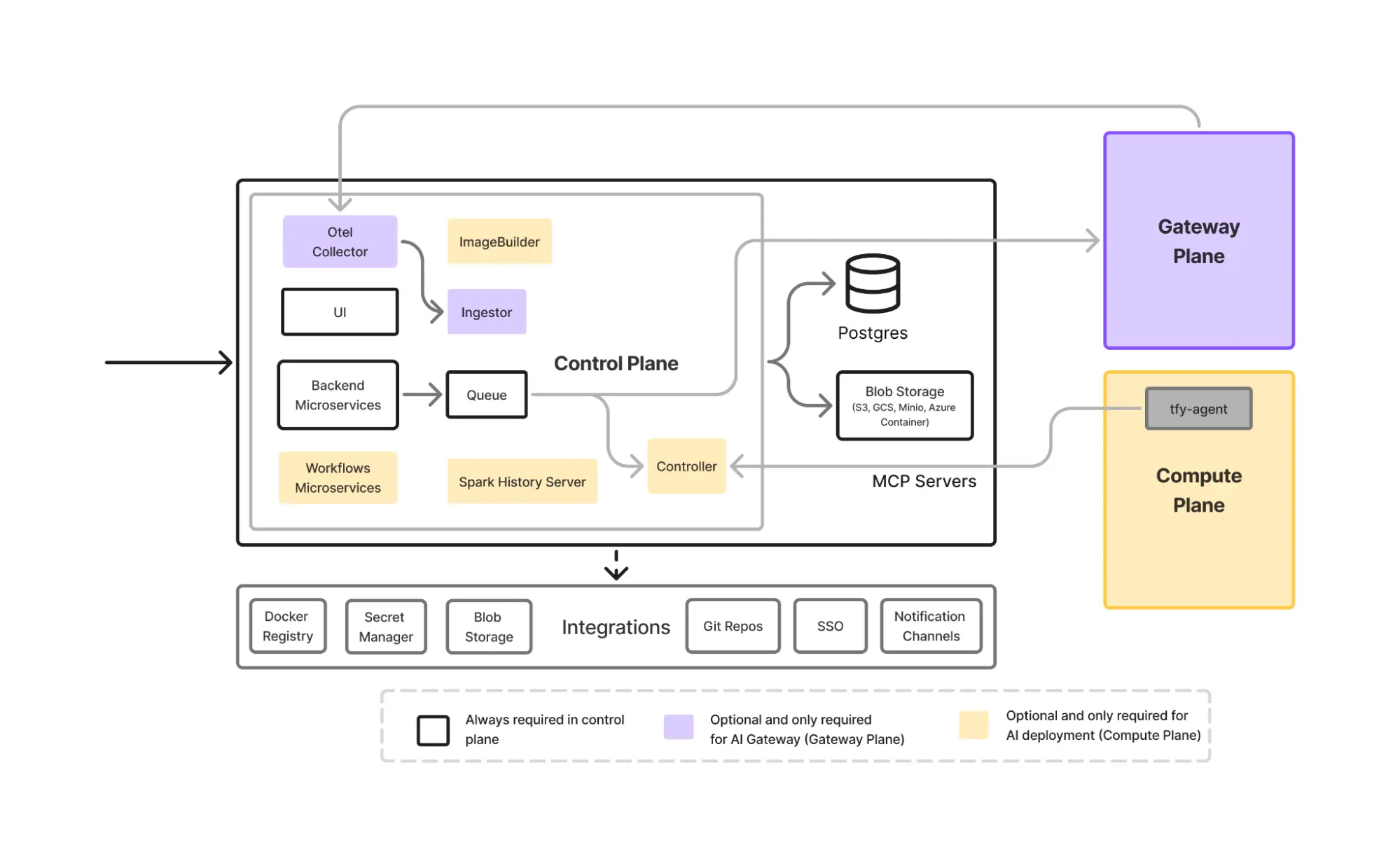
Separation between global orchestration and local regional computeSeparation between global orchestration and local regional compute
The agent deployment Architecture would need a Central Control plane to ensure global consistency while respecting regional isolation.
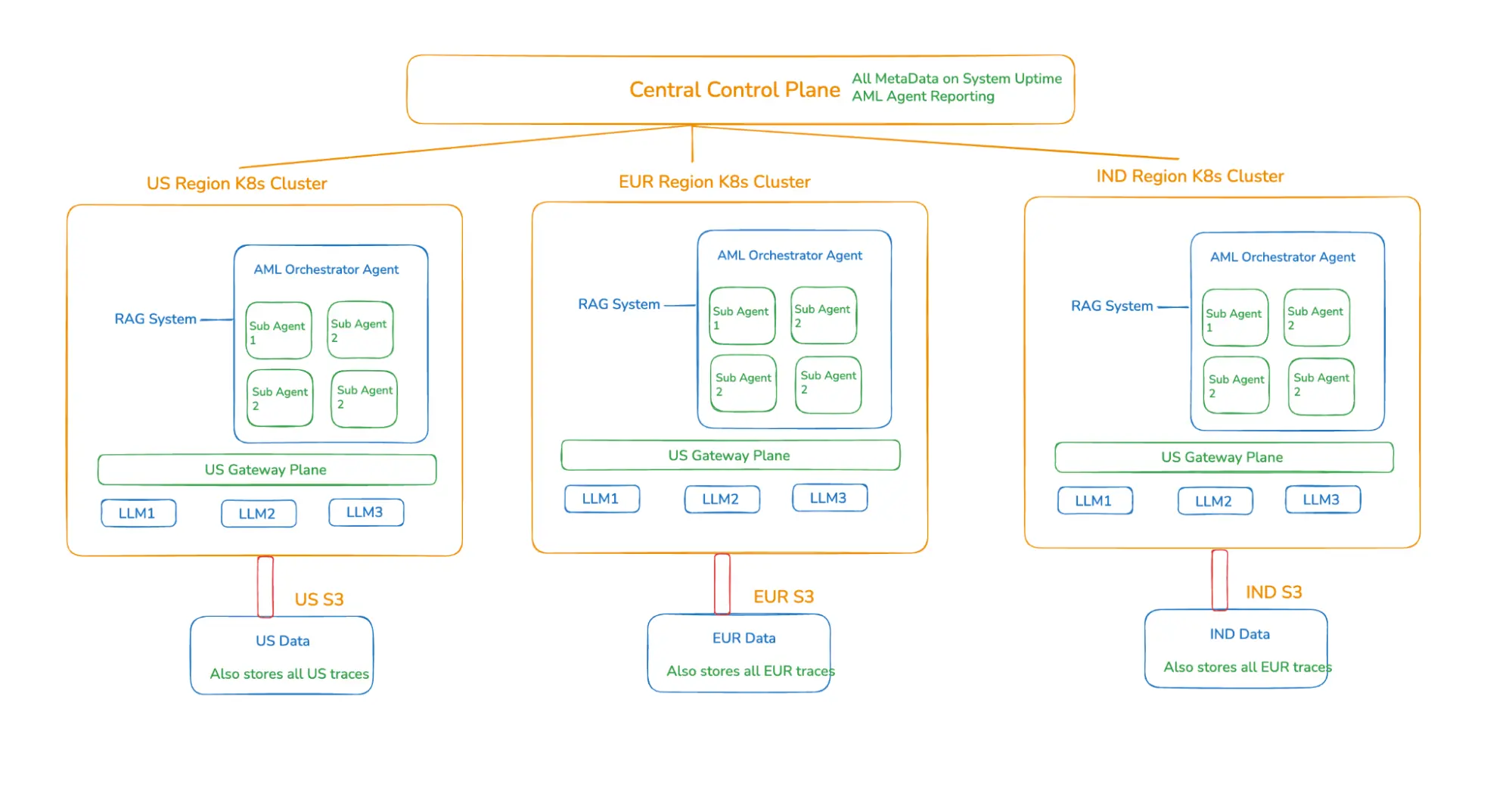
This architecture ensures Zero cross-border data movement, consistent AML reasoning globally, Region-specific compliance by design, low latency as well as centralized observability and reporting for leadership.
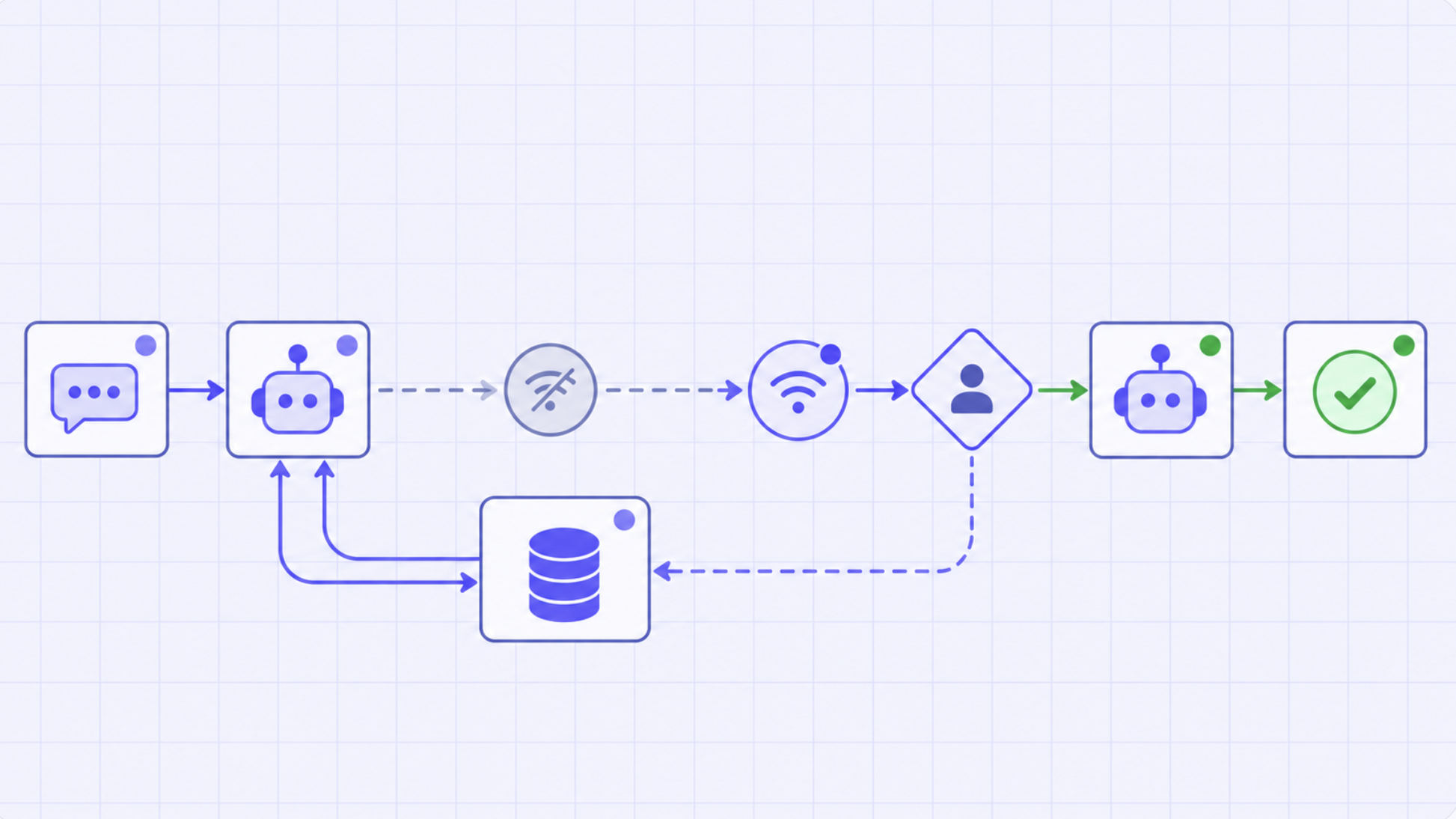
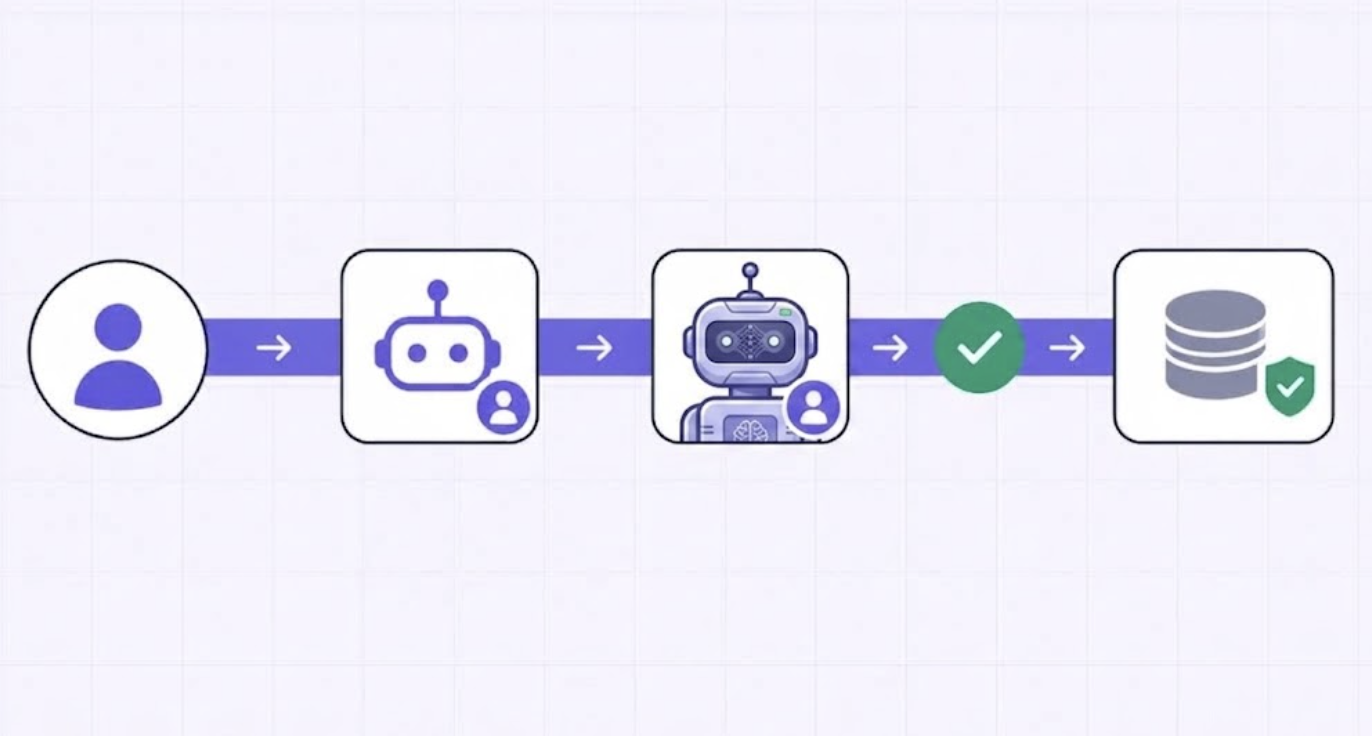
The transition to autonomous systems in banking is not a move toward replacement, but a strategic shift toward human empowerment. While AI agents handle the massive scale of initial alert triage, human investigators remain the final authority through structured feedback loops. This allows compliance teams to move away from repetitive manual data stitching and focus on complex relationship management and proactive financial oversight.
Maintaining trust within a global financial institution requires three specific ethical guardrails:
Ensuring these agents remain compliant over time requires rigorous tracking. Explore our framework for LLM observability to see how to monitor agent performance in production.
Many financial services organizations initially attempt to build a similar stack in‑house. The above AML agent described is mission critical and it’s not wise to have a hard coded system with region specific hacks, hard coded LLM logic and deployment pipelines that need continuous maintenance. In practice, this approach introduces significant hidden costs and long‑term risk.
Just to take an example, the above agent could potentially reduce the time for alert investigation and reporting from 60 mins to 10 mins, i.e. 75-80% reduction in the manual effort while staying fully compliant with cross-border data transfer laws. At the scale of AML teams, that could mean 100Mn in savings or the same can be used for more creative work.
TrueFoundry provides the underlying primitives needed to make this architecture practical:
This allows teams to focus on agent logic and business outcomes, rather than fragile infrastructure glue. And critically:
By 2026, architectures like this will move from experimental to essential. The real challenge for global banks isn’t whether Agentic AI is powerful enough - it’s whether they can deploy it safely, locally, and at scale. And this is what will enable them to confidently say yes to the question that Agentic AI can also be trusted to run parts of core banking operations.
The enterprise teams who adopt this will not only reduce costs but they have a chance to redefine how intelligent, compliant banking systems are built. Our belief is that 2026 is the year this will happen!
Don’t let regulatory complexity stall your AI roadmap. Book a demo with TrueFoundry today to see how our distributed control plane turns regional data residency into your greatest competitive advantage.
An example of agentic AI in banking is an autonomous Anti-Money Laundering (AML) system managing specialized sub-agents to triage alerts. These agents summarize suspicious activity, identify risk patterns, and draft regulator-ready narratives, allowing human investigators to move from manual data stitching to high-impact financial oversight.
Agentic AI in banking is likely to impact anti-money laundering compliance, loan approvals, and wealth management. By automating initial alert triage and processing unstructured data, these systems reduce operational costs, minimize false account freezes, and enable hyper-personalized customer engagement while maintaining competitive advantage.
Financial institutions must prioritize change management and upskilling to prepare for AI adoption. Teams should focus on managing autonomous agents through feedback loops, ensuring human oversight remains central to complex tasks. Establishing clear governance helps frontline staff transition from repetitive tasks to managing customer relationships and proactive financial advice.
Agentic AI in banking systems enhances customer experiences by automating process automation for loan approvals and wealth management. Unlike traditional automation, these autonomous systems handle unstructured data in natural language to meet customer needs in real time. This digital transformation reduces operational costs while maintaining competitive advantage through hyper-personalized customer engagement.
Deploying agentic AI in banking and other financial services requires rigorous risk assessments and continuous monitoring to ensure data protection and regulatory compliance. Banks must mitigate bias in large language models and ensure transparency in financial operations. Maintaining human intervention in high-impact decisions like credit risk prevents errors and preserves trust in financial systems.
TrueFoundry agentic AI in banking provides a unified control plane for geographically distributed agentic systems, solving the impact of agentic AI on legacy systems. It enables region-aware deployments and built-in fraud prevention via its AI Gateway. This allows banks to execute complex workflows at scale with total observability and no regulatory risk.
TrueFoundry AI Gateway delivers ~3–4 ms latency, handles 350+ RPS on 1 vCPU, scales horizontally with ease, and is production-ready, while LiteLLM suffers from high latency, struggles beyond moderate RPS, lacks built-in scaling, and is best for light or prototype workloads.






The latest news, articles, and resources sent to your inbox
.png)
.png)
.png)
.png)
.png)

.webp)
.webp)