احصل على وصول فوري إلى بيئة TrueFoundry مباشرة. انشر النماذج، ووجّه حركة مرور LLM، واستكشف المنصة بالكامل — بيئة الاختبار الخاصة بك جاهزة في ثوانٍ، ولا يلزم وجود بطاقة ائتمان.
٩.٩
من تسخير الوكلاء إلى ذكاء النظام: ما الذي تغيره هندسة الرسوم البيانية في الذكاء الاصطناعي الإنتاجي
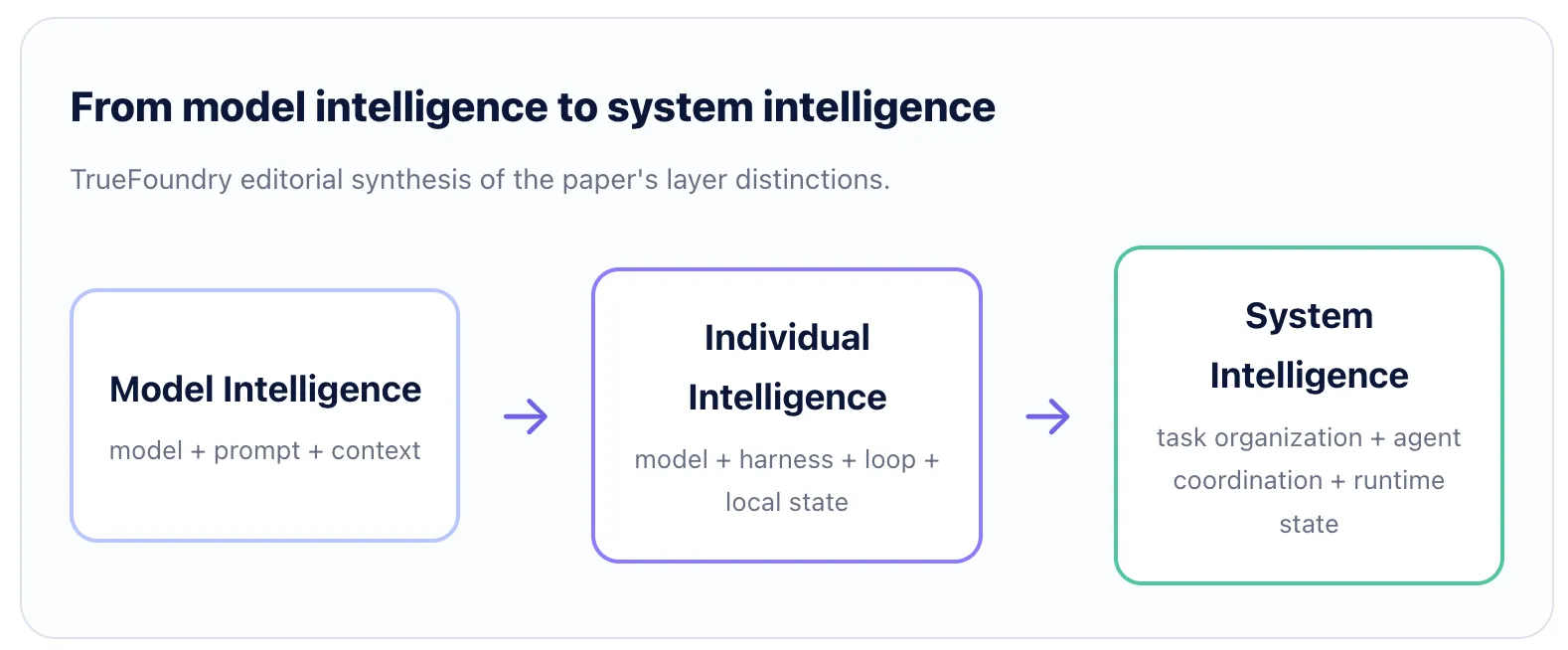
يقدم مسح جديد يقترح هندسة الرسوم البيانية كنموذج ناشئ تسلسلاً هرمياً مفيداً لمطوري الوكلاء: حيث تشكل المطالبات والسياق استدعاء النموذج؛ ويحول التسخير والحلقة ذلك النموذج إلى وكيل دائم؛ بينما ينسق التنظيم على مستوى الرسم البياني وكلاء متعددين، وهياكل عمل، وحالات وقت تشغيل في نظام واحد.
Graph Engineering Article Extract
Source note. This article is a TrueFoundry interpretation of Graph Engineering in the Era of LLM Agents: From Individual Intelligence to System Intelligence (arXiv:2608.21156, August 21, 2026). The paper introduces its own terminology and research framing. The product mapping to TrueForge and TrueFoundry is ours; the paper does not evaluate or endorse TrueFoundry products.
The paper's most useful production insight appears before its graph taxonomy. It reduces an individual agent to a compact systems equation:
That formula matters because it moves the engineering unit away from the model call. A model can reason and generate. An agent must keep resources available across calls, invoke tools, preserve state, interact with an environment, accept feedback, pause, resume, and keep operating as the task changes.
The production principle: the harness turns model capability into durable individual execution; graph engineering begins when the problem becomes how multiple units of execution, responsibility, and state should be organized as one system.
Key Takeaways - Graph Engineering
Key Takeaways
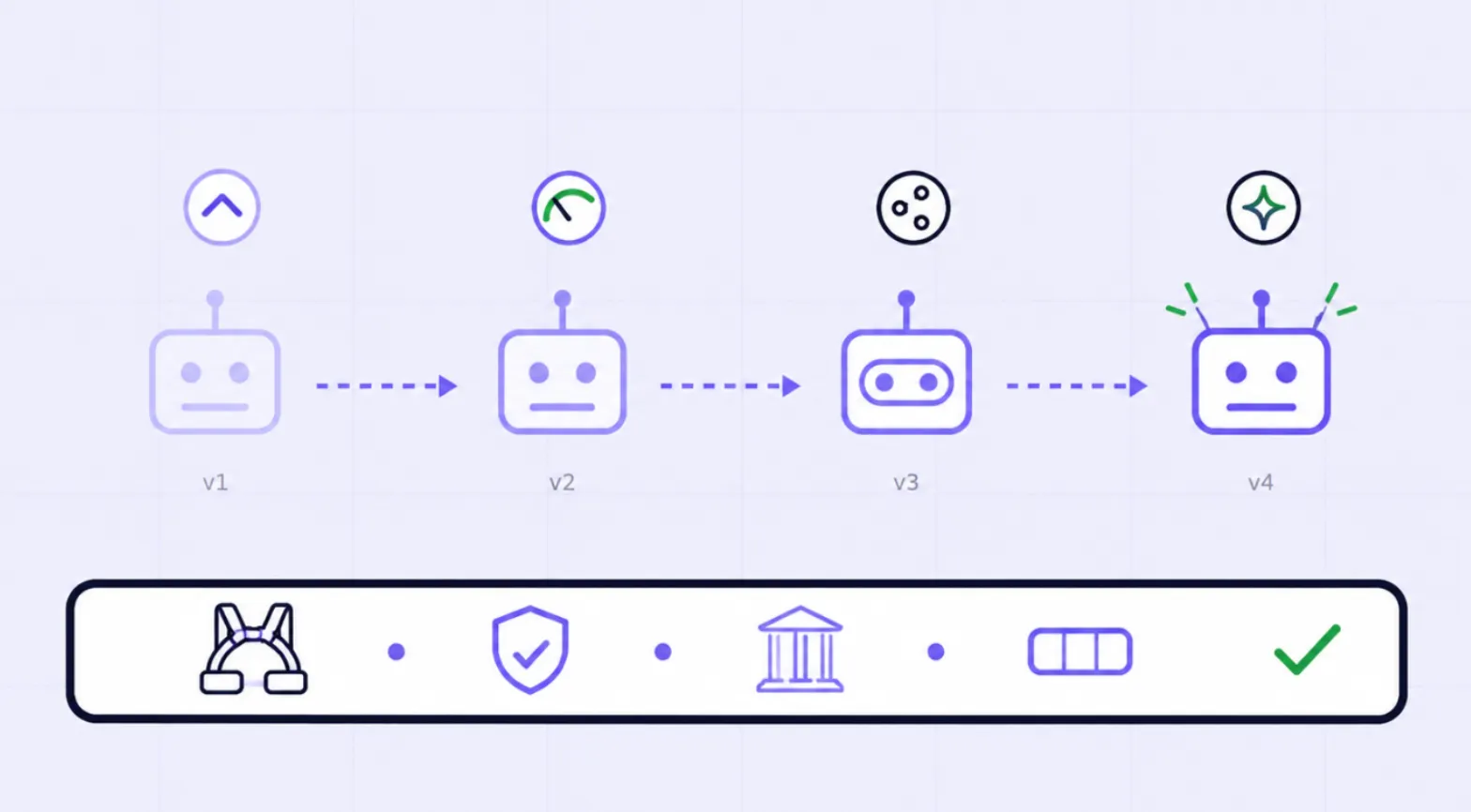
The agent harness is a first-class systems layer. The paper treats Harness Engineering as the runtime around the model: tools, memory, skills, execution environments, state, verification, and supporting mechanisms.
Harness and loop are different engineering objects. The harness determines which durable capabilities exist and how they are exposed; the loop determines how they are repeatedly invoked and adapted during execution.
Graph Engineering starts above the individual agent. Its three core concerns are Task Organization, Agent Coordination, and Runtime State Management.
TrueForge maps naturally to the individual-agent runtime. It runs the model/tool loop with MCP, context controls, sandboxing, approvals, subagents, sessions, and events.
TrueFoundry Gateways map to shared system boundaries. AI Gateway governs routed model traffic; MCP Gateway governs routed tool/data traffic; Agent Gateway provides shared agent registry/control surfaces. None of them replaces the application's graph orchestrator.
A "graph-native agent operating system" remains a research direction. Some of its proposed services resemble today's harness and gateway primitives, but it would be inaccurate to claim that current products already implement the paper's future architecture.
1. تجعل الورقة البحثية من التسخير كائناً هندسياً، وليس مجرد كود ربط
يضع المسح هندسة المطالبات، وهندسة السياق، وهندسة التسخير، وهندسة الحلقات، وهندسة الرسوم البيانية في طبقات مختلفة بدلاً من التعامل معها كمسميات متنافسة. تعمل المطالبات والسياق بشكل أقرب إلى الاستنتاج. وتوسع هندسة التسخير قدرات النموذج بإمكانيات دائمة وقابلة للتنفيذ عبر الاستدعاءات. وتنظم هندسة الحلقات التفاعل المتكرر مع تلك الإمكانيات. بينما تعالج هندسة الرسوم البيانية التنظيم على مستوى النظام.
هذا الفصل مفيد لأن مصطلح "إطار عمل الوكيل" غالباً ما يدمج اهتمامات مختلفة جداً في سلة واحدة. فمخطط الأدوات، ومخزن الجلسات، وبيئة الاختبار المعزولة، ونقطة التحقق من الموافقة، وحلقة إعادة المحاولة ليست أشياء من نفس النوع، حتى لو عرضتها مجموعة تطوير برمجيات (SDK) واحدة من خلال واجهة برمجة تطبيقات واحدة.
يصنف قسم هندسة التسخير في الورقة البحثية أربعة مجالات:
What actions and external capabilities the agent can reach
Memory management
Persistent memory, consolidation, retrieval, update, reconstruction and recovery
What information and experience survive beyond one model call
Skill composition
Reusable procedural capabilities, skill libraries, maintenance and evolution
How successful procedures become named, reusable runtime assets
Runtime orchestration
Configuration, security, verification, execution environments and optimization
How the surrounding runtime turns capabilities into a governable agent
النقطة المهمة هي النطاق. فهندسة التسخير لا تعني ببساطة "تزويد النموذج اللغوي الكبير بالأدوات". بل تتعلق بوقت التشغيل الدائم الذي تظل فيه تلك الأدوات، والذكريات، والمهارات، وحدود التنفيذ، وعناصر التحكم قابلة للاستخدام عبر الاستدعاءات.
2. يتوافق TrueForge بشكل دقيق مع وقت تشغيل الوكيل الفردي المذكور في الورقة البحثية
هنا حيث TrueForge يمتلك توافقاً مباشراً بشكل غير عادي مع مصطلحات الورقة البحثية. تصف وثائق TrueForge الحالية الأداة بأنها "تسخير وكيل" مفتوح المصدر، وهي طبقة وقت التشغيل المحيطة بالنموذج اللغوي الكبير التي تدير حلقة التنفيذ وتربط أدوات MCP، والمهارات، وبيئة الاختبار المعزولة، والموافقات، والوكلاء الفرعيين، وإدارة السياق، وحالة الجلسة الدائمة.
هذا التوافق ليس مجرد بلاغة. توضح وثائق خادم TrueForge أن الخادم يخطط للدور، ويستدعي النموذج، وينفذ الأدوات، ويبث الخطوات، ويتوقف مؤقتاً للحصول على موافقة بشرية على الإجراءات الحساسة، ويحافظ على سياق خفيف للمهام الطويلة، ويحفظ الجلسات عبر عمليات إعادة الاتصال وإعادة التشغيل. كما تجعل مجموعة تطوير البرمجيات (SDK) الخاصة به كائنات الوكيل، والجلسة، والدور، والحدث، والدلتا كائنات واضحة في وقت التشغيل.
TrueFoundry AI Gateway delivers ~3–4 ms latency, handles 350+ RPS on 1 vCPU, scales horizontally with ease, and is production-ready, while LiteLLM suffers from high latency, struggles beyond moderate RPS, lacks built-in scaling, and is best for light or prototype workloads.










.webp)

.png)
.png)
.png)
.png)
.png)
.png)