October 19, 2026
|
5 min read


Obtenha acesso instantâneo a um ambiente TrueFoundry ao vivo. Implante modelos, direcione o tráfego de LLM e explore a plataforma completa — seu sandbox estará pronto em segundos, sem necessidade de cartão de crédito.



Published: October 19, 2026

Blazingly fast way to build, track and deploy your models!
Claude in production fails quietly in two ways: the bill drifts up for reasons no dashboard explains, and a bad response is impossible to reconstruct after the fact. Both are observability gaps, and both have a Claude-specific wrinkle. The cost gap is specific because Claude’s token usage is not a single figure — it splits into normal input, cache writes, and cache reads, each priced differently — so naive token counting produces a number that does not match the invoice. The debugging gap is specific because the interesting failures (a refusal, a tool error, a cache that silently stopped hitting) often leave nothing in application logs.
This post is about closing both gaps: what to account for in Claude’s token usage, what to trace, and how to get complete coverage at the gateway instead of instrumenting every service by hand. The usage-field details are from Anthropic’s documentation, as of October 2026.
The first thing to get right is that “input tokens” on Claude is three numbers that each cost something different.
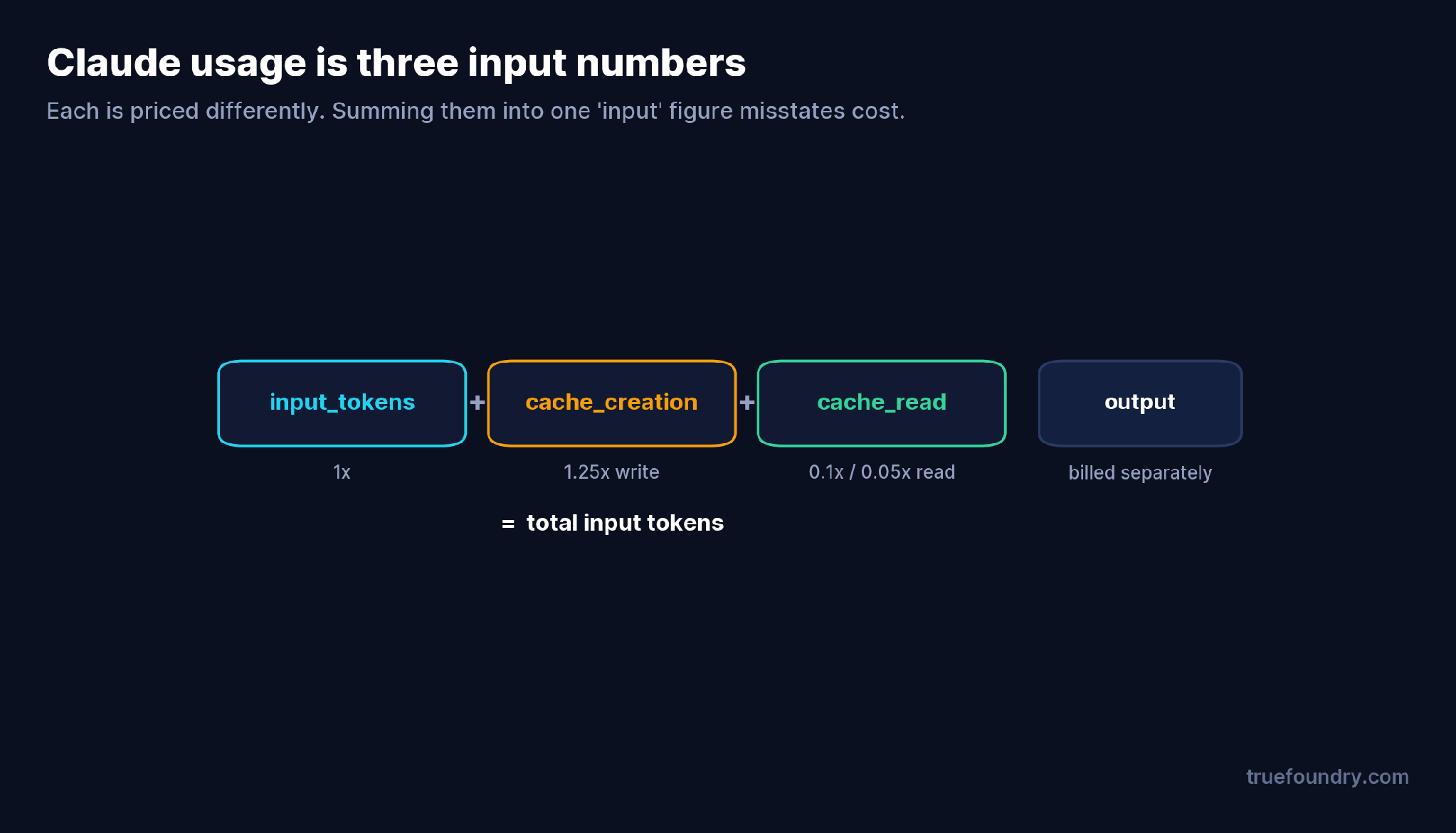
Every Claude response reports input_tokens, cache_creation_input_tokens, and cache_read_input_tokens, and the true total input is the sum of all three. They are not interchangeable for cost: a normal input token is 1x, a cache write is 1.25x (2x for the 1-hour TTL), and a cache read is 0.1x — or 0.05x on Opus 5.5 and Sonnet 5.5. So two requests with identical total token counts can cost very differently depending on how those tokens split. An accounting system that only sums “input tokens” will both misreport spend and hide the single most useful signal: whether your cache is being read or just written.
That signal is cache hit rate, and it is the number that tells you prompt caching is actually paying off. If cache_creation is high and cache_read stays near zero, you are paying the write premium and collecting no discount — a problem invisible to anything that does not break input tokens into its parts.
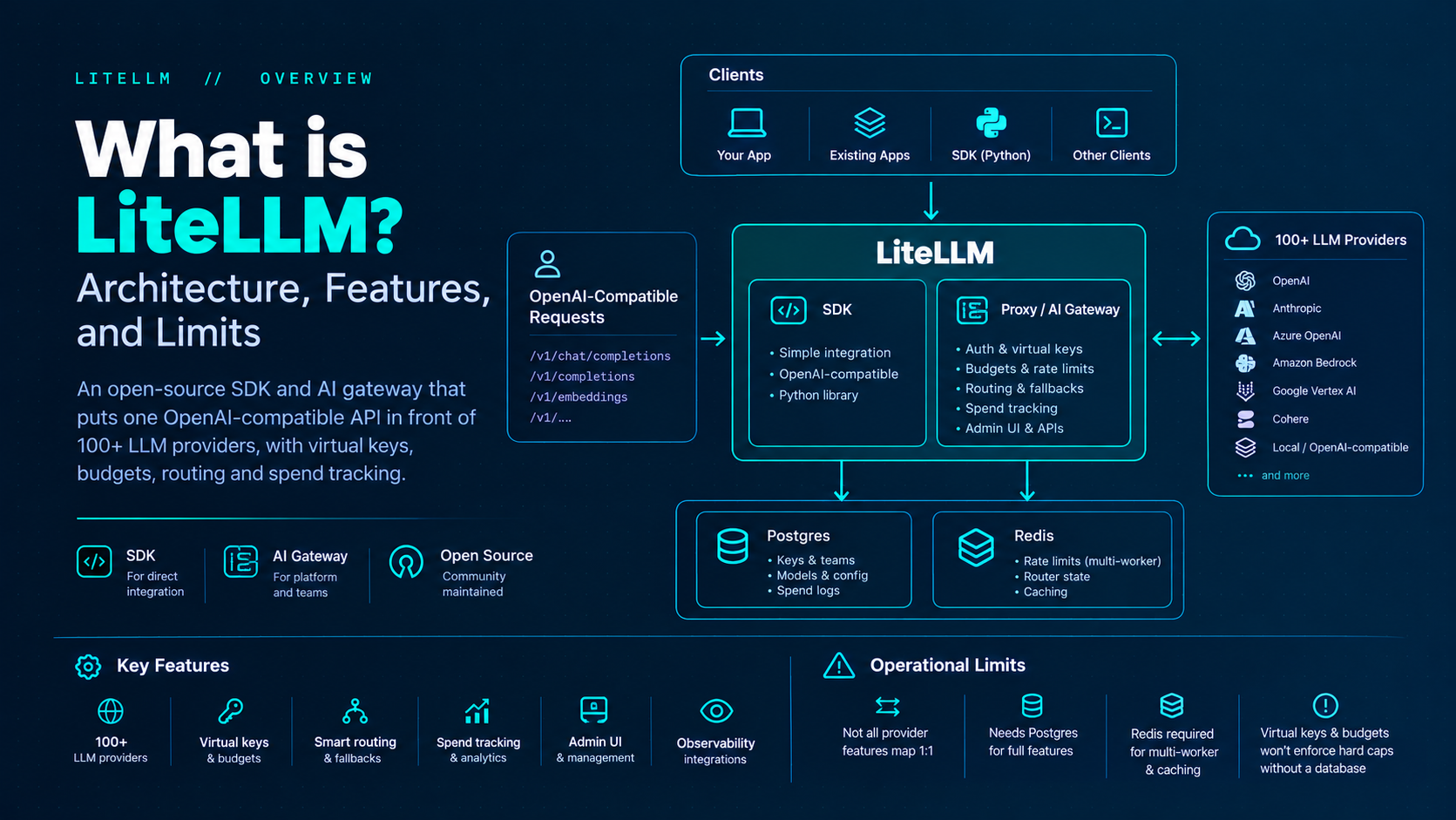
TrueFoundry AI Gateway delivers ~3–4 ms latency, handles 350+ RPS on 1 vCPU, scales horizontally with ease, and is production-ready, while LiteLLM suffers from high latency, struggles beyond moderate RPS, lacks built-in scaling, and is best for light or prototype workloads.


Sum the three input buckets separately: input_tokens (1x), cache_creation_input_tokens (1.25x, or 2x for the 1-hour TTL), and cache_read_input_tokens (0.1x, or 0.05x on Opus 5.5 and Sonnet 5.5), plus output tokens. Collapsing them into one “input” figure misstates cost.
Cache hit rate, alongside cost and error rate. It’s the only signal that distinguishes a cache that’s actually being read from one that only pays the write premium.
Metrics tell you a number moved; a trace reconstructs a single request — including refusals, tool errors, guardrail blocks, and fallbacks that app-side logs usually miss.
Not if Claude goes through a gateway. Every call is recorded there as a side effect, so coverage is complete — including refused requests — without per-service instrumentation.
Yes. Export Claude traces and metrics over OpenTelemetry into Datadog, Grafana, or your current stack rather than running a separate one.



As últimas notícias, artigos e recursos enviados para sua caixa de entrada