


Accédez instantanément à un environnement TrueFoundry en direct. Déployez des modèles, acheminez le trafic LLM et explorez la plateforme complète : votre sandbox est prête en quelques secondes, aucune carte de crédit n'est requise.


What Is Unsupervised Learning and Why Does It Matter?

Gouvernez, déployez et suivez l'IA dans votre propre infrastructure
Frequently Asked Questions
What is unsupervised learning in simple terms?
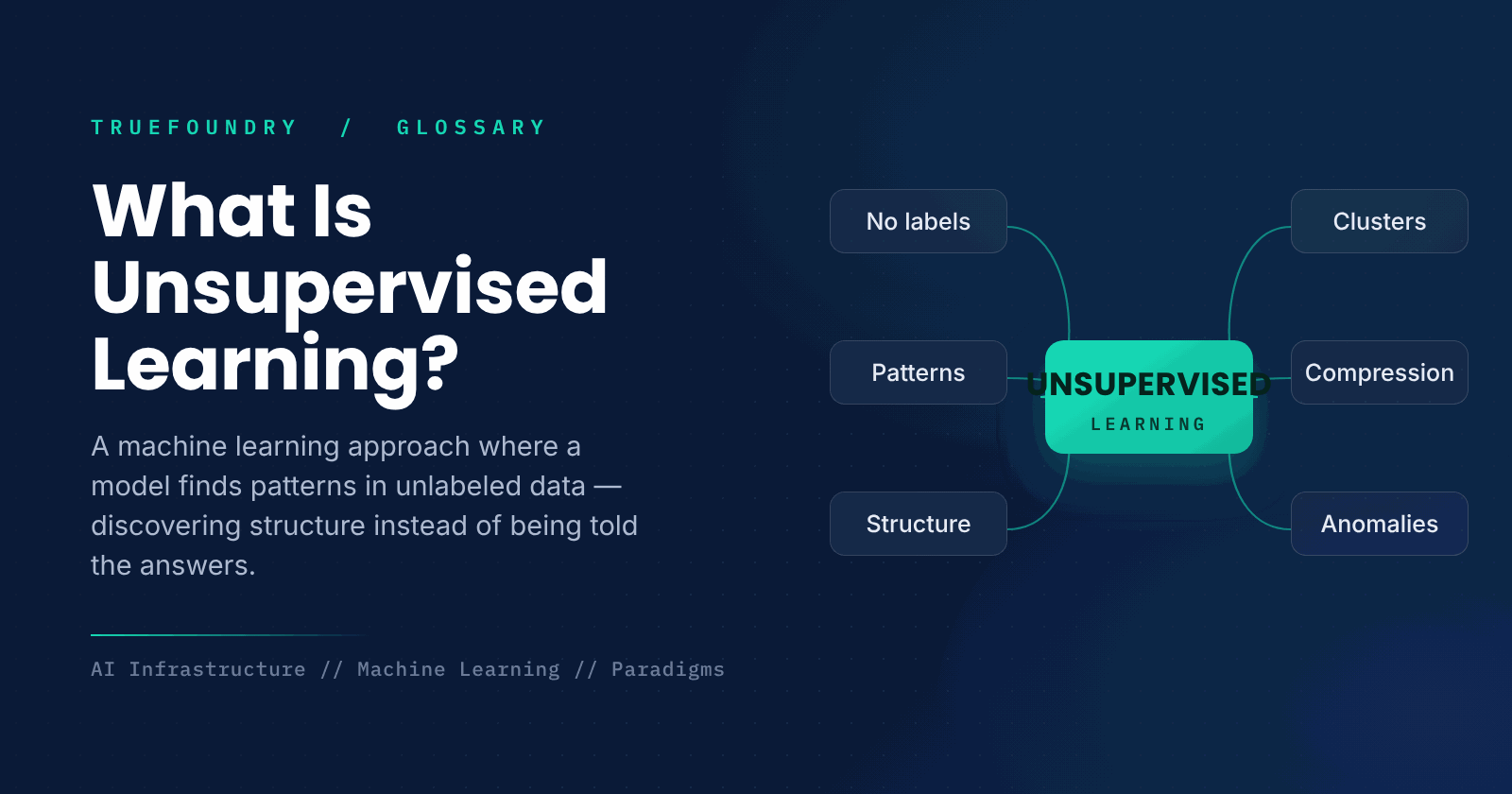
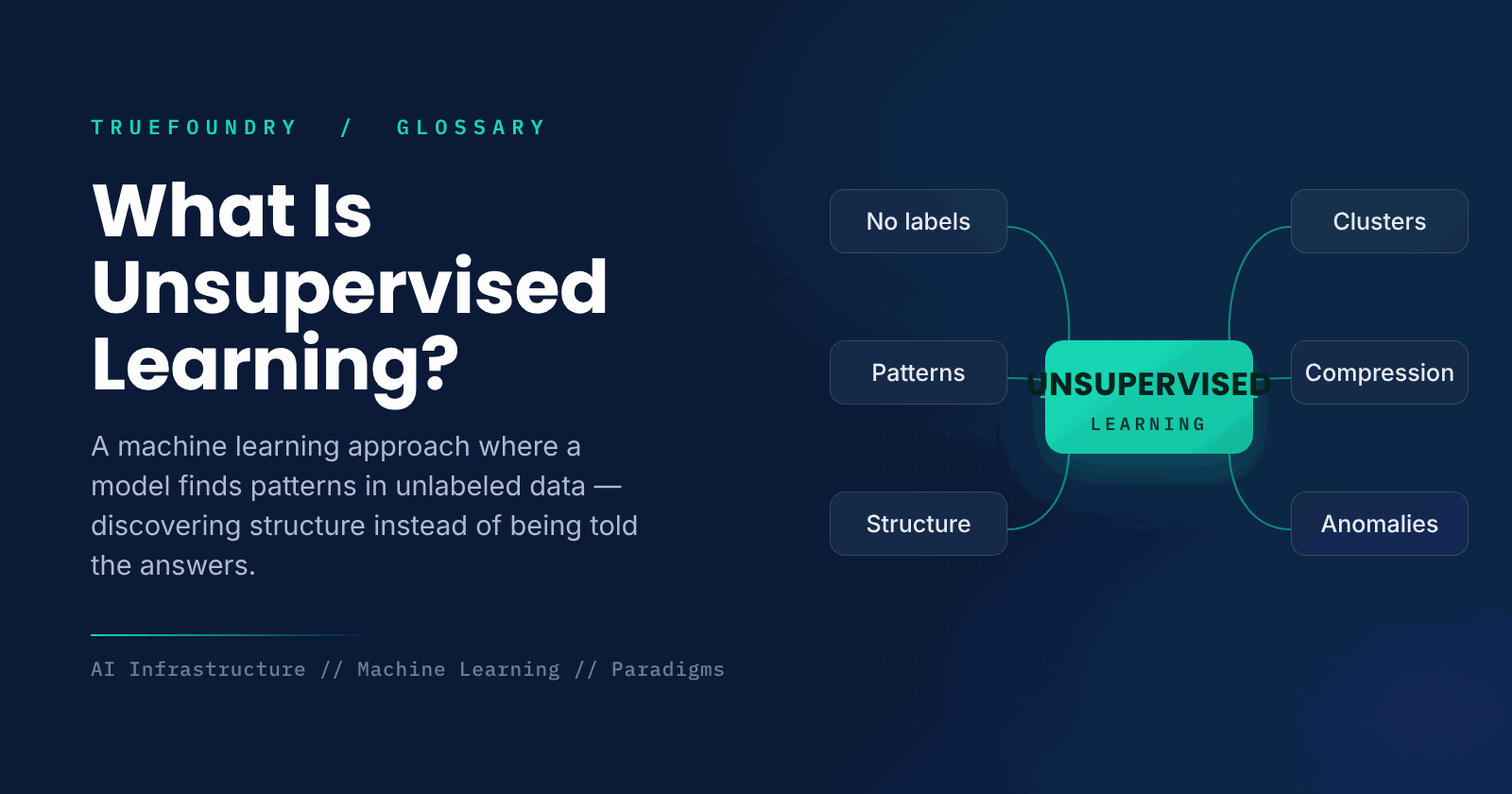
It is machine learning based on unlabeled data. Unlike the case where the model is trained on the correct answers, in unsupervised learning the model comes up with structure on its own, for instance clustering similar instances or reducing the dimensionality of data.
How is unsupervised learning different from supervised learning?
The supervised learning process involves labeled inputs that help predict the correct output, while unsupervised learning does not involve any labels. It simply helps find patterns and structure within the data, exploring rather than predicting a known target.
What is clustering?
Clustering is a fundamental unsupervised learning technique where the algorithm forms clusters of data points based on their similarity and not on pre-existing categories. It may involve grouping consumers according to their behaviors or documents according to their topics, with the groupings emerging from the data rather than being specified in advance.
When should I use unsupervised learning?
In situations where there is unlabeled data and it is necessary to explore it, segment it, reduce its dimensions, or look for anomalies, and where labeling the data is too expensive. It is also useful as a preprocessing step that produces features for a later supervised model.
How do you evaluate an unsupervised model?
It is more difficult than with labeled tasks since there is no ground truth here. You have to use indicators such as the correspondence between the structure and the data, the usefulness of the results downstream, and domain knowledge about whether the found patterns are meaningful.

GenAI infra- simple, plus rapide et moins cher
Les meilleures équipes lui font confiance pour faire évoluer GenAI

- © 2022 ENSEMBLE Technologies



Abonnez-vous à notre newsletter
Les dernières nouvelles, articles et ressources envoyés dans votre boîte de réception


