


Obtenga acceso instantáneo a un entorno TrueFoundry en vivo. Implemente modelos, dirija el tráfico de LLM y explore la plataforma completa: su sandbox estará listo en segundos, sin necesidad de tarjeta de crédito.


What are private, public, and hybrid clouds?

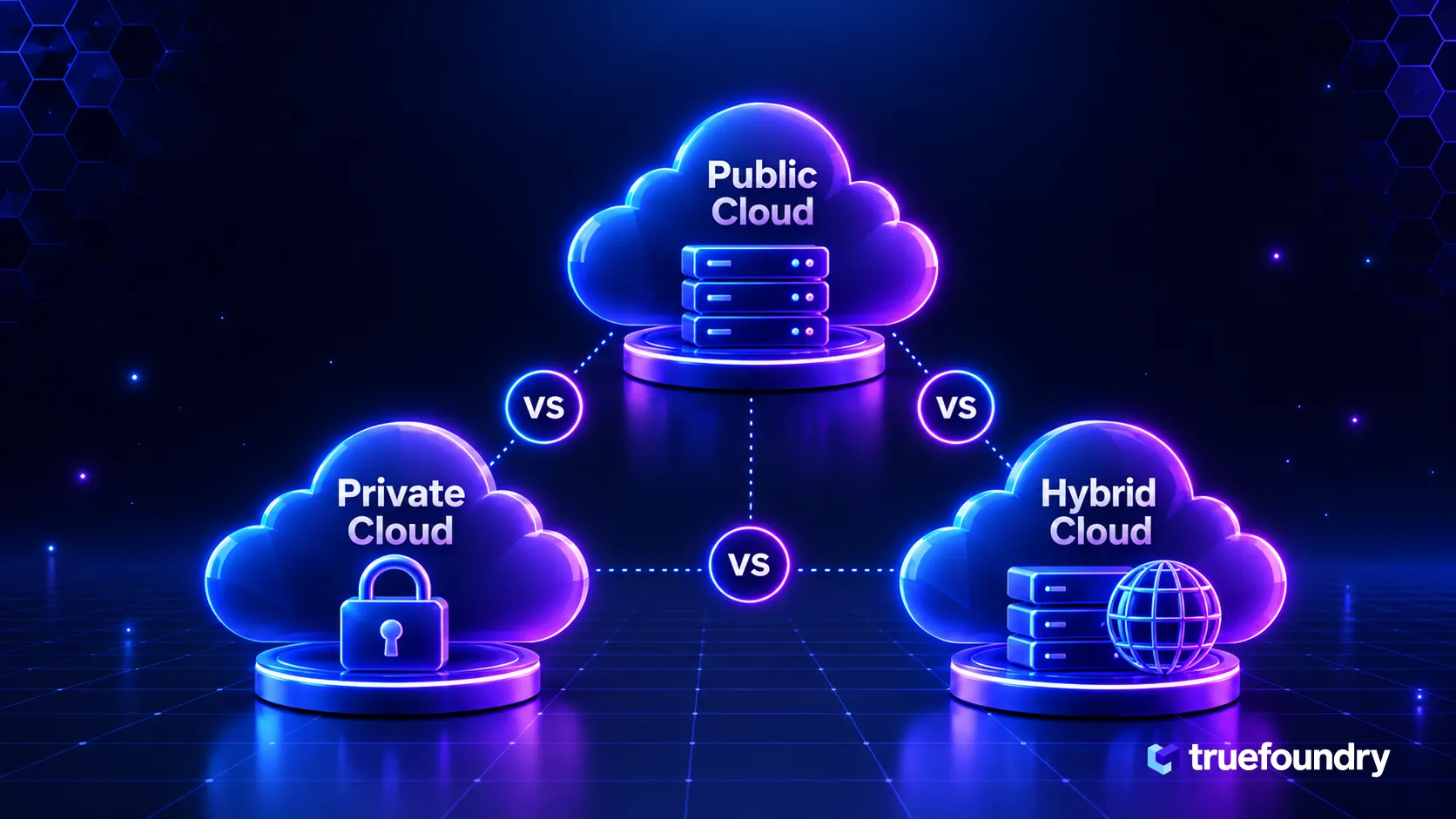
Organizations don't always run all of their workloads in the same cloud environment. Some organizations need tight control over their infrastructure and data. Others have applications that require resources that can rapidly scale. Some organizations may require both and use different environments for their workloads.
Cloud deployment models help determine who owns and manages the IT infrastructure, the level of control an organization has, and how resources are operated. Different workloads may need different levels of control, scalability, security, and infrastructure capacity.
Private, public, and hybrid cloud are deployment models that determine how cloud infrastructure is owned, managed, and accessed.
This article explains what private, public, and hybrid clouds are, how they differ, what they have in common, and how to choose a model for different workloads.
What are private, public, hybrid clouds?
Private, public, and hybrid clouds are cloud deployment models that determine how computing resources are accessed, who operates them, who can use them, and how much control an organization has over them.
A private cloud is dedicated to one organization. A third-party service provider operates a public cloud and serves multiple customers through isolated environments. A hybrid cloud connects private or on-premises infrastructure with public cloud resources so that an organization can use both for its overall computing environment.
Each model changes how much control an organization has over infrastructure, how resources are used, who handles maintenance, how workloads scale, and how data is exchanged.
What is a private cloud?
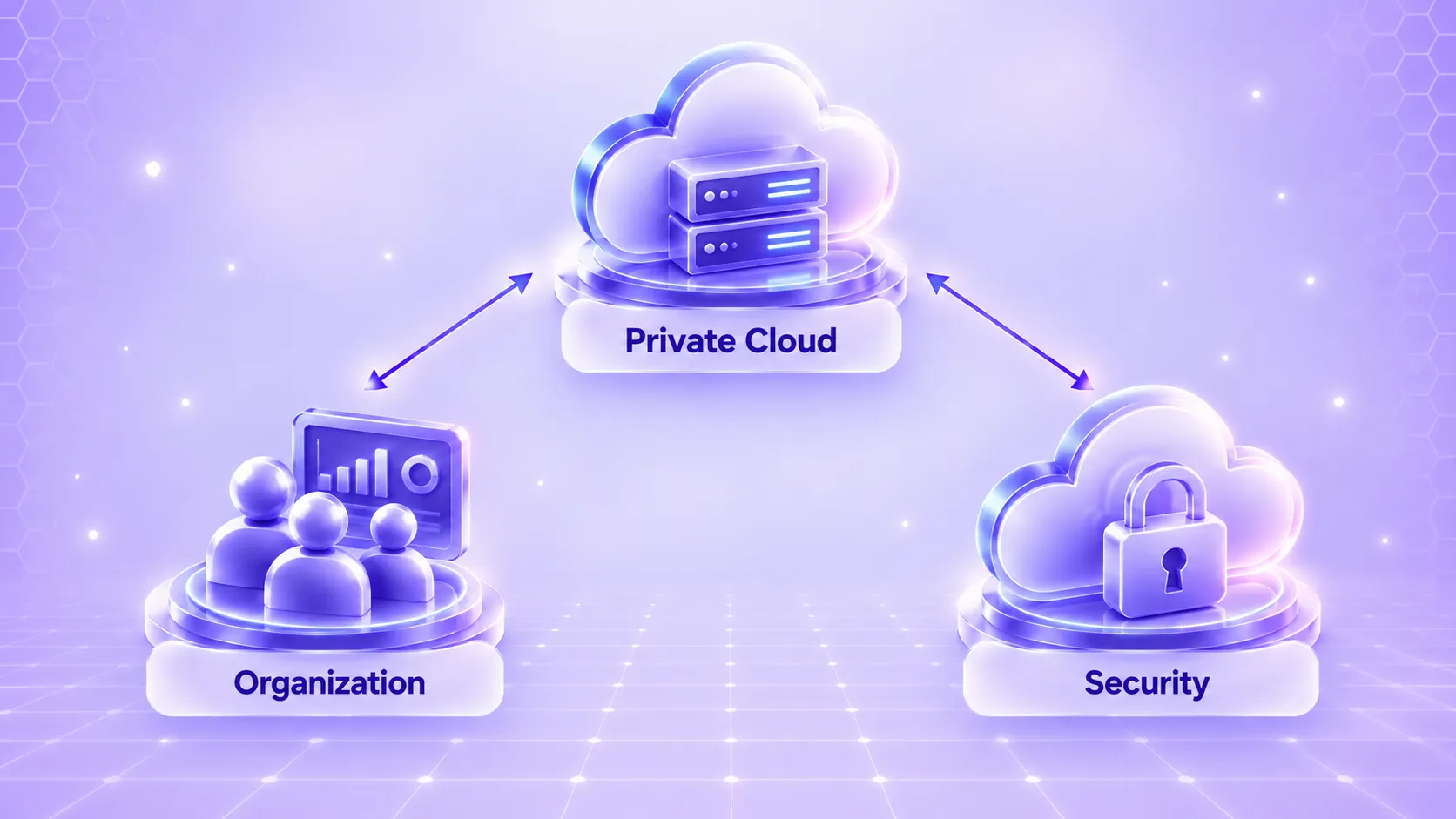
A private cloud is a cloud environment dedicated to one particular organization. The organization has control over its computing, storage, and networking resources. A private cloud can be located in the organization's own data center, or a third party can host and manage the environment, but it will remain dedicated to the organization.
For example, a hospital or government agency running an application may process sensitive data such as confidential patient details. They can choose a private cloud environment, which will provide control over infrastructure and data placement.
Cloud environments provide capabilities including resource pooling, self-service provisioning, automation, and centralized management. However, operating a private cloud can involve greater responsibility. In a self-managed private cloud, the organization is responsible for operating the underlying infrastructure, maintaining hardware and networking systems, applying updates, and handling failures. In a managed private cloud, a third-party provider can handle some or all of these responsibilities.
What is a public cloud?
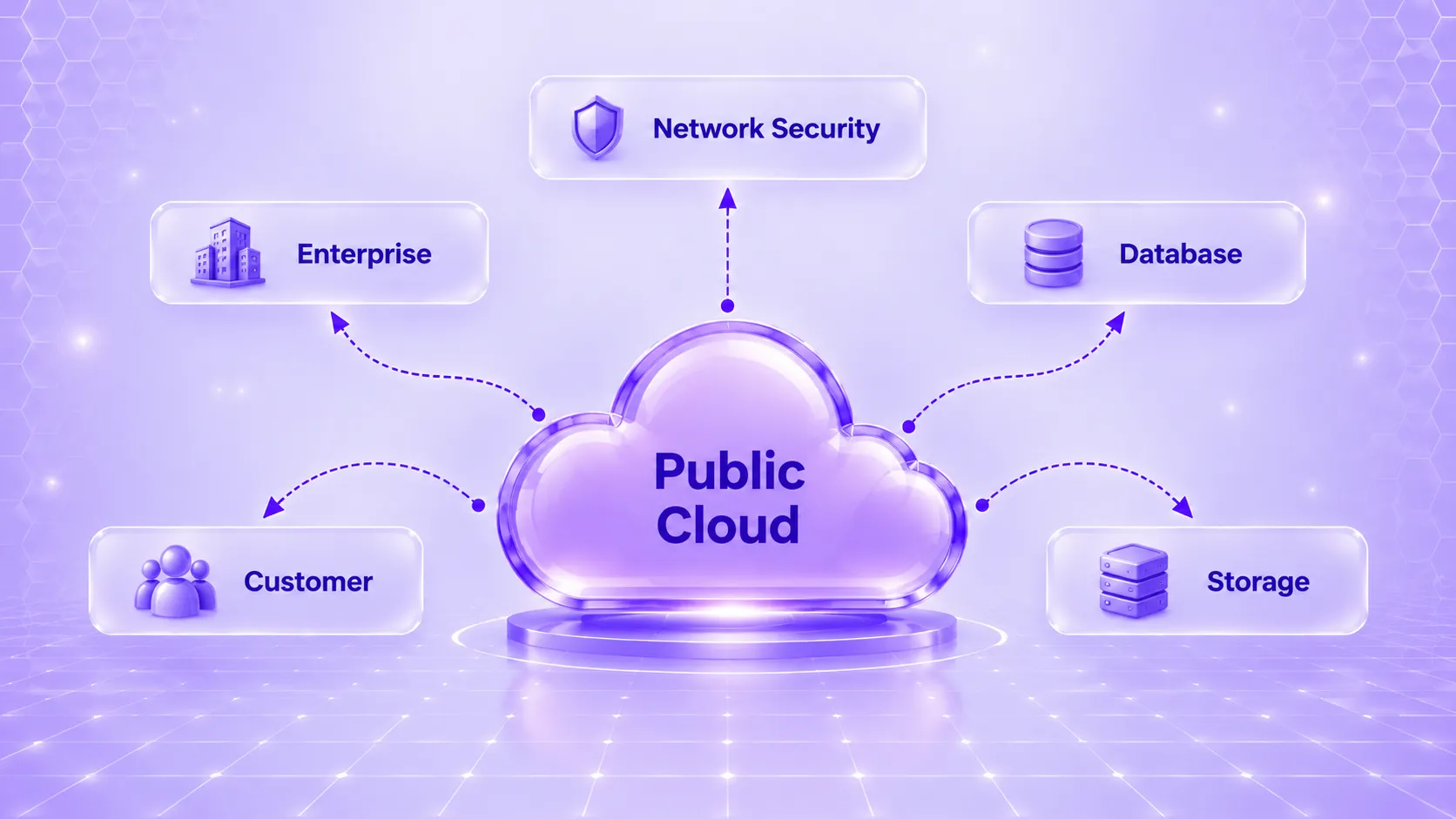
A public cloud is a cloud environment run by a cloud service provider. The provider owns and manages the infrastructure, and customers can access computing resources and services according to their demand.
Customers can use resources such as virtual machines, cloud storage, databases, and networking services through a cloud platform without having to purchase and operate the hardware. Companies can use additional resources and release them when they are no longer needed.
Public cloud resources can also support application development, data analytics, big data processing, and machine learning workloads.
Multiple customers can use the same infrastructure, while logical isolation and access controls help keep their workloads and data separate.
For example, an e-commerce business is preparing for a huge sale. They expect traffic to be huge for a few days and then return to normal. With public cloud resources, the company can achieve rapid scalability to meet changing demand instead of building permanent infrastructure just to use during the busy period.
What is a hybrid cloud?
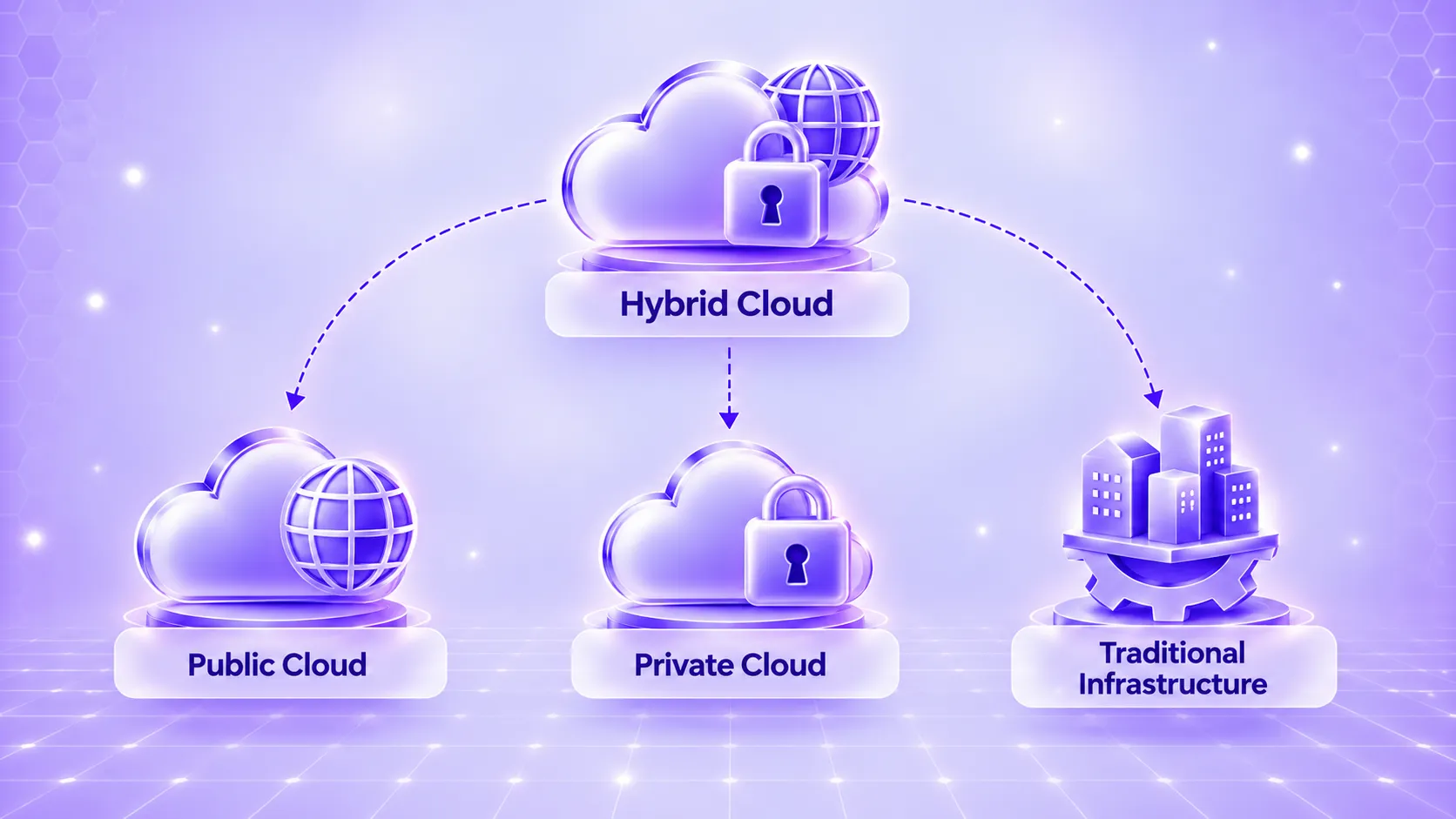
A hybrid cloud connects private cloud or on-premises infrastructure with public cloud resources, allowing organizations to run workloads across both environments. The environment needs integration so that applications, data, users, or management systems can work together.
For example, a company might have a database on private infrastructure, but it also needs additional capacity to handle specific tasks or demands. Cloud bursting allows workloads to temporarily use public cloud resources when private infrastructure reaches its capacity.
Companies can run sensitive workloads in their on-premises infrastructure while less sensitive tasks can be moved to public cloud services as part of a hybrid approach.
Hybrid cloud vs multicloud
Hybrid cloud and multicloud are two different approaches.
Hybrid cloud combines different types of environments, such as private and public cloud. Multicloud means using cloud services from two or more cloud providers, such as AWS, Microsoft Azure, or Google Cloud.
An organization could have both as part of its broader cloud strategy. An organization might run a private environment alongside AWS and Microsoft Azure ( a hybrid cloud with a multicloud component). It can also connect its private cloud to AWS to create a hybrid cloud environment. Platforms such as TrueFoundry can help manage AI workloads across cloud and on-premises environments.
What do private clouds, public clouds and hybrid clouds have in common?
Though the deployment models are different, they are built around the same cloud computing principles.
Virtualization
Virtualization allows physical computing resources to be abstracted into virtual resources, such as virtual machines. It is common in both public and private cloud environments and can support different IT resources. However, cloud infrastructure can also use containers and other resource abstraction methods.
Resource pooling
Cloud infrastructure groups computing resources so that they can be allocated to workloads when needed. In a public cloud, the provider pools computing, storage, and networking resources to serve multiple customers. A private cloud can use similar principles within an organization's environment.
Management software
Cloud environments need software to manage infrastructure. Management systems can provide dashboards, security policies, resource allocations, monitoring, identity management, and configuration.
Automation
Automation reduces the number of manual and repetitive tasks required to provision and manage infrastructure. An organization can automate the creation of virtual machines, storage resources, network configurations, or application environments instead of configuring each resource manually. Automation is useful when infrastructure needs to change frequently.
Application programming interfaces (APIs)
APIs allow applications and management tools to interact with cloud services. A development team might use an API to create a resource, retrieve monitoring information, manage an application, or connect a cloud service with an internet application, like those on TrueFoundry.
Cloud-based applications and services
Private, public, and hybrid cloud models can host applications and services that use cloud computing principles.
Private vs public vs hybrid cloud
How do you choose between private, public, and hybrid clouds?
- Assess workload requirements: Understand what the application really needs. Evaluate its compute, storage, latency, availability, disaster recovery, and data movement requirements, along with expected changes in demand.
- Evaluate regulatory and industry compliance needs: Some workloads handle sensitive data subject to regulatory requirements, contractual obligations, or internal security requirements. Check where the data can be stored, who can access it, how access must be logged, and whether specific infrastructure or location controls are required for regulatory compliance.
- Scalability and performance needs: Public cloud models can give access to large pools of resources without an organization having to build them itself. Private infrastructure can provide control over resources. Hybrid clouds can combine the two depending on the capacity needs.
- Existing infrastructure: An organization may already have significant investments in applications, databases, or operational systems. They may also need to consider business continuity and disaster recovery when deciding where those workloads should run. Keeping some workloads in their original location while gradually migrating others to the public cloud may be more useful than moving everything at once.
- Cost and resource requirements: A private cloud can have higher upfront costs when self-hosted because of servers, networking, storage, facilities, software, maintenance, and specialized personnel. Public cloud reduces the need to buy physical infrastructure and can improve cost efficiency for workloads that do not need dedicated infrastructure, but customers have to pay for ongoing consumption costs. Hybrid cloud combines both cost structures and can increase expenses for connectivity and integration.
- Internal operational expertise: A private environment needs people who can manage the infrastructure and technologies. In the public cloud model, much of infrastructure management is the provider's responsibility, but teams still need to know cloud architecture, security, networking, and operations. Hybrid environments require experience on both sides.
- Portability and integration requirements: Applications may need to exchange data, move workloads, or use services from multiple providers. Check whether the application architecture, data formats, APIs, networking, and deployment tools support those needs before selecting a model.
Simplify Your Hybrid & Multi-Cloud Infrastructure with TrueFoundry

Conclusion
Private, public, and hybrid clouds support different workload requirements.
A private cloud gives an organization a dedicated environment to operate its workloads. A public cloud environment lets customers share the infrastructure while remaining logically separated from other customers. Hybrid cloud combines both private and public cloud resources.
Customers can choose the model depending on the workload requirements. Control, compliance, scalability, performance, infrastructure, cost, operational skills, and integration needs play an important role in making decisions.
Controle, implemente y rastree la IA en su propia infraestructura

GenAI infra: simple, más rápido y más barato
Los mejores equipos confían en nosotros para escalar GenAI

- © 2022 ENSEMBLE Technologies



Suscríbase a nuestro boletín
Las últimas noticias, artículos y recursos enviados a tu bandeja de entrada


