


Obtenga acceso instantáneo a un entorno TrueFoundry en vivo. Implemente modelos, dirija el tráfico de LLM y explore la plataforma completa: su sandbox estará listo en segundos, sin necesidad de tarjeta de crédito.


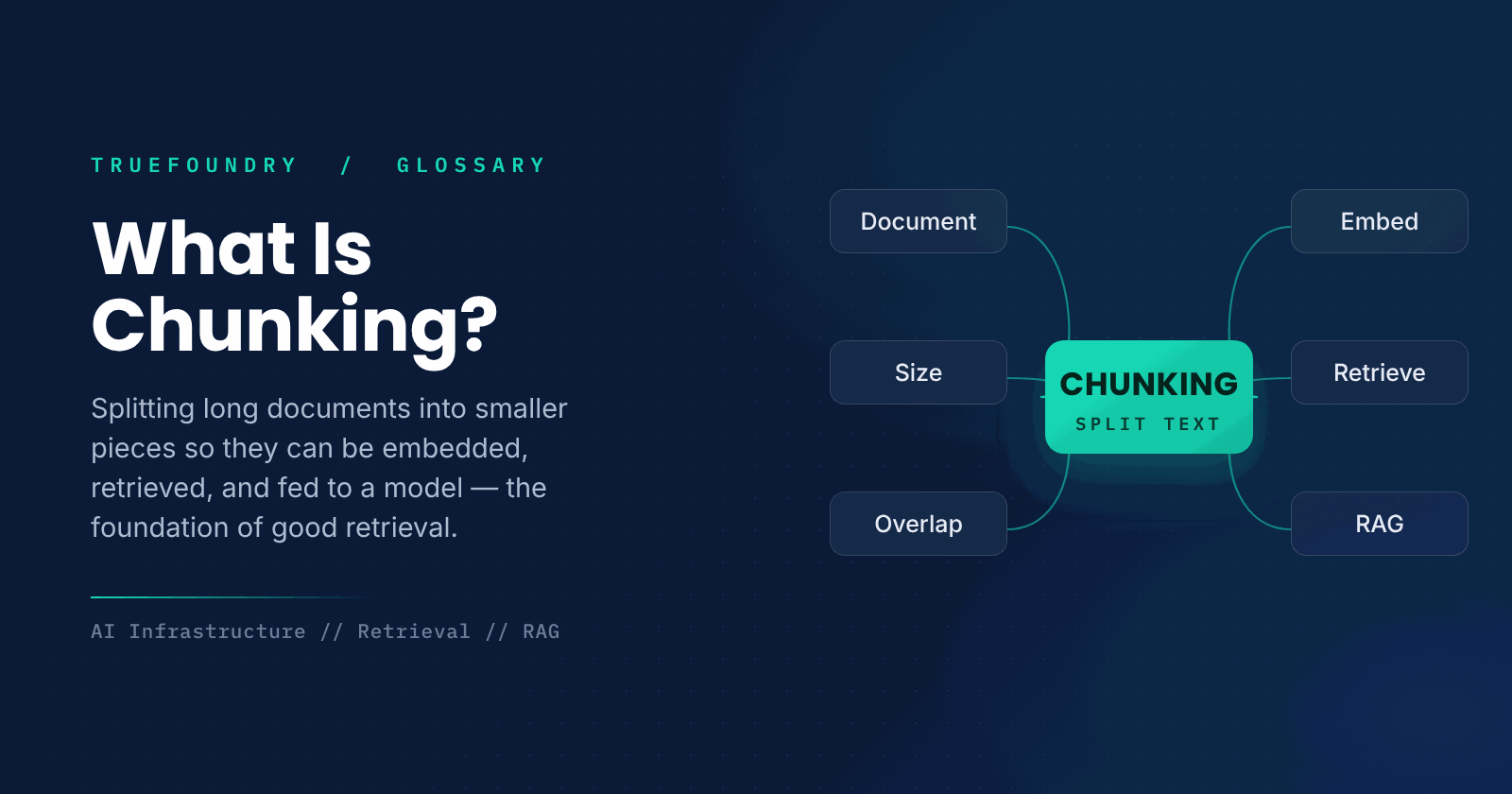
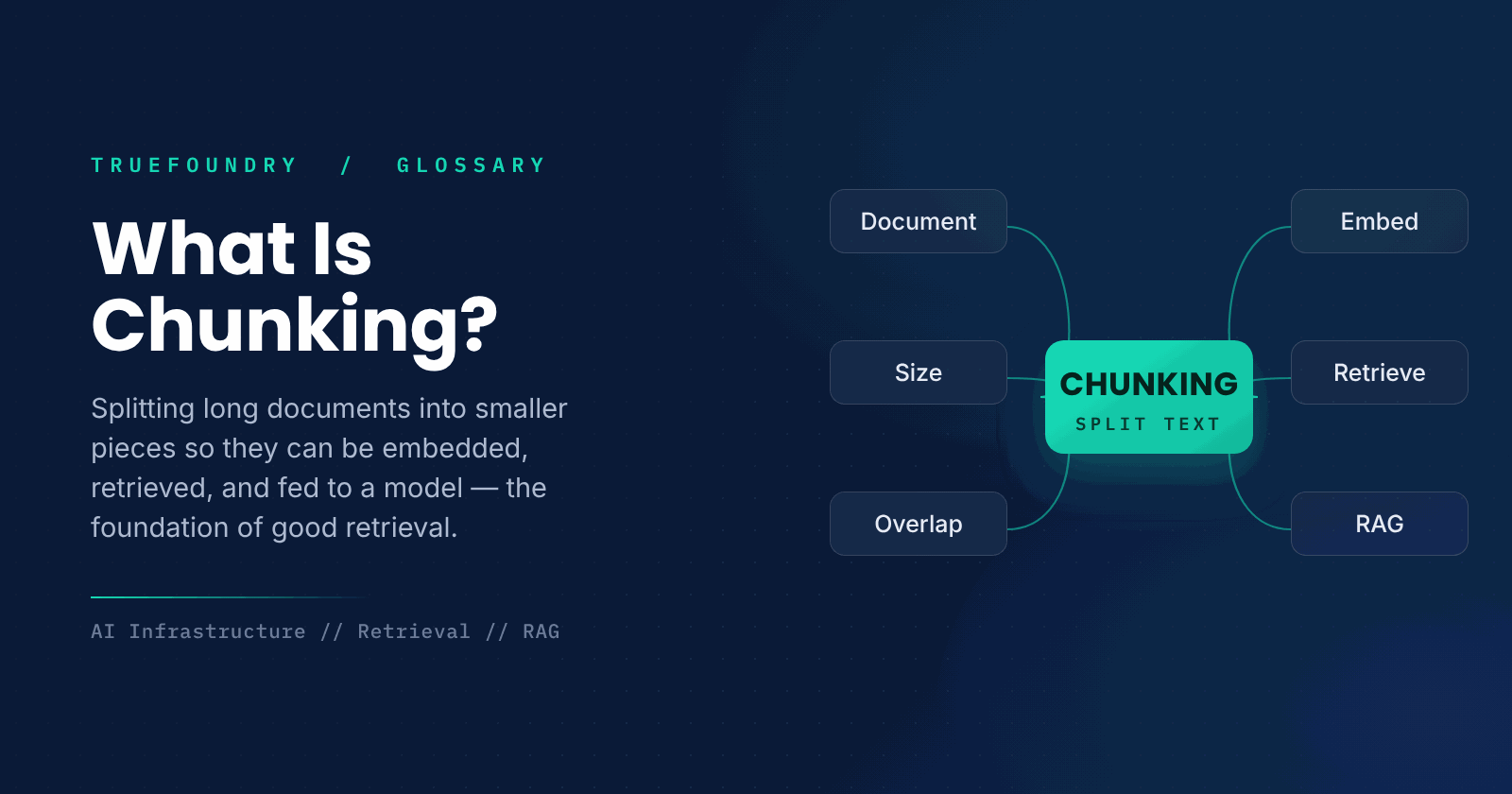
What Is Chunking and How Does It Work?

Controle, implemente y rastree la IA en su propia infraestructura
Frequently Asked Questions
What is chunking in simple terms?
It involves splitting a document into smaller chunks so each can be embedded, searched, and fed to the model. The model does not read the entire document, only the retrieved chunks, so how you split matters.
What is a good chunk size?
It depends on the content, but chunks are typically several hundred tokens long — big enough to contain a meaningful idea but small enough not to become imprecise. The best size is determined by experimenting with retrieval results on your own documents.
What is chunk overlap?
Overlap repeats a small bit of text at the boundary of each chunk so an idea is not divided into two pieces. It allows retrieval of complete ideas rather than fragmented ones.
What is the best chunking strategy?
There is no single best approach. Chunking based on structure or semantics — dividing by the document's structure or its meaning — generally performs better than naive fixed-size approaches, but it requires additional resources. The right choice depends on your documents and how much quality matters.
Why does chunking affect RAG quality?
Because chunks are precisely what a search looks for and retrieves. The better organized and sized the chunks are, the easier it is to match them to a query and provide focused context, while poor chunks retrieve irrelevant fragments.

GenAI infra: simple, más rápido y más barato
Los mejores equipos confían en nosotros para escalar GenAI

- © 2022 ENSEMBLE Technologies



Suscríbase a nuestro boletín
Las últimas noticias, artículos y recursos enviados a tu bandeja de entrada


