



September 24, 2026
|
5 min read


Published: August 11, 2026
Blazingly fast way to build, track and deploy your models!
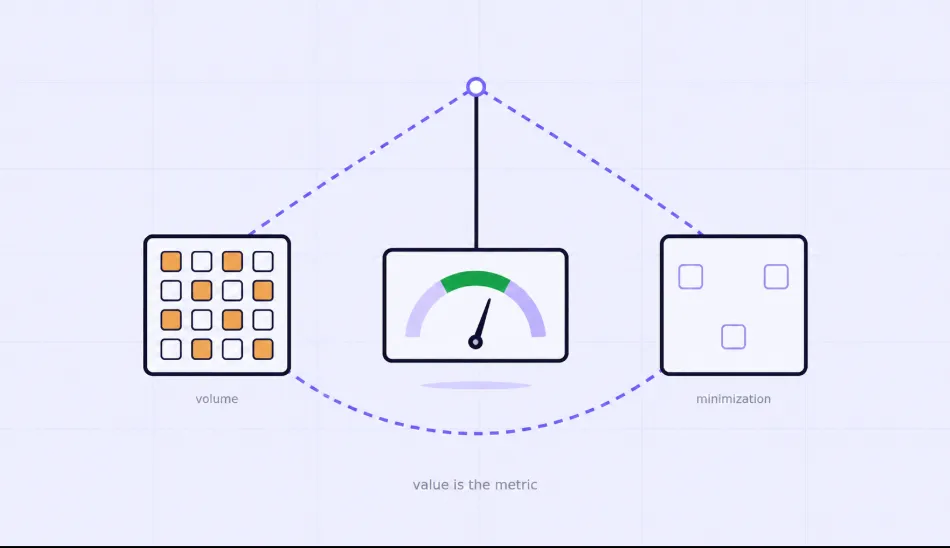
Tokenmaxxing is giving way to cost discipline. In late June, CNBC reported that the frontier labs' largest enterprise customers were pivoting from racing to burn tokens toward tighter budgets and demands for measurable return, with D.A. Davidson's Gil Luria noting that some may begin limiting runaway token spend outright. Uber has imposed a $1,500 monthly cap per employee per agentic coding tool, trackable on an internal dashboard and exceedable by approval (Bloomberg). Microsoft reportedly curtailed some internal AI allowances and has emphasized cost-aware usage, Amazon reportedly directed employees toward AI for real problems rather than an ever-growing use-case list, and reports indicate tighter token budgeting at Meta — internal-policy signals, not withdrawals from AI adoption itself (Publicis Sapient). By July 10, Forbes was reporting that token spend had become the metric to watch, carrying Gartner's warning that AI coding costs are on course to surpass average developer salaries (Forbes). The important question now is not whether enterprises will care about token spend; they clearly do. It is what replaces raw consumption as the governing metric. IBM's June 25 essay — the same piece that argued for valuemaxxing — warns that token minimization can inherit tokenmaxxing's core fallacy by treating consumption itself as the thing to optimize. In IBM's formulation: "costs do not disappear; they move." The durable answer is value per token: measure what the spend produced, then use that evidence to route, budget, and optimize without confusing either high consumption or low consumption with success.
Assemble the new material as a dated sequence, because the tempo is part of the finding. May: trade coverage reports Microsoft curtailing some internal AI allowances, and Amazon directing employees to apply AI to real problems rather than accumulating use cases — internal-policy signals, not withdrawals from AI adoption, but the first incentive reversals from companies that had, months earlier, run consumption as an implicit virtue (Publicis Sapient's synthesis). Late June: CNBC's reporting lands the structural version — the largest enterprise customers of the frontier labs shifting from burn-rate racing to budget discipline and demanded returns, with analyst commentary anticipating outright spend limits — and IBM publishes the essay that named the transition, arguing token consumption is a cost signal rather than a value metric and crediting the valuemaxxing successor term. Uber, the era's cautionary tale, institutes its $1,500 monthly cap per employee per agentic coding tool, dashboard-trackable and exceedable by approval. Early July: Forbes' Tim Keary consolidates the aftermath — token spend as the new board-level metric, Gartner projecting AI coding costs to exceed average developer salaries by 2028 under consumption-based licensing (Gartner's June 24 announcement), multi-model blending emerging as the cost play and introducing a new failure surface in billing complexity and error risk, and Lucidworks' 2026 benchmark finding deployment cost a top concern for 58% of organizations against 3% in 2023 (Forbes). Through July: the practitioner discourse fills in texture: routing platforms surface as the tactical answer, with market analyses describing dynamic allocation across frontier and budget models as the emerging norm and noting the paradox underneath — unit token prices falling while agentic workflows push total consumption up (AlphaSense); engineering-analytics voices caution that consumption extremes are not cost-effective in either direction and that the opportunity is in how tokens are used; and the provenance of the whole era gets its retrospective — the March moment when Nvidia's Jensen Huang said he would be "deeply alarmed" if a $500,000 engineer weren't spending heavily on tokens, the internal leaderboards at major labs and platforms that operationalized the sentiment, and the reported extremes (a single power user's monthly consumption in the hundreds of billions of tokens; enterprise AI bills reported at nine figures annually) that made the reversal inevitable. Read as one arc: the discourse reversed in roughly ninety days, from incentivized consumption to capped consumption — and the institutional transition is still in motion rather than complete: in early August, Uber's own CTO described the company as coming to the end of its tokenmaxxing era (Business Insider). That is the tempo of a proxy metric dying, and the setup for the mistake that can follow proxy deaths.
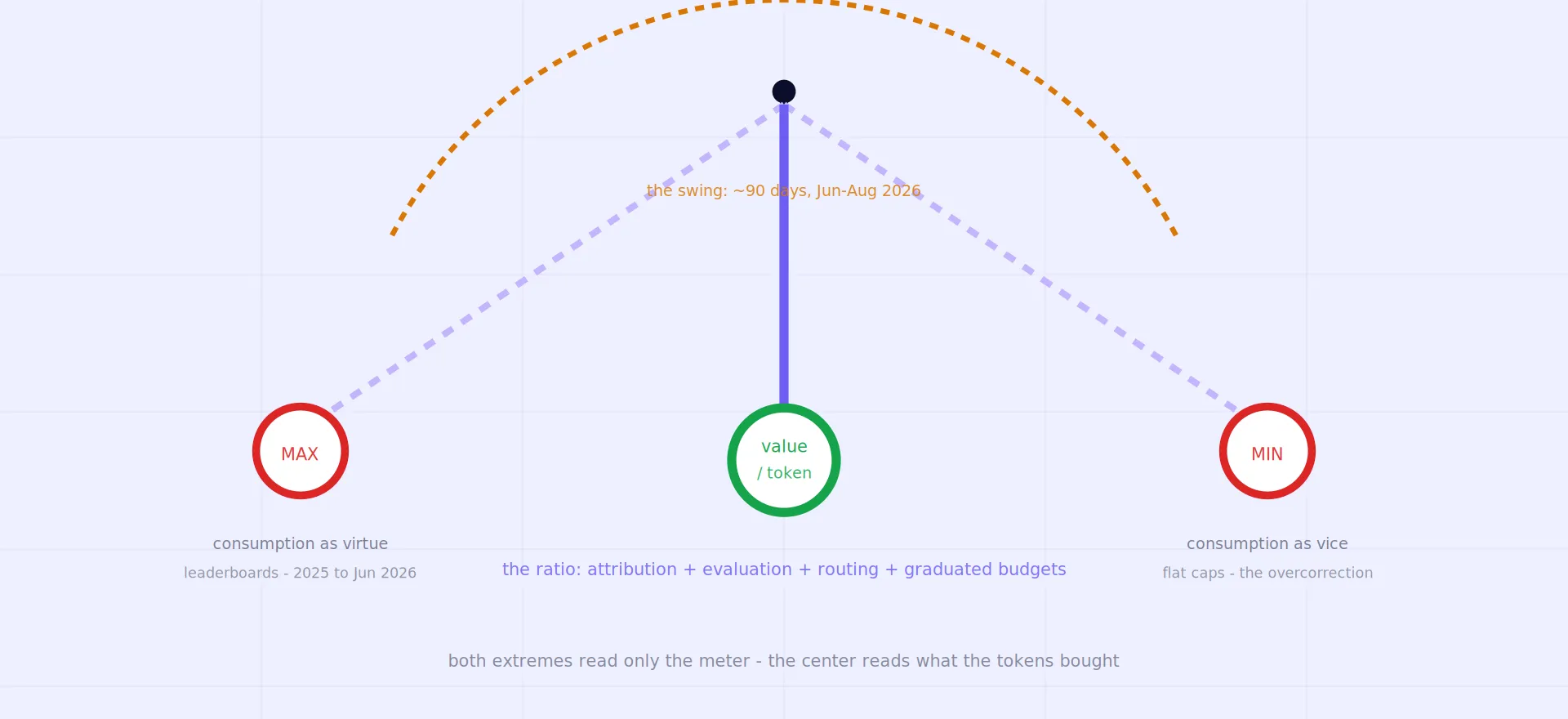
The IBM warning deserves unpacking because it is the most operationally useful sentence of the summer. Both regimes — maximize and minimize — share one axiom: that token count is the number to manage. Under maximization the axiom produced padded prompts, incontinent retries, and agents rewarded for verbosity; under minimization it produces the inverse pathology, and the mechanism is subtler because it looks like discipline. The first cuts are genuinely free: oversized tool catalogs, redundant payloads, stale context — the waste that caching and context engineering can remove. But the cutting doesn't stop at waste, because the metric can't tell waste from nutrition: task descriptions get compressed until ambiguous, business constraints and architectural context get stripped as overhead, retrieval gets rationed — and the system, starved of the context that made it succeed, compensates downstream with extra reasoning, retries, tool calls, validation cycles, and human rework. The input-token line falls; the workflow's true cost rises and disperses into places the token report doesn't look — which is why the celebration is so durable: the number that leadership watches improves while the number nobody computes degrades. Add the two aggravators the July coverage supplies and the picture completes. The agentic denominator: per-employee caps and per-seat intuitions assume people are the consumers, but the structural growth is agents — a flat human ration does little to govern an agentic CI/CD pipeline whose consumption grows independently of seat count, while penalizing the human whose heavy usage is the productive kind. And the multi-model billing surface: the blending strategy that genuinely cuts unit costs (the routing arbitrage: model switching can materially reduce inference cost when cheaper models preserve task quality, with realized savings depending on workload mix, model spread, and routing policy) also multiplies invoices, rate cards, and reconciliation seams — Forbes' billing-error warning — so the estate that diversified models without unifying measurement traded one opacity for several. The synthesis is straightforward: the token is neither a virtue nor a vice; it is a denominator. Any regime that optimizes that denominator without measuring outcomes will eventually misallocate effort, so the numerator has to be instrumented too.
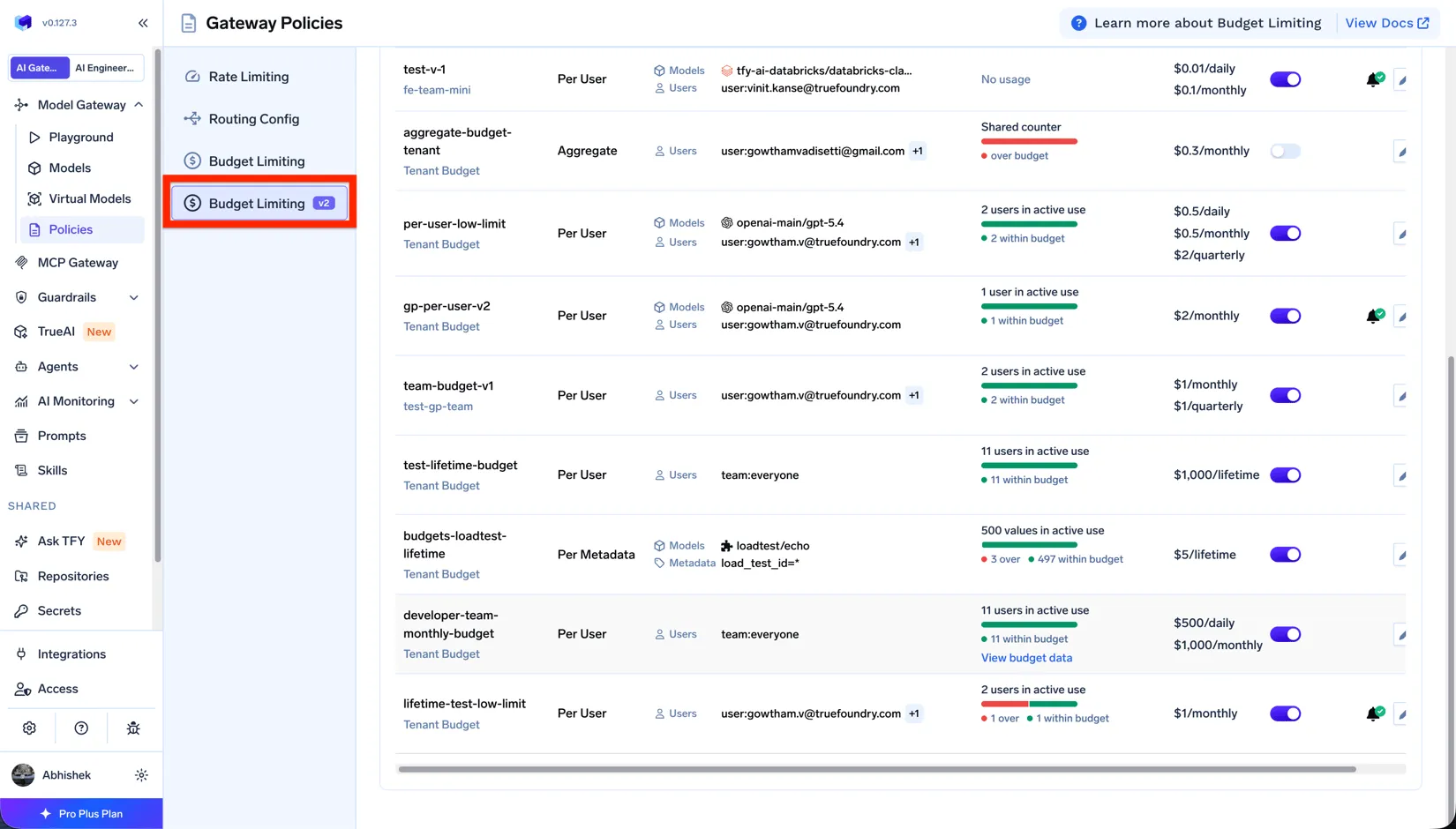
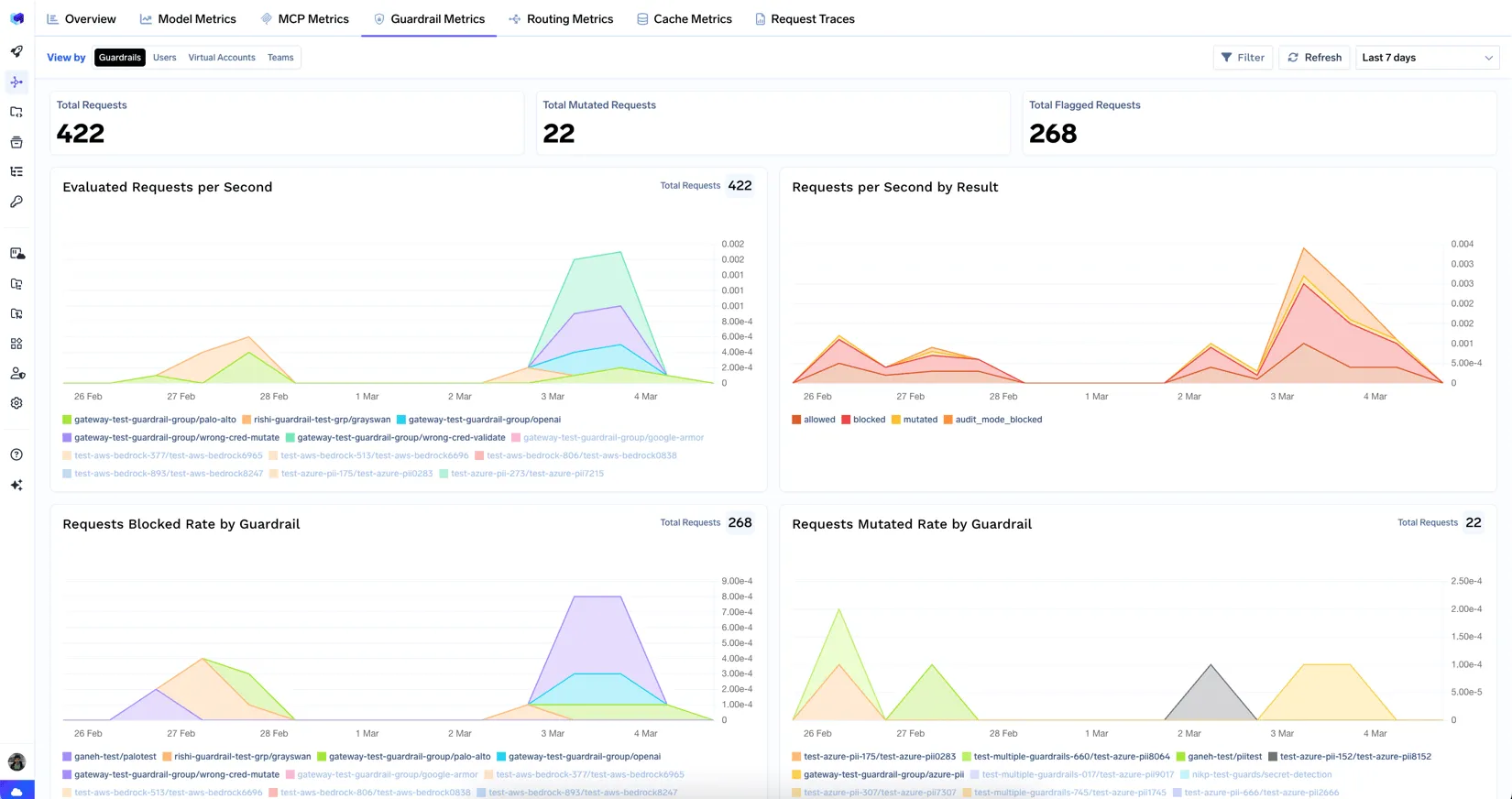
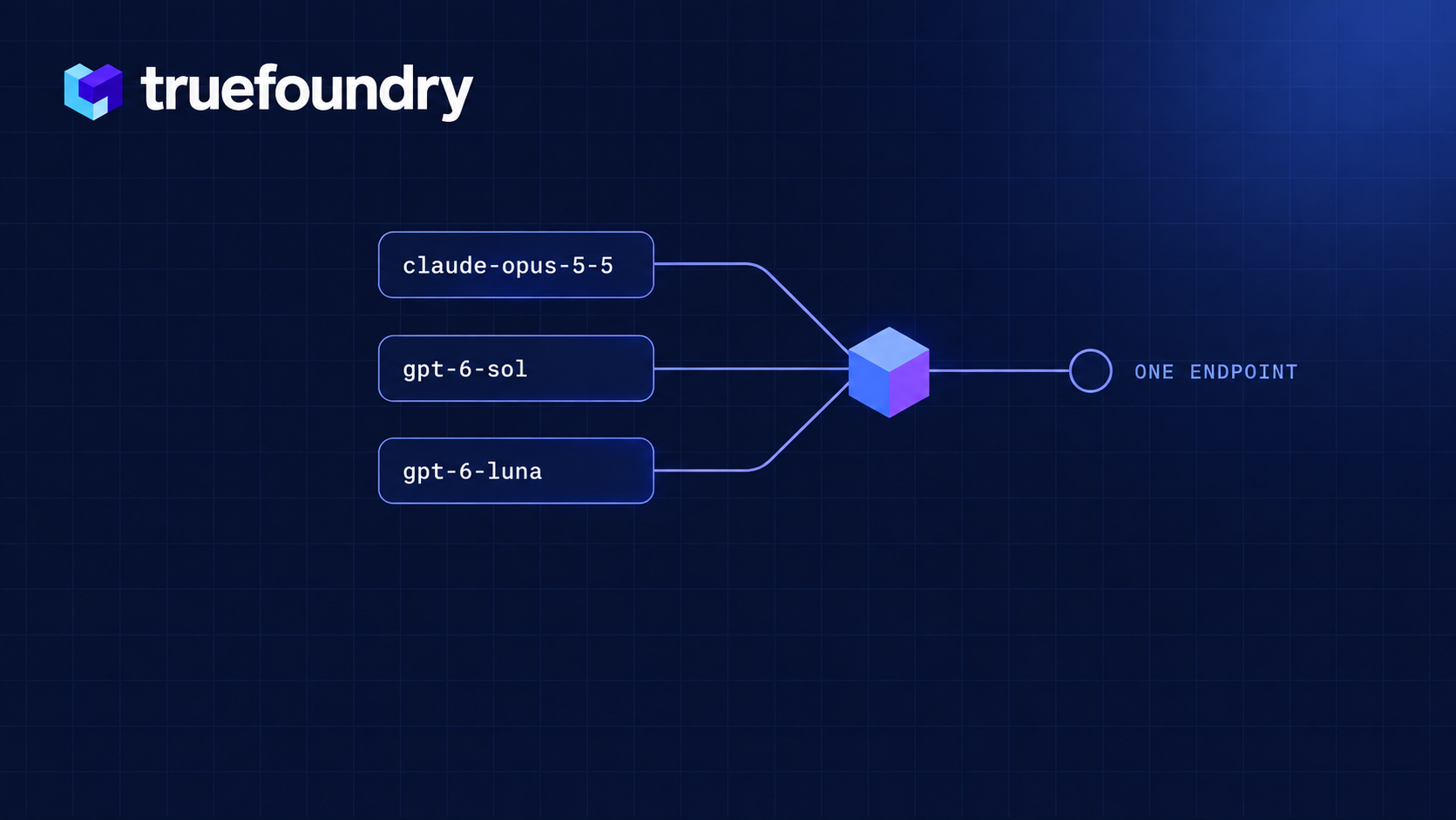
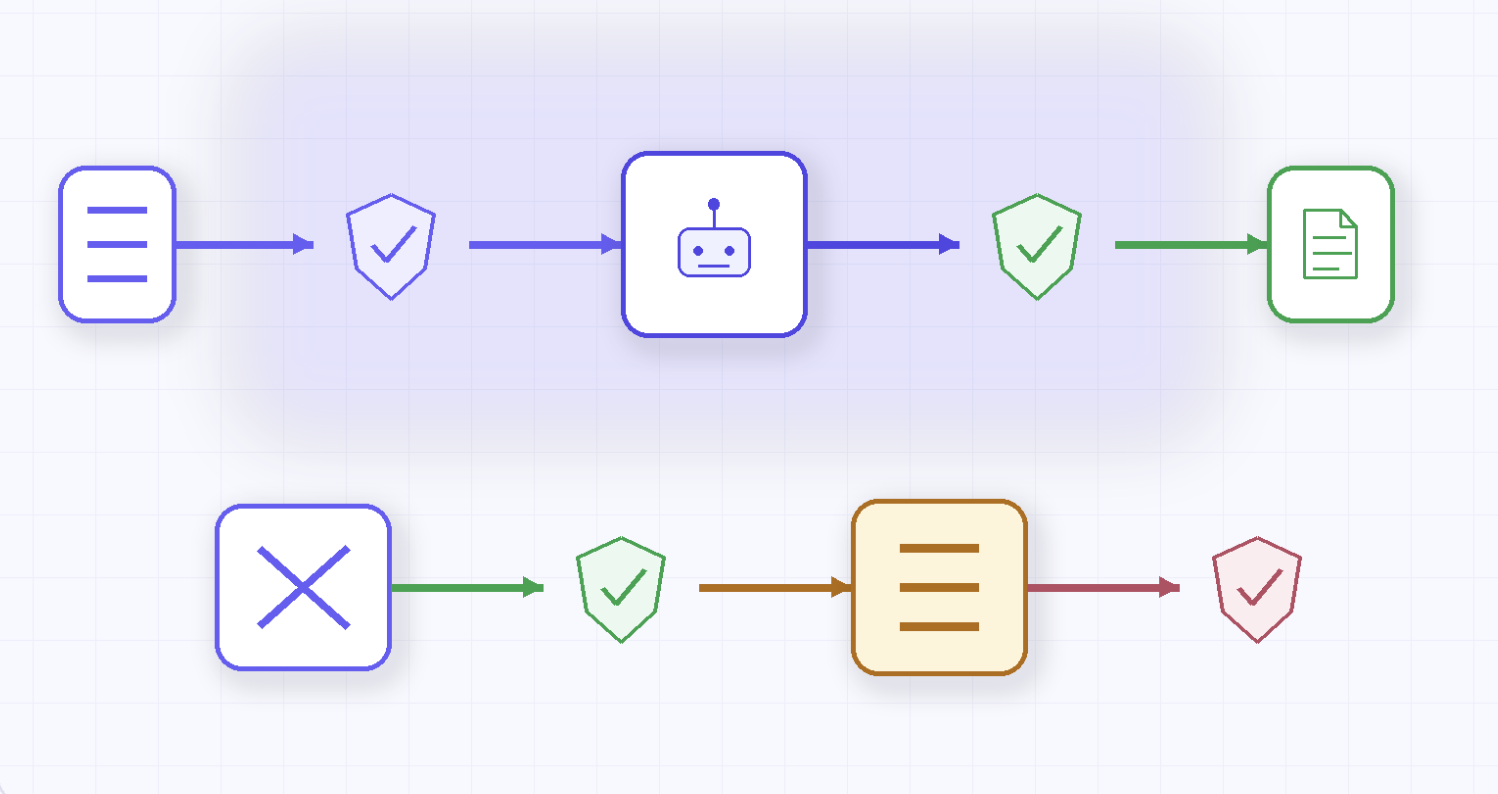
Managing the ratio — value per token — requires four instruments on the path the tokens cross. Attribution decomposes the invoice to team, workflow, and agent (per-request cost attribution; analytics) — the precondition for every sentence smarter than "spend is up," and the unification layer the multi-model billing surface now makes urgent: one measurement plane across every provider the routing strategy touches. Evaluation supplies the numerator — and in TrueFoundry's currently documented surface it is a composed workflow, not a native dashboard measure: gateway traces can be exported through OTEL to connected evaluation platforms such as Braintrust, where quality scores and evaluations are produced, and those scores are what distinguish the hundred million tokens of hard work from the hundred million tokens of circling (the online-evaluation pattern) — the distinction neither maximization nor minimization can make, because both read the meter alone. Routing informed by measured quality operationalizes the blend (cost- and quality-aware routing; semantic caching for the genuinely free savings): the cheap model where evidence says it holds, the frontier model where it doesn't — cutting cost at measured-constant quality, which is the sole cut that doesn't move. And graduated budgets replace the flat ration (budget limiting): tenant- and team-level cost boundaries, partitionable per user, model, virtual account, or metadata value — which is how stable agent and workflow identifiers receive independent envelopes — with milestone alerts at 75/90/95/100% thresholds plus audit, soft_enforce, or enforce behavior; a degrade-to-cheaper-model step is a separate routing policy composable with the budget controls, not a native action of the budget rule itself. Together, these controls create the middle path: remove obvious waste, preserve context where it improves outcomes, route to cheaper models when measured quality holds, and stop runaway spend without treating every high-usage workload as waste. The point is not to optimize token count in either direction; it is to optimize the value produced per unit of spend.
Sourcing and candor. The external record is paraphrased from the cited coverage — IBM's June 25 essay, CNBC's late-June reporting, Bloomberg's Uber-cap reporting, Gartner's June 24 announcement, Lucidworks' benchmark, Forbes' July consolidation, Publicis Sapient's synthesis, and AlphaSense's market analysis — with two short quotations (IBM's six words; Huang's two-word "deeply alarmed") each under fifteen words and attributed; figures we could not verify against primary sources (individual power-user consumption totals, specific enterprise contract values, the widely circulated developer-quality statistics) are characterized as reported claims and deliberately kept out of this piece's load-bearing arguments, and none of the cited organizations evaluates or endorses TrueFoundry. Our commercial interest is structural and disclosed: the instrument set this piece prescribes is the product we sell, bounded by the standing test that the regime is executable on any stack with per-principal attribution, live evaluation, policy routing, and enforced graduated budgets. One limit against our own thesis: instrumentation has a cost floor and a maturity prerequisite — a ten-person startup mid-pivot is rationally on a flat cap, and the graduated regime earns its complexity at the scale where the cost of blunt rationing exceeds the overhead of better instrumentation. The claim is therefore bounded: value-per-token governance is most useful where AI spend is material enough, workloads are stable enough, and outcome measurement is mature enough to justify that instrumentation.
Two attributed quotations under fifteen words are used (IBM's six words; Nvidia's CEO's two, as reported); all other external material is paraphrased, and figures not verifiable against primary sources are marked as reported claims and excluded from load-bearing arguments. None of the cited organizations evaluates or endorses TrueFoundry. Our commercial interest in the instrument set is disclosed, with the regime executable on any stack with equivalent properties. Product images are TrueFoundry's own documentation assets, reproduced with attribution.
TrueFoundry AI Gateway delivers ~3–4 ms latency, handles 350+ RPS on 1 vCPU, scales horizontally with ease, and is production-ready, while LiteLLM suffers from high latency, struggles beyond moderate RPS, lacks built-in scaling, and is best for light or prototype workloads.






The latest news, articles, and resources sent to your inbox
.webp)
.webp)

.webp)
.webp)
.webp)
.png)
.png)
.png)
.png)
.png)
.png)
.png)


