



September 25, 2026
|
5 min read


Published: September 10, 2026

Blazingly fast way to build, track and deploy your models!
In today’s AI-driven world, businesses across industries, from healthcare to finance, need systems that deliver fast, secure, and reliable intelligence. On‑premise deployment of AI infrastructure addresses these needs by keeping data within organizational boundaries, reducing latency, and minimizing dependence on public clouds. This setup ensures stringent compliance with regulations like HIPAA or GDPR, while enabling real-time user experiences and full operational autonomy.
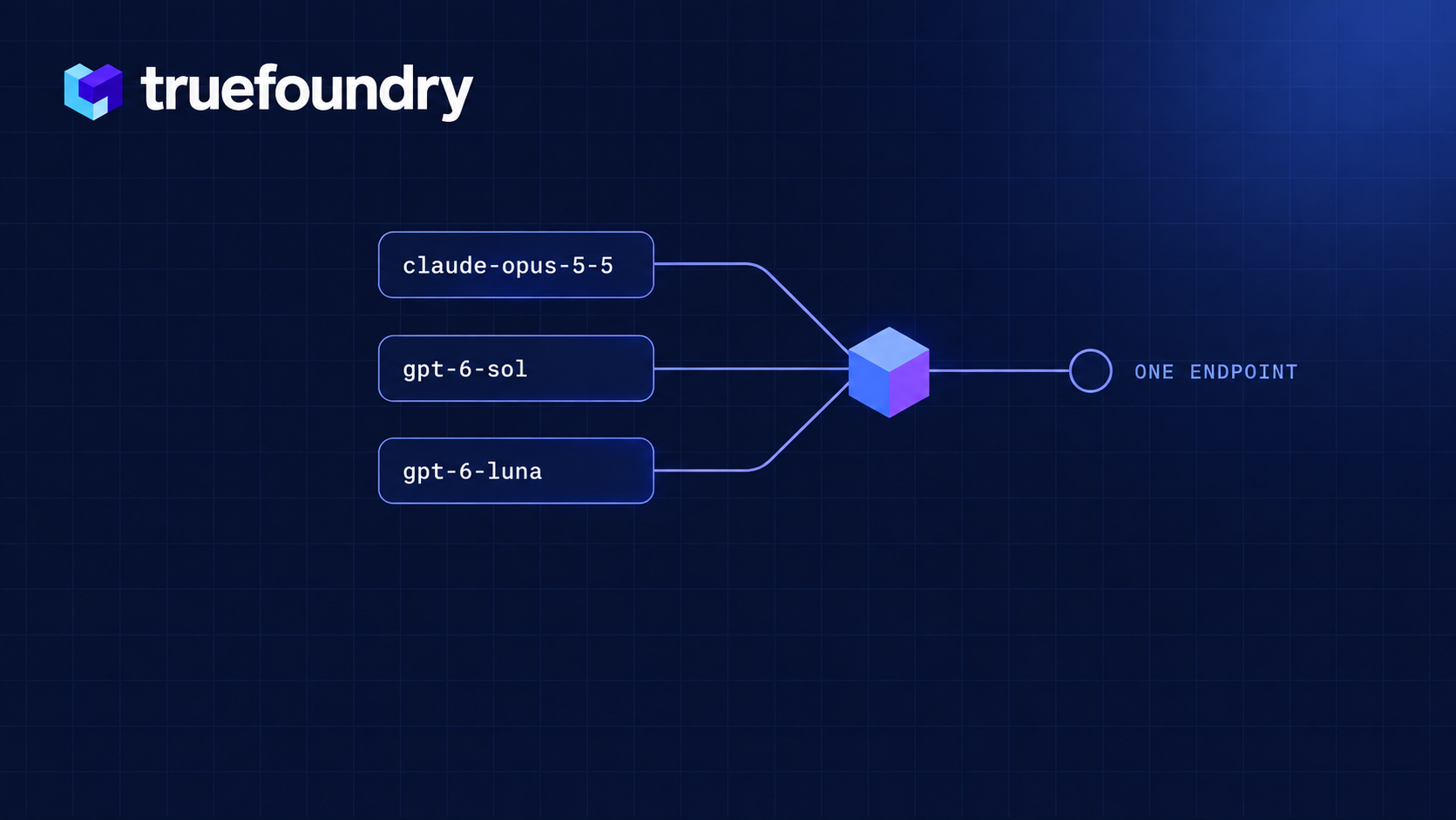
TrueFoundry’s on-prem AI Gateway offers a unified OpenAI-compatible API to access over 250 models securely within your infrastructure. It integrates essential governance like access control, rate limiting, guardrails, and audit logging at the gateway to ensure compliance and accountability. Designed with in-memory decision-making and no external calls in the request path, it achieves ultra-low latency and high reliability.
In this blog, you will learn how its architecture works, why on-prem deployment matters, and best practices for deployment and management.
Organizations increasingly opt for on‑premise AI deployments to strengthen control, security, performance, and cost stability.
First, on‑premise environments provide data sovereignty. Sensitive information, such as healthcare records, financial transactions, or proprietary R&D remains within a company’s own network. This approach ensures compliance with regulations like GDPR, HIPAA, and PCI-DSS, reducing exposure risk and simplifying audits.
Second, these setups enhance security and governance. Internal teams directly oversee encryption, access management, and audit trails, creating tighter control over data handling and reducing reliance on external vendors. This is essential for industries with high data sensitivity and regulatory scrutiny.
Third, performance benefits are significant. By colocating compute next to data, these systems minimize latency, crucial for real-time applications like fraud detection, predictive maintenance, and autonomous systems. On-premise deployment bypasses internet variability and cloud throttling, delivering more consistent performance.
Fourth, although the upfront CapEx for hardware and infrastructure can be substantial, on-premise AI often offers greater long-term cost predictability for sustained workloads. It eliminates variable costs like cloud token pricing and egress fees. Studies show that, over time, maintaining hardware in your own data center can be more cost-effective than relying on cloud services.
Many companies are now embracing hybrid architectures, combining on‑premise and cloud deployments. This strategy allows sensitive workloads to remain on-site while leveraging the cloud’s scalability for less critical tasks. It offers a balanced approach combining regulatory compliance, performance, and flexibility.
In summary, choosing on‑premise AI delivers unmatched data control, enhanced security, low-latency performance, and stable cost structures. These factors make it a strategic priority for organizations handling sensitive or mission-critical workloads. In the next section, we will explore how TrueFoundry’s on‑premise AI Gateway lets you implement these benefits in a scalable, governance-first way.
Key Metrics for Evaluating Gateway
| Criteria | What should you evaluate ? | Priority | TrueFoundry |
|---|---|---|---|
| Latency | Adds <10ms p95 overhead for time-to-first-token? | Must Have | ✅ Supported |
| Data Residency | Keeps logs within your region (EU/US)? | Depends on use case | ✅ Supported |
| Latency-Based Routing | Automatically reroutes based on real-time latency/failures? | Must Have | ✅ Supported |
| Key Rotation & Revocation | Rotate or revoke keys without downtime? | Must Have | ✅ Supported |
| Key Rotation & Revocation | Rotate or revoke keys without downtime? | Must Have | ✅ Supported |
| Key Rotation & Revocation | Rotate or revoke keys without downtime? | Must Have | ✅ Supported |
| Key Rotation & Revocation | Rotate or revoke keys without downtime? | Must Have | ✅ Supported |
| Key Rotation & Revocation | Rotate or revoke keys without downtime? | Must Have | ✅ Supported |

On-premise AI gateways must uphold several essential principles to support enterprise-grade deployments.
High availability ensures the gateway never becomes a single point of failure. Even if dependent components like databases or queues fail, inferencing must continue uninterrupted.
Low latency is critical; gateways should add negligible delay to live requests to maintain responsive AI experiences.
High throughput and scalability are also crucial. Each gateway node should handle high concurrency and scale with demand, ensuring consistent performance under load.
No external dependencies in the request path means live request handling cannot rely on network or disk calls. Non-essential tasks like logging are deferred to the background.
In-memory decision making supports sub-millisecond enforcement of policies such as authentication, authorization, rate-limiting, and routing.
Separation of control plane and data plane allows configuration and management logic to operate independently from live traffic handling, facilitating resilience, easy updates, and horizontal scaling.
Architecture
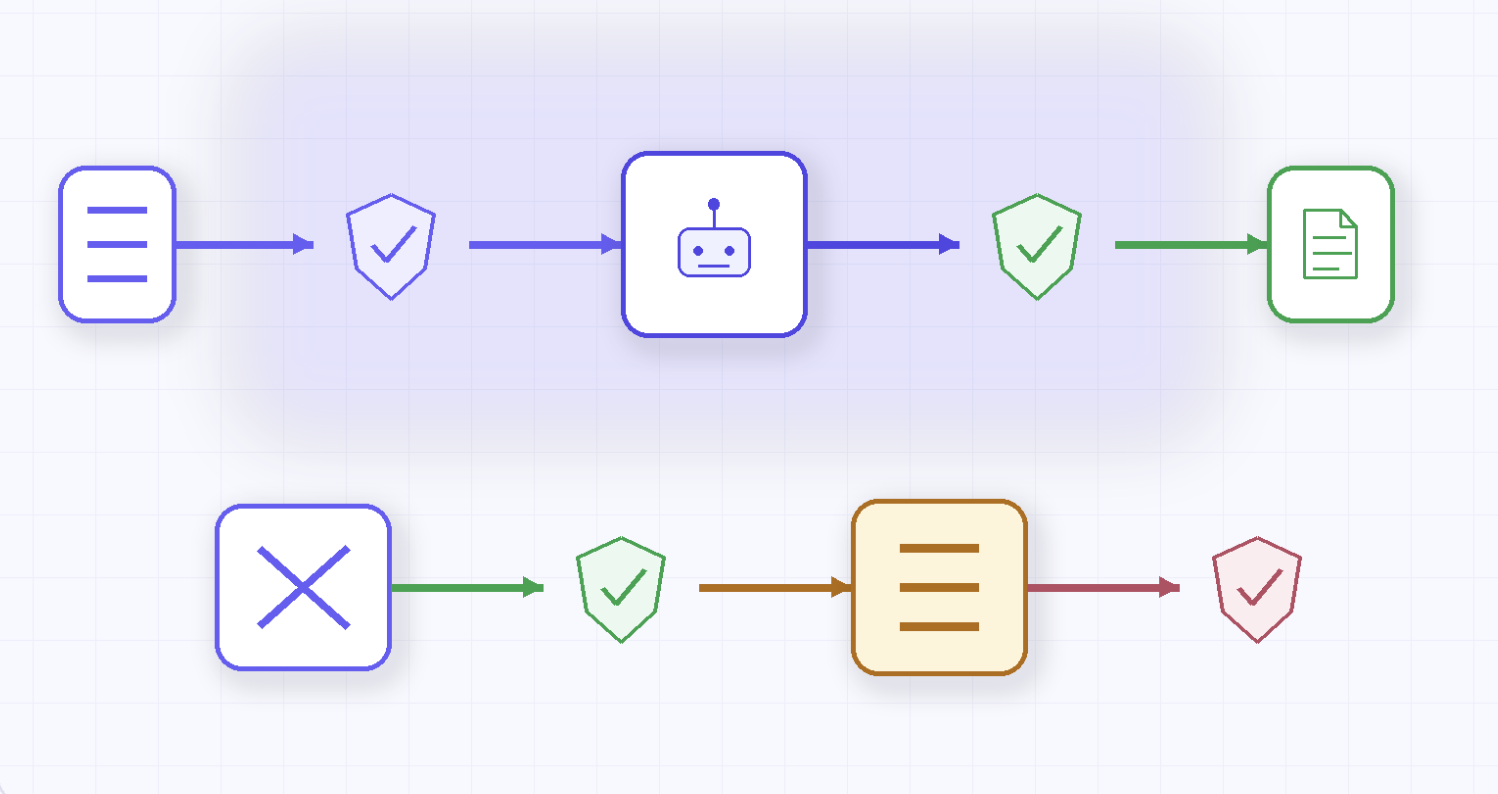
The architecture of an on-premise AI gateway applies these principles in a modular and distributed system.
Finally, both planes are designed for horizontal scaling. Stateless data-plane nodes can be replicated behind load balancers, while control-plane nodes scale independently to support policy orchestration and system resilience.
These combined principles and architecture enable on-premise AI gateways to be fast, resilient, secure, and manageable at enterprise scale. In the next section, we will dive deeper into TrueFoundry’s implementation of these constructs.

TrueFoundry’s on‑prem AI Gateway builds upon foundational principles to deliver a scalable, secure, and high-performance platform for AI workloads. Here's a refined breakdown of its capabilities and internal workings, based solely on official TrueFoundry documentation.
1. High-Performance Core
TrueFoundry’s gateway is built on the Hono framework, a lightweight, edge-optimized runtime designed for speed. Benchmarks show that a single proxy instance, on just 1 CPU and 1 GB of RAM, can handle 250 requests per second with only a few milliseconds of added latency. All key enforcement operations, authentication, authorization, rate limiting, and routing are executed in memory, and absolutely no external calls occur during request handling. This ensures sub-millisecond response times and consistent performance under load.
2. Clean Separation of Responsibilities
The gateway follows a classic control plane/proxy plane split:
3. Resilient and Asynchronous Logging
To preserve performance, logging and telemetry are managed asynchronously:
4. Core System Components
TrueFoundry’s gateway comprises several tightly integrated components:
5. Scalability & Benchmarking
TrueFoundry’s documentation highlights strong linear scalability:
6. Governance and Unified API
7. Observability & Analytics
The gateway delivers deep telemetry insights:
TrueFoundry’s on-prem AI Gateway embodies the ideal blend of performance, scalability, resilience, and governance, all orchestrated within a user-friendly platform. Next, we’ll guide you through deployment steps and best practices to bring this gateway into your infrastructure.
Deploying TrueFoundry’s on‑prem AI Gateway starts with verifying connectivity, licensing, and domain configurations to ensure secure and seamless operations. The installation leverages a Helm-based chart that brings together core components, control plane, database, telemetry, and stateless gateway pods into your Kubernetes cluster.
This approach simplifies AI model deployment by standardizing how inference infrastructure, governance, and routing components are introduced into production environments.
1. Prerequisites & Infrastructure Readiness
Before deploying the AI Gateway on-premise, ensure the following elements are in place:
These prerequisites ensure secure, authorized communication with TrueFoundry’s control plane while maintaining self-managed hosting of core components.
2. Installation and Configuration
With prerequisites in place, you configure the core installation via a Helm-based deployment:
This structure abstracts away manual setup complexity, ensuring consistent and repeatable deployment.
3. Network Setup & Security
During deployment:
4. Scaling & Multi-Node Design
This pattern ensures high availability, elasticity, and system separation for enhanced stability.
5. Continuous Configuration Management
Once deployed, the control plane propagates updates to gateway pods via NATS:
This enables dynamic changes via UI or GitOps workflows, without service disruption.
6. Monitoring & Observability
7. Maintenance, Upgrades & Multi-Cluster Support
With the gateway deployed, configured, and monitored, your on-prem AI stack is ready for production workloads. Next, we’ll cover best practices for operational excellence, security hardening, and governance-aligned scaling.
Deploying an on-prem AI gateway presents specific hurdles alongside proven solutions:
Security & resilience: On-prem setups face increased exposure to threats like DDoS attacks, prompt injection, data leakage, and model poisoning. Best practice is to adopt a zero-trust model with hardened per-request inspection and scalable DDoS protection systems.
Data protection & compliance: Enterprises must enforce stringent encryption for data at rest and in transit. Auditable access controls and robust audit logging are critical to meet GDPR, HIPAA, and similar regulatory standards; hence, using HSM-based key management within an air-gapped environment is recommended.
Scalability & performance: Gateway infrastructure must support horizontal scaling to avoid bottlenecks. Stateless proxy nodes combined with event-driven autoscaling help maintain low-latency throughput. Meanwhile, asynchronous logging ensures observability does not impair performance.
Operational best practices: Automate deployment and configuration using GitOps, integrate continuous monitoring, and maintain observability pipelines. Proactively audit model usage and guardrails to ensure ongoing compliance, safety, and cost control. These measures together ensure a reliable, secure, and compliant on-prem AI deployment.
On‑premise GenAI is evolving from a compliance fallback into a strategic differentiator. TrueFoundry’s on‑prem AI Gateway empowers enterprises with full control over infrastructure, models, and data, making it ideally suited for industries with stringent privacy and regulatory needs such as healthcare, finance, and government. While the setup requires initial investment, it offers long‑term cost predictability, auditability, and deep integration with internal systems. More than just a temporary solution, on‑prem deployment delivers agility, sovereignty, and scalability. As AI solutions become more mission‑critical, having a foundation in your environment ensures you can innovate confidently, securely, and at scale.
TrueFoundry AI Gateway delivers ~3–4 ms latency, handles 350+ RPS on 1 vCPU, scales horizontally with ease, and is production-ready, while LiteLLM suffers from high latency, struggles beyond moderate RPS, lacks built-in scaling, and is best for light or prototype workloads.






The latest news, articles, and resources sent to your inbox


.webp)
.webp)
.webp)

.webp)
.webp)
.webp)
.png)
.png)
.png)
.png)
.png)
.png)


