


September 26, 2026
|
5 min read


Published: April 10, 2026
Blazingly fast way to build, track and deploy your models!
Enterprise AI is entering a new phase.
Over the last few years, organizations have experimented heavily with generative AI—testing chatbots, copilots, and model-driven applications. But as early excitement gives way to real-world deployments, a different challenge is emerging: how do you move from isolated AI features to intelligent systems that can operate safely, reliably, and at scale?
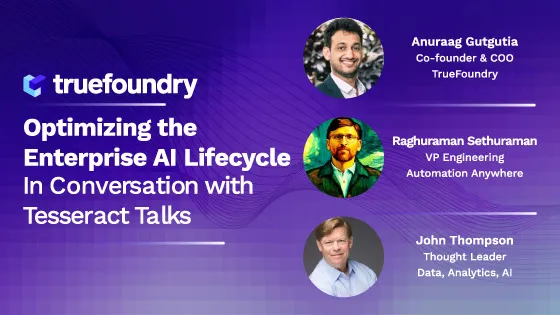
That question was at the heart of a recent episode of Tesseract Talks, with Anuraag Gutgutia, Co-founder and CEO of TrueFoundry and Raghu Sethuraman, Vice President of Engineering at Automation Anywhere.
Together they explored the shift from generative AI to agentic AI—and what it really takes to make that transition work inside large organizations
Watch Episode 1: Turning AI Chaos into Control with Nikunj Bajaj
Watch Episode 2: The Hidden Infrastructure Powering Enterprise AI with Abhishek Choudhary
Here are some of the key insights from that conversation.
For the past few years, most AI conversations have revolved around models. Enterprises compared benchmarks, debated providers, and experimented with prompts. But as Raghu pointed out, agentic AI in enterprise becomes fundamentally different from earlier GenAI deployments.
Traditional generative AI applications were essentially “models wrapped as APIs.” In contrast, agentic AI systems involve many moving parts—tools, memory, workflows, integrations, and guardrails. Models are only one component of a much larger system
This introduces entirely new challenges:
According to Raghu, the problem has evolved from picking the right model to designing the right infrastructure.
“AI is transitioning from a model-as-an-API approach to a system design challenge,” he explained. “Enterprises must now build platforms that can orchestrate multiple components together in a secure and governed way”.
Why Governance Becomes Mission-Critical
Once AI systems begin taking actions—rather than just generating text—governance stops being a nice-to-have. It becomes essential.
Anurag illustrated this with a concrete example: imagine a travel company launching an AI assistant that can book flights on behalf of users.
What could go wrong?
Plenty.
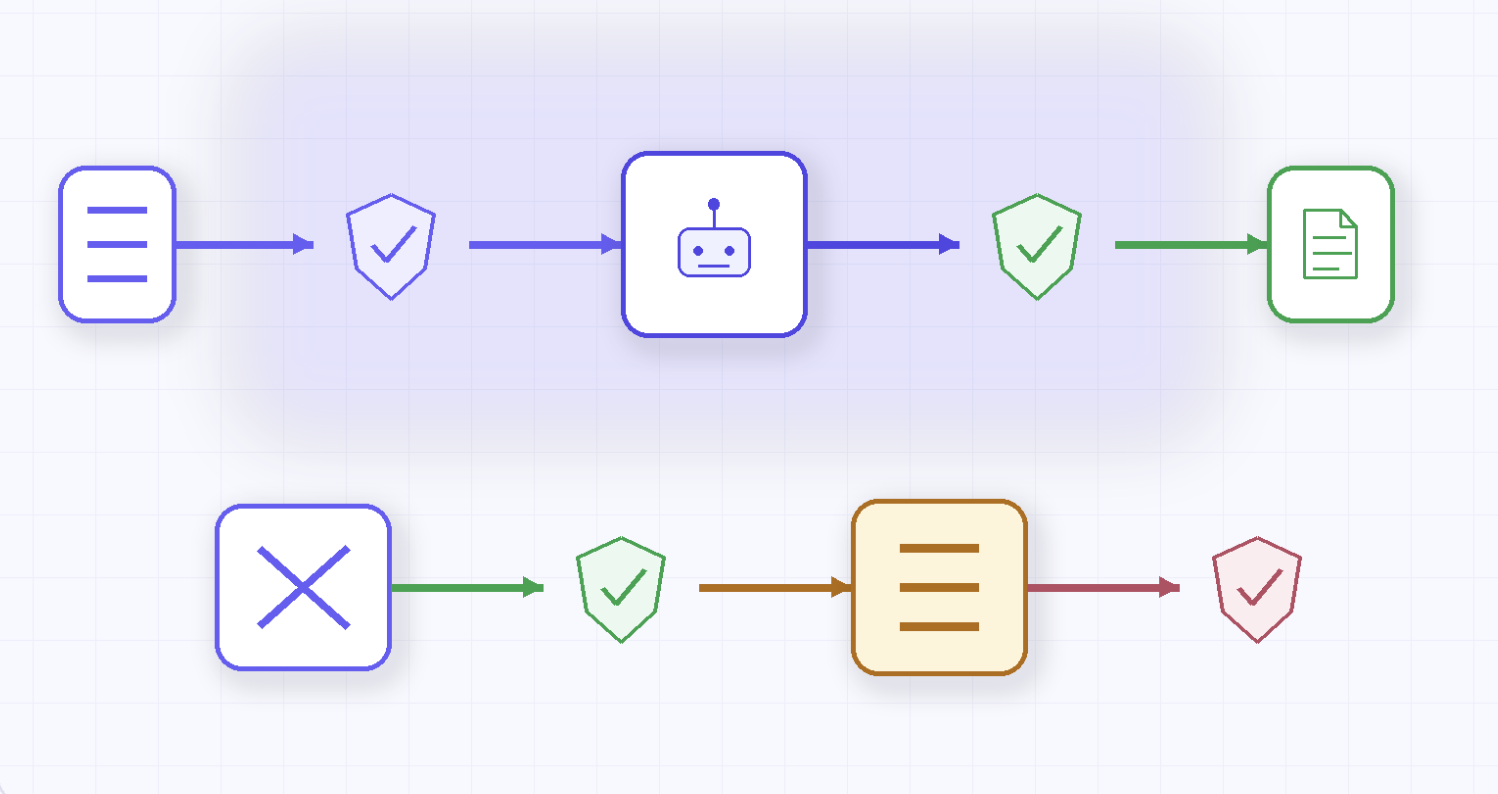
Each of these represents a different governance challenge: safety, cost control, access management, and identity enforcement
This is why agentic AI requires governance across multiple layers:
If there was one clear takeaway from the discussion, it’s this:
Enterprise AI success is no longer about models. It’s about lifecycle management.
Building a clever demo is easy. Running intelligent agents safely, securely, and reliably at enterprise scale is the hard part.
As organizations move beyond proofs of concept and into full production deployments, the focus must shift to:
At TrueFoundry, that’s exactly what we’re building for. Turning agentic AI into enterprise reality requires more than models. It requires a platform built for control, governance, and scale.
TrueFoundry AI Gateway delivers ~3–4 ms latency, handles 350+ RPS on 1 vCPU, scales horizontally with ease, and is production-ready, while LiteLLM suffers from high latency, struggles beyond moderate RPS, lacks built-in scaling, and is best for light or prototype workloads.






The latest news, articles, and resources sent to your inbox


.webp)
.webp)
.webp)
.webp)
.webp)
.png)
.png)
.png)
.png)
.png)
.png)


