


September 22, 2026
|
5 min read


Published: March 25, 2026
.webp)
Blazingly fast way to build, track and deploy your models!
The cost of generative AI looks manageable at the pilot stage. A few api calls, a small team, a limited use case. You spin up a few pilot projects, and everything seems fine. Then the initiative scales. More teams come onboard, token volumes multiply, and infrastructure sprawls across your cloud computing accounts. The monthly bill looks nothing like the original estimate.
IBM research found that computing costs are expected to rise by 89% between 2023 and 2025, with 70% of executives citing generative AI as the primary driver. Every executive surveyed had already cancelled or postponed at least one GenAI initiative due to cost concerns. This is not a budgeting failure; it is a visibility problem. The costs exist, and they compound; they are simply not where most organizations expect to find them.
This guide breaks down where the cost of generative AI accumulates, what the market charges for controlling them, and how you can scale without losing financial control over your AI investments.
.webp)
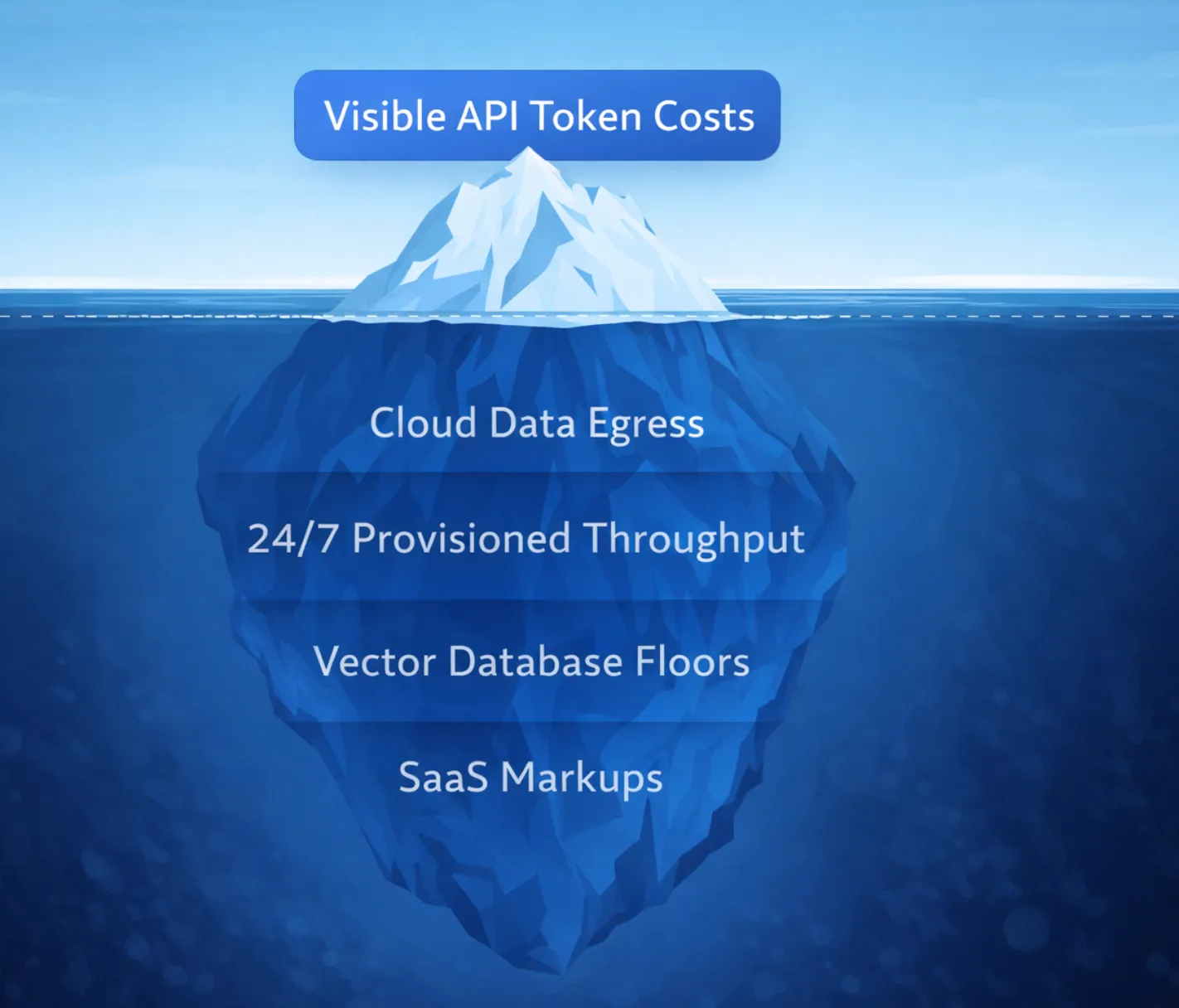
Most teams forecast budgets based on visible token prices, missing the massive structural cloud costs lurking beneath the surface. The overall cost deceives many planners.
Beyond infrastructure, the lifecycle of maintaining production AI introduces hidden costs.
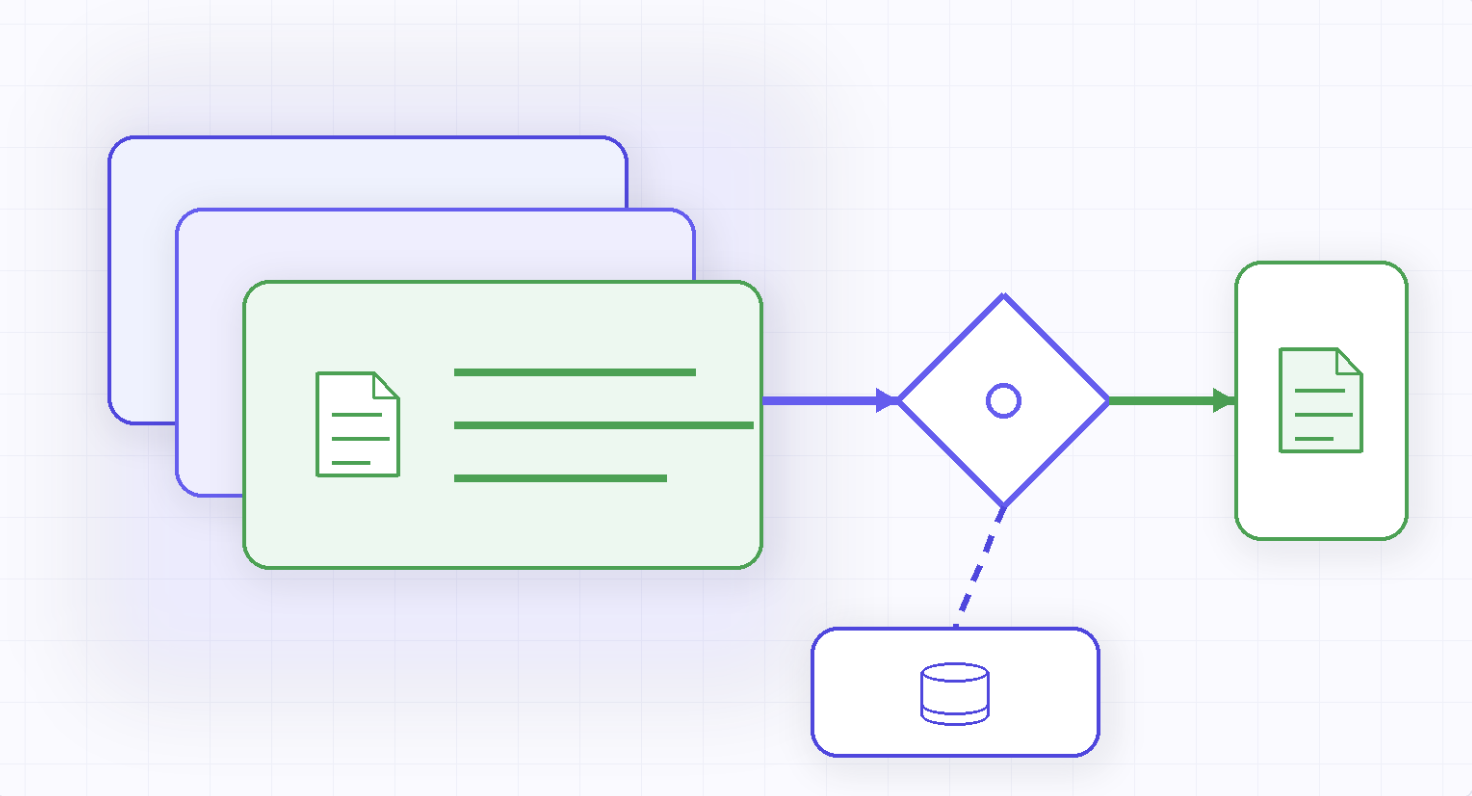
Most cost of generative AI projections begin with the AI model layer itself, with little, if any, consideration of what must be done before a single inference is made. Costs of data preparation, cleaning, and structuring the data for generative AI applications can be nearly as expensive as the model itself. Enterprise data does not exist in a usable state by default. It lives across many systems, requiring initial data acquisition to extract legacy formats that were never intended for machine consumption in the first place.
It takes a significant investment in time, money, and data scientists to get that data to a point where it can be consumed by the model itself. This phase can be quite expensive, especially
for complex domains like healthcare, legal, or financial services, where this phase can be many times the expense of the AI workload itself, driving up the cost of generative AI.
The problem gets worse over time, however, as poor data quality can lead to model training costs, increased compute costs, and wasted resources as an organization continues to try and correct issues with hallucinations caused by poor data quality itself.
When the end result outputs of generative AI models are poor, it is natural to assume that the model itself has failed. In reality, many times, the problem lies with the training or retrieval data itself, and correcting this problem requires expensive evaluation phases to ensure that the data quality has improved, which can be quite expensive, especially when this problem has to be solved multiple times over the life of the model, burning up expensive GPU resources along the way, with none of this being factored into the original budget for the cost of generative AI.
Governance is not a one-time check box. It is a continuous operational cost that most organizations grossly underestimate when they first deploy Gen AI in production, negatively impacting operational efficiency.
For example, regulated industries will have to deal with additional costs for data privacy reviews and remediation when governance of artificial intelligence is an afterthought. A legal or privacy review that might take hours for a traditional software feature can take weeks when AI-generated output is involved, inflating the cost of generative AI.
Moreover, regulators will require organizations to not only show what a model decided but also to show why the model made that decision and what training data was used in that generative artificial intelligence system. It will be exponentially more expensive to build this traceability in after the fact compared to designing it in from the outset.
GDPR, HIPAA, and SOC 2 have documentation requirements that ai systems cannot meet by default and require expensive additional tooling, impacting the overall business case. A traditional LLM API call will log nothing of interest from a regulatory perspective. It will not capture who initiated the request, whether the prompt used to generate the output was sensitive, or how the output was used.
It will not capture the audit trail necessary to meet the requirements of any major regulatory body. It will require additional logging, PII detection, and access-control layers beyond the base-model infrastructure, increasing development time. Organizations that deploy first and then attempt to govern will have to pay for this remediation under time pressure, making the cost of generative AI much higher.
.webp)
If the central IT process is moving slowly, teams will find their own way to solve the problems using new technology. This is how the cost of generative AI gets into the wild, and it rarely gets discovered until the bill arrives or a security issue surfaces it. As teams across the organization implement their own AI tools without proper cost management, the company will pay twice for overlapping functionality while creating costly security governance issues.
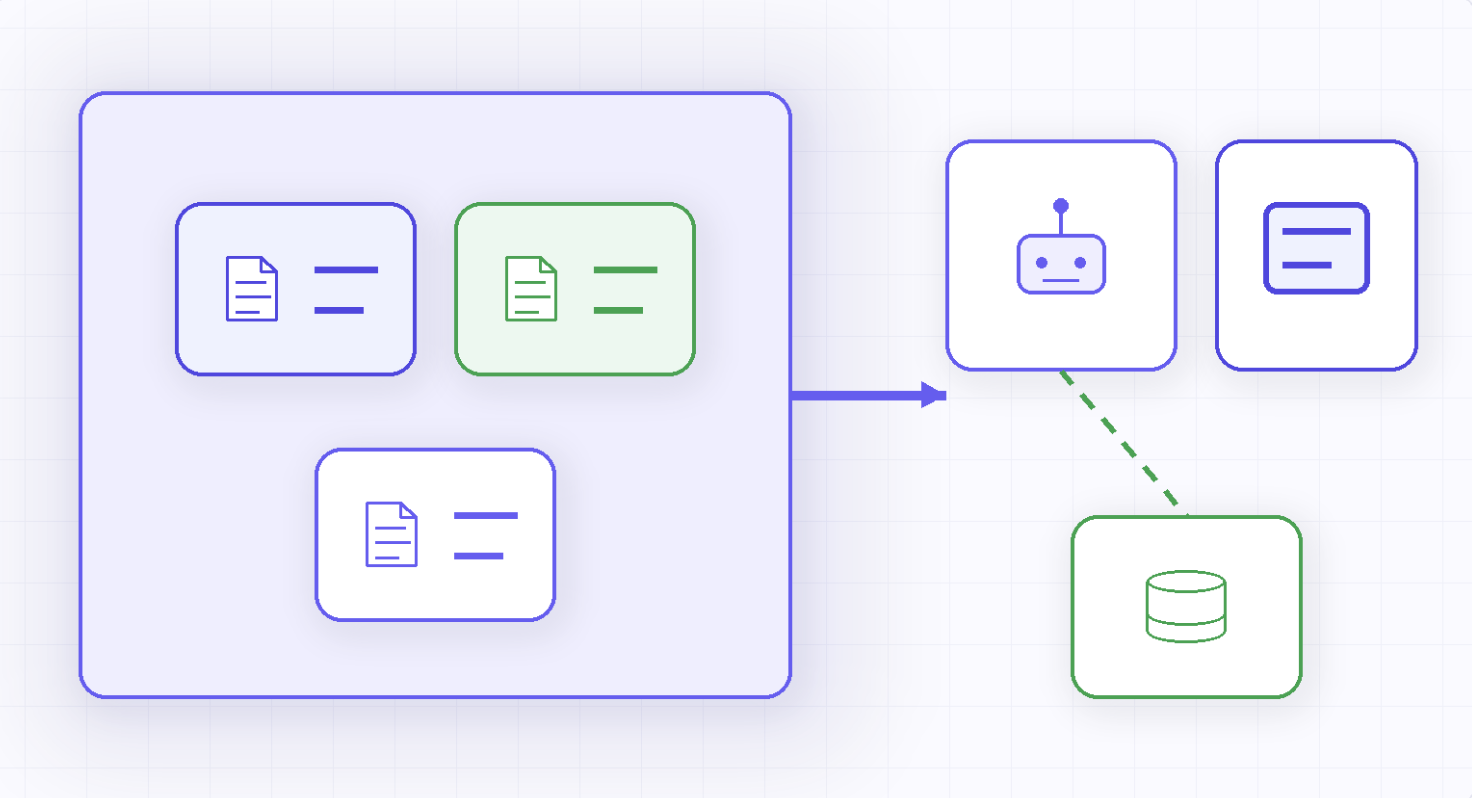
A team will buy an AI writing assistant for content creation. Another team will buy a document analysis tool for a specific task. A third team will build a direct integration to an LLM API. Each of these purchases can be made based on business need. Collectively, they represent costly duplicated functionality that inflates the total cost of ownership, money that could have been saved in a single solution at a fraction of the cost.
More concerning, each of these integrations creates a new attack surface through which enterprise data can leak outside the intended boundaries, undermining the secure user experience. Nearly 10% of prompts sent to public GenAI models contain sensitive enterprise information. This represents a costly compliance risk that rarely makes it into the financial model for generative ai costs.
Employees using consumer-grade AI products do not stop to analyze their inputs using proper prompt engineering. Pricing strategies, customer information, legal communications, and financial information related to the operation of the business can all appear in prompts sent to tools that have not been vetted by security or legal. This type of compliance risk does not show up in a financial model but represents real financial risk in the form of regulatory fines, breach notifications, and reputational damage, thereby ballooning the cost of generative AI.
On the one hand, AI-assisted development and content generation can increase output velocity. On the other hand, AI-assisted development can increase the velocity at which code that no one fully understands and that no one ever budgeted to maintain is produced.
AI code produced quickly via text generation and deployed into a legacy environment can increase the pace at which overall technical debt must be addressed in the future. While the velocity of AI code generation is a significant advantage, it can create a productivity illusion when the AI code is deployed into a legacy environment, increasing the long-term cost of generative AI.
Code designed to operate in a modern API pattern can introduce incompatibilities with older frameworks that may not become apparent until the production environment is under load. While the velocity of AI code generation may have made the initial deployment look like a winner, the same velocity can make the eventual remediation look like a crisis.
AI code can create complex dependencies that become increasingly difficult and expensive to unwind in a legacy environment. Large language models are designed to create plausible output, not sound architecture. Code that is generated can lead to tight coupling, unorthodox coding practices, and other logical issues that may not become apparent until a future point in time. In a legacy environment, these issues do not occur in isolation. They occur alongside other issues that can create a cumulative effect that becomes expensive to unwind, as we discuss in the next section on the cost of generative AI.
.webp)
However, deployment is not the end. For enterprise AI, deployment is merely the first step. Maintenance for AI systems in the enterprise environment can range from 17% to 30% annually, rising to 50% in highly regulated industries. These are not exceptions; they are the normal operating environment for AI systems to remain relevant, accurate, secure, and deliver true business value.
There are updates to cloud services providers. There are changes in the effectiveness of prompts due to alterations in model behavior. There are evaluation pipelines that need to be updated. There are integrations that need to be updated due to changes in API calls. There is a need for change management that requires adding a formal compliance process on top of every change to the AI system in highly regulated industries, contributing to the cost of generative AI.
All of this combines to compress the ability to move quickly. A staggering 75% of the resources invested in building the AI system in the first place may need to be dedicated to ongoing support. Yes, you read that correctly. For finance teams, that number is a shock. For those in the AI departments, that number is a harsh reality. For those in the executive offices, that number should serve as a wake-up call, especially considering the environmental impact and carbon emissions of ongoing computing power.
For many in the enterprise environment, Gen AI budgets are being developed with the assumption that the most expensive phase of AI investments is the build phase. That is not the case. The sustain phase requires a significant portion of the resources invested in building the AI system in the first place, increasing the cost of generative AI.
Prompt engineers, machine learning engineers, data engineers, and infrastructure engineers do not become available for other tasks the moment deployment is complete. They become part of a permanent loop of monitoring, evaluation, and iteration, which is a key factor in the
cost of generative AI. For those in the finance departments, the AI investment model is likely being treated as a capital expense. That is not how it works.
.webp)
.webp)
The organizations that have brought the cost of generative AI under control share one characteristic that has nothing to do with which models they use or how they negotiate cloud contracts. The organizations executing proper cost optimization with intention are those with a single, centralized view of every dollar being spent and on what. Without that view, cost management is at best reactive. Teams discover overspend after it has occurred.
Finance escalations occur at the end of the quarter rather than when a budget threshold is crossed. Decisions about which models to use, which workloads to route where, and which teams are consuming disproportionate resources get made on instinct rather than on data and best practices. The market has not made this easy. Platform markups, fragmented tooling, and governance paywalls convert what should be a manageable infrastructure cost into an unpredictable liability that inflates the cost of generative AI.
The features that would give organizations financial control: granular token attribution, team-level budget enforcement, cross-provider cost comparison, real-time usage alerts, sit behind enterprise contracts, are sold as separate products, or remain unavailable from the platforms organizations already use. The result is that the teams closest to the problem lack the instruments to diagnose it, from a proof of concept to production, and the finance teams with budget authority lack the context to intervene in a meaningful way.
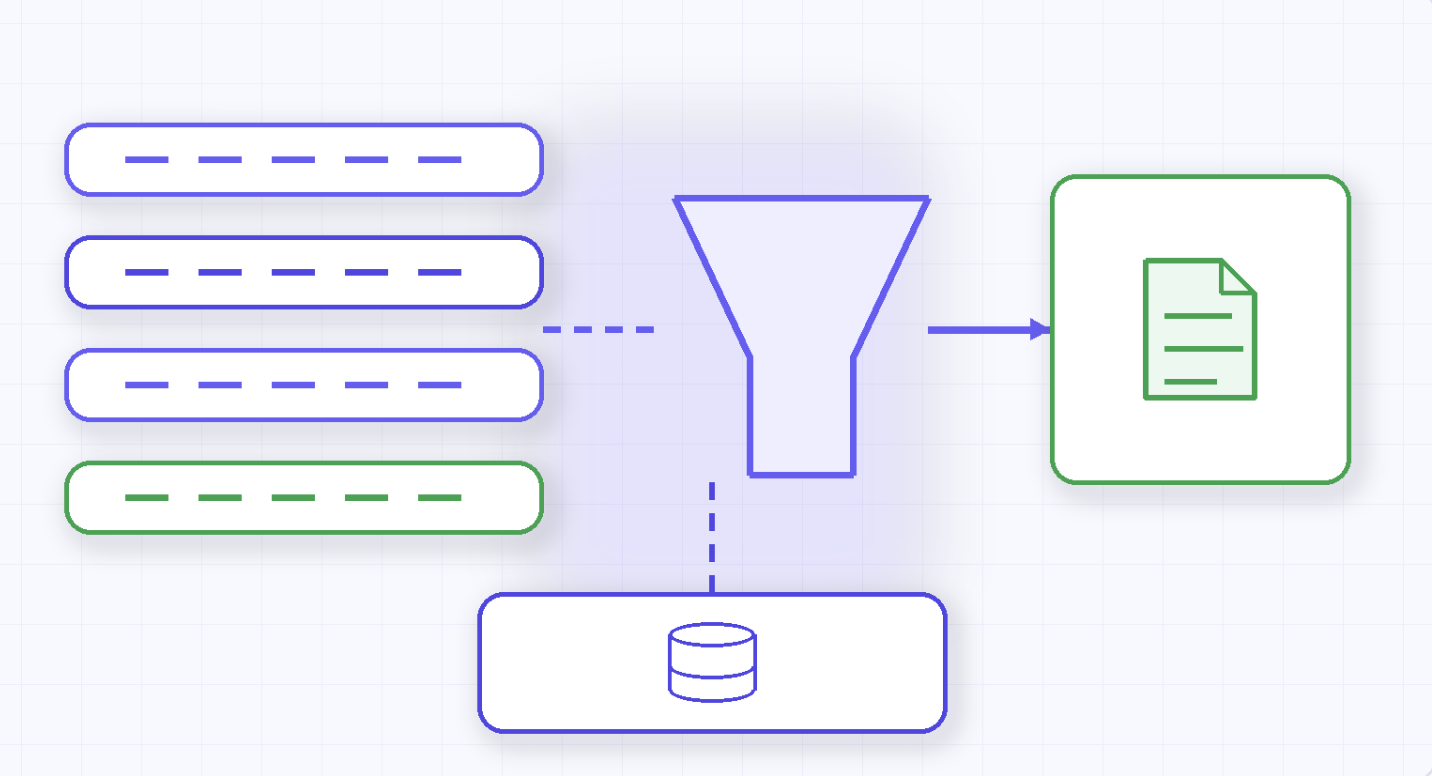
This is a solvable problem, and it does not require trading off model development velocity to solve it. TrueFoundry gives enterprises the compute economics, cost visibility, and budget enforcement they need to scale GenAI without the financial surprises. By eliminating platform markups on raw compute, centralizing observability across every model and provider, and enforcing hard budget limits at the team level before overspend occurs rather than after, TrueFoundry turns management of the cost of generative AI from a quarterly reckoning into a continuous operational control. The goal is not to slow down AI adoption. It is to make sure the financial infrastructure around that adoption is as production-ready as the models themselves.
Stop paying hidden platform markups and guessing your infrastructure costs. TrueFoundry delivers the visibility, smart routing, and budget enforcement you need to scale your AI initiatives with confidence.
Book a demo to get started.
The cost of generative AI varies based on your chosen architecture and deployment strategy. It involves API token fees, vector database hosting, and cloud compute expenses. Integrating models requires a dedicated infrastructure budget. An enterprise setup delivering excellent customer experiences incurs higher overall expenses than simple pilot projects. Predicting exact numbers demands a thorough analysis of your expected usage patterns.
Individuals can access consumer-facing applications for free under strict usage limits. However, deploying artificial intelligence in a true enterprise setting always incurs expenses. You must pay for API calls or for the cloud hardware needed to run open-source models securely. True free usage does not exist for high-volume content generation or production-grade generative AI applications that require reliable uptime.
Yes, enterprise implementation requires consistent payment. Even utilizing open-source models mandates paying for the cloud infrastructure required to host the model training and run inference within your private environment. Your finance teams must budget for the infrastructure powering your unique use case, including the data storage and processing power needed to ensure the AI tool operates well for your business goals.
Building an application ranges from a few hundred dollars per month for a simple proof of concept, to tens of thousands of dollars per month for robust enterprise systems. Production deployments require high-availability endpoints, real time vector databases, and dedicated cost governance platforms to manage the total cost. Establishing a solid business case upfront helps secure the required funding for infrastructure.
The largest hidden costs include SaaS vendor markups on raw compute, cloud data egress fees, and idle compute drain for provisioned endpoints. Maintaining disjointed security and observability tools also requires a significant investment. Managing these fragmented factors is a key factor for controlling the overall cost of generative AI and ensuring you meet your cost optimization goals over the long term.
Organizations reduce the cost of generative AI by using an AI Gateway to route simple prompts to cheaper models, saving frontier models for complex tasks. Hosting open-source models on discounted cloud Spot Instances for basic customer support inquiries improves cost management without sacrificing the user experience. Implementing prompt caching also reduces redundant API calls, lowering the overall cost of operation.
TrueFoundry AI Gateway delivers ~3–4 ms latency, handles 350+ RPS on 1 vCPU, scales horizontally with ease, and is production-ready, while LiteLLM suffers from high latency, struggles beyond moderate RPS, lacks built-in scaling, and is best for light or prototype workloads.






The latest news, articles, and resources sent to your inbox
.png)
.png)
.png)
.png)


.png)
.png)


