


.webp)
October 24, 2026
|
5 min read


.webp)
Blazingly fast way to build, track and deploy your models!
Remember when an AI feature meant one model and one prompt? That setup rarely survives production anymore. A real application may call several LLM providers, pull context from multiple data sources, query vector databases, pass work between agents, and trigger tool calls inside one user request.
That is why LLM orchestration tools have become critical for enterprise teams. They coordinate different components across large language models, retrieval systems, prompts, tools, state, and workflow automation. The overall goal is simple: make LLM applications reliable, observable, governed, and usable at production scale.
The harder part is governance. Which user can call which model? Which agent can use which tool? Which workflow owns the cost? Which logs prove what happened during an audit? Frameworks help teams build agent logic, while a control plane helps them run it safely.
This guide compares the best LLM orchestration tools in 2026 by production criteria. It covers developer frameworks, gateway platforms, agent runtimes, and cloud-native services. It also explains what most teams still need beyond orchestration: access controls, observability, budgets, and governance.
Vendor messaging can make every orchestration tool sound similar. Buyers should first define the production criteria that matter. The strongest LLM orchestration platforms coordinate prompts, models, memory, tools, and data access while protecting sensitive data and improving reliability.
A useful evaluation should cover five areas. Most tools perform well in two or three. Few cover the full path from prompt engineering to runtime governance, especially when AI agents start acting across enterprise systems.
The top tools for LLM orchestration fall into four groups: developer frameworks, retrieval frameworks, gateway platforms, and managed cloud services. The group matters because each solves a different part of production readiness. Some tools build workflows, while others govern the execution path.
.webp)
TrueFoundry is an enterprise AI Gateway and orchestration governance layer for production AI. It sits in front of models, agents, and tools to enforce access, routing, spend controls, and auditability. Teams can keep existing frameworks while adding governance through one infrastructure-level control point.
TrueFoundry is best for enterprise teams that need governed LLM access, private deployment, multi-provider routing, cost control, and audit evidence.
.webp)
LangChain is still where many LLM applications begin. LangGraph is where those workflows become more durable. It adds graph-based state management, persistence, and human-in-the-loop execution. Together, they offer an open-source agent framework for engineering teams building custom workflow logic.
LangChain and LangGraph are best for engineering teams building custom agent workflows that need flexible code-level orchestration and durable state.
.webp)
LlamaIndex earns its place through retrieval. It helps teams connect documents, data sources, indices, vector databases, and retrieval pipelines to LLM applications. It is especially useful when the product depends on accurate data retrieval from internal documents, legal archives, support content, or enterprise knowledge systems.
LlamaIndex is best for teams building RAG, knowledge assistants, search workflows, and document pipelines over complex enterprise data.
.webp)
.webp)
Portkey AI is a gateway-style orchestration platform for routing, retries, caching, observability, and usage controls. It gives teams one interface for different providers and models. It is useful when developers want fast multi-provider setup without building routing logic across every application service.
Portkey AI is best for teams that need fast multi-provider routing, fallback policies, prompt caching, and gateway observability.
.webp)
Haystack grew from search and question-answering systems. Its component-based pipelines help teams combine retrieval, reranking, generation, and tools into modular workflows. It is useful for teams that value pipeline structure, natural language search, and document intelligence more than full agent orchestration platform depth.
Haystack is best for teams building search, RAG, and document-intelligence apps where retrieval pipelines matter most.
.webp)
Amazon Bedrock AgentCore is the stronger AWS planning path for new enterprise agent work. Bedrock Agents Classic still exists for current users, although AWS is shifting new capabilities toward AgentCore. It fits AWS-first teams that want a managed runtime, identity, memory, observability, and tool access inside AWS.
Amazon Bedrock AgentCore is best for AWS-first platform teams that want managed agent runtime infrastructure and native AWS governance.
.webp)
OpenAI Agents SDK helps developers build agents with tools, handoffs, guardrails, sessions, and tracing. It is useful when teams want agent orchestration tied closely to OpenAI models and the Responses API. It gives developers structure without becoming a full enterprise governance platform.
OpenAI Agents SDK is best for developers building OpenAI-first agents with tool calling, handoffs, tracing, and structured agent logic.
.webp)
IBM watsonx Orchestrate is an AI orchestration platform for business workflow automation. It helps organizations coordinate assistants, AI agents, skills, data, and human agents through natural language experiences. It is less developer-framework focused and more aligned with enterprise business automation.
IBM watsonx Orchestrate is best for enterprises automating business workflows across teams, systems, AI assistants, and domain-specific agents.
.webp)
Line these platforms up and one pattern becomes clear. Every tool handles part of the production problem. Developer frameworks build workflows. Retrieval frameworks connect knowledge. Gateways route calls. Cloud services manage infrastructure inside their own ecosystem.
The gap appears when teams need one accountable layer across AI components. Credential handling, policy enforcement, data residency, live budgets, audit evidence, and tool permissions often remain outside the framework. That work usually reaches platform teams after the prototype becomes a product.
Frameworks such as LangChain, LangGraph, Haystack, and LlamaIndex offer strong building blocks. They do not replace a governance layer. Teams still need infrastructure-level identity, access control, deployment standards, and logs that survive compliance review.
Gateway platforms handle routing more directly. They still require careful assessment around residency, storage, policy ownership, and private deployment. A regulated enterprise cannot treat model routing as the same thing as enterprise governance.
Cloud-native services reduce infrastructure work inside one cloud. The limitation appears when teams need different LLM providers, external tools, hybrid deployment, or governance across clouds. The orchestration layer then becomes fragmented.
Cost is another common gap. Tying spend to a team, workflow, agent, and user in real time requires central attribution. Without that layer, the first serious invoice often becomes the first serious governance meeting.
TrueFoundry does not require teams to remove the frameworks they already use. It adds an infrastructure governance layer above existing orchestration code. The LLM Gateway controls model access, routing, fallback, observability, rate limits, and costs across providers.
Every model call can pass through the gateway control point, regardless of the framework that triggered it. This allows access policies, routing rules, logs, and cost attribution to be applied once at the infrastructure layer instead of being rebuilt in every service.
The MCP Gateway extends the same governance to tool calls. When an agent reaches for an external tool or data source through the Model Context Protocol, the action can follow the same authorization, observability, and audit patterns as a model request.
The Agent Gateway helps govern multi-step agent behavior. It can support workflow limits, policy enforcement, agent controls, and traceability across tool-connected workflows. This matters as production agents start acting across live enterprise systems.
Cost control runs live at the team and workflow level. Hard budgets and routing policies help reduce surprises before costs accumulate. Teams can also review AI gateway cost planning when cost attribution becomes a production requirement.
Deployment is another major advantage. TrueFoundry can run across SaaS, VPC, on-prem, and air-gapped deployment patterns. This gives enterprise buyers stronger control when prompts, completions, traces, and logs cannot leave approved environments.
For tool-connected agents, enterprise MCP patterns become important because external tools can access live systems. TrueFoundry helps teams control those calls before execution, instead of discovering risks after a workflow runs.
Book a demo with TrueFoundry to compare your current frameworks, providers, and deployment needs against a governed AI Gateway reference architecture.
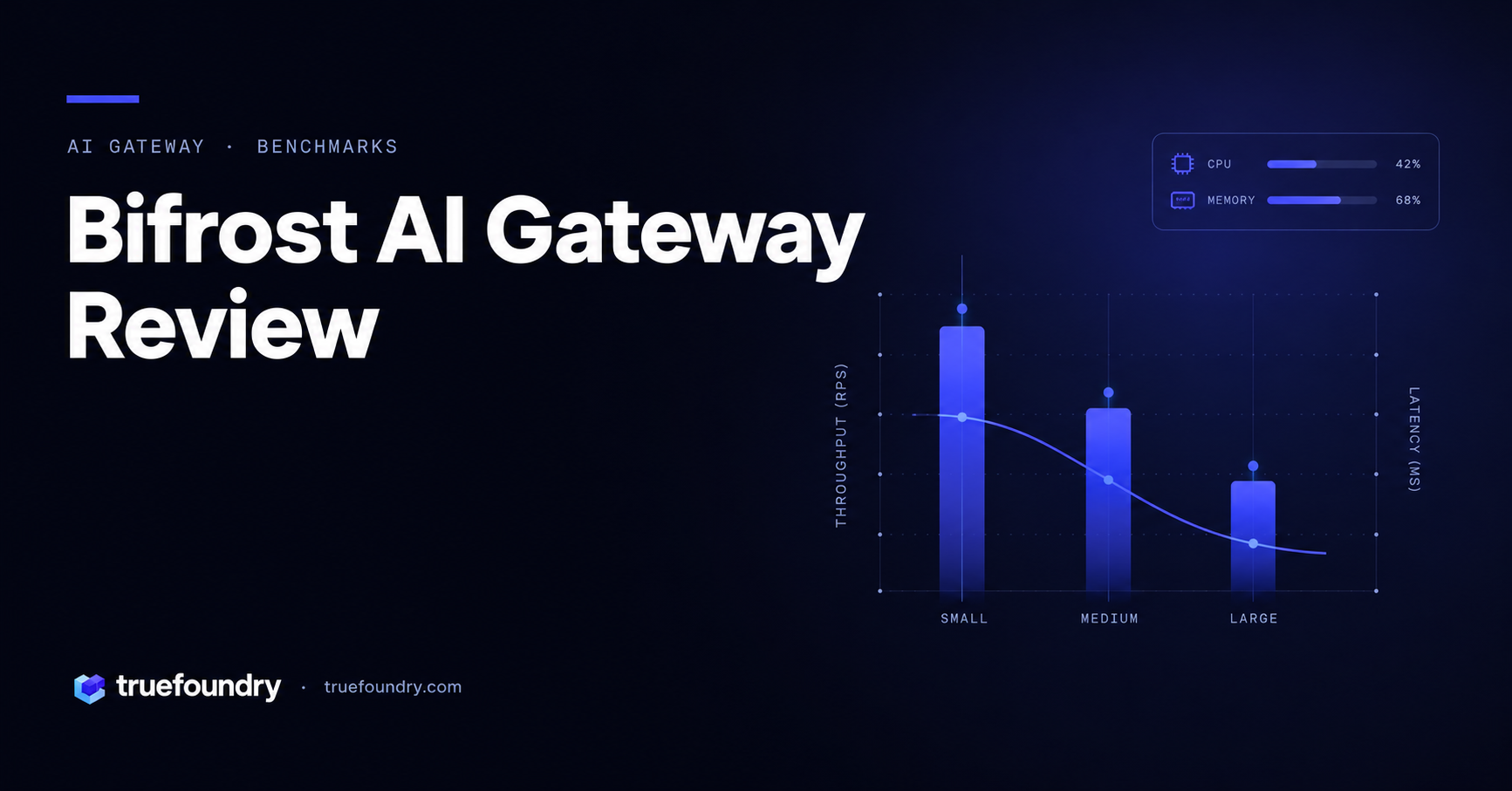
TrueFoundry AI Gateway delivers ~3–4 ms latency, handles 350+ RPS on 1 vCPU, scales horizontally with ease, and is production-ready, while LiteLLM suffers from high latency, struggles beyond moderate RPS, lacks built-in scaling, and is best for light or prototype workloads.




LLM orchestration tools coordinate multi-step AI work across models, providers, prompts, tools, memory, state, and external data sources. They help teams build workflows that go beyond one prompt and one model. In production, they should also support observability, routing, cost visibility, access governance, and deployment flexibility.
The main categories are developer frameworks, retrieval frameworks, gateway platforms, managed cloud services, and business automation platforms. Examples include TrueFoundry, LangChain, LangGraph, LlamaIndex, Portkey AI, Haystack, Amazon Bedrock AgentCore, OpenAI Agents SDK, and IBM watsonx Orchestrate. Each category solves a different production requirement.
An LLM orchestration framework gives developers code-level primitives for prompts, agents, tools, state, memory, and retrieval. LangGraph, LangChain, Haystack, and LlamaIndex fit this category. These frameworks help build the workflow logic, while deployment, access control, cost governance, and audit readiness often need separate infrastructure.
Start by mapping the workflow, model calls, data sources, tools, state, and user permissions. Choose a framework for agent logic or retrieval, then add a gateway for routing, provider control, observability, budgets, and access policies. Production orchestration should also include logging, fallback paths, and security reviews.
A framework helps developers build the application logic directly. A platform adds operational controls around that logic, including deployment, governance, observability, routing, budgets, and compliance support. Engineering teams often use both together: a framework for building workflows and a platform for running them safely in production.



The latest news, articles, and resources sent to your inbox

.webp)

.png)
.png)
.png)
.png)
.png)
.png)
.png)
.png)
.png)
.png)
.png)


