


September 19, 2026
|
5 min read

Published: February 18, 2026

Blazingly fast way to build, track and deploy your models!
For engineering teams building Generative AI on AWS, the architecture decision often narrows to two primary services: AWS Bedrock vs Azure AI. This is rarely just a choice between models; it is a fundamental decision regarding ecosystem integration, identity management (IAM vs. Entra ID), and long-term infrastructure commitments. Azure holds the exclusive enterprise license to OpenAI’s GPT-4o, heavily integrated into the Microsoft 365 stack. Conversely, AWS Bedrock prioritizes a "model agnostic" approach, offering a unified serverless API for Anthropic’s Claude, Meta’s Llama, and Amazon’s own Titan models.
As organizations move from proof-of-concept to production, the initial convenience of these walled gardens often hits operational ceilings. We frequently observe friction points regarding Provisioned Throughput (PT) commitments, opaque rate limiting, and identity fragmentation. This report analyzes AWS Bedrock and Azure AI from a structural and economic perspectiv, and introduces TrueFoundry as an architectural alternative for teams requiring a control plane independent of the underlying cloud provider.
This section breaks down the primary architectural focus of each platform.
AWS Bedrock functions as a serverless abstraction layer. It excels at aggregating disparate foundation models (FMs) behind a standardized InvokeModel API. It allows AWS-native teams to switch between Anthropic and Llama models without altering infrastructure code, provided they stay within the AWS security boundary.
Azure AI is the enterprise wrapper for OpenAI. While it offers other models, its primary utility is providing GPT-4o and DALL-E 3 with the compliance, security, and private networking features (VNETs, Private Links) that the direct OpenAI API lacks. It is optimized for organizations already deeply entrenched in the Microsoft enterprise stack.
TrueFoundry operates as a cloud-agnostic AI Gateway and training platform. It decouples the model serving layer from the infrastructure provider. This allows engineers to route traffic to whichever provider offers the best price/performance ratio for a specific query, or to host open-source models (like Llama or Mixtral) within their own Kubernetes clusters on spot instances.
Strategic alignment dictates platform behavior. Understanding the engineering philosophy behind these hyperscalers helps predict future feature velocity and constraints.
AWS Bedrock operates on a philosophy of aggregation. By not having a singular dominant internal model (Titan has seen lower adoption compared to GPT-4), AWS is incentivized to partner. It is currently the only major cloud provider offering first-party, secure access to Anthropic’s Claude 3.5 Sonnet and Opus.
For DevOps teams, Bedrock behaves like a standard AWS service. It integrates natively with CloudWatch for logs and IAM for fine-grained permissioning. If your application logic requires switching between model providers—for example, using Llama for summarization and Claude for reasoning—Bedrock minimizes the code changes required to do so.
Azure AI’s strategy centers on depth rather than breadth. The platform is designed to make OpenAI models viable for regulated industries. While OpenAI’s direct API is sufficient for startups, Azure AI adds the necessary layers for SOC2 and HIPAA compliance, including private networking and regional data residency guarantees.
The trade-off is dependency. Azure’s roadmap is tightly coupled with OpenAI’s release cycle. When OpenAI experiences instability, Azure AI workloads can be affected, though Azure offers distinct SLAs. The value proposition here is less about model choice and more about the integration of GPT-4o into data residing in Azure Blob Storage and Microsoft Fabric.
Unit economics in Generative AI are volatile. While on-demand pricing is transparent, scaling production workloads introduces complex cost structures regarding throughput guarantees and networking.
Bedrock offers two primary consumption models: On-Demand and Provisioned Throughput. On-demand pricing is standard (per 1k input/output tokens) and competitive for bursty workloads. However, AWS applies rigid throttling on this tier.
For guaranteed availability, AWS requires Provisioned Throughput. This is where costs escalate. You purchase "Model Units" for a specific time commitment (often 1 or 6 months).
Azure utilizes a Pay-As-You-Go model mirroring OpenAI’s direct rates, and a Provisioned Throughput Unit (PTU) model.
.webp)
Fig 1: The divergence between linear on-demand costs and step-function provisioned costs.
Identity management acts as the strongest form of vendor lock-in. Moving compute is easy; moving identity and data is hard.
Bedrock is the logical choice if your vector embeddings (stored in OpenSearch or RDS PostgreSQL) and unstructured data (S3) already reside in AWS.
Azure AI’s strength lies in Entra ID (formerly Active Directory). For internal enterprise apps, Azure AI Studio can respect document-level permissions.
Day-two operations—debugging, tracing, and safety—differ significantly between the platforms.
Bedrock Agents are essentially orchestrators for AWS Lambda functions. You define an OpenAPI schema, and the Agent uses the LLM to determine which Lambda to trigger.
Azure prioritizes "Responsible AI" tooling. Azure AI Studio includes distinct content safety models that sit in front of the LLM.
TrueFoundry offers an architecture that treats cloud providers as interchangeable commodities rather than dependencies.
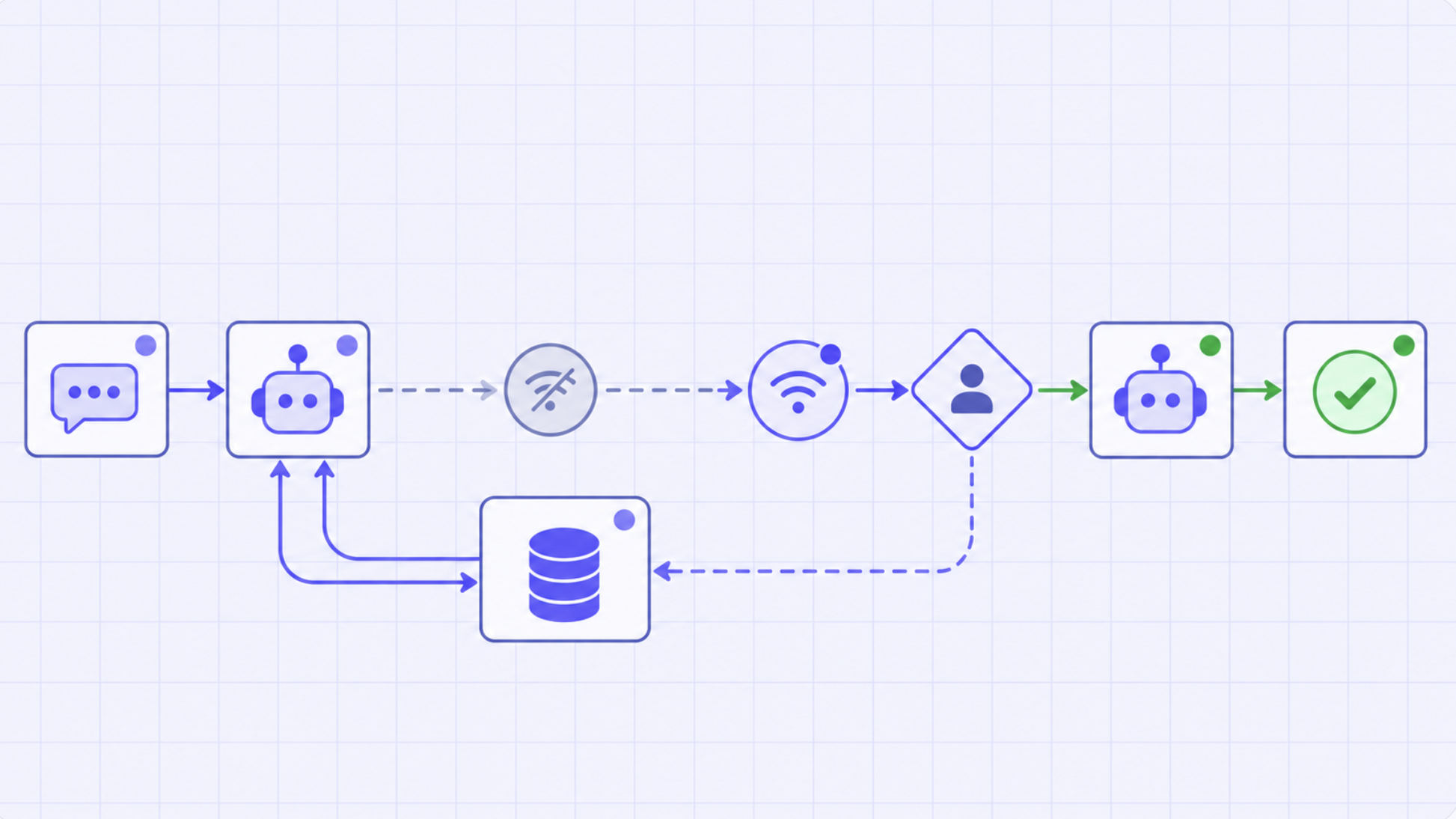
TrueFoundry acts as a unified AI Gateway. This middleware layer allows you to configure routing rules based on cost, latency, or model availability.
.webp)
Fig 2: Gateway routing logic optimizing for cost and compliance.
Managing API keys across ten different developer teams and two clouds is a security risk. TrueFoundry centralizes this into a single control plane.
For predictable workloads, token-based pricing often exceeds the cost of rented compute. TrueFoundry facilitates deploying open-source models (like Llama 3 or Mixtral) directly into your own Kubernetes cluster (EKS/AKS).
The following table contrasts the technical capabilities of the platforms.
The decision should be based on your existing technical debt and future scaling requirements.
Choose Azure AI If: You are structurally a "Microsoft Shop." Your enterprise data resides in OneLake, your identity provider is Entra ID, and your legal team has already vetted the Microsoft BAA (Business Associate Agreement). The integration friction is lowest here for pure Microsoft stacks.
Choose AWS Bedrock If: You are an "AWS Native" builder. Your applications run on ECS or Lambda, and you require the reasoning capabilities of Anthropic’s Claude without managing the infrastructure overhead. It is the path of least resistance for data already sitting in S3.
Choose TrueFoundry If: You prioritize leverage and unit economics. You anticipate high-volume workloads where token costs will balloon, necessitating a move to open-source models on Spot instances. You require a "kill switch" to move traffic between clouds to avoid vendor lock-in or outages.
History in cloud computing suggests that abstraction layers eventually win. Just as Kubernetes abstracted the VM, AI Gateways are abstracting the model provider.
AWS Bedrock and Azure AI are powerful, but they are designed to retain your compute spend within their respective perimeters. A multi-model strategy reduces the risk of price hikes and model deprecation.
Book a demo to see how TrueFoundry can unify your AWS and Azure models into a single, governed AI pipeline.
"Better" is subjective to the workload. Azure AI is generally superior for applications requiring GPT-4o and deep Microsoft 365 integration. Amazon Bedrock is superior for teams that prefer Anthropic's Claude models and want to maintain a serverless architecture within AWS.
AWS offers a broader set of "primitive" tools (SageMaker, Bedrock, chips like Inferentia) suitable for teams building custom AI stacks. Azure offers a more productized, application-layer experience dominated by its OpenAI partnership.
The closest equivalent is Azure AI Studio (specifically the Model Catalog), which allows users to deploy various models (OpenAI, Llama, Phi) via an API endpoint, similar to Bedrock’s InvokeModel.
TrueFoundry acts as a neutral control plane. Unlike Bedrock or Azure AI, it does not lock you into a single cloud’s infrastructure. It allows for cost-arbitrage routing, unified governance across multiple clouds, and the ability to host models on significantly cheaper Spot instances in your own VPC.
TrueFoundry AI Gateway delivers ~3–4 ms latency, handles 350+ RPS on 1 vCPU, scales horizontally with ease, and is production-ready, while LiteLLM suffers from high latency, struggles beyond moderate RPS, lacks built-in scaling, and is best for light or prototype workloads.






The latest news, articles, and resources sent to your inbox
.png)
.png)
.png)
.png)
.png)
.png)
.png)
.png)
.png)
.png)
.png)


