


.webp)
October 8, 2026
|
5 min read


Published: September 11, 2026

Blazingly fast way to build, track and deploy your models!
In traditional software security, we defend Endpoints. We put a gate in front of /admin/delete-database, check the user's JWT role, and allow or deny the request. It is binary, static, and well-understood.
In Agentic Software, we must defend Intent.
An endpoint like /chat/completions is effectively an open door. A user doesn't ask to "delete the database"; they ask the agent to "optimize storage by removing old logs." The agent then decides how to fulfill that intent. If the agent decides that "dropping the table" is the best optimization, your endpoint security is useless because the agent has the permission, even if the user shouldn't.
This creates the "Confused Deputy" problem on a massive scale. To solve it, TrueFoundry introduces the Policy Engine — a multi-layered defense system that secures not just who you are, but what you are trying to make the machine do.
The single biggest risk in a Multi-Agent System is that a low-privilege user will use a high-privilege agent as a proxy to bypass security controls.
Agents often run with "Service Accounts" (e.g., an SRE Agent needs access to AWS). If a Junior Developer can simply ask the SRE Agent to "run this script," they have effectively elevated their privileges to Admin level without ever touching the AWS console.
Let's visualize a real-world breach scenario in a standard enterprise setup.
The Actors:
The Attack:
The TrueFoundry Policy Engine solves this by enforcing Context Propagation.
We distinguish between the Executor (The Agent) and the Principal (The User). When Bob messages the Director Agent, the Gateway attaches a "Context Object" to the session.
When the Director Agent attempts to call the Database Tool, the Gateway intercepts the call. It ignores the Agent's Admin privileges and asks: "Does Bob have permission to Drop Tables?"
The answer is No. The action is blocked.
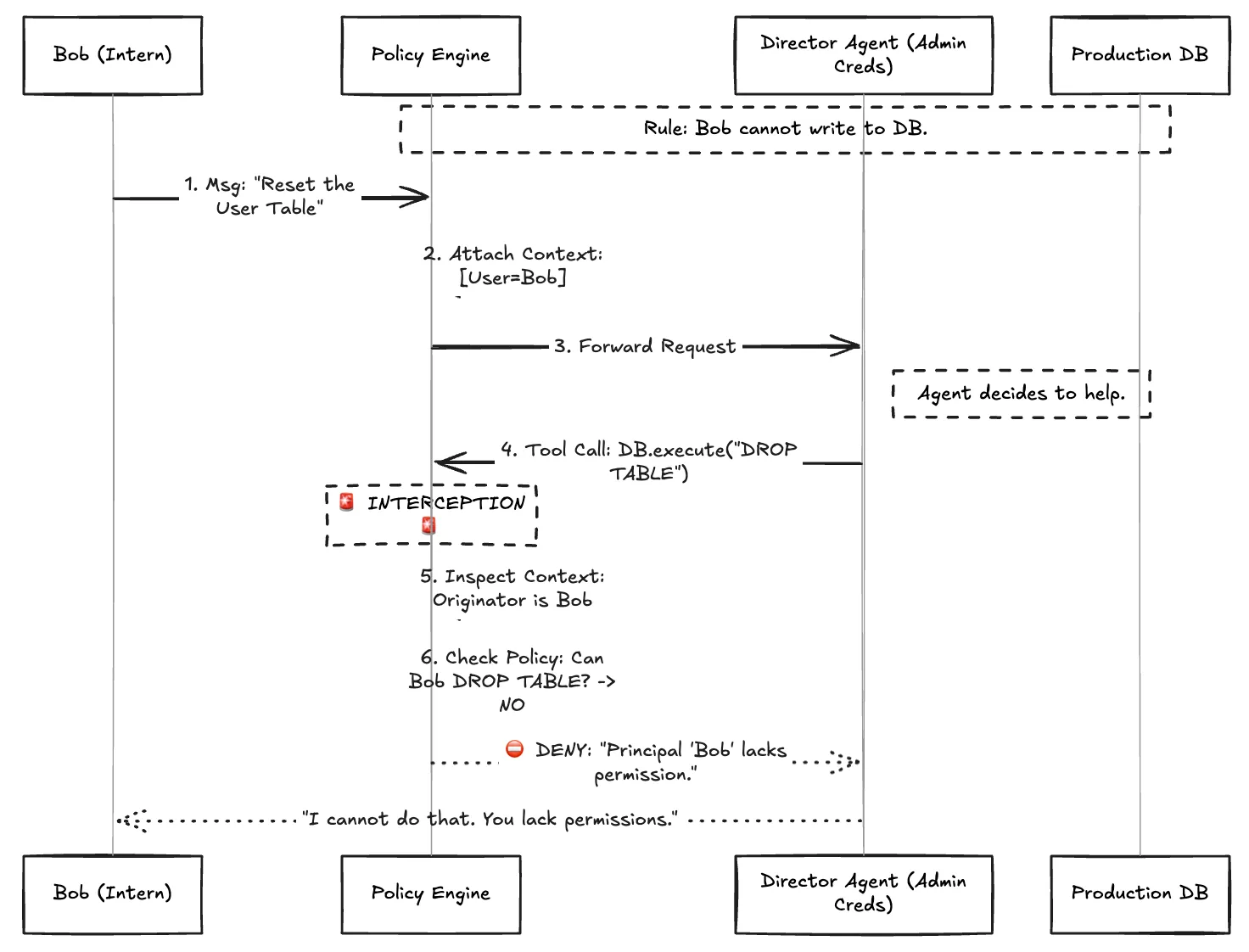
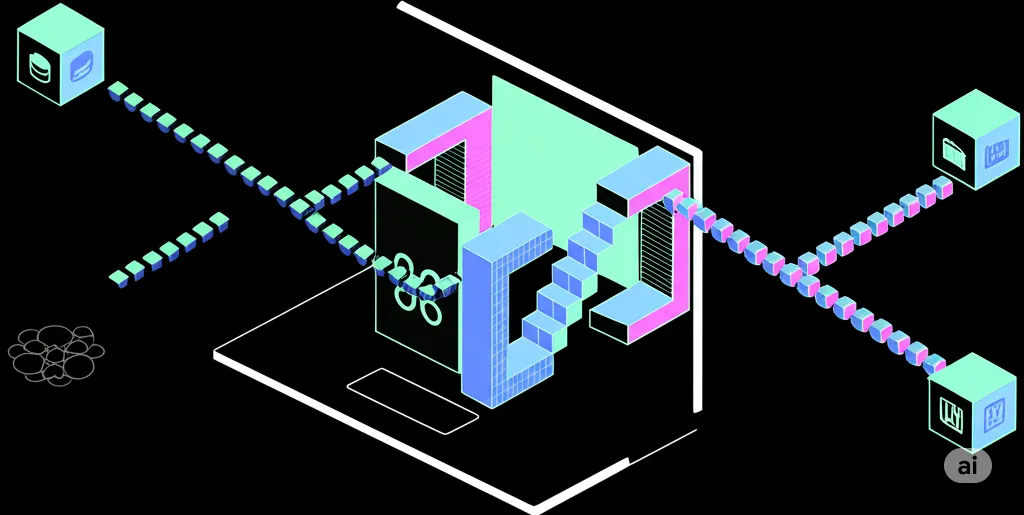
Fig 1: An Example of How Identity Chain Works
Security in depth requires multiple checkpoints. The Policy Engine evaluates every request through three distinct filters. A request must pass all three to proceed.
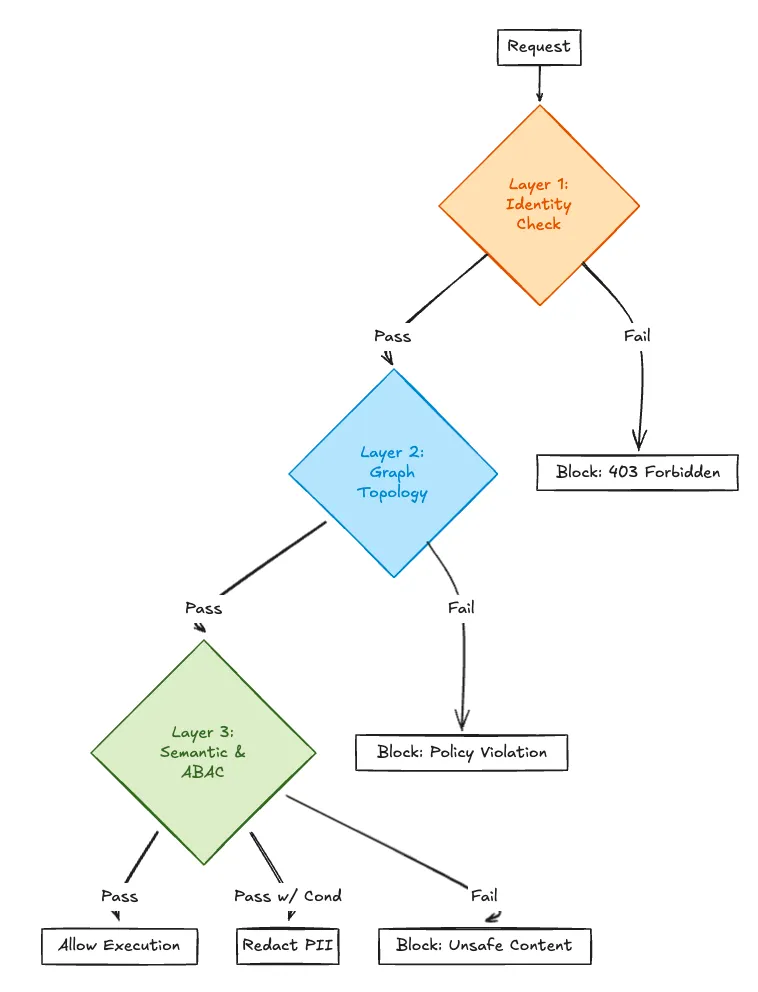
Fig 2: The 3-Layer Defense Strategy Illustration
In a microservices architecture, we use Service Meshes to prevent unauthorized service-to-service calls. The Policy Engine provides this same segmentation for Agents.
We define Zones of Trust:
Traffic can flow Public -> dmz -> Secure. Traffic cannot flow Public -> Secure.
This prevents "Prompt Injection" attacks from jumping directly from a chatbot into a database writer.
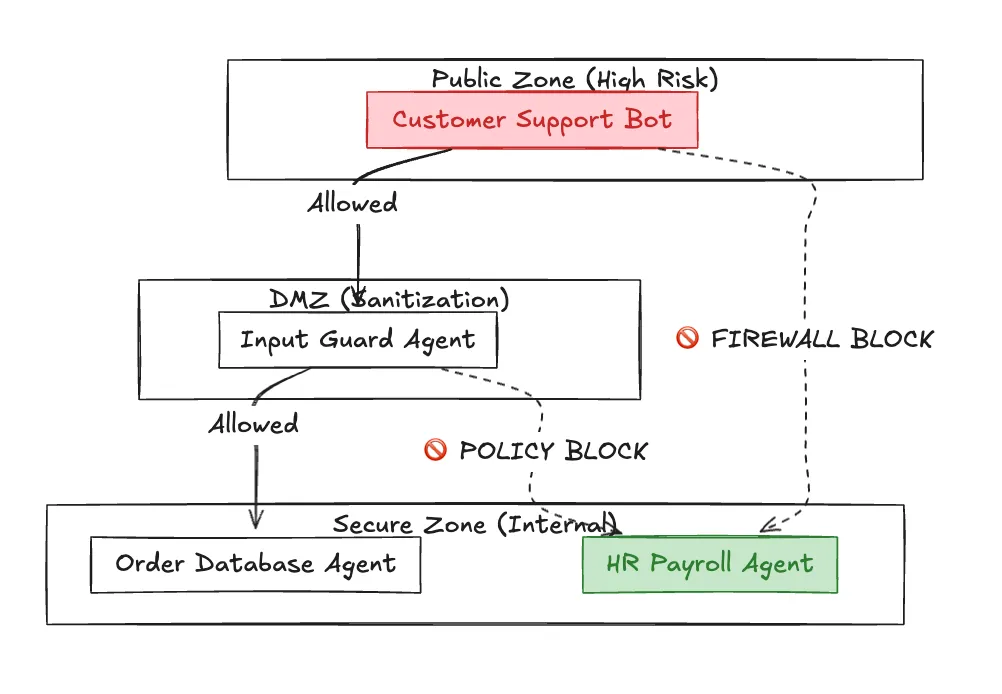
Fig 3: Zones of Trust Illustration
Sometimes, the metadata isn't enough. You need to look at the data itself. The Policy Engine integrates with LLM Guardrails to perform real-time content inspection.
If an agent accidentally retrieves an AWS Secret Key in its scratchpad, the Output Rail catches the regex pattern AKIA... and replaces it with [REDACTED] before sending the message back to the user.
Security cannot be an afterthought in agentic systems. It must be foundational. By implementing Context Propagation to solve the proxy problem, and wrapping it in a 3-Layer Defense of Identity, Topology, and Semantics, the TrueFoundry Policy Engine allows you to deploy autonomous agents without surrendering control. It ensures that your digital workforce remains a helpful servant, not a confused deputy.
TrueFoundry AI Gateway delivers ~3–4 ms latency, handles 350+ RPS on 1 vCPU, scales horizontally with ease, and is production-ready, while LiteLLM suffers from high latency, struggles beyond moderate RPS, lacks built-in scaling, and is best for light or prototype workloads.






The latest news, articles, and resources sent to your inbox




.png)
.png)
.png)
.png)
.png)
.png)
.png)


