


.webp)
October 8, 2026
|
5 min read


Published: May 29, 2026

Blazingly fast way to build, track and deploy your models!
In traditional software, an infinite loop is a nuisance. It spikes your CPU usage, maybe slows down a server, and you fix it by restarting the pod. The cost is negligible—electricity is cheap.
In Agentic Software, an infinite loop is a financial disaster.
Imagine two agents getting stuck in a politeness loop: "No, after you!" "I insist, you first!"
If these agents are running on GPT-4 at $30 per million tokens, and they exchange messages once per second, you can burn through thousands of dollars in a single afternoon.
To run agents in production, you cannot just give them API keys and hope for the best. You need an Internal Economy.
The TrueFoundry Agent Gateway acts as the Central Bank for your digital workforce. It mints grants, enforces quotas, issues stop-loss orders, and manages the exchange rates between different departments. For more details: .https://www.truefoundry.com/docs/ai-gateway/budgetlimiting.
The Problem: The Hidden Bill of Autonomy
The fundamental risk of agency is unpredictable consumption.
You need a system that governs Consumption Intent, not just request volume.
Let’s look at a real-world horror story: The recursive market analysis.
The Setup:
A user asks the Research Agent: "Find me all AI startups in California."
The agent is designed to:
The Failure Mode:
The agent finds a "List of 1,000 Startups" directory. It dutifully decides to visit all 1,000 links.
Each visit requires a browser tool call and a summarization call (GPT-4).
The Fix (With A2A Economy):
The best agent gateway implements a Budget Grant.
The system failed gracefully and cheaply, rather than succeeding expensively.
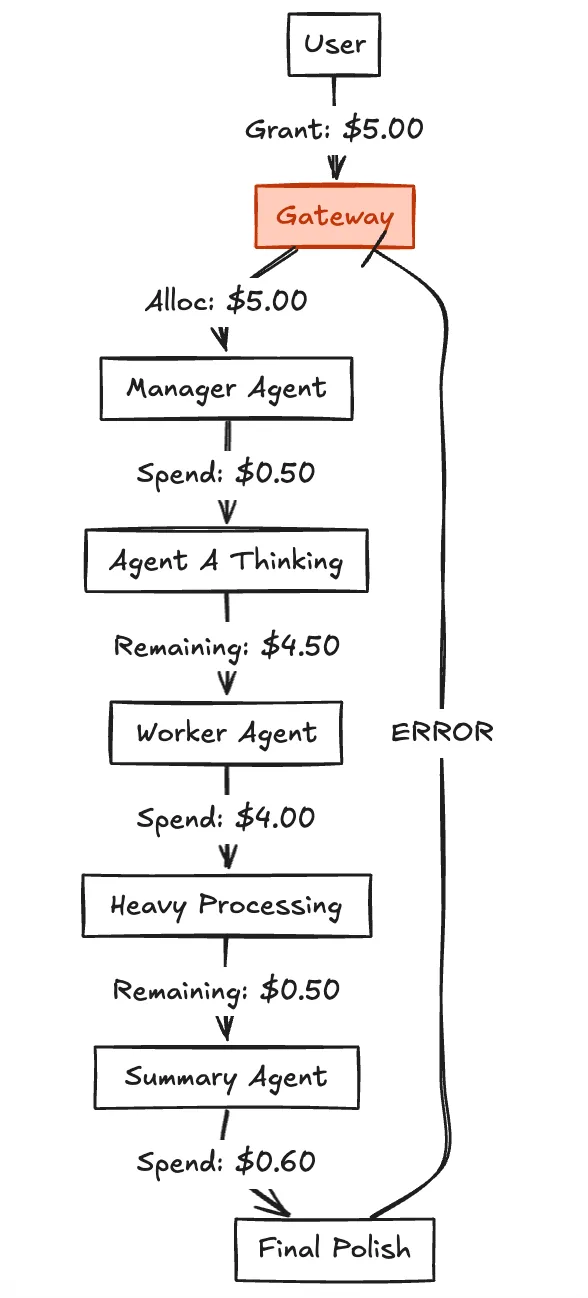
Fig 1: The Flow of the Budget Granting Process
We treat computation as a currency. Every request entering the Gateway must carry a Budget Context.
This is not a static monthly quota. It is a Per-Request Micro-Budget.
When a Manager Agent calls a Worker Agent, it must "pay" the Worker from its own wallet. This creates a natural incentive for efficiency. If the Manager wastes money, it fails its own task.
This enables Economic Reasoning within the agent's logic.
Budget caps handle the "Total Cost." But we also need to handle the "Speed of Spend".
A "Runaway Agent" (infinite loop) looks like a spike in financial velocity.
The Gateway monitors the change rate of cost .
If the velocity breaches the threshold, the Circuit Breaker trips. The session is frozen. A human admin is alerted. This protects against code bugs where an agent retries a failed tool call 100 times in a millisecond.
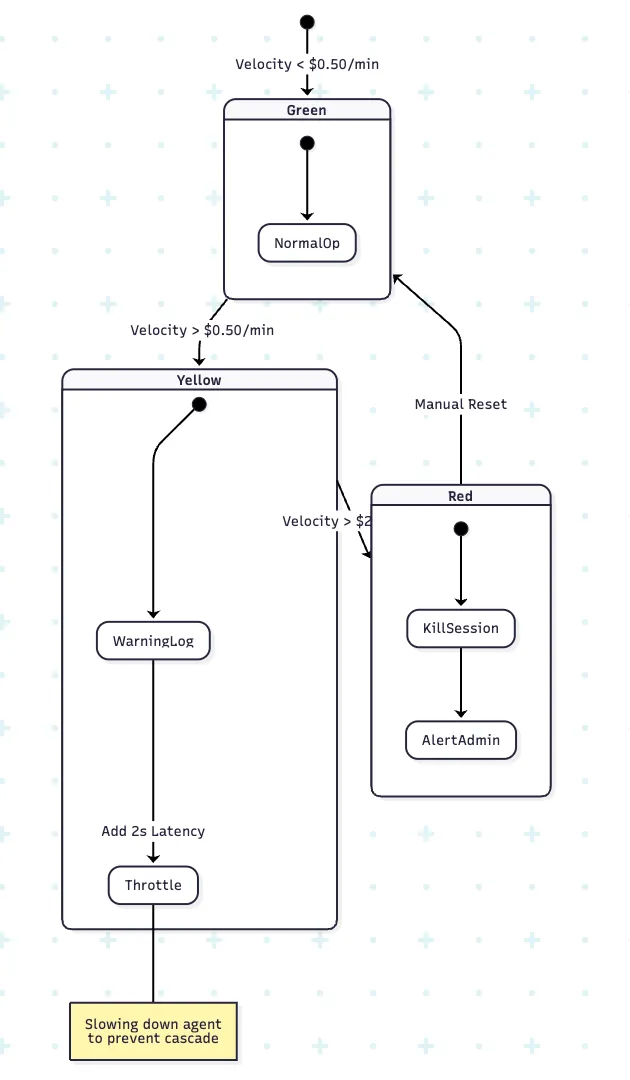
Fig 2: Handling the "Speed of Spend"
In a large enterprise, agents are shared services.
When Marketing's agent asks Engineering's agent for data, who pays the OpenAI bill?
If Engineering pays, they will block Marketing to save money. This creates silos.
If Marketing pays, how do we track it?
The Agent Gateway implements East-West Chargebacks.
At the end of the month, the Gateway generates a report for the CFO. This transforms agents from cost centers into Internal Service Providers.

Before an agent even starts, can we guess the bill? This is where Finops for AI becomes especially useful for predicting cost before execution.
The Gateway includes a Shadow FinOps Model. It is a small regression model trained on historical agent runs.
When a user sends a prompt: "Summarize the Q3 financial reports," the Shadow Model predicts:
If the user's personal limit is $0.20, the Gateway rejects the request instantly, before a single GPU cycle is wasted. It tells the user: "This task requires Manager Approval."
Autonomy without accountability is anarchy. The A2A Economy provides the financial guardrails that allow enterprises to deploy agents confidently. By enforcing budgets, preventing runaway loops, and enabling fair chargebacks, we turn AI from a "black box of spending" into a measurable, manageable capital asset.
TrueFoundry AI Gateway delivers ~3–4 ms latency, handles 350+ RPS on 1 vCPU, scales horizontally with ease, and is production-ready, while LiteLLM suffers from high latency, struggles beyond moderate RPS, lacks built-in scaling, and is best for light or prototype workloads.






The latest news, articles, and resources sent to your inbox




.png)
.png)
.png)
.png)
.png)
.png)
.png)


