


October 1, 2026
|
5 min read


احصل على وصول فوري إلى بيئة TrueFoundry مباشرة. انشر النماذج، ووجّه حركة مرور LLM، واستكشف المنصة بالكامل — بيئة الاختبار الخاصة بك جاهزة في ثوانٍ، ولا يلزم وجود بطاقة ائتمان.



Published: July 4, 2026
.webp)
Blazingly fast way to build, track and deploy your models!
The Model Context Protocol (MCP) has emerged as a game-changing standard for connecting AI applications to external data sources and tools. As organizations seek to build more sophisticated agentic AI systems, the choice of MCP gateway becomes critical for ensuring security, scalability, and operational efficiency.
While AWS has introduced its own MCP gateway solution as part of its Bedrock ecosystem, many enterprises are discovering that alternatives like TrueFoundry offer superior features, flexibility, and enterprise-grade capabilities.
In this comprehensive guide, we'll explore the AWS MCP Gateway landscape and examine five leading alternatives that are transforming how organizations deploy and manage their AI infrastructure. Whether you're dealing with multi-cloud requirements, seeking better cost control, or need enhanced observability features, understanding these alternatives will help you make an informed decision for your enterprise AI strategy.
The AWS Model Context Protocol Gateway represents Amazon's approach to standardizing how AI applications interact with external data sources and tools within the AWS ecosystem. Built on top of the open-source MCP specification developed by Anthropic, AWS MCP Gateway serves as a bridge between Amazon Bedrock language models and various AWS services, enabling seamless integration of enterprise data with AI applications.
Key features of AWS MCP Gateway include native integration with Amazon Bedrock's Converse API, support for tool use capabilities that allow models to request information from external systems, and seamless connectivity to AWS services such as Amazon S3, DynamoDB, RDS databases, CloudWatch logs, and Bedrock Knowledge Bases. The platform leverages AWS's existing security mechanisms, including IAM for consistent access control, making it an attractive option for organizations already heavily invested in the AWS ecosystem.
Also Read: What is MCP Gateway
AWS MCP Gateway implements a client-server architecture that follows the standardized Model Context Protocol to enable secure, two-way communication between AI applications and AWS services. The system consists of three primary components: MCP clients embedded in AI applications like Amazon Bedrock, MCP servers that provide standardized access to specific AWS data sources, and the communication flow that follows well-defined protocol specifications.
The operational flow begins when an AI application hosted on Amazon Bedrock processes a user query and determines it needs additional information not available in its training data. The system then generates a toolUse message requesting access to specific tools, which the MCP client application receives and translates into an MCP protocol tool call. This request is routed to the appropriate MCP server connected to AWS services, where the server executes the tool and retrieves the requested data from systems like Amazon S3, DynamoDB, or CloudWatch.
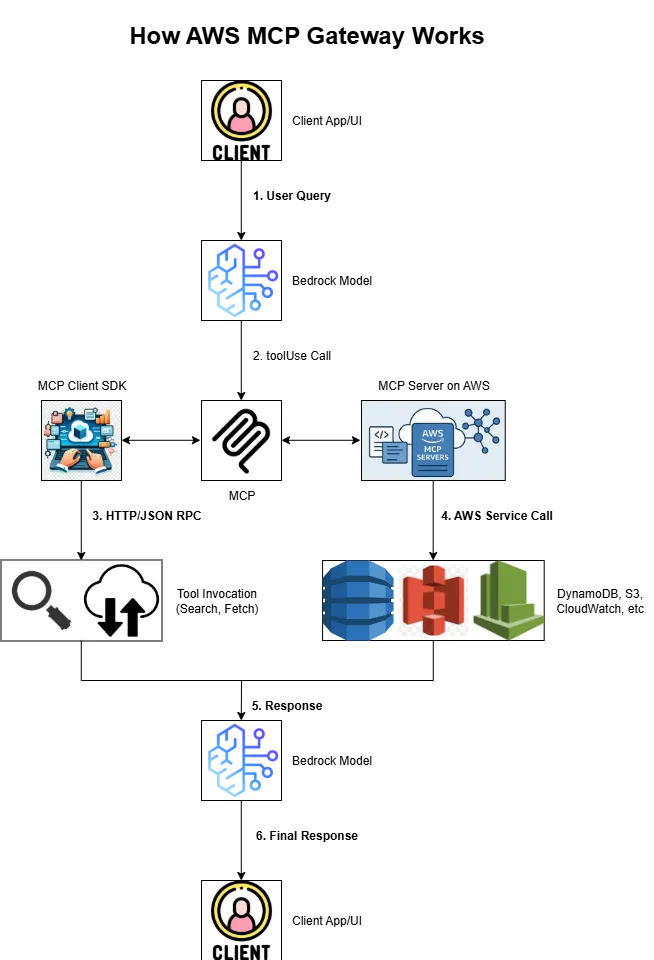
The architecture supports three essential primitives that form the foundation of MCP interactions: Tools (functions that models can call to retrieve information or perform actions), Resources (data that can be included in the model's context such as database records or file contents), and Prompts (templates that guide how models interact with specific tools or resources). This design enables AWS customers to establish a standardized protocol for AI-data connections while reducing development overhead and maintenance costs through the elimination of custom integrations for each AWS service.
While AWS MCP Gateway offers solid integration within the AWS ecosystem, there are several compelling reasons organizations evaluate alternatives.
1. Avoiding Vendor Lock-In
AWS MCP Gateway tightly couples your AI infrastructure to Amazon services, making multi-cloud strategies or migrations challenging. Organizations seeking flexibility across providers may find this limiting.
2. Cost Considerations
AWS pricing can become complex and unpredictable, especially for high-volume AI workloads. Multi-dimensional pricing across gateway services, API requests, and premium features often results in unexpected charges. Alternatives often provide more transparent and predictable pricing models.
3. Flexibility and Customization
AWS MCP Gateway focuses primarily on AWS service integration, lacking comprehensive LLMOps capabilities, advanced routing strategies, and extensive provider support. Purpose-built AI gateway solutions enable custom routing, multi-LLM support, and enhanced workflow management.
4. Performance and Observability
Specialized AI gateways often deliver lower latency, better cost tracking, and richer monitoring compared to AWS’s service-specific dashboards. Developers benefit from unified interfaces, advanced tracing, and more intuitive management tools.
5. Enterprise Governance
For enterprises, governance is critical. Dedicated AI gateways provide guardrails, content filtering, PII protection, and role-based access control across multiple LLM providers — capabilities that AWS MCP Gateway handles only partially out-of-the-box.
Key Metrics for Evaluating Gateway
| Criteria | What should you evaluate ? | Priority | TrueFoundry |
|---|---|---|---|
| Latency | Adds <10ms p95 overhead for time-to-first-token? | Must Have | ✅ Supported |
| Data Residency | Keeps logs within your region (EU/US)? | Depends on use case | ✅ Supported |
| Latency-Based Routing | Automatically reroutes based on real-time latency/failures? | Must Have | ✅ Supported |
| Key Rotation & Revocation | Rotate or revoke keys without downtime? | Must Have | ✅ Supported |
| Key Rotation & Revocation | Rotate or revoke keys without downtime? | Must Have | ✅ Supported |
| Key Rotation & Revocation | Rotate or revoke keys without downtime? | Must Have | ✅ Supported |
| Key Rotation & Revocation | Rotate or revoke keys without downtime? | Must Have | ✅ Supported |
| Key Rotation & Revocation | Rotate or revoke keys without downtime? | Must Have | ✅ Supported |

TrueFoundry MCP Gateway stands as the premier enterprise-grade alternative to AWS MCP Gateway, offering a comprehensive solution that combines performance, security, and extensive functionality in a single platform. Built specifically for production AI workloads, TrueFoundry delivers sub-3ms internal latency while handling over 350 requests per second on just 1 vCPU, significantly outperforming both AWS and other alternatives in benchmark tests.
Key Features:
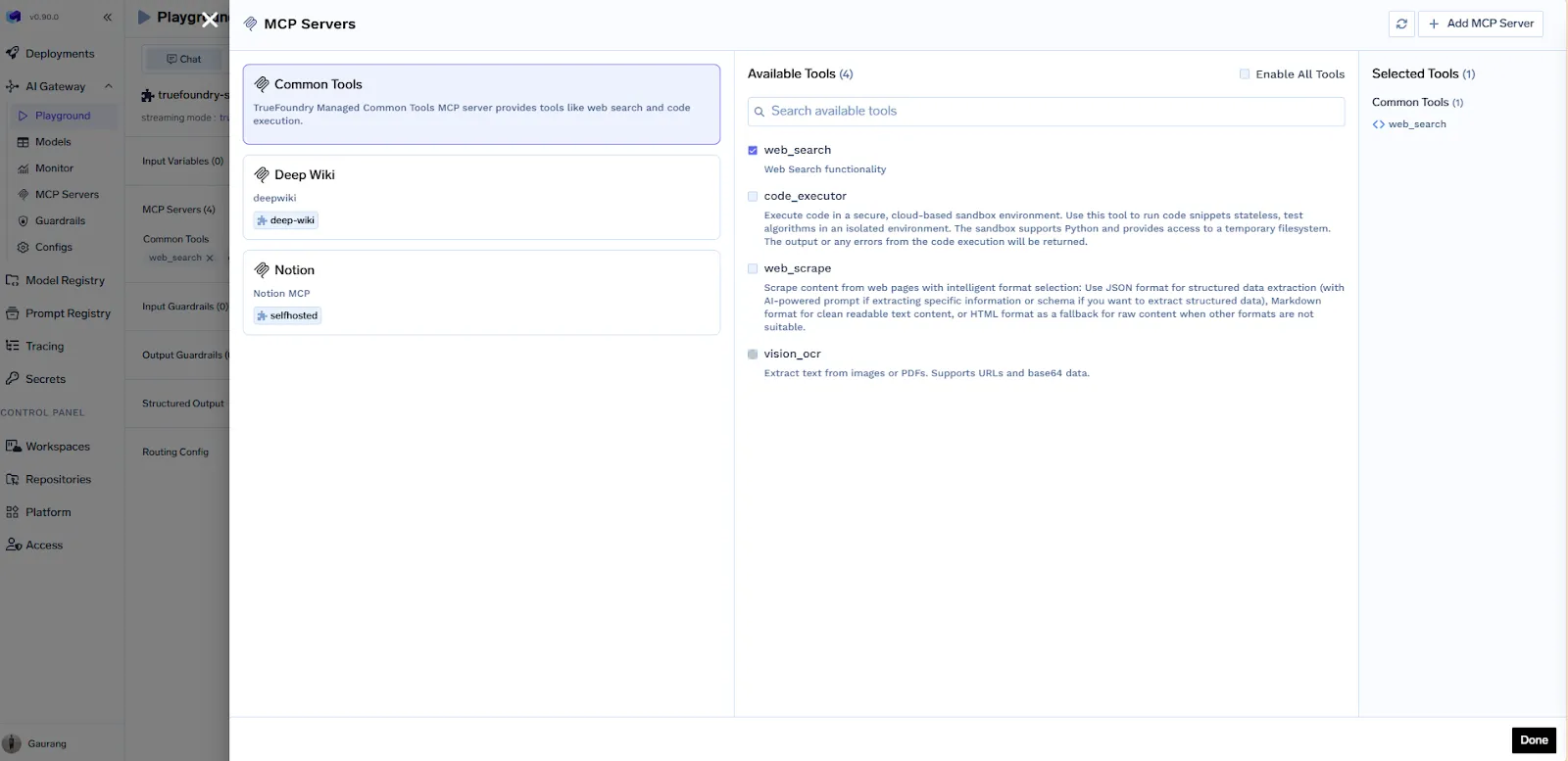
TrueFoundry's MCP Gateway capabilities enable organizations to securely manage integrated MCP servers while providing developers with seamless access to tools and data sources. The platform offers OAuth2 authentication for MCP servers, fine-grained authorization controls, and comprehensive monitoring of tool usage metrics. Unlike AWS MCP Gateway's ecosystem limitations, TrueFoundry supports any MCP server regardless of the underlying infrastructure.
Why Choose TrueFoundry:
For enterprises searching for the best MCP gateway needing enterprise-grade reliability without vendor lock-in find TrueFoundry ideal for managing multiple LLM providers with granular cost and access control. The platform particularly appeals to teams requiring comprehensive observability, predictable costs, and integration with existing enterprise infrastructure while maintaining the flexibility to deploy across any cloud or on-premises environment.
Composio represents an upcoming approach in the MCP ecosystem that focuses on standardized tool abstraction and developer-centric MCP Gateway workflows. Rather than acting as a traditional proxy or platform, it emphasizes discoverable, protocol-driven access to external services and tools via the Model Context Protocol.
Key Characteristics:
Composio fits into the broader MCP Gateway landscape by offering a gateway-aligned architectural pattern that prioritizes consistency and tool standardization. It complements more comprehensive enterprise-grade solutions by highlighting how MCP can be used as a core building block in modular AI stacks.
Kong AI Gateway extends the battle-tested Kong platform with AI-specific capabilities, making it an attractive option for organizations already using Kong for traditional API management. Built on Kong's mature infrastructure, it provides comprehensive API governance with specialized features for LLM traffic management.
Key Features:
توفر بوابة Kong للذكاء الاصطناعي قدرات معالجة دلالية متطورة، بما في ذلك التخزين المؤقت والتوجيه الدلالي المدعوم بـ Redis للبحث عن تشابه المتجهات. توفر المنصة وظيفة حماية المطالبات الدلالية وتحديد معدل خاص بالذكاء الاصطناعي يعتمد على الرموز المميزة بدلاً من مجرد الطلبات.
اعتبارات: تعقيد تسعير Kong موثق جيدًا، حيث تتجاوز التكاليف غالبًا 30 دولارًا لكل مليون طلب، وتخلق نماذج التسعير متعددة الأبعاد عدم القدرة على التنبؤ بالتكاليف. يتطلب تسعير المؤسسات استشارة مبيعات، مما يجعل تخطيط التكاليف صعبًا لأعباء عمل الذكاء الاصطناعي عالية الحجم.
يعمل LiteLLM كمكتبة بايثون مفتوحة المصدر تركز على توفير واجهة موحدة عبر أكثر من 100 مزود لنموذج اللغة الكبير (LLM) بمرونة كاملة وتطوير مدفوع بالمجتمع. تتفوق في خوارزميات التوجيه المتقدمة وإدارة شاملة للفريق من خلال تكوينات قابلة للتخصيص بدرجة عالية.
الميزات الرئيسية:
يوفر LiteLLM قدرات قوية لإدارة الفريق مع مفاتيح افتراضية، وضوابط للميزانية، وتوجيه قائم على العلامات، وتتبع الإنفاق على مستوى الفريق. تدعم المنصة منطق إعادة المحاولة الشامل وآليات التراجع لضمان موثوقية الإنتاج.
اعتبارات: يتطلب إعدادًا تقنيًا يستغرق 15-30 دقيقة مع خبرة في بايثون وتكوين YAML. تتطلب جميع الميزات تكوينًا يدويًا، مما يخلق منحنى تعلم حادًا وتكاليف صيانة إضافية مقارنة بالحلول المدارة.
يعمل موصل Anthropic MCP كواجهة تعتمد على البروتوكول تسمح لنماذج Claude بالاتصال بالأدوات وقواعد البيانات والخدمات الخارجية عبر بروتوكول سياق النموذج (MCP). يركز على قابلية التشغيل البيني وتكامل الأدوات لسير عمل الذكاء الاصطناعي.
الميزات الرئيسية:
اعتبارات: يقتصر حاليًا على الأدوات المتوافقة مع MCP؛ وميزات بوابة المؤسسة الكاملة (مثل التراجع متعدد LLM، والتوجيه، والتخزين المؤقت) ضئيلة. يتطلب إعدادًا تقنيًا وثقة في الخوادم البعيدة؛ وهناك مخاوف أمنية محتملة في حال استخدام خوادم MCP غير موثوقة.
يتجاوز نطاق بوابات بروتوكول سياق النموذج بكثير ما تقدمه AWS، مع حلول متخصصة توفر إمكانيات فائقة لعمليات نشر الذكاء الاصطناعي للمؤسسات. بينما تخدم بوابة AWS MCP المؤسسات المترسخة بعمق في نظام AWS البيئي، فإن البدائل مثل TrueFoundry MCP Gateway توفر أداءً معززًا ومرونة وميزات مؤسسية شاملة دون قيود الاحتكار من قبل بائع معين.
غالبًا ما تبحث الشركات عن بدائل لبوابة AWS MCP لتجنب الارتباط بمورد واحد أو لتحقيق أداء أفضل عبر موفري خدمات سحابية متعددين. تميل الأنظمة الأخرى مثل بوابة TrueFoundry MCP إلى تقديم زمن استجابة أقل، ومراقبة أكثر تفصيلاً، أو القدرة على التشغيل ضمن شبكة VPC خاصة، وهو أمر بالغ الأهمية لتلبية متطلبات الإقامة الصارمة للبيانات.
تشمل البدائل الرئيسية TrueFoundry، وبوابة Docker الأصلية للحاويات، وأدوات مفتوحة المصدر مثل Obot. تبرز TrueFoundry كلوحة تحكم على مستوى المؤسسات توفر سجلًا موحدًا لأي نموذج. إنها توفر مرونة أكبر بكثير للبيئات الهجينة وقياسات عن بعد أعمق من خدمات موفري السحابة القياسية.
تُعد TrueFoundry بديلًا مثاليًا لبوابة AWS MCP لأنها توفر زمن استجابة أقل من 3 مللي ثانية وسجلًا موحدًا لأي نموذج. تُمكّن الفرق من إدارة البنية التحتية بأمان مع توفير رؤية عميقة لاستدعاءات الأدوات، مما يضمن بقاء سير العمل الآلي سريعًا وآمنًا ومتوافقًا مع معايير المؤسسات.
لا، بوابات API القياسية ليست بدائل مباشرة لبوابة MCP مخصصة لأنها تفتقر إلى دعم البروتوكولات الأصلية. بينما تتعامل مع حركة مرور HTTP التقليدية، توفر بوابة متخصصة في MCP تجريد الأدوات الضروري، والأمان الخاص بالوكيل، والمراقبة في الوقت الفعلي، وهي أمور أساسية لإدارة التفاعلات المعقدة ضمن سير العمل الآلي على مستوى الإنتاج.
نعم، توفر البدائل المتخصصة مثل TrueFoundry مراقبة أعمق بكثير لدورة التفاعل الكاملة بين الوكيل والأداة. تحصل على تتبعات مفصلة لاستدعاءات الأدوات، وتتبع دقيق لزمن الاستجابة، ومراقبة التكلفة لكل رمز. يسمح هذا المستوى من الرؤية لفرق الهندسة بتصحيح سلوكيات الوكيل المعقدة بشكل أكثر فعالية من سجلات السحابة الأصلية الأساسية.
TrueFoundry AI Gateway delivers ~3–4 ms latency, handles 350+ RPS on 1 vCPU, scales horizontally with ease, and is production-ready, while LiteLLM suffers from high latency, struggles beyond moderate RPS, lacks built-in scaling, and is best for light or prototype workloads.





أحدث الأخبار والمقالات والموارد تصلك مباشرة إلى بريدك الوارد
.png)
.png)
.png)
.png)
.png)
.png)
.png)
.png)
.png)
.png)
.png)


