

Using Firecrawl through the MCP Gateway
The TrueFoundry MCP Gateway centralizes access to Firecrawl - agents connect through one endpoint instead of maintaining separate server configurations per client. When you use Firecrawl MCP server through the AI Gateway, TrueFoundry provides:- Authentication — Clients authenticate inbound to the AI Gateway with a Personal Access Token, Virtual Account, or IDE OAuth flow. For outbound access, the AI Gateway injects the configured Firecrawl API key on requests.
- Tool-level access control — You can selectively enable or disable individual Firecrawl tools from the TrueFoundry UI.
- Access control — Collaborators and role-based policies define who can use the server and which tools they can invoke. Enable or disable individual Firecrawl tools from the server detail page.
- Observability — Tool calls are traced with caller identity, tool name, inputs, and latency. Monitor server- and tool-level usage in MCP Metrics and export traces to your observability stack via OpenTelemetry.
- Guardrails — Apply pre-tool and post-tool guardrails on MCP tool calls.
Prerequisites
- A TrueFoundry account with permission to add MCP servers.
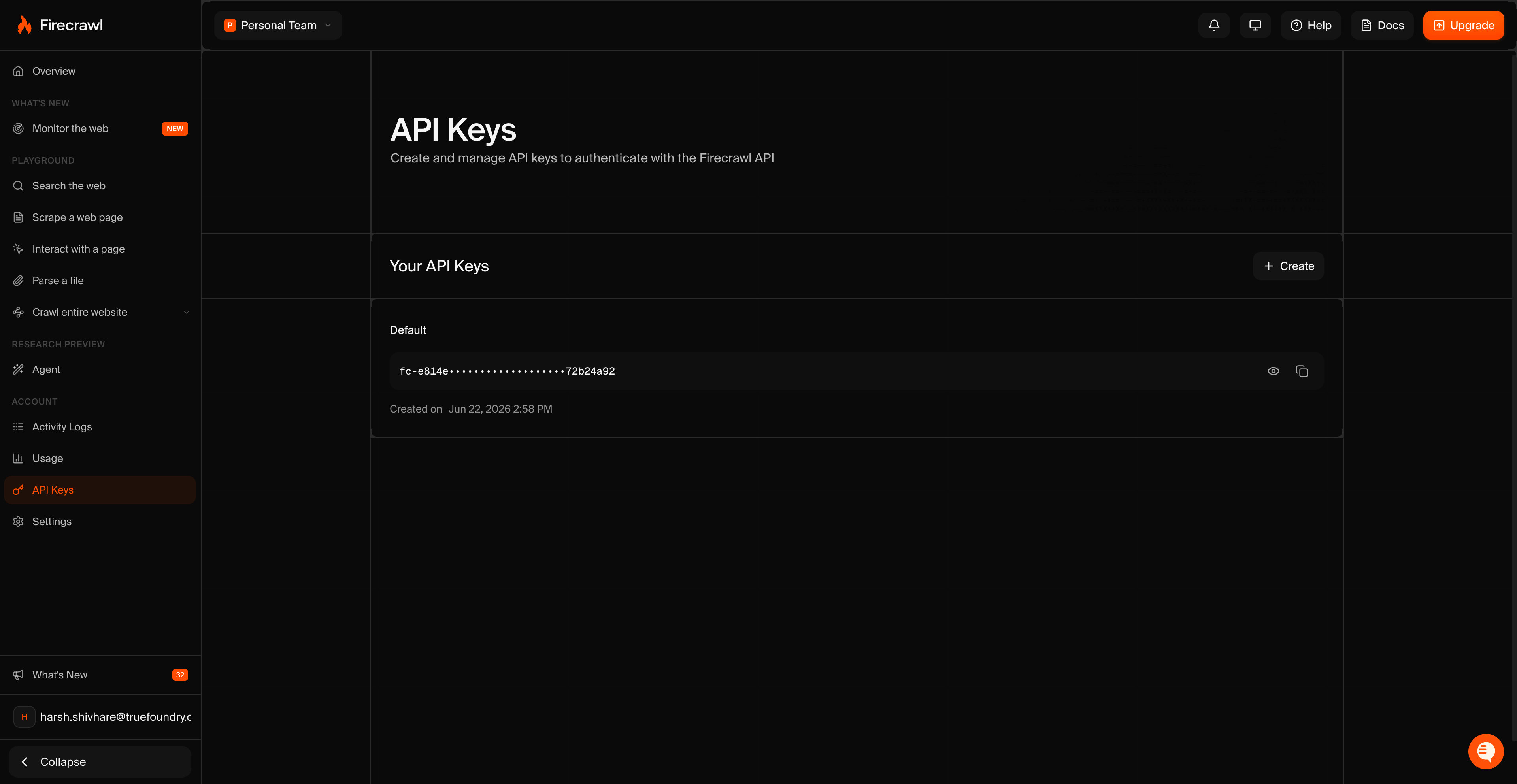
- A Firecrawl API key. Sign in at firecrawl.dev, open the API Keys page from the dashboard, and copy your key (it looks like
fc-xxxxxxxx). Use Create to generate a new key if you don’t have one yet.
Adding Firecrawl MCP server to TrueFoundry
1
Open the MCP Server catalog
Navigate to MCP Servers in the TrueFoundry sidebar and click Add new MCP Server. On the next screen, select Connect Official Remote MCP Servers - this lists official, vetted remote MCP servers that you connect with your own auth.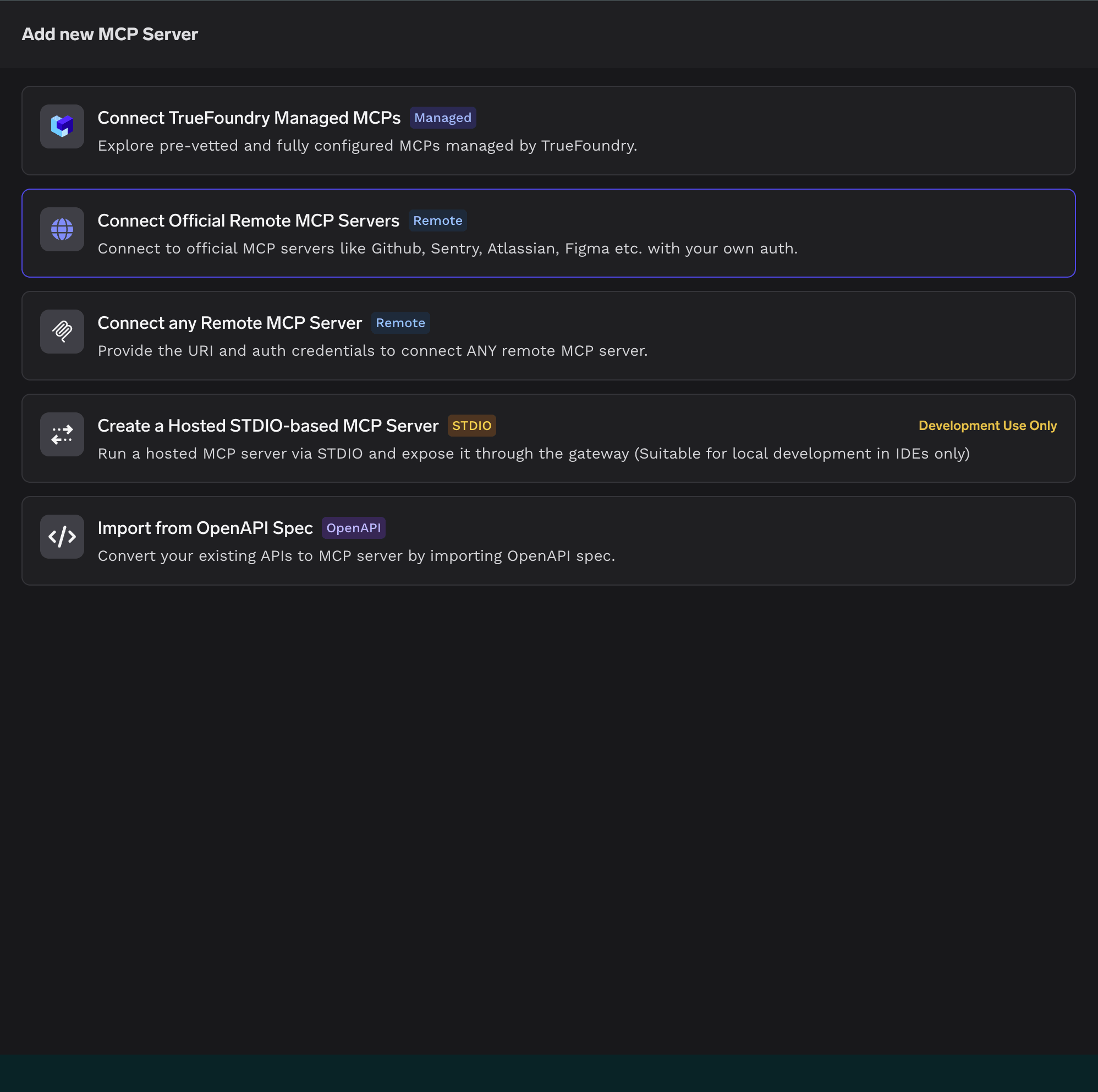
2
Add Firecrawl
Type 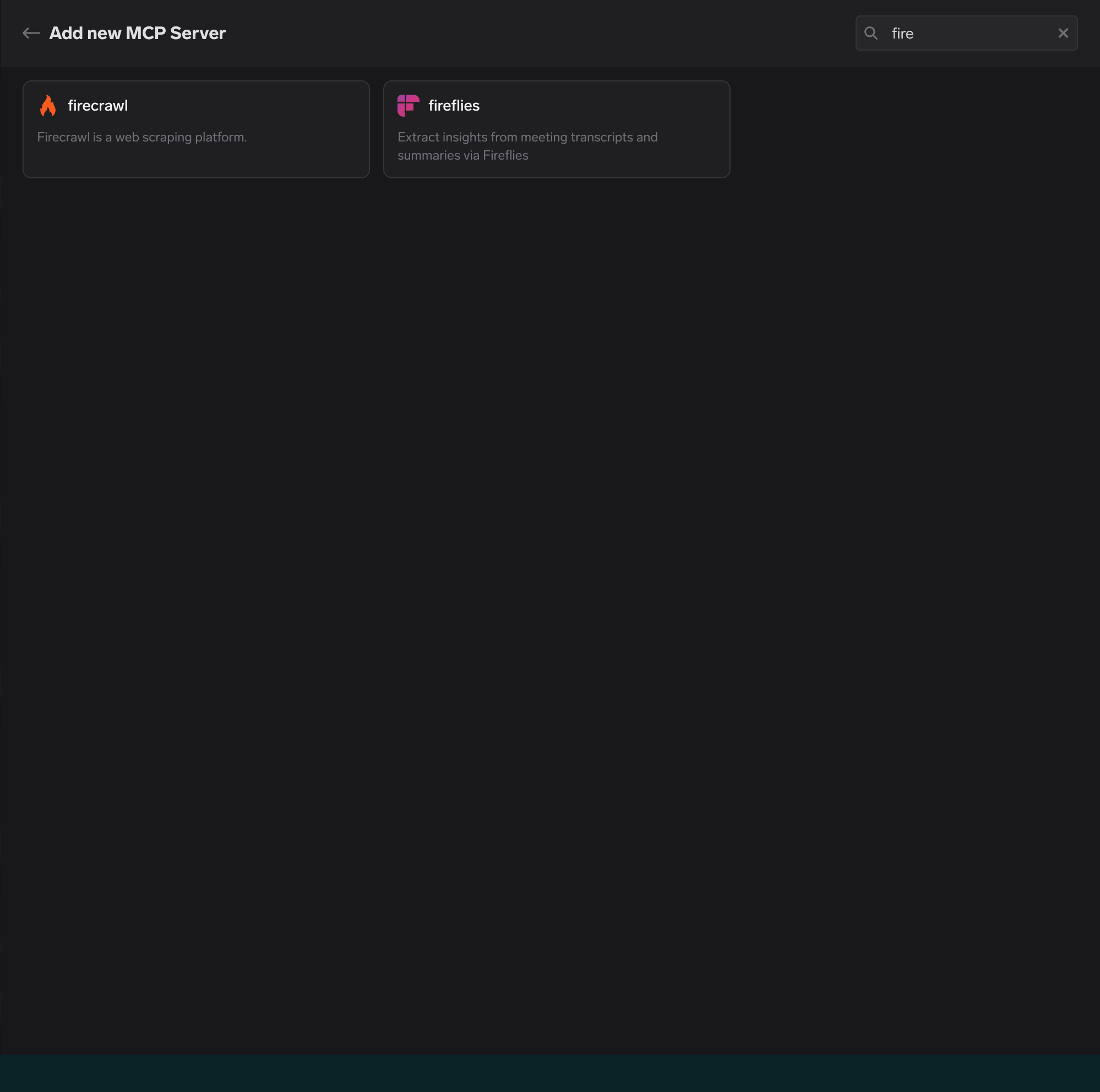
firecrawl in the search box, find firecrawl in the catalogue, and click + Add. TrueFoundry opens the Firecrawl MCP server detail page with the server URL pre-filled.3
Configure the server
TrueFoundry pre-fills the server details for Firecrawl: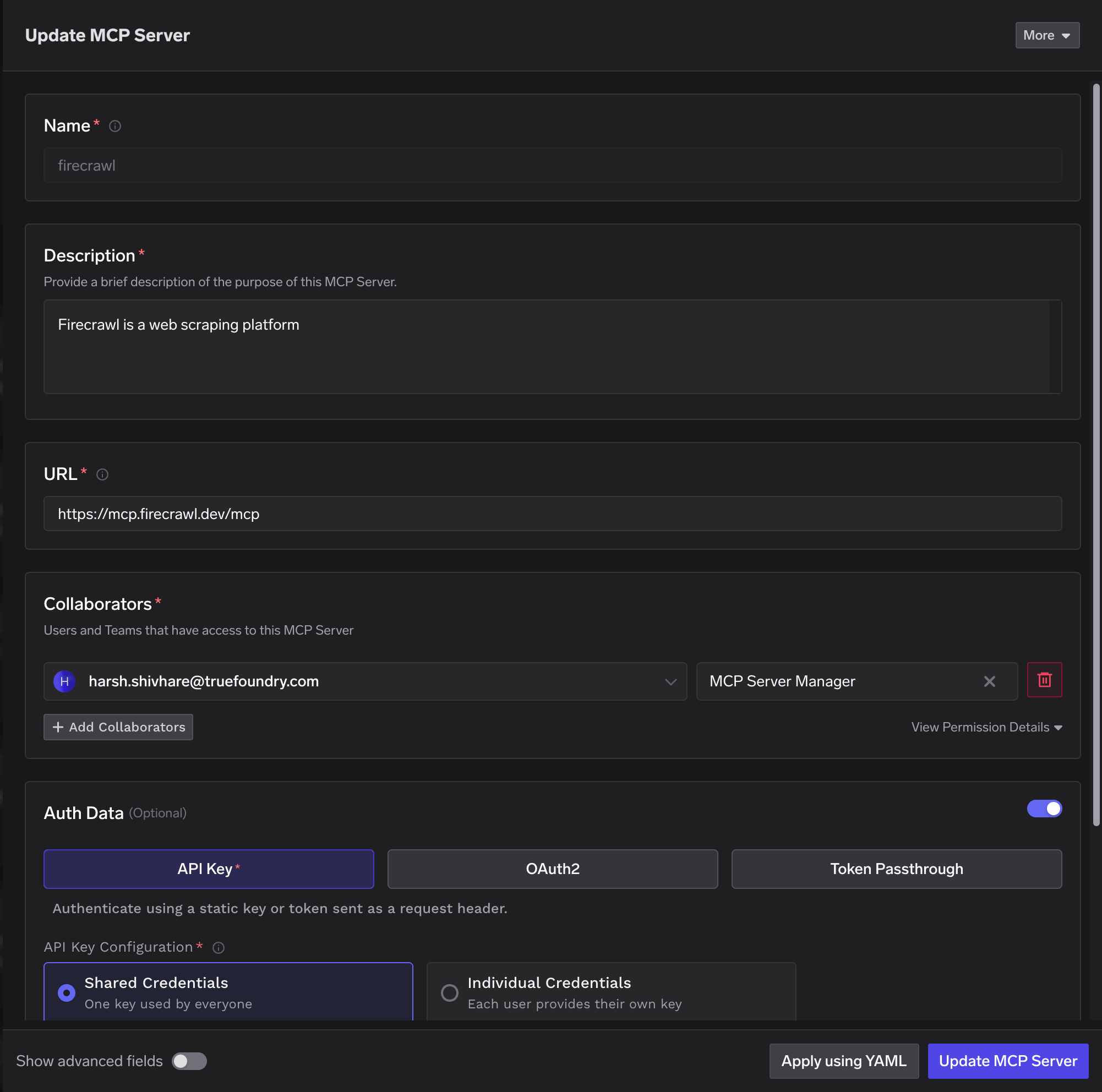
Add Collaborators - the users and teams that can use or manage this server - and assign each an MCP Server Manager or MCP Server User role.
4
Authenticate
Under Auth Data, select API Key. Firecrawl authenticates with a static key sent as a request header. Choose how the key is supplied: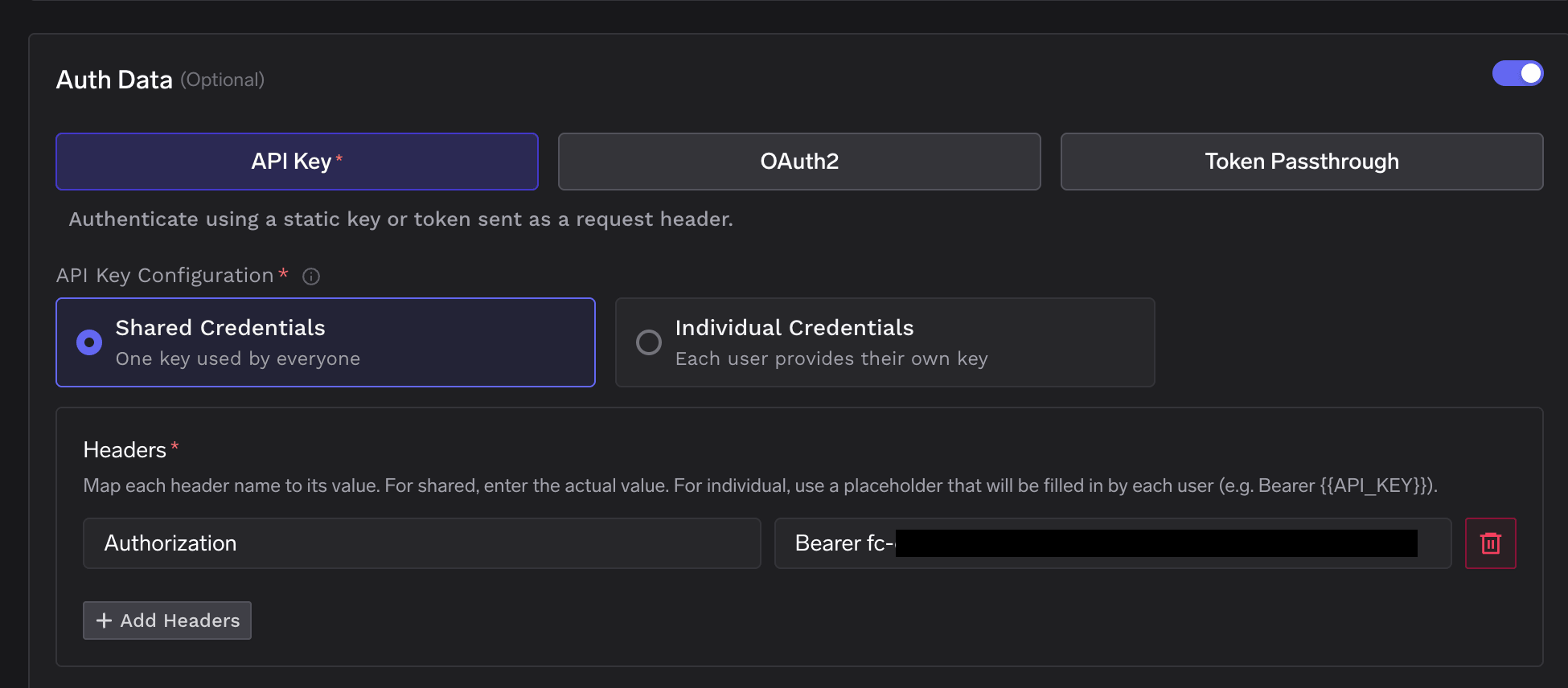
- Shared Credentials - one key used by everyone. Enter the actual header value.
- Individual Credentials - each user provides their own key. Use a placeholder (for example
Bearer {{API_KEY}}) that each user fills in.
Authorization to the value Bearer fc-<your-firecrawl-key>, then click Update MCP Server to save.5
Verify tools
After saving, the Tools tab lists Firecrawl’s available tools (scrape, map, crawl, search, extract, and more). Click Try on any tool to test it and inspect the JSON output before using it in an agent.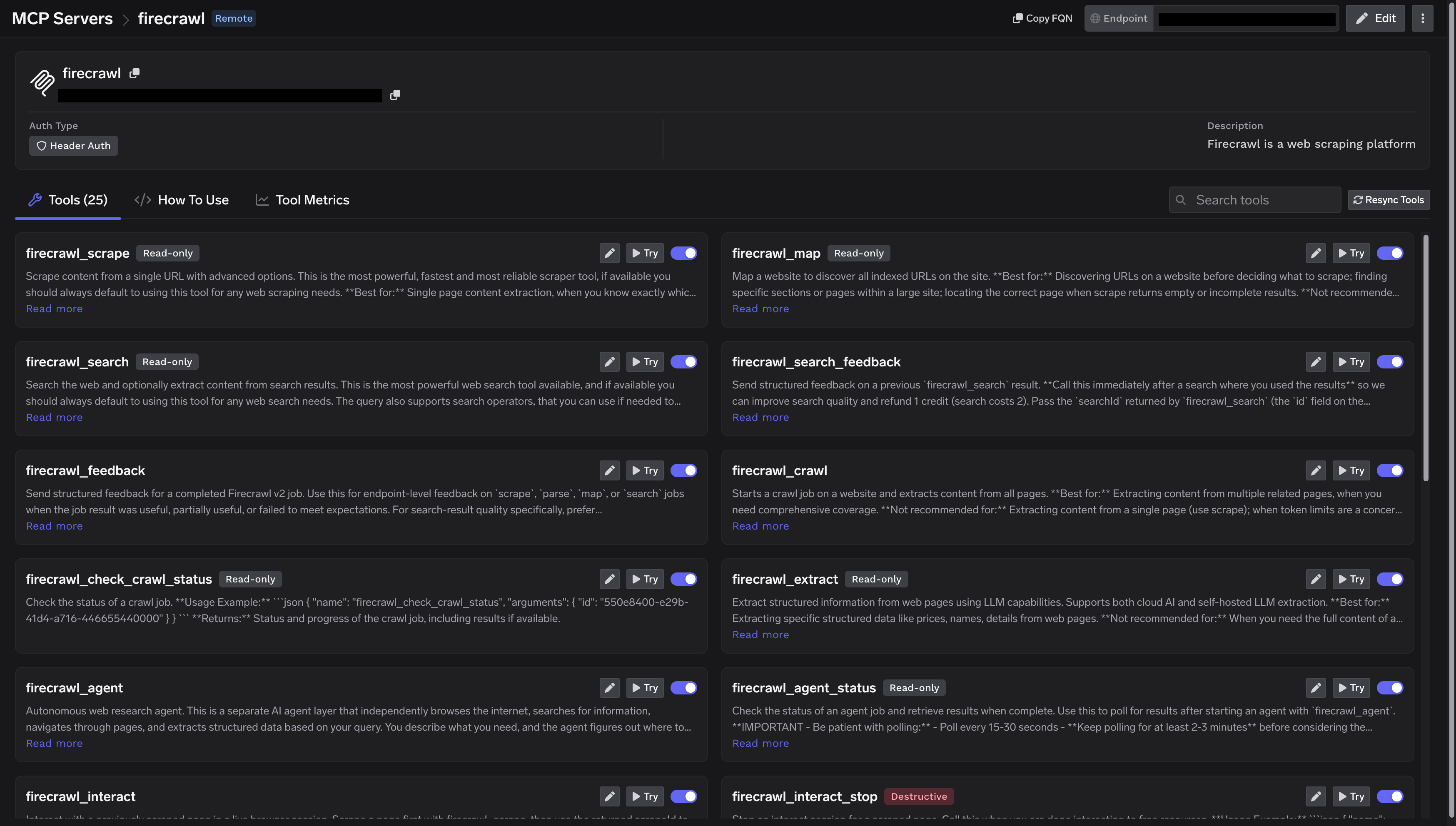
Connecting to an MCP Client
Open the How To Use tab on the Firecrawl server detail page for your tenant-specific Gateway URL and ready-to-paste client snippets - don’t build the endpoint manually. The tab includes snippets for Claude Code, VS Code, Claude Web, Claude Desktop, Cursor, Windsurf, Codex, and the Python and TypeScript MCP SDKs. Use Show API Key if your client requires a Gateway token in a header.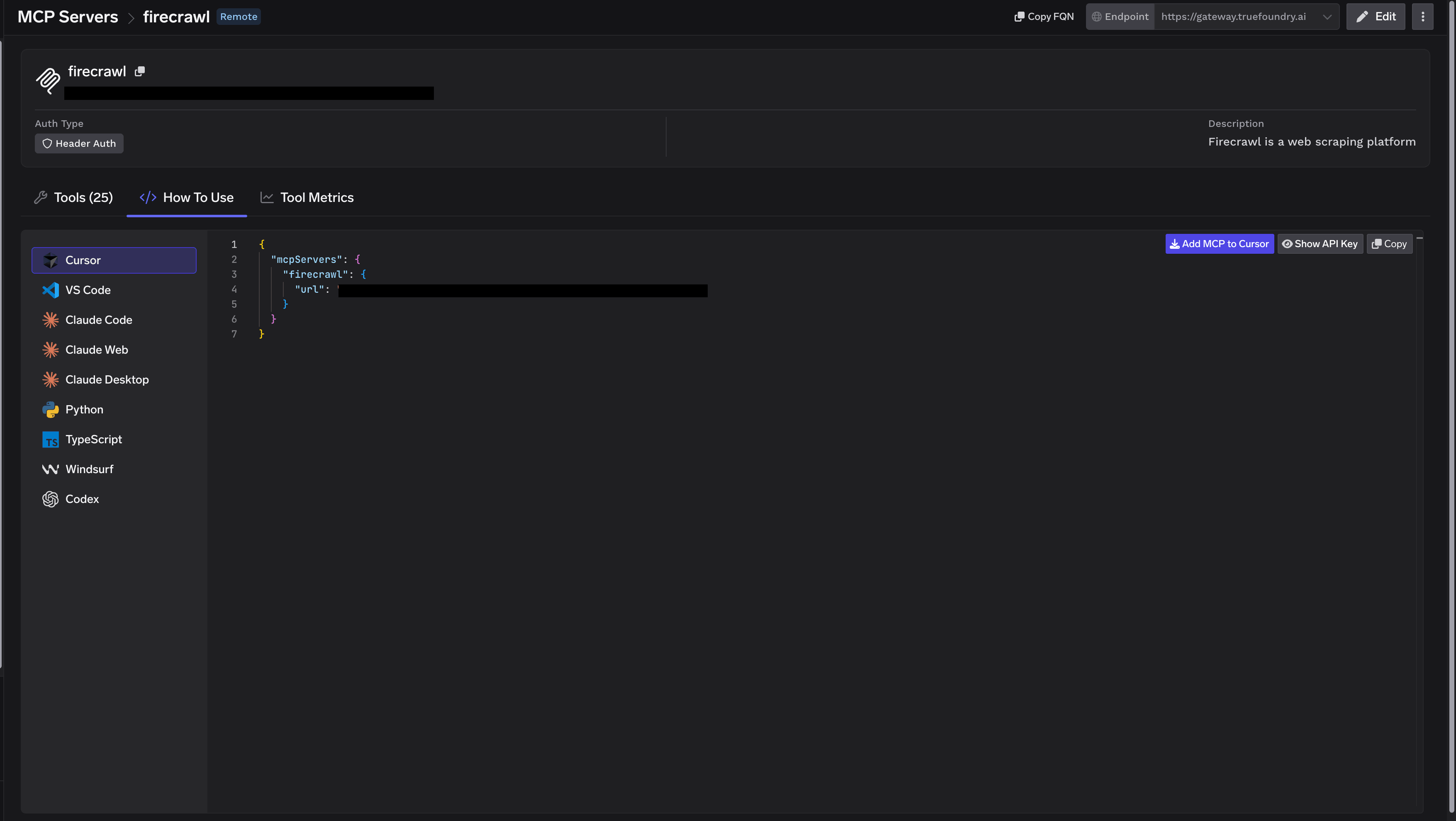
Using the Tool Playground
Before deploying an agent, you can test any Firecrawl MCP server tool directly in TrueFoundry:1
Open a tool
On the Firecrawl MCP server detail page, click Try next to any tool - for example
firecrawl_scrape.2
Fill in the inputs
Provide the tool’s inputs, such as the
url of the page to scrape and any format options (for example, markdown).3
Execute and inspect
Click Execute Tool and inspect the JSON output in the right panel.
Tool Metrics
The Tool Metrics tab on the Firecrawl server detail page tracks how agents use each tool:- Invocation count - which tools are called most often
- Latency - how long each tool takes to respond
- Error rates - which tools are failing in production
Disabling Individual Tools
On the Tools tab, toggle off any Firecrawl tools your agents don’t need:- Disabled tools are hidden from MCP clients and cannot be invoked.
- Enabled tools remain available to agents as usual.