



September 26, 2026
|
5 min read


Published: September 10, 2026

Blazingly fast way to build, track and deploy your models!
As AI adoption accelerates across defense, aerospace, and national security organizations, regulatory compliance is no longer optional - it is foundational. Enterprises building AI systems for sensitive, export-controlled workloads must ensure not just performance and scalability, but strict adherence to regulations like ITAR (International Traffic in Arms Regulations).
TrueFoundry introduces ITAR-compliant AI Gateway deployments, making it possible for defense and aerospace organizations to run regulated AI workloads with full control over data, access, and infrastructure.
This milestone reflects our long-standing commitment to secure, sovereign, and enterprise-grade AI infrastructure especially for teams operating in highly regulated environments.
The International Traffic in Arms Regulations (ITAR) is a U.S. government regulation that governs the access, storage, processing, and transfer of defense-related technical data and systems. Any organization that builds or operates technology connected to defense or military use cases must ensure that regulated data is strictly controlled, auditable, and protected from unauthorized access or export.
As AI becomes deeply embedded in defense and aerospace workflows, ITAR compliance increasingly extends beyond traditional software systems into AI models, prompts, and automated decision-making pipelines.
In modern AI systems, regulated data can surface in multiple places:
Without the right infrastructure, these artifacts may be unintentionally stored, processed, or accessed outside approved environments - creating serious compliance risks.
AI further complicates ITAR compliance because many platforms rely on:
For defense and aerospace organizations, this means ITAR compliance cannot be addressed at the application layer alone. It requires governance at the AI infrastructure and gateway layer, where every model request, response, and agent action can be controlled, audited, and constrained.
As a result, ITAR is no longer just a legal consideration - it has become a core architectural requirement for production AI systems in regulated environments.
Most AI platforms today are optimized for rapid experimentation and developer convenience, not for operating under strict regulatory frameworks like ITAR. While these platforms work well for general-purpose applications, they introduce significant gaps when used for regulated defense and aerospace workloads.
Common limitations include:
In AI-driven systems, regulated data does not live in a single database. It moves through prompts, models, agents, tools, retries, and logs often across multiple services. Without centralized governance, organizations are left to manage compliance through fragmented application-level controls, which are difficult to enforce and even harder to audit.
For ITAR-regulated teams, these gaps create unacceptable risk. Compliance depends on having full visibility, control, and enforcement at the AI infrastructure layer, not just within individual applications.
Key Metrics for Evaluating Gateway
| Criteria | What should you evaluate ? | Priority | TrueFoundry |
|---|---|---|---|
| Latency | Adds <10ms p95 overhead for time-to-first-token? | Must Have | ✅ Supported |
| Data Residency | Keeps logs within your region (EU/US)? | Depends on use case | ✅ Supported |
| Latency-Based Routing | Automatically reroutes based on real-time latency/failures? | Must Have | ✅ Supported |
| Key Rotation & Revocation | Rotate or revoke keys without downtime? | Must Have | ✅ Supported |
| Key Rotation & Revocation | Rotate or revoke keys without downtime? | Must Have | ✅ Supported |
| Key Rotation & Revocation | Rotate or revoke keys without downtime? | Must Have | ✅ Supported |
| Key Rotation & Revocation | Rotate or revoke keys without downtime? | Must Have | ✅ Supported |
| Key Rotation & Revocation | Rotate or revoke keys without downtime? | Must Have | ✅ Supported |

TrueFoundry’s AI Gateway was designed from the ground up for enterprise control, deployment flexibility, and governance, making ITAR compliance achievable without compromising on modern AI capabilities.
TrueFoundry supports on-premises and private VPC deployments, ensuring:
This is critical for ITAR, where data sovereignty and physical control are mandatory.
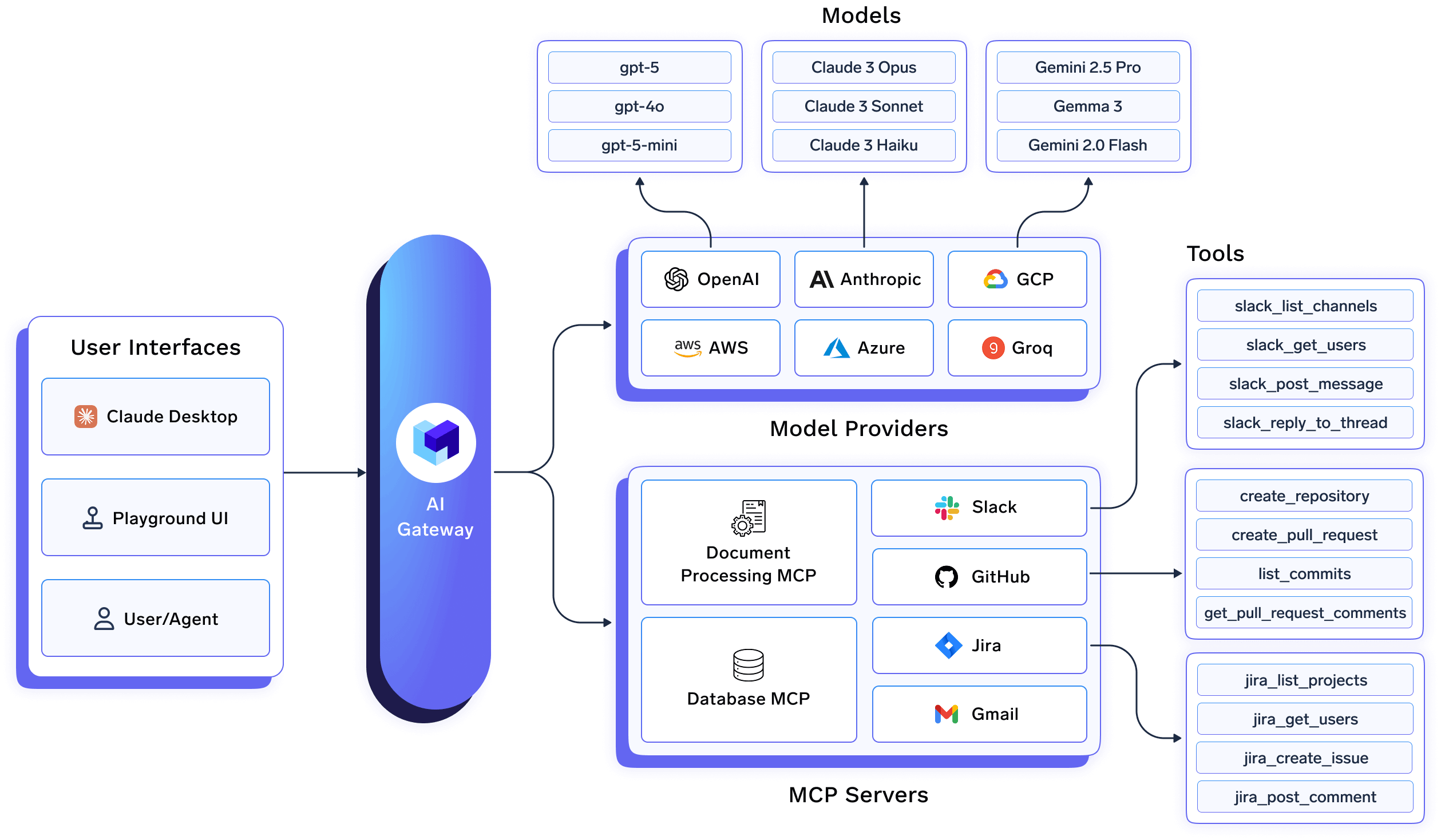
With TrueFoundry, every AI request flows through a single, governed gateway:
This allows organizations to enforce ITAR policies at the gateway level, rather than relying on fragmented application-level controls.
TrueFoundry integrates with enterprise IAM systems to enable:
This ensures that only authorized personnel can access regulated AI workflows.

ITAR compliance requires provable controls, not just promises.
TrueFoundry provides:
Every AI interaction becomes observable, traceable, and reviewable.
Organizations can enforce strict policies such as:
This avoids accidental violations caused by hidden retries or default routing behavior.
By supporting ITAR-compliant AI Gateways, TrueFoundry enables teams to:
This is especially important as AI agents, tool-calling, and autonomous workflows become central to mission-critical systems.
ITAR compliance is not a one-off feature, it’s part of a broader strategy.
TrueFoundry already supports enterprise-grade compliance requirements including:
The goal is simple: make regulated, production-grade AI accessible without compromise.
As AI systems move closer to mission-critical operations, compliance can no longer be treated as a secondary concern. Infrastructure choices made early will determine whether AI deployments remain governable as they scale.
By supporting ITAR-compliant AI Gateways, TrueFoundry enables organizations to build AI systems that meet today’s regulatory requirements while remaining adaptable to future standards and controls.
TrueFoundry AI Gateway delivers ~3–4 ms latency, handles 350+ RPS on 1 vCPU, scales horizontally with ease, and is production-ready, while LiteLLM suffers from high latency, struggles beyond moderate RPS, lacks built-in scaling, and is best for light or prototype workloads.






The latest news, articles, and resources sent to your inbox


.webp)
.webp)
.webp)
.webp)
.webp)
.png)
.png)
.png)
.png)
.png)
.png)


