


October 1, 2026
|
5 min read


احصل على وصول فوري إلى بيئة TrueFoundry مباشرة. انشر النماذج، ووجّه حركة مرور LLM، واستكشف المنصة بالكامل — بيئة الاختبار الخاصة بك جاهزة في ثوانٍ، ولا يلزم وجود بطاقة ائتمان.



Published: July 4, 2026
.webp)
Blazingly fast way to build, track and deploy your models!
As more enterprises roll out multiple AI agents, a new challenge is surfacing, getting them to actually work together. Too often, one agent’s output doesn’t quite fit as another’s input, leading to broken workflows and inconsistent results. So the question isn’t just ‘can you build an agent?’ anymore, it’s ‘can your agents collaborate?’
That’s where two emerging standards come in: the Agent-to-Agent Protocol (A2A) and the Model Context Protocol (MCP). They may sound similar, but MCP and A2A play different role. A2A gives agents a common language to communicate, while MCP keeps them anchored in the same context. The real choice for enterprises is deciding which one to trust first.
The Agent-to-Agent (A2A) Protocol, announced by Google Cloud in April 2025 with support from over 50 leading technology and consulting partners, is an open standard for agent interoperability. Its goal is straightforward yet transformative: to enable AI agents, regardless of vendor, framework, or modality, to communicate, collaborate, and coordinate tasks seamlessly across enterprise systems.
Unlike brittle, one-off integrations, A2A provides a formalized protocol layer built on standards like HTTP, SSE, and JSON-RPC, making it highly compatible with existing IT stacks.
The result is a universal framework where agents become interoperable components of a scalable, multi-agent ecosystem, capable of automating complex enterprise workflows with reliability and reduced integration costs.
.webp)
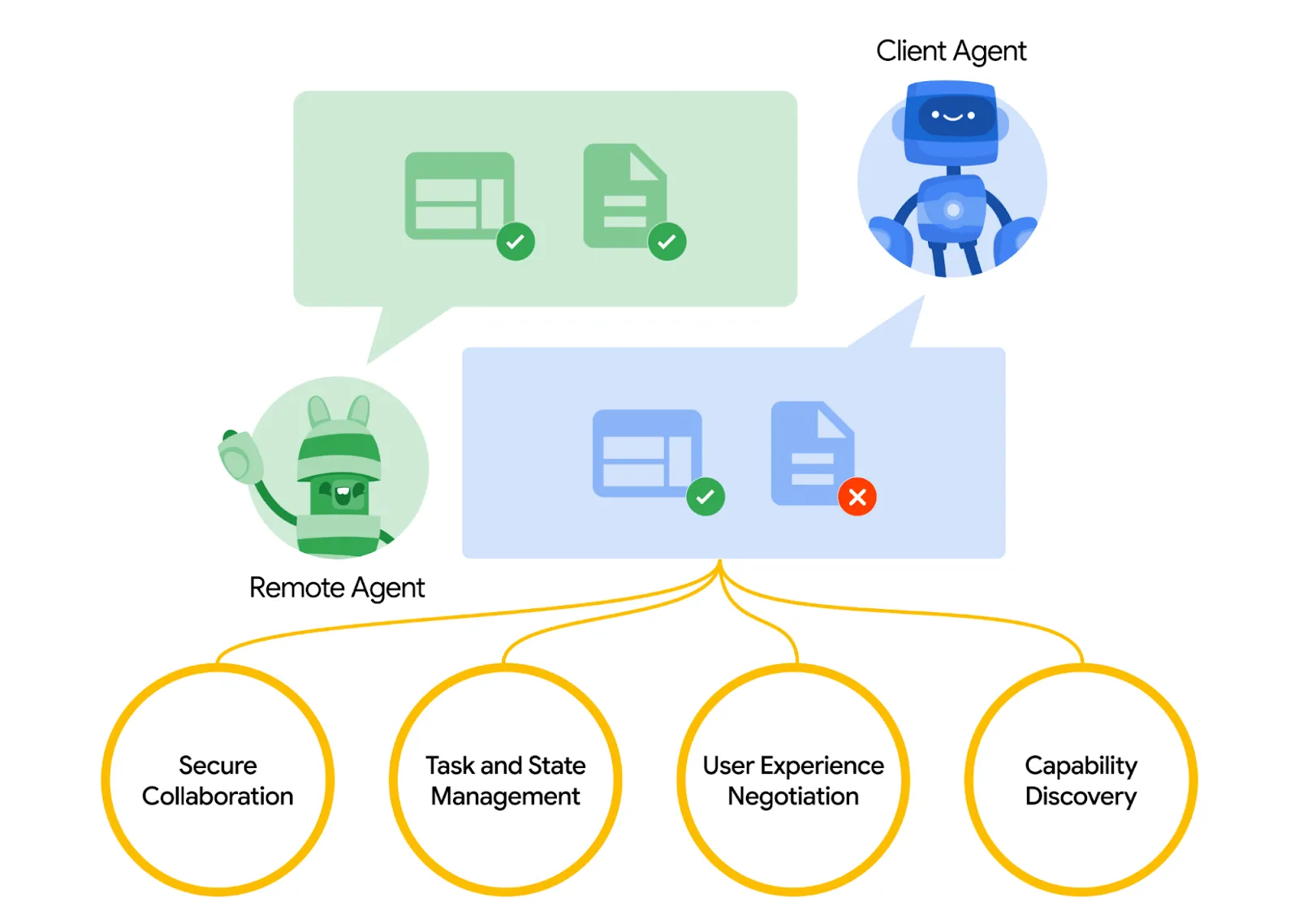
Agent-to-Agent (A2A) enables seamless collaboration between a “client” agent and a “remote” agent. The client agent defines tasks and communicates what needs to be done, while the remote agent executes those tasks to deliver the desired outcomes.
Agents share their capabilities through “Agent Cards” in JSON format, allowing the client to identify the most suitable agent for each task. Once a task is assigned, both agents coordinate throughout its lifecycle, keeping each other updated on progress and exchanging results, or “artifacts.”
Beyond task execution, agents communicate context, instructions, and responses to stay aligned. Each message consists of distinct “parts” with specified content types, enabling agents to negotiate the correct format for the user interface, whether images, video, interactive forms, or other elements, so the end user receives the information exactly as needed.
Also Read: 6 Best LLM Gateways in 2026
The Model Context Protocol (MCP), introduced by Anthropic in 2024, is an open standard for connecting AI applications with external tools, databases, and services. Acting as a universal integration layer, MCP eliminates the brittle, ad hoc connectors that often plague multi-agent systems.
Instead, it provides a standardized communication channel that makes agents context-aware, scalable, and more reliable in production environments.
Just like how USB-C standardized hardware connectivity, MCP standardizes how agents interface with heterogeneous tools and data sources.
The Model Context Protocol (MCP) empowers a single AI agent to leverage external tools and resources efficiently. Here, have a look at the features of MCP.
Unlike orchestration frameworks such as LangChain or CrewAI, MCP does not decide when a tool should be invoked.
Instead, it establishes the standard wiring layer that ensures tools, prompts, and resources are seamlessly available to agents. This transforms multi-agent systems from brittle prototypes into enterprise-grade, interoperable AI ecosystems.
.webp)
The Model Context Protocol lets an LLM complete tasks by using external tools that go beyond its native capabilities. For example, if you ask an AI assistant to “Check the inventory for the latest smartphone models and create a summary report,” MCP coordinates the process.
The LLM recognizes it cannot directly access the inventory database or generate a report on its own, so it queries the MCP system to discover relevant tools. It finds an inventory lookup tool to retrieve product data and a report generator tool to create the summary.
The LLM then sends structured requests to these tools: the inventory tool fetches the latest product information, and the report generator formats this data into a readable summary. Once both steps are completed, the LLM presents the final report to the user. By orchestrating tool discovery, invocation, and response handling, MCP enables LLMs to safely and efficiently extend their capabilities for real-world tasks.
Also Read: What is MCP Proxy?
When scaling AI, choosing the right protocol determines how agents share context, access tools, and collaborate. Both MCP and A2A are complementary but focus on different layers: MCP standardizes model-tool interactions, while A2A enables agents to coordinate tasks and communicate across systems.
Both protocols serve distinct but complementary purposes. MCP powers agents internally with context and tools, while A2A connects agents externally for collaboration and task execution. Together, they form a robust framework for scalable, multi-agent AI systems.
Here’s a concise comparison of MCP vs A2A.
The Agent2Agent (A2A) Protocol is a transformative standard that enables AI agents to collaborate seamlessly across various platforms and frameworks. By facilitating secure, context-aware communication, A2A empowers enterprises to build scalable, interoperable multi-agent ecosystems.
Seamless Interoperability: A2A allows agents from different vendors and frameworks to communicate effortlessly, eliminating integration barriers and promoting a unified AI ecosystem.
Enhanced Task Orchestration: The protocol supports complex task management, enabling agents to delegate responsibilities, track progress, and manage long-running workflows efficiently.
Modality-Agnostic Communication: A2A accommodates various communication modalities, including text, audio, and video, allowing agents to interact in diverse formats suited to specific tasks.
Enterprise-Grade Security: Built with robust authentication and authorization mechanisms, A2A ensures secure agent interactions, safeguarding sensitive enterprise data.
Scalability and Flexibility: The protocol's design supports the dynamic addition of new agents and capabilities, facilitating the growth of AI ecosystems without significant reconfiguration.
Standardized Communication Protocol: A2A utilizes widely adopted standards such as HTTP, SSE, and JSON-RPC, simplifying integration with existing IT infrastructures.
Context-Aware Collaboration: Agents can share and understand each other's context, leading to more informed decision-making and efficient task execution.
Accelerated Development Cycles: By providing a common communication framework, A2A reduces development time for multi-agent systems, enabling faster deployment of AI solutions.
Several enterprises have already seen tangible benefits from implementing A2A. For example, Comparus, which uses IBM watsonx.ai solutions, reported that integrating the protocol significantly streamlined their AI operations.
Their agents are now able to collaborate more effectively across different workflows, resulting in faster task completion and improved service delivery for clients. This real-world adoption underscores the protocol’s potential to transform multi-agent AI ecosystems.
Also Read: Top 5 LiteLLM Alternatives for Enterprises in 2026
The Model Context Protocol (MCP) is revolutionizing the way AI agents interact with external tools and data sources. By providing a standardized framework, MCP enables seamless integration, enhancing the capabilities and efficiency of AI systems. Here are the key advantages:
Standardized Integration: MCP offers a universal interface for connecting AI agents to various tools and data sources, reducing the complexity of custom integrations.
Enhanced Interoperability: AI agents can access a diverse ecosystem of resources, including APIs, databases, and files, ensuring consistent performance across different platforms.
Reduced Development Time: Developers can leverage MCP to quickly integrate new tools and data sources, accelerating the development cycle and time-to-market for AI applications.
Improved Security: MCP incorporates robust security measures, such as controlled access to resources and secure communication protocols, safeguarding sensitive data during interactions.
Dynamic Context Management: The protocol allows AI agents to maintain context across different tools and interactions, enabling more coherent and context-aware responses.
Scalability: MCP's modular architecture supports the addition of new tools and data sources without significant reconfiguration, facilitating scalable AI solutions.
Ecosystem Growth: By providing a common standard, MCP encourages the development of a wide range of compatible tools and services, fostering a vibrant AI ecosystem.
Future-Proofing: As an open-source protocol, MCP is continuously evolving, ensuring that AI systems remain adaptable to emerging technologies and requirements.
Several enterprises have reported measurable improvements after adopting MCP. Tech Innovators Inc., for example, found that integrating the protocol streamlined their development process, allowing their AI agents to connect seamlessly with multiple tools and data sources.
As a result, the agents capabilities expanded, workflows became more efficient, and overall system performance improved significantly.
Scaling AI in the enterprise isn’t just about building powerful agents; it’s about making them work together effectively. Two protocols are leading this effort: MCP and A2A.
While both enhance AI systems, they operate at different layers. MCP focuses on providing context and connecting tools, whereas A2A enables agents to communicate and collaborate seamlessly. The question isn’t which is better, but which fits your use case or how you can combine them to maximize results.
يتألق MCP عندما تحتاج وكلاء الذكاء الاصطناعي لديك إلى وصول منظم وموثوق إلى الموارد الخارجية. تكمن قوته الأساسية في التوحيد القياسي، مما يضمن قدرة الوكلاء على التفاعل باستمرار مع واجهات برمجة التطبيقات وقواعد البيانات والقوالب.
يجب على المؤسسات النظر في استخدام MCP عندما:
على سبيل المثال، يمكن لوكيل خدمة العملاء الذي يستخدم MCP الاستعلام بسلاسة عن قواعد بيانات معرفية متعددة واستخدام قوالب جاهزة للرد على المستخدمين دون الحاجة إلى برمجة نصية مخصصة.
يعد A2A ضروريًا عندما يحتاج وكلاء متعددون إلى التنسيق والتواصل في الوقت الفعلي. يوفر إطار عمل آمنًا ومستقلًا عن الوسائط لتنسيق المهام بين الوكلاء.
فكر في A2A عندما:
على سبيل المثال، في سيناريو سلسلة التوريد، يمكن لوكلاء المشتريات والخدمات اللوجستية وإشعارات العملاء استخدام A2A لمزامنة المهام ومشاركة التحديثات تلقائيًا.
اقرأ أيضًا: خوادم MCP في كود كلود
مع استمرار تطور الذكاء الاصطناعي، تستعد بروتوكولات الوكلاء مثل MCP و A2A لتصبح العمود الفقري للأنظمة الذكية التعاونية.
عمليًا، تستخدم العديد من المؤسسات كلا البروتوكولين معًا. يضمن MCP أن يكون لكل وكيل السياق والأدوات المناسبة، بينما يمكّن A2A هؤلاء الوكلاء من التعاون بفعالية عبر سير العمل المعقدة. هذا المزيج يزيد من الكفاءة وقابلية التوسع والأمان.
يعد اختيار البروتوكول المناسب أو الجمع بينهما قرارًا استراتيجيًا. من خلال فهم نقاط قوة MCP و A2A، يمكن للمؤسسات تصميم أنظمة بيئية للذكاء الاصطناعي ليست قوية فحسب، بل متماسكة وواعية بالسياق وتعاونية.
على الرغم من قوتهما، غالبًا ما يساء فهم بروتوكولي MCP و A2A. تتضمن بعض المفاهيم الخاطئة الشائعة ما يلي:
اقرأ أيضًا: أفضل 5 بدائل لبوابة AWS MCP
مع توسع الشركات في استخدام الذكاء الاصطناعي، لم تعد بروتوكولات مثل MCP و A2A اختيارية؛ بل هي ضرورية. يضمن MCP للوكلاء السياق والأدوات المناسبة للعمل بكفاءة، بينما يمكّن A2A التعاون السلس بين وكلاء متعددين عبر سير العمل والمنصات.
معًا، يشكلان نظامًا بيئيًا قويًا ومتوافقًا للذكاء الاصطناعي قادرًا على التعامل مع المهام المعقدة، وأتمتة العمليات، ودفع الإنتاجية. يمكن أن يحدث اختيار البروتوكول المناسب أو الجمع بينهما بشكل استراتيجي الفرق بين ذكاء اصطناعي مجزأ ومعزول وشبكة وكلاء متماسكة وعالية الأداء. بالنسبة للشركات التي تهدف إلى الريادة في عصر الذكاء الاصطناعي، فإن فهم هذه البروتوكولات واعتمادها هو الخطوة الأولى نحو ذكاء جاهز للمستقبل وقابل للتطوير.
بينما يحسن كلا المعيارين قابلية التشغيل البيني للذكاء الاصطناعي، لا يمكن لـ MCP أن يحل محل A2A بالكامل لأنهما يحلان تحديات معمارية مختلفة. تم تصميم MCP لربط وكيل واحد بالأدوات والبيانات، بينما يركز A2A على تنسيق الاتصال وتسليم المهام بين وكلاء مستقلين متعددين. استخدامهما معًا ينشئ نظامًا بيئيًا للذكاء الاصطناعي أكثر قابلية للتطوير.
يكمن الاختلاف الأساسي بين MCP و A2A في نطاقهما الوظيفي وهندستهما المعمارية. يستخدم MCP نموذج العميل والخادم لتزويد الوكلاء بالسياق الخارجي والوصول إلى الأدوات، بينما يستخدم A2A نموذج الند للند لتعاون الوكلاء. بينما يرسخ MCP الوكيل في البيانات، يمكّن A2A الوكلاء من التفاوض ومشاركة المهام عبر أنظمة مختلفة.
نعم، غالبًا ما يكون الجمع بين MCP و A2A هو الاستراتيجية المثالية لسير عمل الوكلاء في المؤسسات. في هذا الإعداد الهجين، يضمن MCP لكل وكيل فردي وصولاً موحدًا إلى الأدوات التي يحتاجها، بينما يدير A2A التنسيق والاتصال عالي المستوى بين هؤلاء الوكلاء. يعمل هذا التراكب على زيادة ذكاء الوكيل الداخلي وكفاءة التعاون الخارجي إلى أقصى حد.
يعمل كل من MCP و A2A كعمود فقري حيوي للاتصالات. يعمل MCP كموصل عالمي للنماذج للتفاعل مع قواعد البيانات وواجهات برمجة التطبيقات (APIs)، بينما يوفر A2A اللغة المشتركة للوكلاء للعمل معًا على أهداف معقدة. توحد TrueFoundry هذه البروتوكولات في بوابة واحدة، مما يوفر الحوكمة والأمان المطلوبين لنشر الوكلاء على مستوى الإنتاج.
لا، A2A ليس جزءًا من MCP. بينما يوحد MCP الوصول إلى الأدوات وتنفيذ المهام لوكيل واحد، يركز A2A على تمكين الاتصال والتنسيق بين وكلاء متعددين. يخدمان أغراضًا متكاملة: يعزز MCP قدرات الوكيل الفردي، وينسق A2A سير عمل الوكلاء المتعددين للتعاون وإنجاز المهام المشتركة.
تم تصميم MCP لسير عمل الوكيل الواحد، مما يحد من قدرته على تنسيق المهام عبر وكلاء متعددين. يعالج A2A هذا من خلال تمكين الوكلاء من التواصل، ومشاركة السياق، وتبادل المخرجات، والتفاوض على النتائج. يتيح هذا التنسيق متعدد الوكلاء سير عمل معقدة وتكيفية لا يمكن لـ MCP إدارتها بمفرده، مما يوفر مرونة وتعاونًا أكبر في أنظمة الذكاء الاصطناعي.
TrueFoundry AI Gateway delivers ~3–4 ms latency, handles 350+ RPS on 1 vCPU, scales horizontally with ease, and is production-ready, while LiteLLM suffers from high latency, struggles beyond moderate RPS, lacks built-in scaling, and is best for light or prototype workloads.





أحدث الأخبار والمقالات والموارد تصلك مباشرة إلى بريدك الوارد
.png)
.png)
.png)
.png)
.png)
.png)
.png)
.png)
.png)
.png)
.png)


