


October 1, 2026
|
5 min read


احصل على وصول فوري إلى بيئة TrueFoundry مباشرة. انشر النماذج، ووجّه حركة مرور LLM، واستكشف المنصة بالكامل — بيئة الاختبار الخاصة بك جاهزة في ثوانٍ، ولا يلزم وجود بطاقة ائتمان.



Published: July 4, 2026
Blazingly fast way to build, track and deploy your models!
Shadow AI already accounts for 20% of enterprise breaches, costing organizations an average of $670,000 more than standard incidents. The EU AI Act high-risk enforcement provisions took effect in August 2026, with fines reaching 35 million euros or 7% of global turnover. And Gartner projects that 40% of enterprise applications will embed autonomous AI systems by the end of 2026, up from less than 5% in 2025.
Artificial intelligence governance is no longer a planning conversation. It is an operational requirement, and the gap between what most teams have deployed and what they need is widening fast.
The market for AI governance tools, covering everything from artificial intelligence policy documentation to runtime enforcement gateways, has expanded quickly to meet this demand, but the tools are not all solving the same problem. Some document compliance. Some monitor model performance and drift. Some enforce controls at runtime.
Picking the wrong one means investing in a layer of governance that looks thorough on paper but does nothing to stop a misconfigured agent from accessing sensitive data at 2 AM on a Tuesday.
This article compares the leading AI governance tools in 2026: what each one does, where it falls short, and how to choose based on your team's needs in production. Read on!
Monitoring tools tell you what happened. AI governance tools prevent what should not happen. That distinction matters because by the time you see something in a monitoring dashboard, the data has already moved, the cost has already been spent, or the policy has already been violated.
Compliance workflows and features locked behind enterprise pricing tiers effectively mean governance is unavailable to most teams. If the controls that actually matter, RBAC, audit logs, PII redaction, require a contract upgrade, teams work around them. That is exactly where Shadow AI begins.
The strongest AI governance platforms operate at the infrastructure layer. They apply policy enforcement automatically to every request without requiring developers to write policy logic into application code. If governance depends on developers remembering to implement it, it will not be consistent.
Read our indepth guide on what is an AI governance.

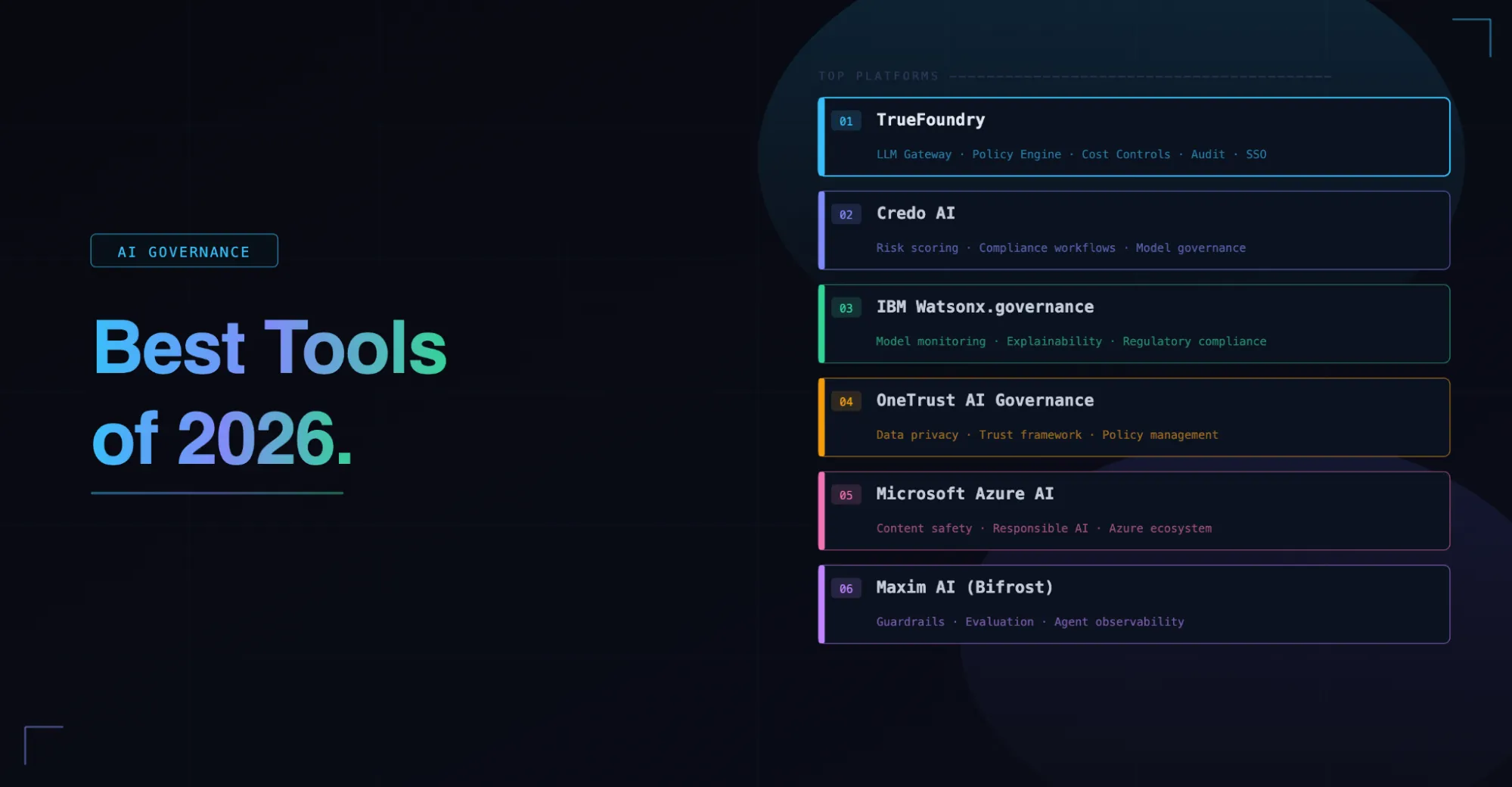
TrueFoundry is recognized as a Representative Vendor in the 2025 Gartner Market Guide for AI Gateways, processing over 10 billion requests per month across Fortune 1000 companies. It deploys as a VPC-native AI gateway platform inside your AWS, GCP, or Azure account, keeping all inference calls, prompts, and model responses within your own network boundary.
TrueFoundry is purpose-built for enterprise teams that need AI governance enforced at the infrastructure layer across models, agents, and tools. It is the right fit for regulated industries, multi-cloud deployments, and organizations requiring full data sovereignty alongside compliance-ready audit trails.
TrueFoundry offers flexible plans, including a Pro tier with VPC deployment and essential governance tools, and an Enterprise tier for organizations running AI at scale with strict compliance, advanced security, and custom deployment requirements. Pro starts at $499/month. Enterprise pricing is available on request.
Ready to govern every model call, agent action, and tool connection from one unified control plane inside your own cloud?
Explore our live demo and see the platform live with and how it works with your own workloads.

Credo AI is a lifecycle AI governance platform focused on compliance automation and audit-ready documentation. It ships pre-built policy packs aligned to the EU AI Act, NIST AI RMF, ISO 42001, SOC 2, and HITRUST with automated evidence collection workflows.
Credo AI documents governance requirements but does not enforce them at the execution layer. TrueFoundry's AI gateway enforces access controls, cost budgets, and audit logging on every live model request, making governance operational rather than aspirational.

IBM Watsonx.governance provides enterprise-grade AI risk management covering lifecycle monitoring, bias detection, explainability, and model behavior tracking. It received FedRAMP authorization, making it one of the few AI governance platforms cleared for US federal deployments.
IBM Watsonx.governance works best within IBM's own stack and requires significant overhead outside it. TrueFoundry's AI gateway platform is provider-agnostic by design, governing workloads across OpenAI, Anthropic, Azure, AWS Bedrock, and self-hosted models from a single VPC-native control plane.
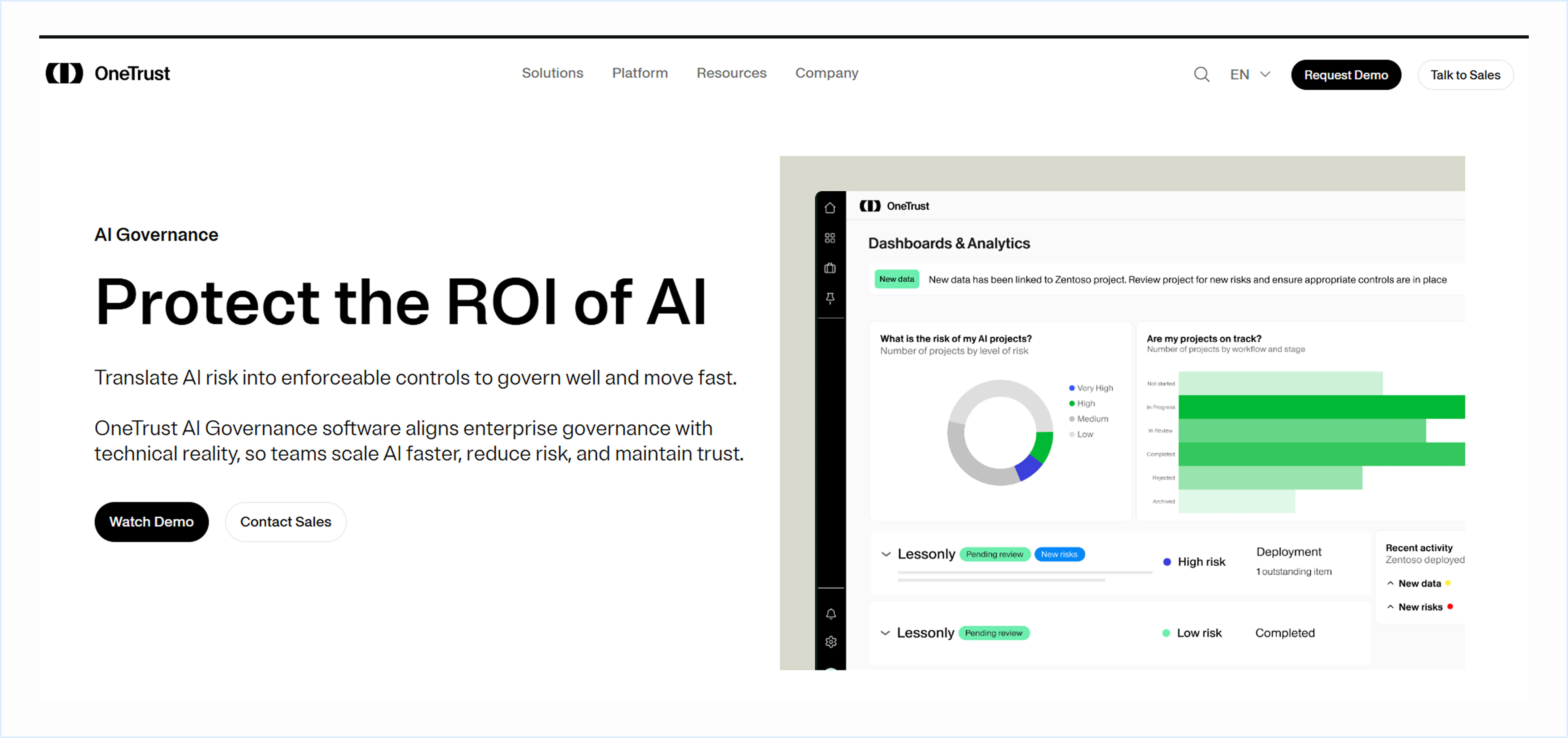
OneTrust AI Governance specializes in GRC workflows for regulated industries, extending OneTrust's established data privacy platform to cover AI system inventories, risk assessments, and vendor management. In March 2026, OneTrust expanded to include continuous monitoring and real-time AI agent detection.
OneTrust governs AI inventory and vendor risk at the policy layer. TrueFoundry's MCP gateway and AI gateway enforce governance at the request layer, applying access controls, content guardrails, and audit logging to every model call and agent tool invocation in real time.

Azure AI Content Safety and Responsible AI provide cloud-native governance for models deployed within Azure, including Prompt Shield for prompt injection defense and responsible AI impact assessments integrated directly into the Azure portal. For organizations already standardized on Azure, these controls require no additional deployment overhead.
Azure AI governance works only within the Azure boundary. TrueFoundry's AI gateway governs workloads across Azure, AWS, GCP, and self-hosted models from a single VPC-native control plane, applying the same access controls and audit logging regardless of where the model runs.

Maxim AI combines infrastructure-level governance through its Bifrost gateway layer, including budget controls, access management, and audit logging, with an integrated LLM evaluation and quality assurance platform for product and engineering teams.
تتناول Maxim AI التقييم والحوكمة الأساسية للفرق الصغيرة. بينما تقدم TrueFoundry's بوابة الوكيل وبوابة الذكاء الاصطناعي الخاصة بها تخدم فرق المؤسسات بنشر أصيل لشبكة VPC، وتكوين RBAC متعمق، وحوكمة سير العمل القائم على الوكلاء، ومسارات تدقيق جاهزة للامتثال التي تتطلبها منصات البنية التحتية المصممة خصيصًا.
تنتج منصات توثيق الامتثال مخرجات تدقيق من المدخلات اليدوية والمراجعات الدورية. إنها لا تعترض وكيلاً تم تكوينه بشكل خاطئ يصل إلى بيانات حساسة في الوقت الفعلي. التوثيق والتنفيذ طبقتان منفصلتان، ومعظم أدوات الحوكمة تعالج واحدة فقط. بحلول الوقت الذي يكشف فيه تقرير الامتثال عن ثغرة، يكون الوصول قد حدث بالفعل وانتقلت البيانات.
تقصر إمكانيات الحوكمة السحابية الأصلية من Azure و AWS و Google Vertex التنفيذ على بيئات استضافة النماذج الخاصة بها. تجد المؤسسات التي تشغل أعباء عمل عبر مزودين مختلفين، أو تستخدم نماذج مستضافة ذاتيًا، أن هذه الضوابط ببساطة لا تنطبق خارج البنية التحتية الخاصة بالمورد. والنتيجة هي ذكاء اصطناعي محكوم على مجموعة فرعية من أعباء العمل بينما تعمل البقية بدون إشراف. هذه الفجوة هي حيث ينمو الذكاء الاصطناعي الخفي.
تتعامل معظم منصات الحوكمة مع الحوكمة كميزة ضمن منتج أوسع بدلاً من اعتبارها بنية تحتية أساسية. تنتهي المطاف بالقدرات الأساسية مثل ميزانيات التكلفة لكل فريق، والتحكم الدقيق في الوصول المستند إلى الأدوار (RBAC)، وإخفاء معلومات التعريف الشخصية (PII) في الوقت الفعلي، خلف عقود المؤسسات. تعمل الفرق غير القادرة على الوصول إلى هذه الميزات على التحايل عليها، وهذا هو بالضبط كيف ينتشر الذكاء الاصطناعي الخفي داخل المؤسسات التي تعتقد أن الحوكمة مطبقة بالفعل. يؤكد تقرير Gartner 2026 لأفضل الممارسات لتحسين تكاليف الذكاء الاصطناعي القائم على الوكلاء أن ضوابط التكلفة والحوكمة يجب أن تعمل على مستوى البنية التحتية لتكون فعالة.
لا تعالج أي من المنصات التي تركز على الامتثال فجوة المساءلة عن التكاليف التي تنشأ عندما تشغل عشرات الفرق أعباء عمل الاستدلال بشكل مستقل. ترى الإدارة المالية فاتورة مجمعة واحدة. ليس لدى قسم الهندسة آلية لتحديد أي فريق أو تطبيق أو نموذج مسؤول عن ارتفاع التكاليف. تحل بوابة LLM الخاصة بـ TrueFoundry هذه المشكلة عن طريق وسم كل طلب ببيانات تعريف المستخدم والفريق والنموذج والبيئة في وقت التنفيذ، مما ينتج عنه إسناد لكل طلب دون الحاجة إلى مسارات تحليل مخصصة.

إليك سبب حاجة المؤسسات إلى حوكمة على مستوى البنية التحتية:
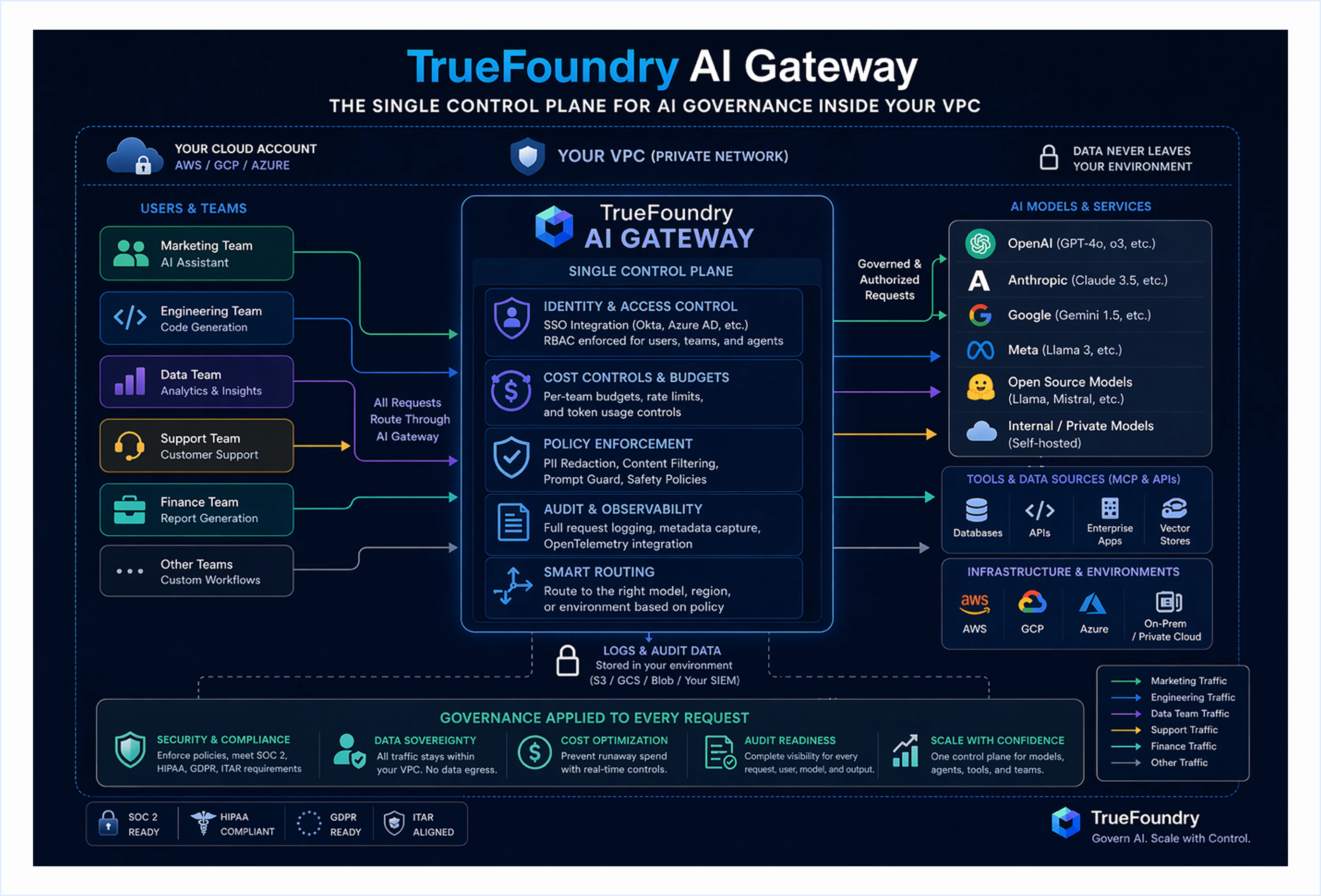
TrueFoundry مبنية على مبدأ مباشر: حوكمة الذكاء الاصطناعي هي مشكلة بنية تحتية، وليست سير عمل لأتمتة الامتثال. كل تحكم موجود على طبقة البوابة ويطبق تلقائيًا على كل طلب. لا يحتاج أي مطور إلى تنفيذ منطق أتمتة السياسات في كود التطبيق ليعمل.
احجز عرضًا توضيحيًا مجانيًا اليوم للبدء.
TrueFoundry AI Gateway delivers ~3–4 ms latency, handles 350+ RPS on 1 vCPU, scales horizontally with ease, and is production-ready, while LiteLLM suffers from high latency, struggles beyond moderate RPS, lacks built-in scaling, and is best for light or prototype workloads.


أدوات حوكمة الذكاء الاصطناعي هي منصات تساعد المؤسسات على مراقبة سياسات الحوكمة والتحكم فيها وتطبيقها عبر أنظمة الذكاء الاصطناعي الخاصة بها. اعتمادًا على الأداة، قد يعني ذلك توثيق الامتثال التنظيمي لقانون الذكاء الاصطناعي للاتحاد الأوروبي، أو مراقبة أداء النموذج وانحراف التحيز، أو فرض التحكم في الوصول لتحديد الفرق التي يمكنها استخدام أي نماذج ذكاء اصطناعي، أو إدارة تكاليف الرموز (tokens)، أو تسجيل كل طلب استدلال كمسارات تدقيق. تشمل هذه الفئة أطر الحوكمة ومنصات أتمتة الامتثال التي تستخدمها فرق الامتثال، وصولاً إلى بوابات على مستوى البنية التحتية تفرض الضوابط على طبقة الطلبات.
تعتمد أدوات حوكمة الذكاء الاصطناعي المناسبة على حالة الاستخدام الخاصة بك وما تحتاج إلى حوكمته. يُعد TrueFoundry الخيار الأقوى للفرق التي تحتاج إلى فرض وقت التشغيل، والتحكم في الوصول، وميزانيات التكلفة، وسجلات التدقيق داخل شبكتها الافتراضية الخاصة (VPC). يناسب Credo AI فرق الامتثال التي تحتاج إلى توثيق الأطر التنظيمية. يعمل IBM Watsonx للمؤسسات التي لديها بنية تحتية حالية من IBM. يناسب OneTrust فرق حوكمة البيانات. أما Azure AI Content Safety فيناسب المؤسسات الموحدة على Azure والتي ليس لديها متطلبات سحابة متعددة.
منصات حوكمة الذكاء الاصطناعي على مستوى البنية التحتية مثل TrueFoundry تقع بين تطبيقاتك ونماذج الذكاء الاصطناعي، وتتولى اعتراض كل طلب قبل وصوله إلى النموذج. في هذه الطبقة، تتحقق من الهوية والأذونات، وتتحقق من تطبيق السياسات مقابل ميزانيات التكلفة، وتفحص المطالبات بحثًا عن بيانات حساسة أو انتهاكات، وتسجل التفاعل بالكامل. تعمل أدوات أتمتة الامتثال مثل Credo AI بشكل مختلف: فهي تجمع معلومات حول أنظمة الذكاء الاصطناعي الخاصة بك من خلال عمليات التكامل وتُنشئ تقييمات للمخاطر، وتقارير امتثال، ومستندات تدقيق.
ثلاثة أسباب كلها تشغيلية. أولاً، الذكاء الاصطناعي الخفي مسؤول بالفعل عن 20% من الاختراقات المؤسسية. عندما تتصل الفرق بخدمات خارجية لاستخدامات الذكاء الاصطناعي دون رؤية قسم تكنولوجيا المعلومات، تغادر المعلومات الحساسة عبر قنوات غير مراقبة. ثانياً، قانون الذكاء الاصطناعي للاتحاد الأوروبي قيد التنفيذ للأنظمة عالية المخاطر، مع غرامات تصل إلى 35 مليون يورو. ثالثاً، تكاليف الرموز عبر تبني الذكاء الاصطناعي غير المتحكم به من قبل فرق متعددة غير قابلة للتنبؤ. تعالج منصات حوكمة الذكاء الاصطناعي هذه الأسباب الثلاثة من خلال إدارة دورة الحياة والرؤية وضوابط التكلفة.
تُعد TrueFoundry أحد الأمثلة على منصة حوكمة الذكاء الاصطناعي متكاملة تُنشر داخل سحابتك الخاصة وتفرض التحكم في الوصول، وميزانيات التكلفة، وإخفاء معلومات التعريف الشخصية (PII)، وسجلات التدقيق على مستوى طبقة البوابة. Credo AI هي مثال آخر، تركز على جمع الأدلة وسير عمل تقييم المخاطر. يدمج IBM Watsonx الحوكمة في تطوير الذكاء الاصطناعي ضمن بيئة IBM للمؤسسات الكبيرة التي تعمل بالفعل ضمن هذه البنية. يمثل كل منها نهجًا مختلفًا لحوكمة الذكاء الاصطناعي بناءً على ما إذا كنت بحاجة إلى التوثيق أو المراقبة أو الإنفاذ.
لا توجد إجابة واحدة، لأن استخدام الذكاء الاصطناعي ومتطلبات الحوكمة التي ينشئها يختلفان بشكل كبير حسب الصناعة ونوع النشر والسياق التنظيمي. لتطبيق الحوكمة في بيئة الإنتاج، يُعد TrueFoundry الخيار الأقوى للمؤسسات التي تحتاج إلى تطبيق ضوابط الحوكمة داخل شبكتها الافتراضية الخاصة (VPC) عبر نماذج الذكاء الاصطناعي والوكلاء والأدوات.
لأتمتة الامتثال وتوثيق المتطلبات التنظيمية، يُعد Holistic AI و Credo AI خيارين مصممين خصيصًا لهذا الغرض. يتوقع دليل سوق Gartner لعام 2025 لبوابات الذكاء الاصطناعي أنه بحلول عام 2028، ستستخدم 70% من فرق هندسة البرمجيات التي تبني تطبيقات متعددة النماذج أدوات حوكمة الذكاء الاصطناعي مثل بوابات الذكاء الاصطناعي.



أحدث الأخبار والمقالات والموارد تصلك مباشرة إلى بريدك الوارد
.png)
.png)
.png)
.png)
.png)
.png)
.png)
.png)
.png)
.png)
.png)


