



October 1, 2026
|
5 min read


Published: May 22, 2026
Blazingly fast way to build, track and deploy your models!
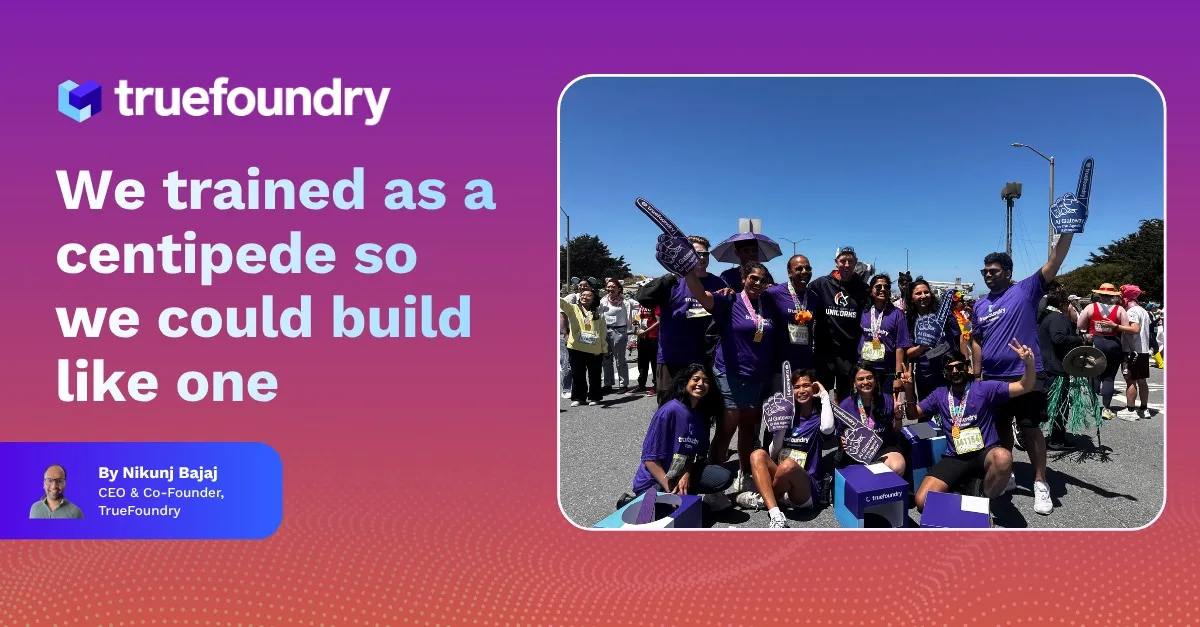
I've been asked a few times what TrueFoundry's culture actually is. It’s a tricky one to explain. To me, culture is more than what we hang up on the walls. Or what we chose for our values page, as carefully as we thought about them. And that’s because culture is dynamic and ever-evolving. It exists in the small interactions between our team members. Culture is when an engineer immediately jumps on a call to help a sales member answer a customer’s questions, even if it’s last minute. It’s also what happens when a group of us decide to voluntarily spend our Sunday morning tied together for a 7.46 mile run.
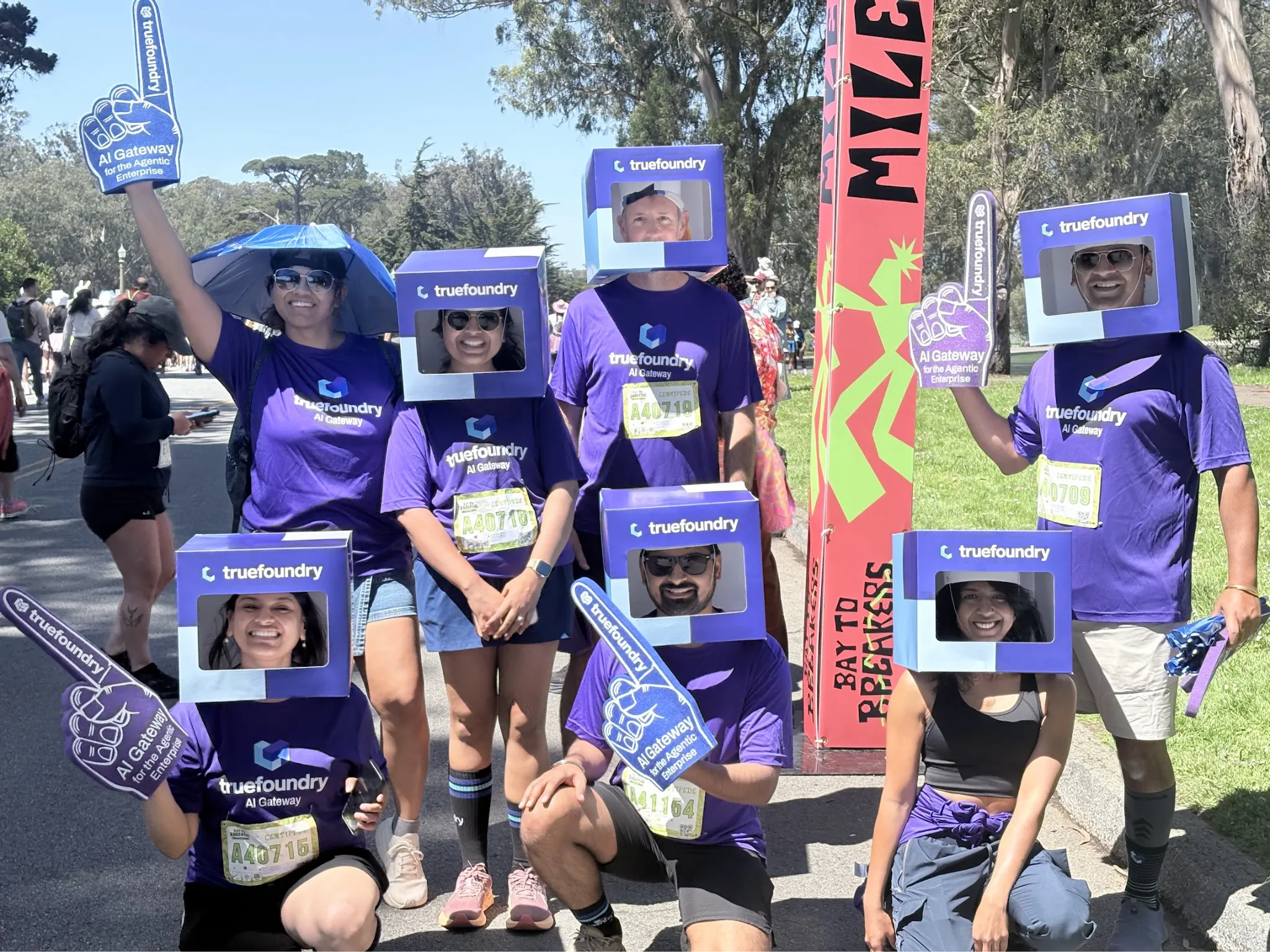
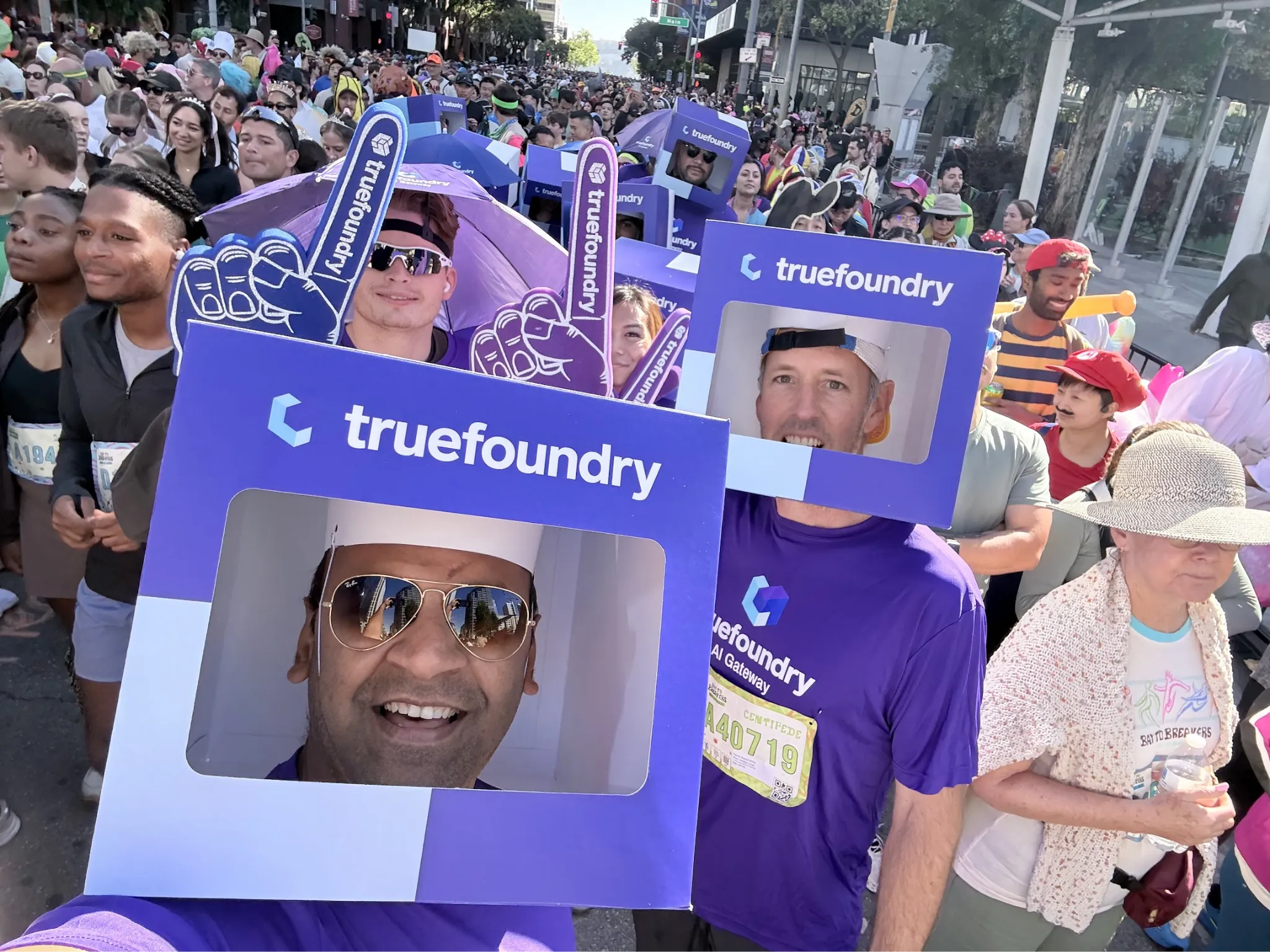
Bay to Breakers is one of San Francisco's most iconic races. 7.46 miles from the Embarcadero to the ocean. It's chaotic, it's festive, and it draws thousands of people who genuinely love the city. For the uninitiated: a centipede team runs together, connected with the same rope. You can't surge ahead. You can't fall behind. You literally cannot finish unless everyone runs as one. The fastest person on the team is irrelevant if the slowest isn't keeping up.
What left the biggest impression on me is how running together reflected the way we naturally operate as a team. Every awkward shuffle, every moment someone called out to hold the pace, every adjustment we made in real time, was us learning to trust each other outside of Slack and weekly planning calls.
Running as a centipede through the streets of San Francisco felt like a metaphor that wrote itself. Technology, community, collective motion. You can't be precious about your pace. You have to give up some individual glory for something bigger.
When we started TrueFoundry, we knew the product had to be exceptional. But we also knew that the team, how we'd work, how we'd disagree, how we'd show up for each other, mattered just as much (maybe more).
We didn't want a culture of performers. We wanted a culture of people who are genuinely obsessed with the problem, genuinely care about the customer, and genuinely want to see each other succeed. The values we wrote aren't aspirational posters. They're a description of the people we were trying to hire, and the standards we hold ourselves to every day:
But here's the thing about values: they're only real when they're tested. Anyone can say they have extreme ownership when things are going well. The question is what happens when a production system goes down at 2am, or a customer is frustrated, or a decision turns out to be wrong. That's when you find out what your culture actually is.
Companies don’t lose their culture overnight. Over time, communication gets formalized. New people come in who didn't share the early experiences. And slowly, the things that made the team feel like a team wither away.
I don't want that for us.
That's why we do things like Bay to Breakers. Not as a team-building box to tick. But as a genuine attempt to create shared experiences that remind us what kind of team we're trying to be. One that finishes what it starts, that moves together, that doesn't leave anyone behind.
As we grow, we'll hire more people. We'll add new functions and new geographies. And each of those moments is an opportunity to either strengthen the culture or dilute it. I think about this a lot. The answer isn't to set things in stone, culture should evolve. But the core of it, the genuine togetherness, the willingness to go the extra mile, the positive energy we try to bring into every room, that has to stay.
Sometimes unconventional thinking requires stepping outside your comfort zone. Training as a centipede on a Sunday morning when you could be sleeping in is a small, tangible version of that. It's us saying: we're willing to do the slightly absurd, slightly hard thing, together, because that's what we're about.
That's the culture we set out to build. And it's the one I'm most proud of.
Learn more about our culture and explore our career openings here.
TrueFoundry AI Gateway delivers ~3–4 ms latency, handles 350+ RPS on 1 vCPU, scales horizontally with ease, and is production-ready, while LiteLLM suffers from high latency, struggles beyond moderate RPS, lacks built-in scaling, and is best for light or prototype workloads.






The latest news, articles, and resources sent to your inbox
.png)

.png)
.png)
.png)
.png)
.png)
.png)
.png)
.png)
.png)
.png)


