


September 19, 2026
|
5 min read


Published: August 3, 2026
.webp)
Blazingly fast way to build, track and deploy your models!
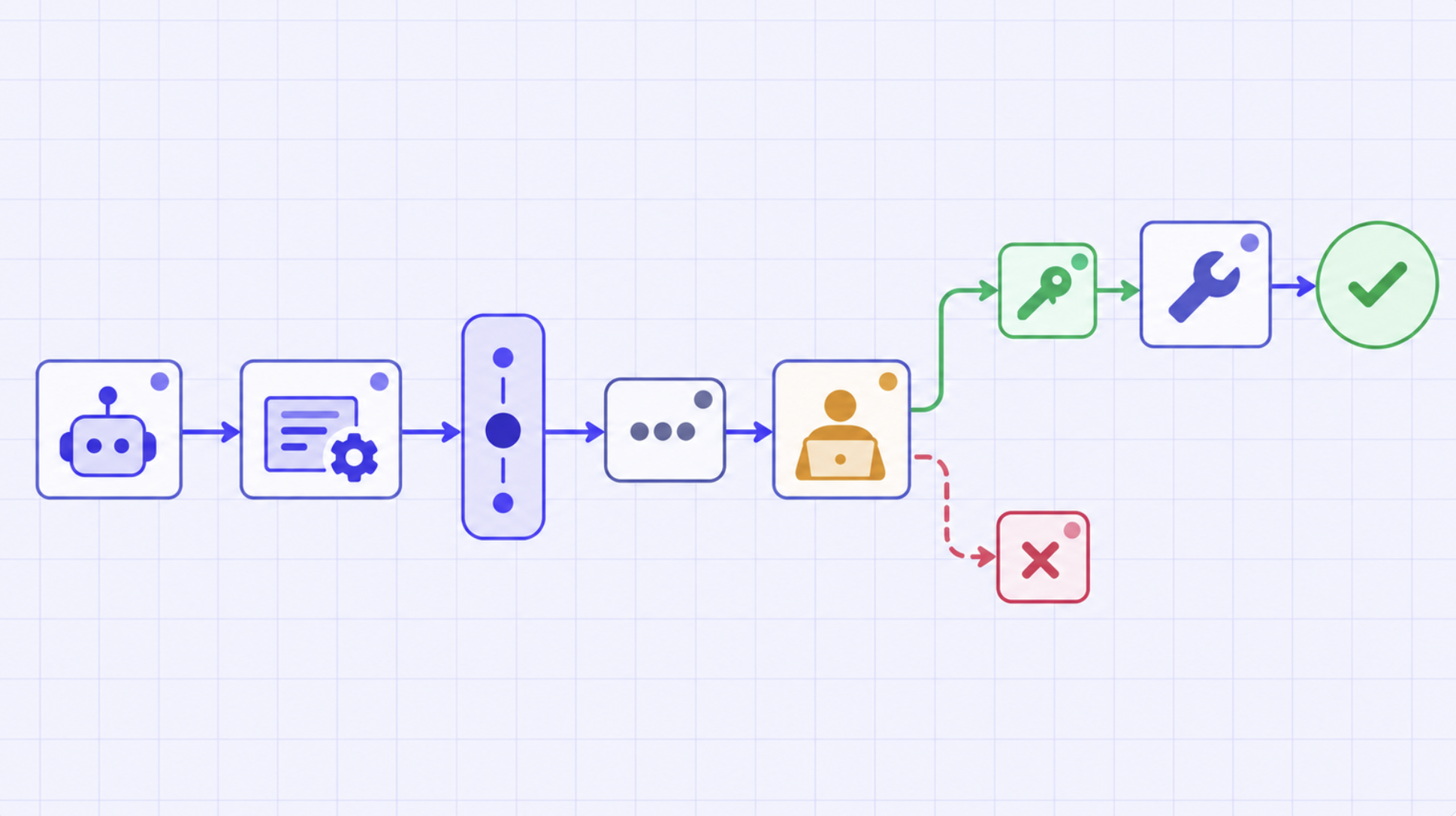
As AI moves from experimentation to production, organizations are realizing that connecting agents to external tools is no longer just an integration challenge; it's an infrastructure challenge.
This shift has created demand for the Model Context Protocol (MCP), a standard that defines how AI agents connect to external tools. Solutions like Mint MCP help teams secure, manage, and govern agent access across cloud, on-premises, and hybrid environments.
However, Mint MCP isn't the only option. Depending on your requirements, whether that's performance, scalability, deployment flexibility, or throughput, other MCP gateways may be a better fit.
In this blog, we'll cover what Mint MCP is, why teams look for Mint MCP alternatives, the best MCP gateway tools in 2026 and how to choose the right MCP gateway for your needs. Let’s get started.
Mint MCP is an MCP gateway that helps AI agents securely connect with external tools, APIs, and business systems while giving organizations control over access, security, and governance.
MCP, or Model Context Protocol, is a standard that enables AI agents to communicate with various tools and data sources consistently and reliably, making integrations easier to build and manage.
While Mint MCP is a popular option, it may not be the best fit for every organization. Different businesses have different needs regarding scalability, performance, security, deployment options, and cost.
For example, some companies prefer a cloud-based solution, while others require on-premise or hybrid deployments to meet compliance and data privacy requirements. As AI adoption grows, many organizations look for Mint MCP alternatives that better align with their technical requirements, security standards, and budget while still providing reliable connectivity between AI agents and external systems.
To make a fair and practical comparison, we evaluated each Mint MCP alternative based on the factors that matter most in real production environments.
MCP protocol support: We examined how comprehensively each platform supports MCP communication standards such as STDIO, Streamable HTTP, and SSE. We also considered how reliably it works in real client–server setups, since strong protocol compatibility is essential for seamless tool execution and agent coordination.
Security and compliance: Since these tools often operate in enterprise environments, we evaluated security capabilities like GDPR readiness, SOC 2 and HIPAA. We also looked at authentication and access control mechanisms including OAuth 2.1, RBAC, and SSO to ensure proper governance over agent behavior and tool access.
Performance: We assessed how efficiently each gateway handles requests under different loads, focusing on latency metrics like p50 and p95. This helps determine how well the system performs in both normal and high-traffic production scenarios.
Deployment flexibility: We analyzed how easily each solution can be deployed across different environments, including SaaS, self-hosted setups, VPC-based deployments, Kubernetes clusters, and fully air-gapped infrastructure for highly regulated environments.
Unified LLM and MCP management: We checked whether the platform provides a single control layer for managing both LLMs and tool integrations, which can significantly simplify operations and reduce system complexity.
Ecosystem and integrations: Finally, we reviewed how well each tool integrates with popular AI development frameworks such as LangChain, CrewAI, and AutoGen, along with the overall ecosystem of supported tools and connectors available out of the box.
.webp)
Best For: Enterprise platform engineering teams building governed, scalable AI infrastructure for LLM serving, MCP tooling, and agent orchestration across multi-cloud or hybrid environments.
TrueFoundry is an enterprise AI infrastructure platform that unifies LLM routing, MCP tool governance, and model serving into a single control plane. It can be deployed across VPCs, on-premises, or in air-gapped environments, making it suitable for strict security and compliance requirements. It has also been recognized as a Representative Vendor in the 2025 Gartner Market Guide for AI Gateways.
Best For: Developer teams looking for fast integrations and quick time-to-production for agent tooling.
.webp)
Best For: Teams needing high-performance, open-source infrastructure with full control over deployment and routing.
.webp)
Best For: Teams already using Docker who want container-native MCP orchestration and isolation.
.webp)
Best For: Organizations already using Kong for API management and extending into AI/LLM and MCP workloads.
.webp)
Best For: Security-focused teams prioritizing AI threat detection and governance over orchestration.
.webp)
Best For: Teams wanting a fully managed, edge-based AI gateway with minimal infrastructure overhead.
.webp)
Best For: Teams building full self-hosted MCP environments with complete control over infrastructure.
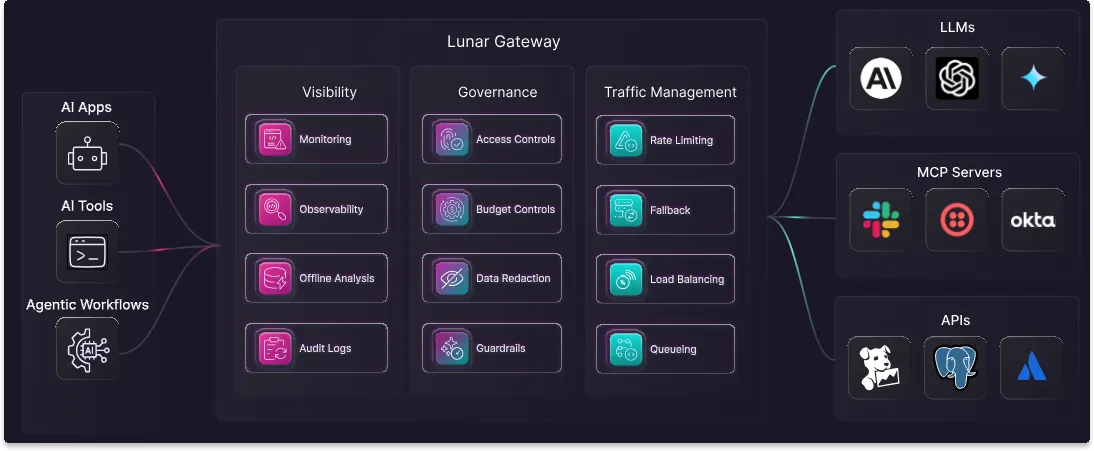
Best For: Organizations that want an open-source MCP control plane with strong pre-production risk evaluation and the ability to harden tool variants before they reach agents.
.webp)
Best For: Teams already using Portkey for LLM gateway capabilities and wanting to extend the same control plane to MCP traffic.
TrueFoundry stands out among modern Mint MCP competitors because it is designed as a full-stack MCP and AI infrastructure control plane, not just a gateway. Instead of managing LLM routing, MCP tool governance, and model serving as separate layers, it brings everything together into a single unified system.
This removes infrastructure fragmentation and significantly simplifies how teams build and operate production-grade AI agents.
Beyond consolidation, TrueFoundry focuses heavily on production readiness. It provides centralized tool discovery so agents can easily find and use MCP servers without manual wiring, along with RBAC-based access control to ensure only the right users and applications can access specific tools.
Secure credential management eliminates API key sprawl by handling OAuth tokens centrally, while built-in observability gives teams full visibility into tool usage, latency, errors, and cost across all MCP interactions.
From a performance and deployment perspective, TrueFoundry is built for enterprise scale. It delivers low-latency execution, supports VPC-native and air-gapped deployments, and integrates with 25+ agent frameworks used in modern AI stacks.
This combination of governance, performance, and flexibility makes TrueFoundry a strong Mint MCP alternative for organizations building secure and scalable AI agent infrastructure.
As demand for Mint MCP alternatives grows, it is clear that no single MCP gateway fits every AI agent infrastructure use case.
Mint MCP remains strong for governance-heavy environments, but many teams now require more flexibility, performance, and integration depth across modern AI systems.
TrueFoundry stands out as a leading Mint MCP competitor by combining LLM and MCP governance, delivering low-latency performance, supporting VPC-native deployments, and enabling scalable production AI agent infrastructure.
Sign up to see how TrueFoundry can serve as your mint mcp alternative and power your AI agent infrastructure at scale.
TrueFoundry AI Gateway delivers ~3–4 ms latency, handles 350+ RPS on 1 vCPU, scales horizontally with ease, and is production-ready, while LiteLLM suffers from high latency, struggles beyond moderate RPS, lacks built-in scaling, and is best for light or prototype workloads.




Mint MCP is used as an MCP gateway that connects AI agents to external tools, APIs, and enterprise systems while providing centralized governance, security, and observability.
TrueFoundry is a strong alternative, as it provides a unified MCP gateway and AI infrastructure layer with built-in governance, observability, and high-performance tool execution for production environments.
MCP gateways are not strictly required, but they are highly useful in production because they standardize tool access, improve security, and provide better visibility into agent-to-tool interactions.
TrueFoundry is often considered a strong choice for production AI agents because it combines MCP governance, LLM routing, and model serving in a single unified platform.
Teams look for alternatives like TrueFoundry when they need better performance, simpler infrastructure management, stronger deployment flexibility, and deeper integration with enterprise systems.
Unlike traditional API gateways, MCP tools like TrueFoundry are designed specifically for AI agents, enabling structured tool usage, context-aware execution, and tighter integration with LLM workflows.
TrueFoundry stands out because it provides a unified control plane for LLMs and MCP, ultra-low latency performance, secure VPC-native deployment, and integration with 25+ agent frameworks for production-scale AI systems.
TrueFoundry provides centralized policy enforcement through RBAC, unified tool governance, and centralized credential management across all MCP servers and AI agents.
TrueFoundry offers strong security controls with RBAC, secure credential handling, VPC deployment, audit logs, and fine-grained governance over tool access and agent behavior.



The latest news, articles, and resources sent to your inbox
.png)
.png)
.png)
.png)
.png)
.png)
.png)
.png)
.png)
.png)
.png)


