


October 1, 2026
|
5 min read


احصل على وصول فوري إلى بيئة TrueFoundry مباشرة. انشر النماذج، ووجّه حركة مرور LLM، واستكشف المنصة بالكامل — بيئة الاختبار الخاصة بك جاهزة في ثوانٍ، ولا يلزم وجود بطاقة ائتمان.



Published: September 22, 2026

Blazingly fast way to build, track and deploy your models!
Over the last few years, generative AI has moved from research labs into the center of business and everyday applications. Large Language Models (LLMs) like GPT-4, Claude, and LLaMA have demonstrated remarkable capabilities—summarizing documents, generating software code, creating images, and even acting as conversational assistants. But with this rapid adoption comes a new challenge: how do enterprises manage, govern, and scale generative AI usage across multiple providers and teams, while ensuring security, compliance, and cost efficiency?
The answer lies in a concept that is quickly gaining momentum: the Generative AI Gateway.
A Generative AI Gateway is a middleware layer that sits between applications and generative AI services. Much like an API gateway routes and secures calls to backend services, a generative AI gateway is designed specifically for the unique needs of AI models. It centralizes governance, controls access, enforces security, and optimizes the use of AI models.
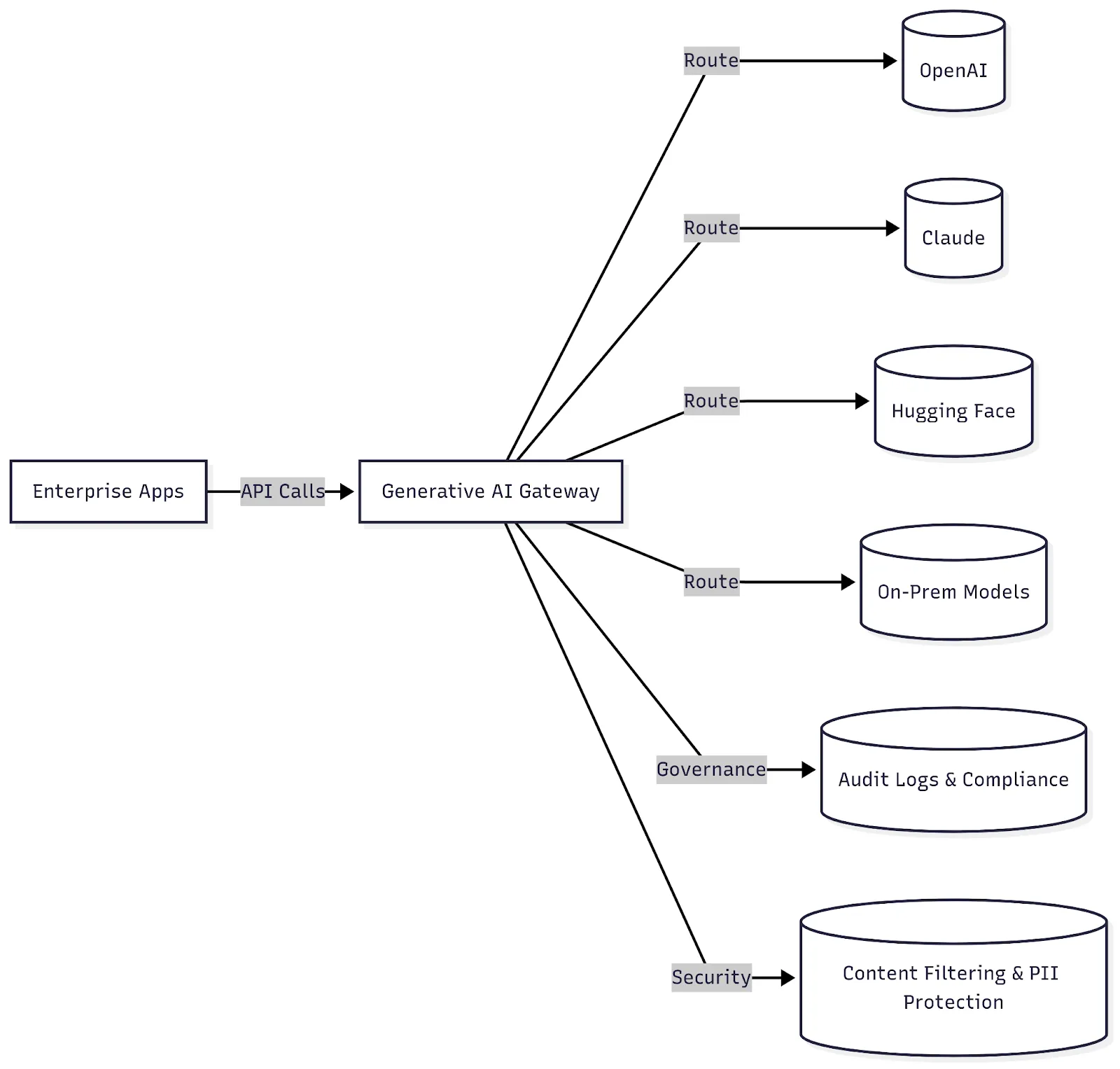
In simpler terms, it acts as a control tower for all AI traffic—deciding which model to call, how much usage to allow, how to handle risky responses, and how to log activities for compliance.
Whereas a traditional API gateway manages HTTP traffic, a generative AI gateway understands:
To understand the role of a generative AI gateway, imagine an international airport. Every day, thousands of planes (AI requests) arrive from multiple airlines (AI providers), each carrying passengers (data) destined for the same country (enterprise applications). Before passengers can enter the country, they must pass through immigration and security checks. This is where the system ensures order, safety, and compliance.
Here’s how this analogy maps:
But let’s extend the analogy further for clarity:
In essence, the generative AI gateway is like the airport’s security, customs, and immigration combined into one streamlined checkpoint. It ensures that regardless of the airline (AI provider) or the passenger (data), the entry into the enterprise ecosystem is safe, regulated, and optimized. Without such a system, the airport (enterprise AI adoption) would descend into chaos, with unchecked entries, security threats, and overwhelming traffic.
Key Metrics for Evaluating Gateway
| Criteria | What should you evaluate ? | Priority | TrueFoundry |
|---|---|---|---|
| Latency | Adds <10ms p95 overhead for time-to-first-token? | Must Have | ✅ Supported |
| Data Residency | Keeps logs within your region (EU/US)? | Depends on use case | ✅ Supported |
| Latency-Based Routing | Automatically reroutes based on real-time latency/failures? | Must Have | ✅ Supported |
| Key Rotation & Revocation | Rotate or revoke keys without downtime? | Must Have | ✅ Supported |
| Key Rotation & Revocation | Rotate or revoke keys without downtime? | Must Have | ✅ Supported |
| Key Rotation & Revocation | Rotate or revoke keys without downtime? | Must Have | ✅ Supported |
| Key Rotation & Revocation | Rotate or revoke keys without downtime? | Must Have | ✅ Supported |
| Key Rotation & Revocation | Rotate or revoke keys without downtime? | Must Have | ✅ Supported |
The demand for AI governance isn’t theoretical—it’s essential. Enterprises are under immense pressure to adopt AI responsibly. Without a gateway, generative AI adoption can spiral into chaos: uncontrolled costs, security breaches, regulatory violations, and inconsistent experiences.
If you're running a business and thinking about using AI tools like ChatGPT or Claude, you've probably realized it can get pretty messy pretty fast. That's where something called a generative AI gateway comes in handy. Think of it as a smart middleman that makes everything easier and safer.
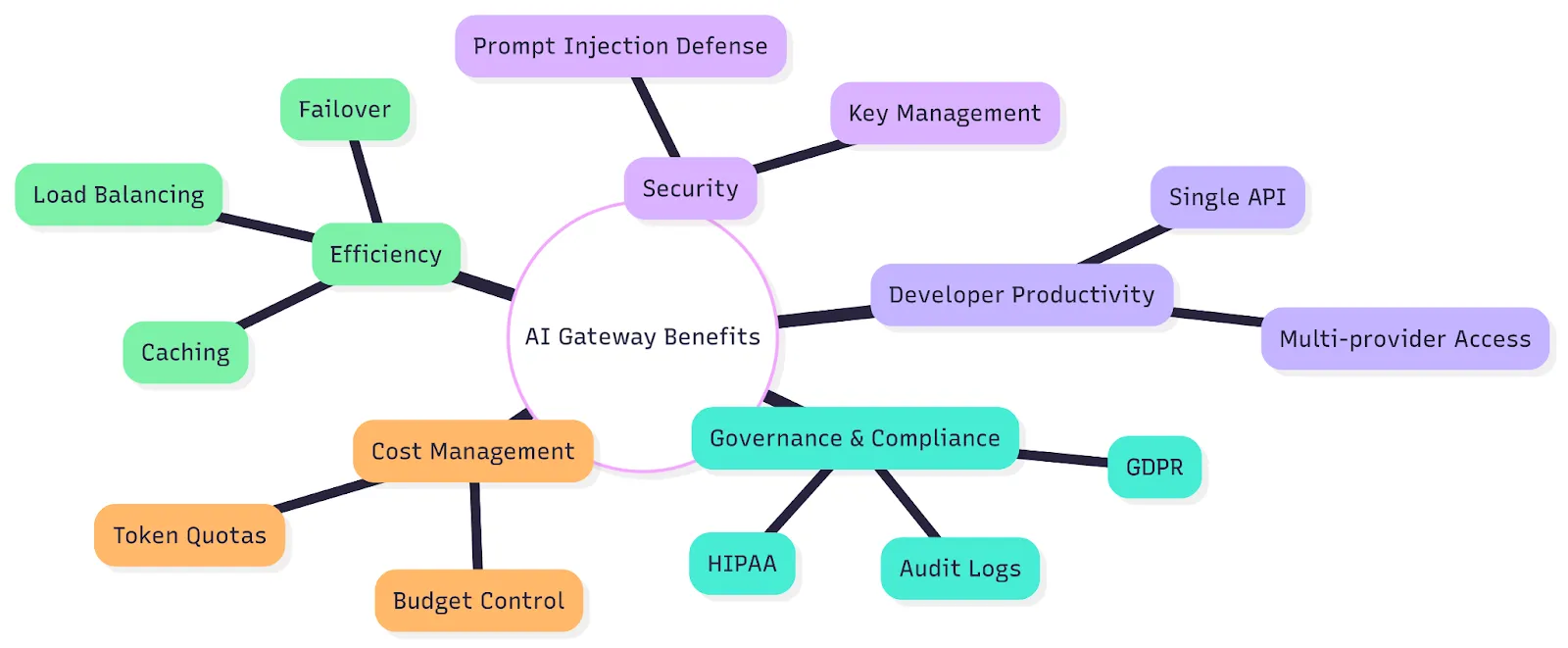
Instead of having your developers learn how to connect to OpenAI, then Anthropic, then whatever new AI company pops up next week, they just connect to one place - the gateway. It's like having one remote control for all your TVs instead of juggling five different ones. This saves time and headaches, especially when new AI models come out every few months.
Not every task needs the most expensive, powerful AI model. Sometimes you need super accurate results for important legal work, other times you just need quick answers for customer service. With a gateway, you can easily switch between different AI models without changing your code. It's like being able to choose between a sports car and a pickup truck depending on what you need to haul.
AI services go down sometimes - it happens to everyone. A good gateway automatically switches to a backup when your main AI service is having problems. Your customers won't even notice the difference. It's like having a backup generator that kicks in during a power outage.
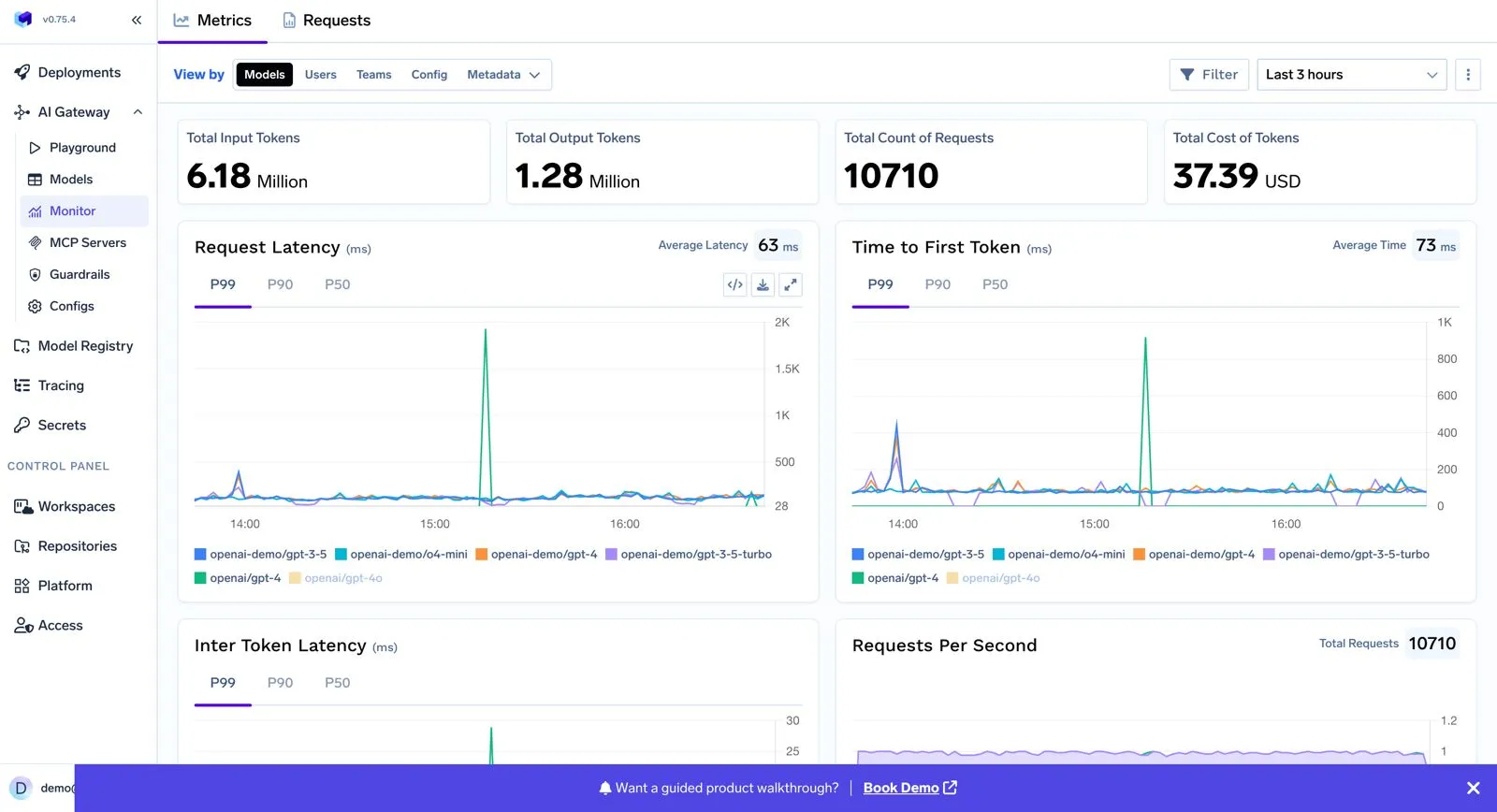
One big problem with AI is that it's hard to track who's using what and how much it's costing you. Gateways give you clear dashboards showing exactly how much each team is spending and what they're doing with AI. No more surprise bills at the end of the month.
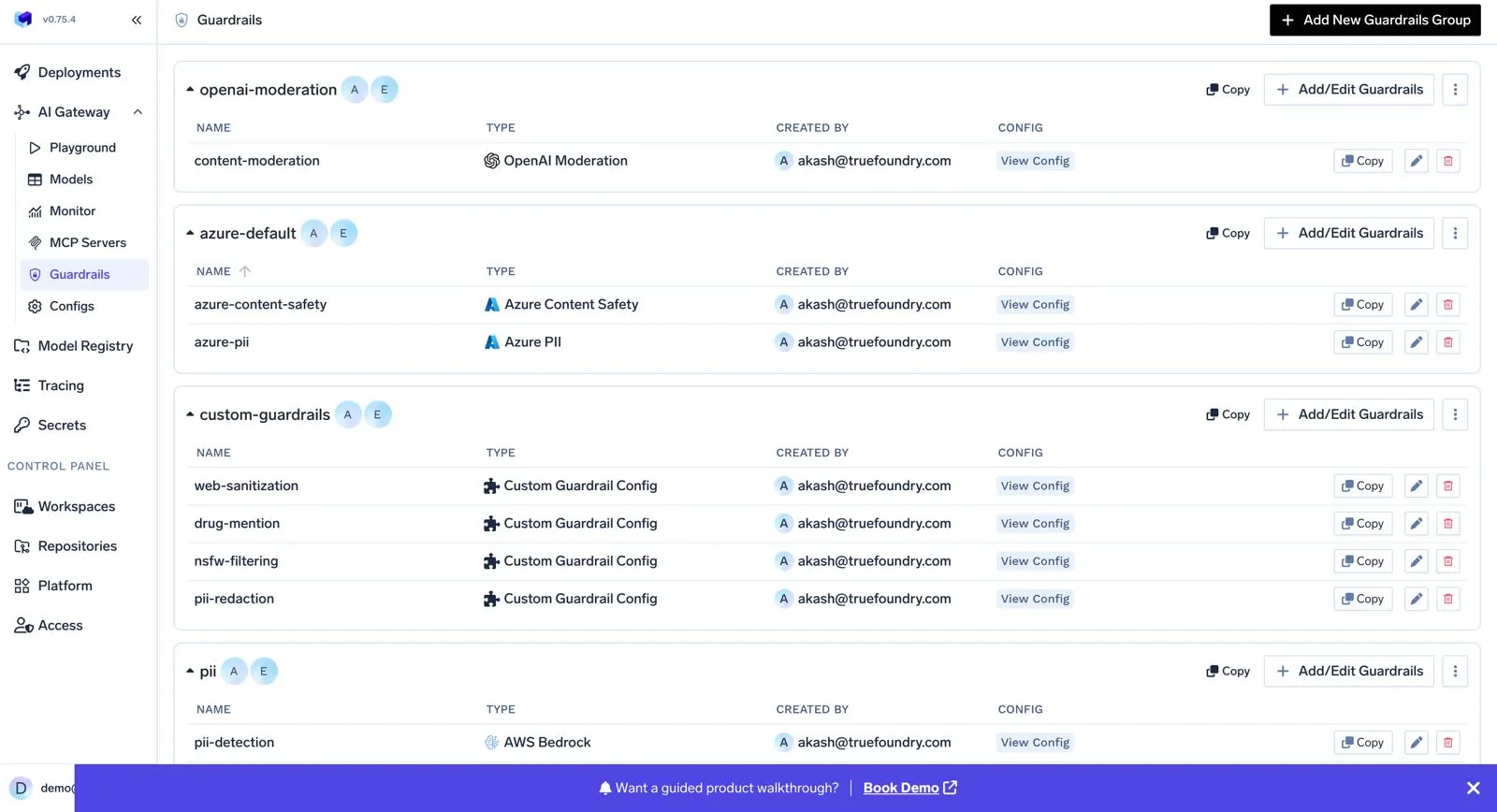
AI can sometimes say weird or inappropriate things, or accidentally leak private information. A gateway acts like a filter, catching problematic responses before they reach your customers. It's like having a supervisor double-check everything before it goes out the door.
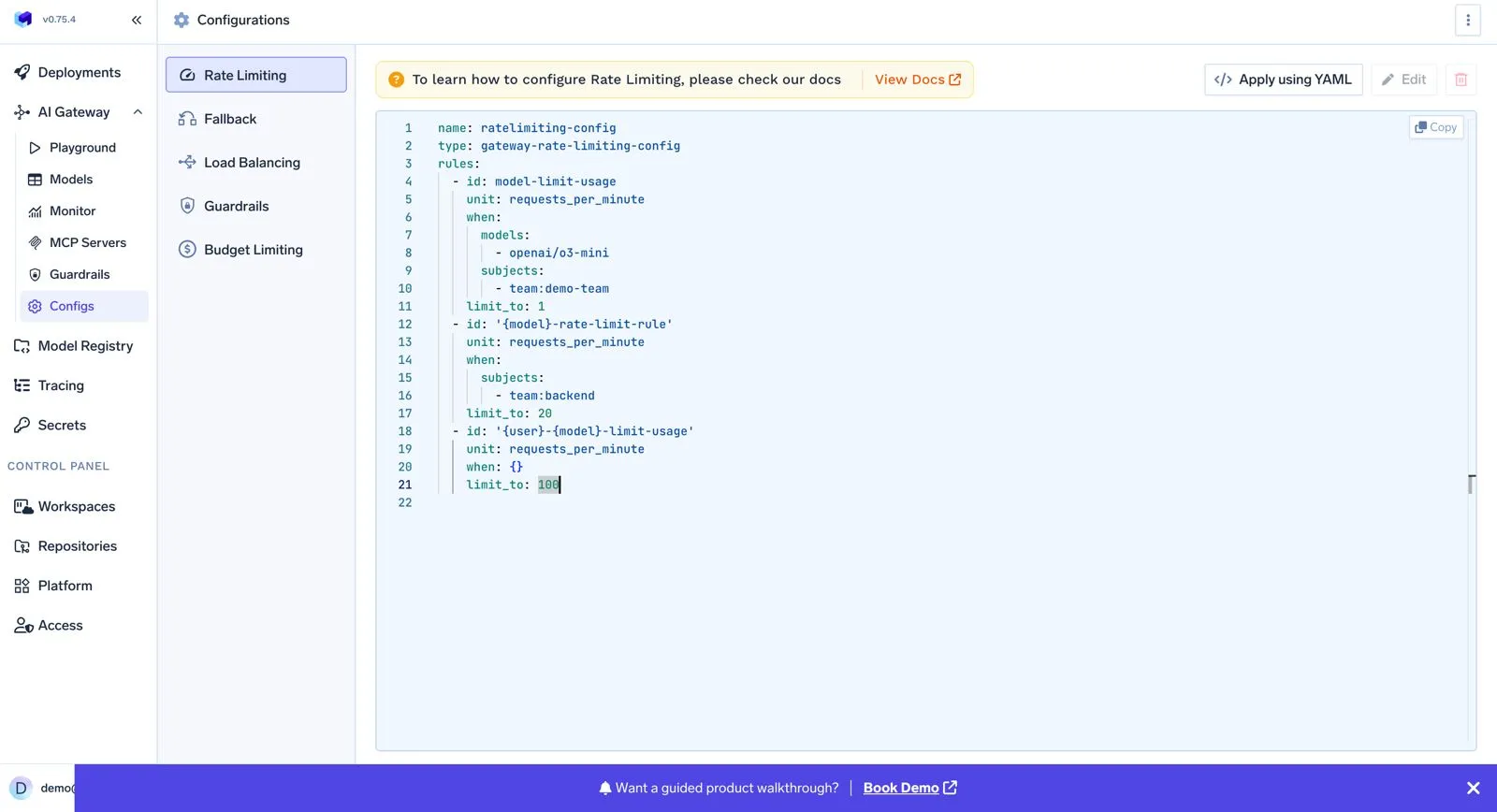
AI can get expensive fast if you're not careful. Gateways let you set spending limits for different teams or projects, so no one accidentally burns through your entire budget in a weekend. They also help reduce costs by avoiding duplicate requests and caching common responses.
If you're in healthcare, finance, or any regulated industry, you have strict rules about data privacy and security. Gateways help you follow these rules by managing access keys securely and keeping detailed logs of everything that happens. This makes audits much easier.
Instead of spending time figuring out API keys and rate limits, your developers can focus on building features that actually matter to your business. The gateway handles all the boring technical stuff behind the scenes.
When you connect directly to one AI company's service, switching to a competitor later means rewriting a lot of code. A gateway keeps you flexible - you can easily try new models or switch providers without major headaches.
The biggest advantage might be helping you move from small experiments to actual business use. A gateway gives you the safety and control you need to let your whole company use AI, not just a few tech-savvy teams.
Let’s explore how TrueFoundry implements this powerful concept through its rich suite of features:
يمكنك الرجوع إلى هذا الـ الرابط إذا كنت ترغب في معرفة المزيد حول سبب حاجتنا لموازنة التحميل.
لا تزال بوابات الذكاء الاصطناعي التوليدي تتطور، والمستقبل يبدو واعدًا. مع سعي الشركات لتحقيق قدر أكبر من الثقة والتوسع والكفاءة، ستتولى البوابات أدوارًا أكثر تعقيدًا:
هذه التطورات ستجعل البوابات أكثر من مجرد طبقة تحكم؛ ستصبح مراكز ذكية تعمل بنشاط على تعزيز النتائج، وتحسين الإنفاق، وضمان الامتثال عبر النظام البيئي للذكاء الاصطناعي للمؤسسات.
أثبت الذكاء الاصطناعي التوليدي نفسه كأكثر من مجرد حداثة تكنولوجية؛ فقد أصبح العمود الفقري للتحول الرقمي عبر مختلف الصناعات. من أتمتة دعم العملاء إلى المساعدة في اتخاذ القرارات المعقدة، الفرص لا حصر لها. ولكن بينما تتبنى المؤسسات هذه القوة، فإنها تواجه مفارقة: كلما زادت القيمة التي يولدها الذكاء الاصطناعي، زادت مخاطر سوء الإدارة والتكاليف غير المنضبطة وإخفاقات الامتثال.
هنا تبرز بوابات الذكاء الاصطناعي التوليدي ليس فقط كأداة مساعدة، بل كـ ضرورة استراتيجية. إنها تعمل بمثابة الجهاز العصبي المركزي لتبني الذكاء الاصطناعي في المؤسسات—تنسق استخدام النماذج، وتفرض الحوكمة، وتدير الأمن، وتوفر رؤية واضحة لكيفية استخدام الذكاء الاصطناعي على نطاق واسع. بدون طبقة البنية التحتية هذه، تخاطر المؤسسات بالتجزئة وعدم الكفاءة والتعرض لضرر كبير على السمعة أو ضرر مالي.
فكر في الأمر بهذه الطريقة: أصبحت بوابات API لا غنى عنها عندما سيطرت الخدمات المصغرة على بنية المؤسسات. وأصبحت منصات إدارة السحابة إلزامية عندما تحولت الشركات من الأنظمة المحلية إلى السحابة الهجينة. وبالمثل، بينما تنتقل المؤسسات إلى عصر يعتمد على الذكاء الاصطناعي أولاً، ستكون بوابات الذكاء الاصطناعي هي الركيزة الأساسية للتبني الآمن والقابل للتطوير والفعال من حيث التكلفة.
بمرور الوقت، سنرى هذه البوابات تتطور إلى ما هو أبعد بكثير من توجيه حركة المرور والمراقبة. ستدمج التنسيق الذكي—الذي يجمع ديناميكيًا نماذج متعددة لإنتاج نتائج قابلة للتحقق، ومحددة النطاق، ومقاومة للتحيز. ستصبح أنظمة تعليمية بحد ذاتها، تعمل على تحسين استراتيجيات التخزين المؤقت، وتحسين الإنفاق، وحتى ضبط سياسات الحوكمة ذاتيًا. ومع صعود الذكاء الاصطناعي الحافي (Edge AI)، ستمتد البوابات إلى بيئات جديدة حيث تكتسب السرعة والخصوصية والاستقلالية أهمية لا تقل عن الدقة.
المؤسسات التي تستثمر مبكرًا في استراتيجيات بوابات الذكاء الاصطناعي التوليدي القوية لن تكتسب الكفاءة فحسب، بل ستضع نفسها كقادة في الثقة والامتثال والابتكار. أما أولئك الذين يهملونها فقد يجدون أنفسهم غارقين في التكاليف المتصاعدة، ومشاريع الذكاء الاصطناعي الخفية، والتدقيق التنظيمي.
TrueFoundry AI Gateway delivers ~3–4 ms latency, handles 350+ RPS on 1 vCPU, scales horizontally with ease, and is production-ready, while LiteLLM suffers from high latency, struggles beyond moderate RPS, lacks built-in scaling, and is best for light or prototype workloads.





أحدث الأخبار والمقالات والموارد تصلك مباشرة إلى بريدك الوارد
.png)
.png)
.png)
.png)
.png)
.png)
.png)
.png)
.png)
.png)
.png)


