Blank white background with no objects or features visible.

Ask TFY: Debug, Analyze, and Act on Everything Happening Inside Your AI Gateway Learn More

Best Agentic AI Frameworks for 2026: Compared for Enterprise AI Teams

By Ashish Dubey

Published: July 29, 2026

TrueFoundry governs agentic AI frameworks in production
⚡ TL;DR

The best agentic AI frameworks in 2026 are LangGraph, CrewAI, AutoGen, Google ADK, OpenAI Agents SDK, LlamaIndex, and Semantic Kernel, each suited to a different orchestration pattern. These AI agent frameworks help teams build agent workflows, while TrueFoundry helps enterprises govern those agents once they reach production.

Which framework to pick:
  • Best for stateful production workflows: LangGraph; graph-based execution, checkpointing, recovery, and durable state make it strong for complex multi-step agents.
  • Best for fast role-based agents:CrewAI; specialist agent roles make it easier to prototype research, support, and business automation workflows.
  • Best for reasoning-heavy collaboration: AutoGen and AG2; conversational agents can debate, critique, validate, and refine outputs through multi-turn exchanges.
  • Best for ecosystem-specific teams: Google ADK fits Google Cloud environments, while OpenAI Agents SDK fits OpenAI-first agent workflows.
  • Best governance layer above frameworks: TrueFoundry; it governs model access, MCP tools, agent actions, budgets, routing, and audit trails across frameworks.

Agentic AI frameworks have moved from experimentation to production planning. They now help teams build agents that reason, use tools, manage state, and coordinate multi-step workflows.

However, choosing the right framework is not only a developer decision. It affects debugging, reliability, infrastructure design, model costs, governance, and future portability.

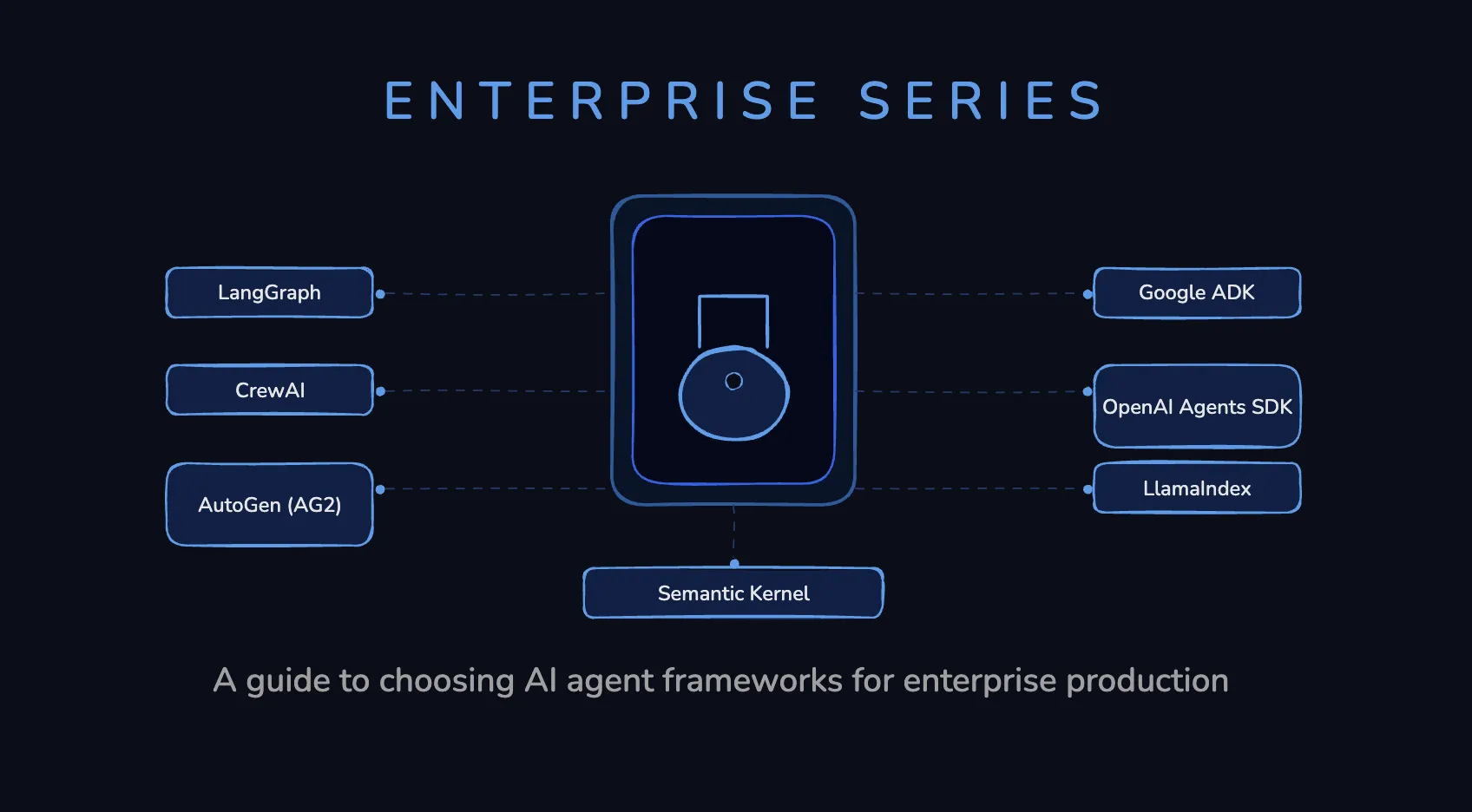
This guide compares the top agentic AI frameworks in 2026, including LangGraph, CrewAI, AutoGen, Google ADK, OpenAI Agents SDK, LlamaIndex, and Semantic Kernel. It also explains where AI agent frameworks stop and where TrueFoundry helps enterprises govern production agents from the gateway layer.

Your Agents Are Running Now You Need to Govern What They Do.

TrueFoundry connects, observes, and governs agentic AI workloads across any framework from a single control plane

What Are Agentic AI Frameworks?

Agentic AI frameworks help developers build autonomous or semi-autonomous agents that plan tasks, call tools, maintain context, and complete multi-step workflows.

An agentic AI framework defines how an agent behaves. It decides how tasks are broken down, how tools are invoked, how memory is maintained, and how agents recover from failures.

This is different from a simple LLM API call. A standard LLM request returns one response. An agentic system can plan, act, observe results, update state, and continue the workflow.

In practical terms, AI agent frameworks usually help with:

  • Planning: Breaking user goals into smaller execution steps.
  • Tool use: Calling APIs, databases, SaaS tools, and internal systems.
  • Memory: Maintaining short-term or long-term context across steps.
  • Orchestration: Deciding which agent or tool should act next.
  • Recovery: Retrying failed steps or resuming interrupted workflows.

How Should You Evaluate AI Agent Frameworks?

Enterprise teams should compare AI agent frameworks by production fit, not only developer convenience. The right choice depends on workflow complexity and governance needs.

Evaluation Area What to Check
Orchestration model Graph-based, role-based, conversational, hierarchical, handoff-led, or retrieval-led execution
State management Checkpointing, persistence, recovery, long-running task support, and session continuity
Tool integration Function calling, API access, MCP support, and external system connectivity
Observability Traces, debugging support, execution visibility, and failure inspection
Production burden Infrastructure setup, scaling complexity, version stability, and maintenance effort
Governance readiness Access control, audit logs, cost enforcement, tool permissions, and policy coverage

Top Agentic AI Frameworks in 2026

These agentic AI frameworks cover different orchestration patterns. The right choice depends on control needs, team maturity, cloud preference, and production requirements.

1. LangGraph

LangGraph offers strong state management, checkpointing, and graph control

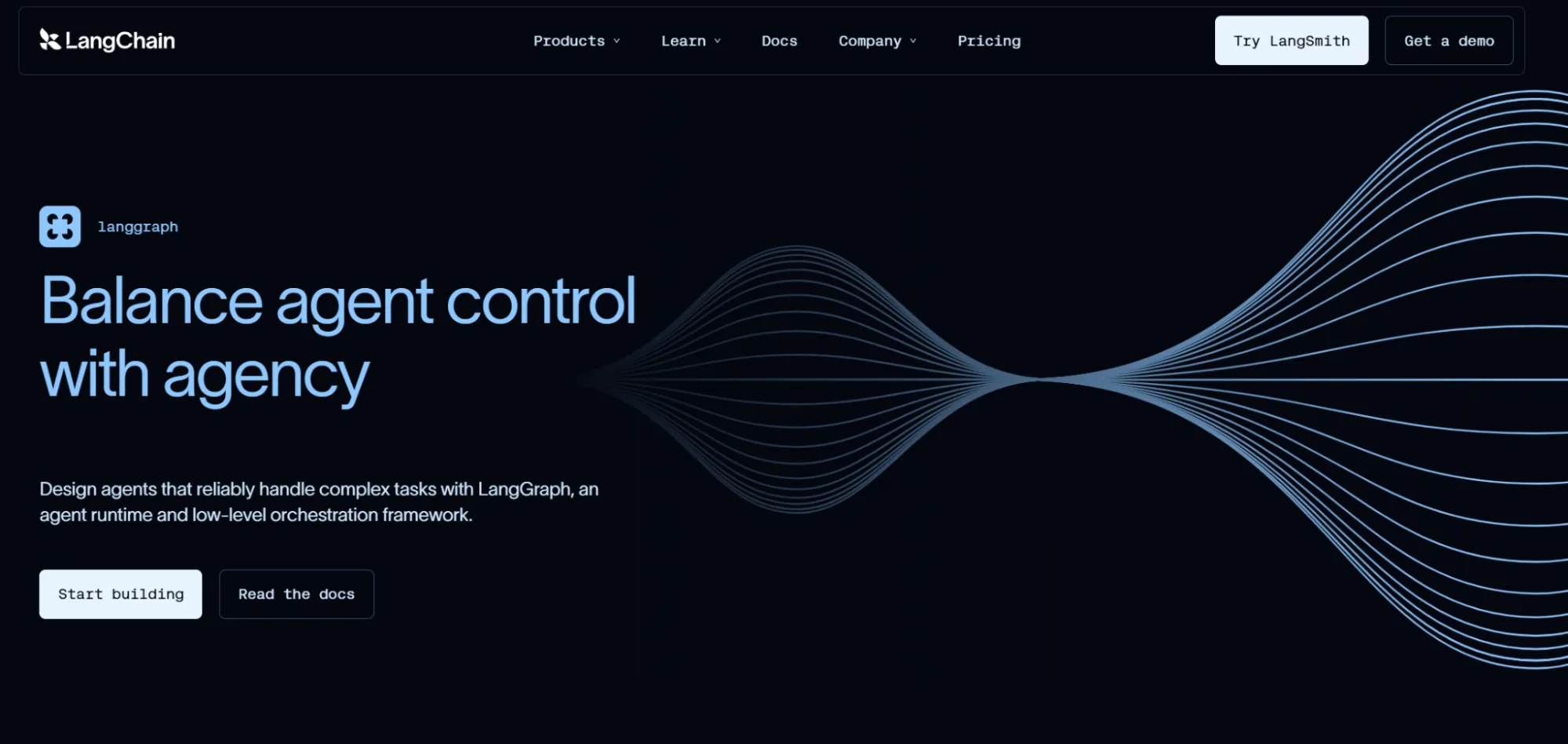
LangGraph is built for stateful, graph-based agent workflows that need predictable execution paths. It represents workflows as nodes and transitions, giving teams stronger control over multi-step agent behaviour. It suits production use cases where checkpointing, retries, and recovery matter.

  • Best for: Complex production workflows that need durable execution, structured recovery, state persistence, and reliable multi-step agent control.
  • Key strength: LangGraph offers strong state management, checkpointing, graph control, and debugging support. This makes it useful for long-running agents.
  • Limitation: Teams need to understand state machines, graph design, and transition logic before implementation. This can increase the initial learning curve.

2. CrewAI

CrewAI offers a simple role-based abstraction and strong developer experience

CrewAI uses a role-based model where agents act like specialist team members with defined goals. This makes it easier to map agents to business workflows, research tasks, and support processes. It is often faster to prototype than graph-heavy frameworks.

  • Best for: Business automation, support workflows, research processes, and fast multi-agent prototyping with clearly defined agent roles.
  • Key strength: CrewAI offers a simple role-based abstraction and strong developer experience. Teams can build collaborative agent workflows with less setup.
  • Limitation: Complex branching workflows may need extra design effort beyond CrewAI’s default abstraction. Deterministic control can become harder at scale.

3. Microsoft AutoGen and AG2

AutoGen helps teams build deeper reasoning workflow

AutoGen uses conversation-led coordination where agents collaborate through structured multi-turn exchanges. It works well when agents need to debate, critique, refine, or validate outputs. AG2 continues this pattern for teams building reasoning-heavy multi-agent workflows.

  • Best for: Reasoning-heavy workflows, research agents, enterprise copilots, and human-in-the-loop collaboration where output quality matters more than speed.
  • Key strength: AutoGen supports conversable agents, multi-agent collaboration, tool use, and human feedback. This helps teams build deeper reasoning workflows.
  • Limitation: Conversation-led orchestration can increase token usage and latency during production execution. Monitoring these workflows also needs more effort.

4. Google Agent Development Kit

Google ADK provides strong orchestration control, tool support, and debugging capabilities

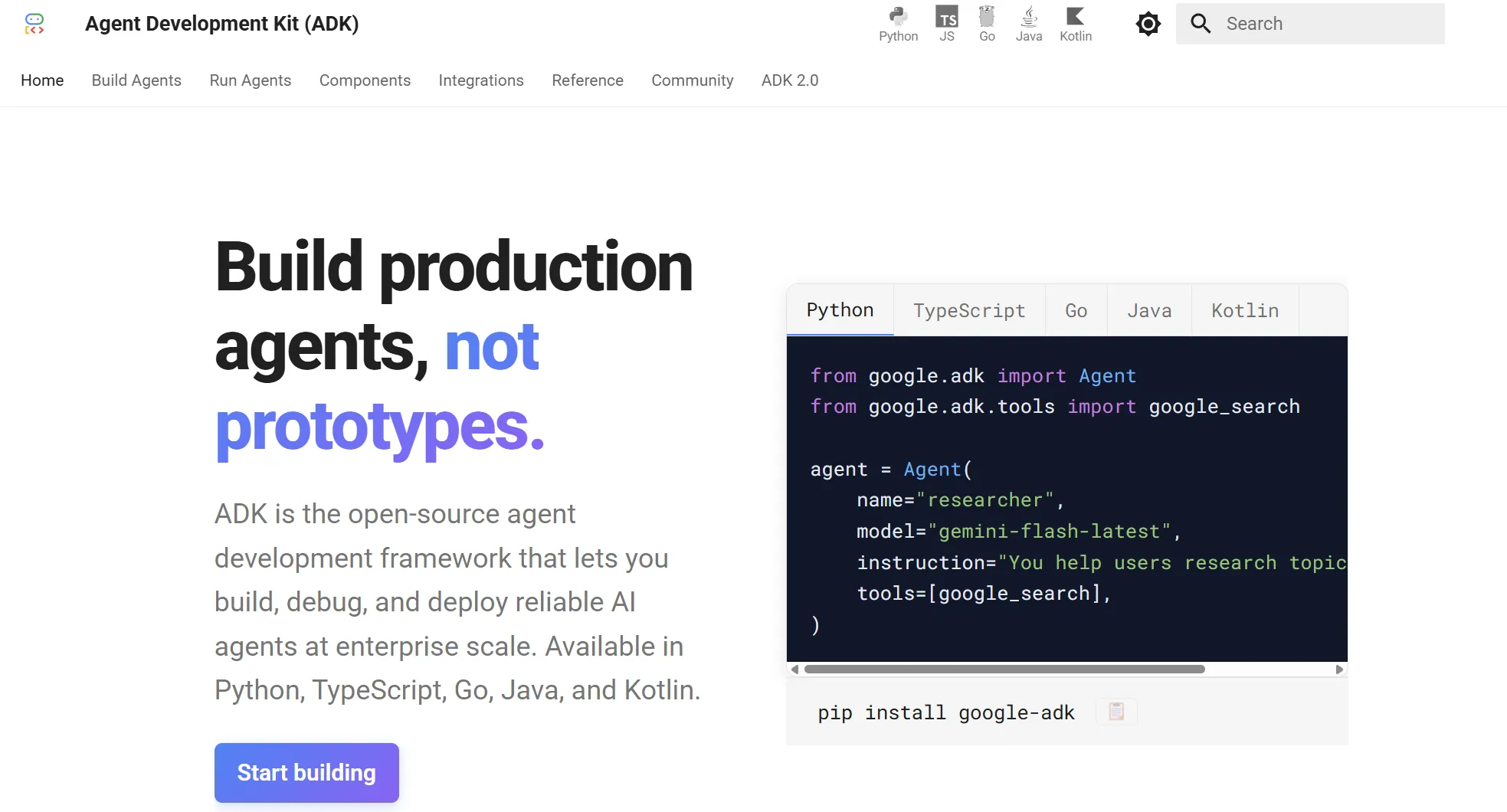
Google Agent Development Kit helps teams build multi-agent systems with hierarchy, tools, orchestration controls, and evaluation support. It allows root agents to delegate tasks to sub-agents. This makes it a natural fit for Google Cloud environments.

  • Best for: Google Cloud teams building hierarchical multi-agent systems that need structured delegation, tool support, and cloud-native development workflows.
  • Key strength: Google ADK provides strong orchestration control, tool support, debugging capabilities, and evaluation features. It supports structured multi-agent development.
  • Limitation: Teams outside the Google ecosystem should evaluate portability before long-term adoption. Cloud alignment may influence architecture decisions later.
Top agentic AI frameworks compared by enterprise use case

5. OpenAI Agents SDK

OpenAI Agents SDK provides a clean way to build agents with tools

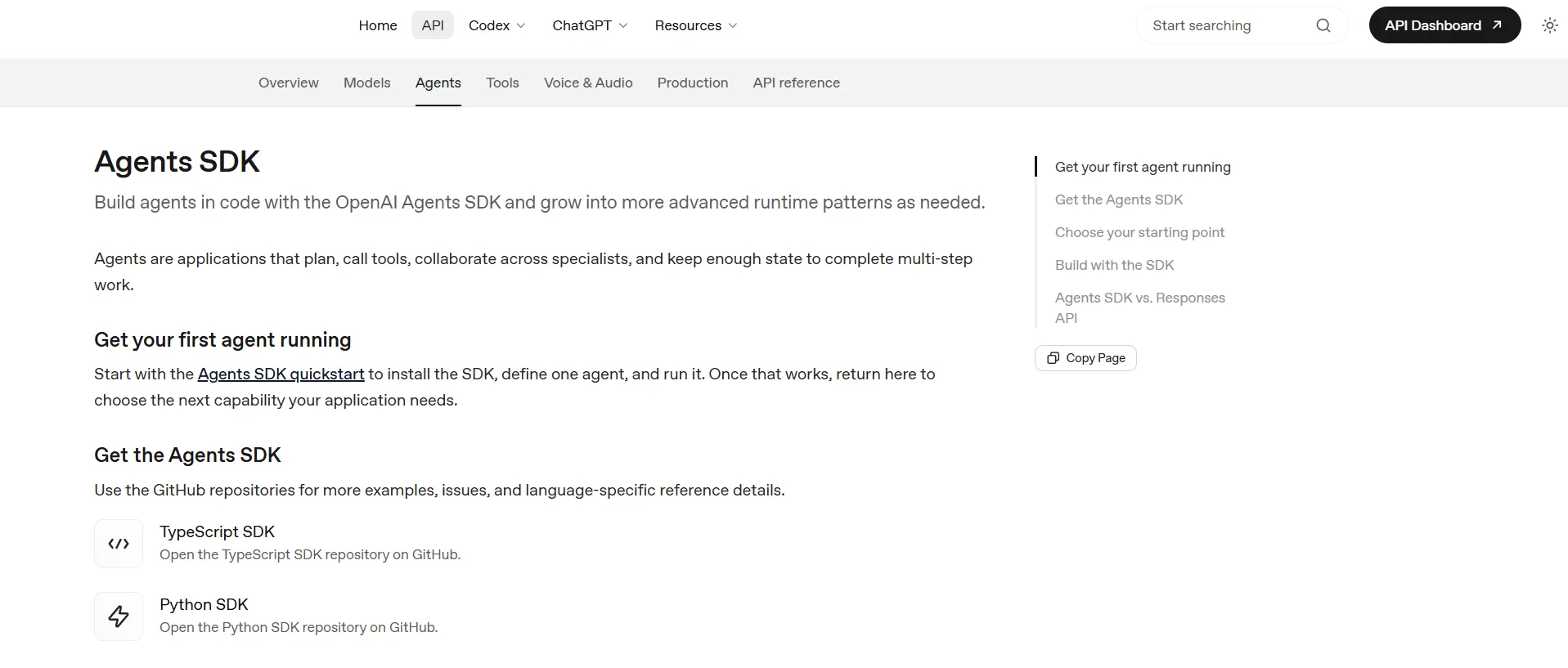
OpenAI Agents SDK provides a clean way to build agents with tools, handoffs, guardrails, sessions, and tracing. It is useful for teams already using OpenAI models. The SDK keeps agent flows understandable through clear handoff patterns.

  • Best for: OpenAI-first teams building agents with handoffs, tools, guardrails, tracing, and faster prototype-to-production movement.
  • Key strength: The SDK offers a simple development flow with managed turns, sessions, handoffs, and tracing. This improves developer productivity.
  • Limitation: Teams should evaluate portability and long-term provider flexibility before scaling. OpenAI-first design may limit future model optionality.

6. LlamaIndex

LlamaIndex offers strong retrieval pipelines, data connectors, and knowledge workflows

LlamaIndex works well for retrieval-heavy agents that interact with enterprise data, documents, and knowledge systems. It is useful for agentic RAG, research assistants, and data-aware workflows. Its strength lies in connecting agents with structured and unstructured knowledge.

  • Best for: Enterprise knowledge retrieval, agentic RAG, document workflows, and data-focused assistants that depend on accurate contextual grounding.
  • Key strength: LlamaIndex offers strong retrieval pipelines, data connectors, knowledge workflows, and RAG-oriented agent capabilities. It is effective for data-heavy systems.
  • Limitation: It is less suited as a standalone orchestration layer for complex multi-agent processes. Teams may need another framework alongside it.

7. Semantic Kernel

Semantic Kernel works well for teams building inside Microsoft-oriented environments

Semantic Kernel connects models with enterprise systems through plugins, planners, and function calling. It works well for teams building inside Microsoft-oriented environments. Developers can use it to connect AI capabilities with existing applications and business logic.

  • Best for: Teams building AI systems inside Microsoft, Azure, .NET, or Python environments with enterprise integration requirements.
  • Key strength: Semantic Kernel supports enterprise integration, plugin-based design, multi-language development, and Microsoft ecosystem alignment. It fits existing engineering workflows.
  • Limitation: Plugin abstraction can add debugging complexity when workflows become large or distributed. Teams may need clearer tracing across components.

Agentic AI Frameworks Compared by Use Case

Here is a quick comparison of leading agentic AI frameworks as per their use cases:

Framework Orchestration Style Best Fit Main Limitation
LangGraph Graph-based Complex stateful workflows Higher design complexity
CrewAI Role-based Business process automation Less deterministic branching
AutoGen and AG2 Conversational Reasoning-heavy collaboration Higher token usage
Google ADK Hierarchical Google Cloud agent systems Ecosystem dependency
OpenAI Agents SDK Handoff-led OpenAI-first agent workflows Provider portability concerns
LlamaIndex Retrieval-led RAG and knowledge agents Limited standalone orchestration
Semantic Kernel Plugin-led Microsoft enterprise systems Debugging can become complex
Sign up

Use Any AI Agent Framework,TrueFoundry Adds the Governance Layer They All Need

Sign up for TrueFoundry and govern every agent, model call, and tool execution from a single framework-agnostic control plane

What Agentic AI Frameworks Do Not Solve

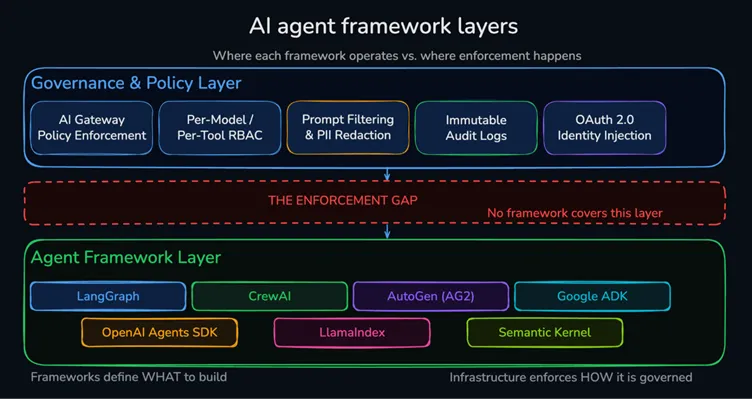
Agentic AI frameworks handle execution logic. They do not fully solve access control, cost enforcement, compliance evidence, or governance across agents.

  • Access governance: Frameworks do not define organization-level permissions for which teams, users, or agents can access specific models and tools.
  • Cost enforcement: Multi-agent workflows can trigger multiple model calls, which makes pre-execution budget controls critical for production teams.
  • Compliance-ready audit trails: Framework logs capture execution details, while compliance teams need structured records tied to identity, tools, time, and decisions.
  • MCP tool governance: Agents can call tools via MCP, but tool-level permissions must be enforced outside the framework layer.
  • Provider flexibility: Some frameworks work best with specific model ecosystems, which can make provider changes harder later.
  • Version stability: Framework upgrades can introduce breaking changes, especially when several teams use different framework versions.
AI agent framework layer beneath enterprise governance control plane

Why Enterprises Need a Gateway Layer Above Agent Frameworks

A gateway layer gives enterprises one place to control how agents access models, tools, systems, and data across different frameworks. It separates agent execution from enterprise governance, so teams can build with LangGraph, CrewAI, OpenAI Agents SDK, or any other framework without creating separate control rules.

This matters when agents move from prototypes to production. Without a shared gateway, every team may handle routing, permissions, logging, retries, and cost limits differently. That creates fragmented governance, weaker visibility, and higher operational risk across the agentic AI stack.

TrueFoundry solves this by giving enterprises a unified AI gateway platform for model access, MCP tool governance, agent observability, budget controls, and audit trails. Teams keep their preferred frameworks, while platform and security teams maintain consistent governance across production agents.

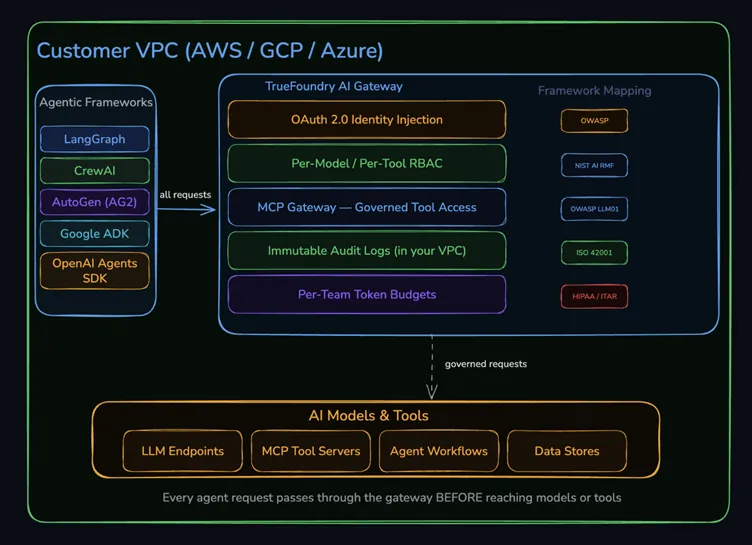
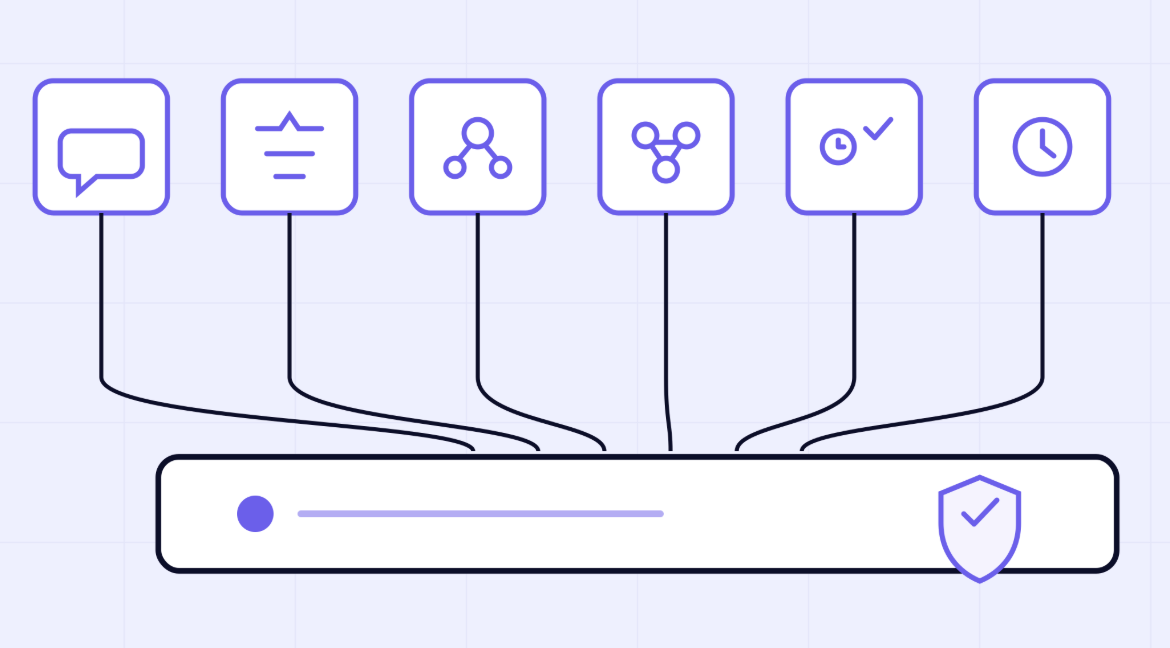
TrueFoundry gateway governing multiple agentic AI frameworks uniformly

How TrueFoundry Governs Agentic AI Frameworks

TrueFoundry helps enterprises govern agentic AI frameworks without forcing teams into one development stack. Developers can keep using their preferred frameworks, while platform teams control access, routing, observability, and costs. This creates a consistent governance layer across production agents.

TrueFoundry supports this through five connected capabilities:

  • AI gateway platform: TrueFoundry’s AI gateway platform centralizes model access, routing, monitoring, guardrails, failovers, and cost controls. It gives enterprises one governed entry point for agentic workloads across teams.
  • LLM Gateway: The LLM Gateway helps teams route model requests across providers through one controlled layer. It also supports access policies, usage tracking, fallback paths, and provider flexibility.
  • MCP Gateway: The MCP Gateway governs how agents connect with MCP servers, internal tools, external APIs, and enterprise systems. It brings authentication, permissions, observability, and policy control to tool access.
  • Agent Gateway: The Agent Gateway helps enterprises observe and control agents built across different frameworks. It supports agent-level tracing, access governance, cost visibility, retries, and workflow-level monitoring.
  • Enterprise deployment: TrueFoundry supports SaaS, VPC, on-premise, and air-gapped enterprise deployments for regulated environments. This helps teams keep sensitive traffic and governance data within approved infrastructure.

This makes TrueFoundry useful when different teams build agents with different frameworks. The framework can define how an agent acts, while TrueFoundry governs what it can access, how it performs, what it costs, and how every action is audited.

Final Takeaway

Agentic AI frameworks help teams design how agents reason, call tools, maintain context, and recover from failures. LangGraph, CrewAI, AutoGen, Google ADK, OpenAI Agents SDK, LlamaIndex, and Semantic Kernel each solve a different orchestration need.

However, production agentic AI needs more than orchestration. Enterprises also need model access control, MCP governance, agent observability, cost enforcement, routing, failovers, and audit-ready records across every framework in use.

That is where TrueFoundry fits. It lets teams keep their preferred AI agent frameworks while governing models, tools, and agents through one enterprise-grade AI Gateway.

Govern every production agent with TrueFoundry’s AI Gateway. Book a demo today and get started.

The fastest way to build, govern and scale your AI

Sign Up
Table of Contents

One Gateway for Every LLM, Agent and MCP Server

Book a 30-min with our AI expert

Book a Demo

The fastest way to build, govern and scale your AI

Book Demo
Summarize with
ChatGPT logo by OpenAI
Perplexity AI logo
Blurry red snowflake on white background, symmetrical frosty design with soft edges and abstract shape.

Discover More

No items found.
TrueFoundry governs agentic AI frameworks in production
July 29, 2026
|
5 min read

Best Agentic AI Frameworks for 2026: Compared for Enterprise AI Teams

No items found.
TrueFoundry LLM gateway implements automatic LLM fallback in production
July 29, 2026
|
5 min read

What Is LLM Fallback? Definition, Mechanism, and How to Implement It

No items found.
TrueFoundry applies ABAC to enterprise AI agent governance
July 29, 2026
|
5 min read

What Is ABAC? A Complete Guide to Attribute-Based Access Control

No items found.
TrueFoundry platform governs LLM orchestration for enterprise teams
July 29, 2026
|
5 min read

Best LLM Orchestration Tools in 2026: A Practical Guide for Engineering and Platform Teams

No items found.
No items found.

Recent Blogs

Black left pointing arrow symbol on white background, directional indicator.

Frequently asked questions

What Agentic AI Frameworks Do Not Solve?

Agentic AI frameworks manage agent execution but do not fully address enterprise governance needs such as access control, budget enforcement, compliance-ready audit trails, MCP tool permissions, provider flexibility, or version stability. These capabilities typically require additional governance and security layers.

‍

Why Enterprises Need a Gateway Layer Above Agent Frameworks?

A gateway layer centralizes governance for AI agents by enforcing consistent access controls, model and tool permissions, cost limits, observability, and audit trails across frameworks. It lets teams use their preferred agent framework while ensuring enterprise-grade security, compliance, and operational consistency in production.

How TrueFoundry Governs Agentic AI Frameworks?

TrueFoundry provides a unified governance layer for agentic AI, allowing developers to use any framework while giving platform teams centralized control over model access, routing, MCP tools, observability, costs, and compliance. It also supports flexible enterprise deployments, including SaaS, VPC, on-premise, and air-gapped environments.

What are the best agentic AI frameworks in 2026?

LlamaIndex, Semantic Kernel, smolagents, and the Microsoft Agent Framework. Teams should compare core capabilities such as agent behavior, memory management, error handling, task delegation, easy tool integration, type safety, and support for complex workflows.

What are AI agent frameworks?

AI agent frameworks are modular components that help developers build intelligent systems using large language models, tools, data sources, and vector databases. They support natural language interfaces, prompt engineering, data retrieval, and agentic workflows. These frameworks help agents respond to user requests, collect relevant information, and complete specific tasks with minimal human intervention.

What is the difference between agentic AI frameworks and AI agent frameworks?

The terms are often used interchangeably in the world of AI. Agentic AI frameworks usually emphasize autonomous systems, reasoning, planning, and complex processes. AI agent frameworks describe broader developer tooling for generative AI agents, including orchestration, tool calling, state, data analysis, human intervention, and integration with human agents when escalation is needed.

Which agentic AI framework is best for production?

LangGraph is strong when teams need explicit control, durable state, and real-time recovery for complex workflows. Google ADK suits Google Cloud teams, while OpenAI Agents SDK fits OpenAI-first builds. CrewAI supports rapid prototyping for short-term experiments. Production choice depends on governance, reliability, documentation, scalability, terms of use, and new features.

Do AI agent frameworks support MCP?

Some AI agent frameworks support the Model Context Protocol directly, while others require custom connectors or middleware. MCP helps agents use external tools, APIs, and data sources through a common interface. Enterprises should evaluate authentication, tool permissions, logging, policy enforcement, access boundaries, and how each AI model handles tool calls during execution.

What do agentic AI frameworks not solve?

Agentic AI frameworks do not fully solve enterprise access control, cost enforcement, audit trails, cross-provider routing, or governance across production agents. They may help with agent logic, repetitive tasks, natural language processing, and machine learning workflows. Enterprises still need a gateway layer to govern sensitive actions, budgets, tools, and compliance evidence.

How does TrueFoundry work with agentic AI frameworks?

TrueFoundry sits above agentic AI frameworks as an enterprise AI Gateway. It governs model calls, MCP tool access, routing, failovers, observability, and cost controls across different frameworks. This lets developers keep their preferred core components while platform teams enforce policies for specific goals, agentic workflows, and production AI agents.

Take a quick product tour
Start Product Tour
Product Tour