احصل على وصول فوري إلى بيئة TrueFoundry مباشرة. انشر النماذج، ووجّه حركة مرور LLM، واستكشف المنصة بالكامل — بيئة الاختبار الخاصة بك جاهزة في ثوانٍ، ولا يلزم وجود بطاقة ائتمان.
٩.٩
شرح أحداث الوكيل: عقد وقت التشغيل الكامن وراء وكلاء الذكاء الاصطناعي الموثوقين
تخبرك الإجابة النهائية للوكيل بما رآه المستخدم. أما أحداثه فتخبر تطبيقك بما حدث، وما لا يزال يحدث، وما يتطلب تدخلاً بشرياً، وكيفية الاسترداد عند انقطاع الاتصال.
Source Note API Contracts
Source note. This article describes the public TrueForge API and UI event contracts available on September 3, 2026. It separates documented behavior from architectural guidance. Event names and lifecycle semantics are grounded in the linked TrueForge documentation; the production patterns and control boundaries are TrueFoundry editorial analysis.
Key Takeaways
Key takeaways
An event is a typed runtime record, not merely a log line or a token fragment.
TrueForge exposes lifecycle, model, tool, approval, authentication, sandbox, and subagent events through one stream.
Live deltas and persisted events serve different jobs: responsive rendering versus settled recovery and analysis.
A completed turn can still contain required actions. Turn completion and workflow completion are different states.
Events provide evidence for debugging and evaluation, but do not by themselves guarantee authorization, exactly-once side effects, compliance, or business outcomes.
1. لماذا تعتبر واجهة برمجة تطبيقات الإجابة النهائية غير كافية للوكلاء
يتمتع استدعاء النموذج التقليدي بشكل مطمئن: إرسال مدخلات، وتلقي مخرجات. وحتى عند تدفق الاستجابة، يقوم التطبيق عادةً بإعادة بناء إجابة واحدة. لكن تنفيذ الوكيل يختلف؛ إذ يمكن للتشغيل الواحد إجراء عدة استدعاءات للنموذج، وطلب أدوات، وانتظار الموافقة، والمصادقة على خادم MCP، وإنشاء بيئة معزولة (sandbox)، والتفويض لوكلاء فرعيين، والاستئناف في طلب لاحق.
إذا كان وقت التشغيل يكشف فقط عن آخر استجابة نصية، فإن التطبيق يفقد الهيكل الذي يحتاجه لتشغيل سير العمل هذا. ولا يمكنه الإجابة بشكل موثوق على أسئلة أساسية مثل:
هل الوكيل في حالة تفكير، أم يستدعي أداة، أم ينتظر تدخلاً بشرياً، أم أنه انتهى؟
أي رسالة من النموذج اقترحت استدعاء هذه الأداة؟
أي الأحداث تنتمي إلى وكيل فرعي بدلاً من الوكيل الرئيسي؟
أي الأجزاء تم عرضها بالفعل؟
بعد انقطاع الاتصال، هل يجب على العميل إعادة الاتصال بالتشغيل المباشر أم إعادة البناء من الحالة المحفوظة؟
لهذا السبب تعتبر الأحداث مهمة؛ فهي الواجهة بين التنفيذ الخفي وكل ما يجب أن يستجيب له: واجهة المستخدم، وخدمة الموافقة، ووحدة تحكم العمليات، ومصحح الأخطاء، والمقيّم.
Useful Unit Callout
The useful unit is not “the agent returned a string.” It is “the runtime emitted a typed sequence of state changes that the application can interpret.”
2. ماذا يعني "الحدث" في TrueForge
تنظم TrueForge التنفيذ كـ وكيل ← جلسة ← دورة ← حدث ← تغير (Delta). يجيب كل مستوى على سؤال مختلف:
Agent Levels Table
Level
Question it answers
Typical lifetime
Agent
Which reusable instructions, tools, model configuration, and runtime behavior define the worker?
Many user interactions
Session
Which ongoing issue or context does this work belong to?
Several turns
Turn
What happened in one request/response cycle?
One execution cycle
Event
What meaningful runtime occurrence happened?
One structured record in the stream or history
Delta
What incremental content arrived for an event that is still being assembled?
Live stream only
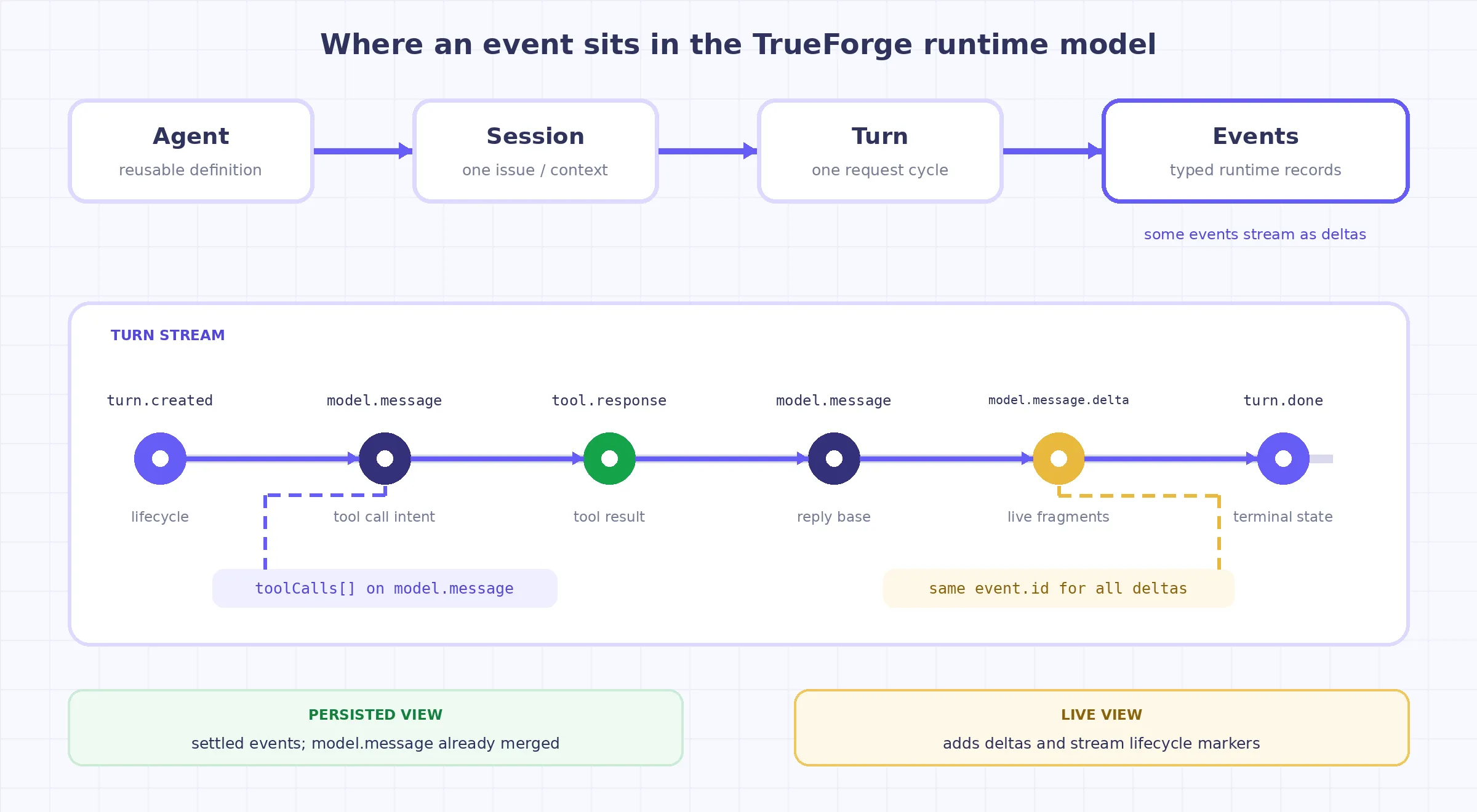
الوكيل هو تعريف وليس عملية مستمرة التشغيل. تحافظ الجلسة على السياق عبر الدورات. تمثل الدورة دورة طلب واحدة، ولا تعمل سوى دورة واحدة في كل مرة داخل الجلسة. الأحداث هي سجلات مكتوبة يتم إنتاجها داخل تلك الدورة. يمكن تجميع بعض الأحداث—بشكل أكثر وضوحاً في رسائل النموذج—بشكل تدريجي من خلال التغيرات (deltas).
الشكل 1. يقع الحدث داخل دورة، والتي تقع بدورها داخل جلسة دائمة. يتضمن العرض المباشر التغيرات (deltas) وعلامات دورة حياة التدفق؛ بينما يعيد العرض المحفوظ الأحداث المستقرة مع دمج تغيرات الرسائل مسبقاً.
تمنع هذه الهيكلية الوقوع في خطأين شائعين في التصميم. أولاً، لا ينبغي التعامل مع سجل الجلسة كنص متصل غير محدود، فالمداخلات توفر حدوداً طبيعية للتنفيذ. ثانياً، لا ينبغي تخزين أو تقييم التغيرات المتدفقة (streamed delta) وكأنها الحدث الدلالي النهائي.
3. تصنيف الأحداث هو بمثابة آلة الحالة لوقت التشغيل
يغطي اتحاد الأحداث الموثق في TrueForge عدة فئات. العبرة ليست في عدد أنواع الأحداث، بل في أن كل فئة تستلزم سلوكاً مختلفاً للتطبيق.
TrueFoundry AI Gateway delivers ~3–4 ms latency, handles 350+ RPS on 1 vCPU, scales horizontally with ease, and is production-ready, while LiteLLM suffers from high latency, struggles beyond moderate RPS, lacks built-in scaling, and is best for light or prototype workloads.










.webp)

.png)
.png)
.png)
.png)
.png)
.png)
.png)
.png)
.png)
.png)
.png)


