



October 1, 2026
|
5 min read


احصل على وصول فوري إلى بيئة TrueFoundry مباشرة. انشر النماذج، ووجّه حركة مرور LLM، واستكشف المنصة بالكامل — بيئة الاختبار الخاصة بك جاهزة في ثوانٍ، ولا يلزم وجود بطاقة ائتمان.



Published: September 22, 2026

Blazingly fast way to build, track and deploy your models!
The modern software ecosystem increasingly relies on microservices and distributed architectures, where efficient communication, security, and observability are critical.
In this environment, service proxies act as the backbone of reliable infrastructure. Envoy Proxy has emerged as a popular choice, offering advanced features like load balancing, service discovery, traffic routing, and telemetry. Its robust architecture makes it a favorite for enterprises adopting cloud-native designs, Kubernetes, or service mesh frameworks.
However, as organizations scale, the limitations of a single proxy solution become evident. Teams may require more flexibility, deeper observability, better integration with multi-cloud environments, or simpler operational management.
Exploring alternatives to Envoy can reveal platforms that offer enhanced performance, enterprise-ready governance, or specialized support for modern microservices patterns.
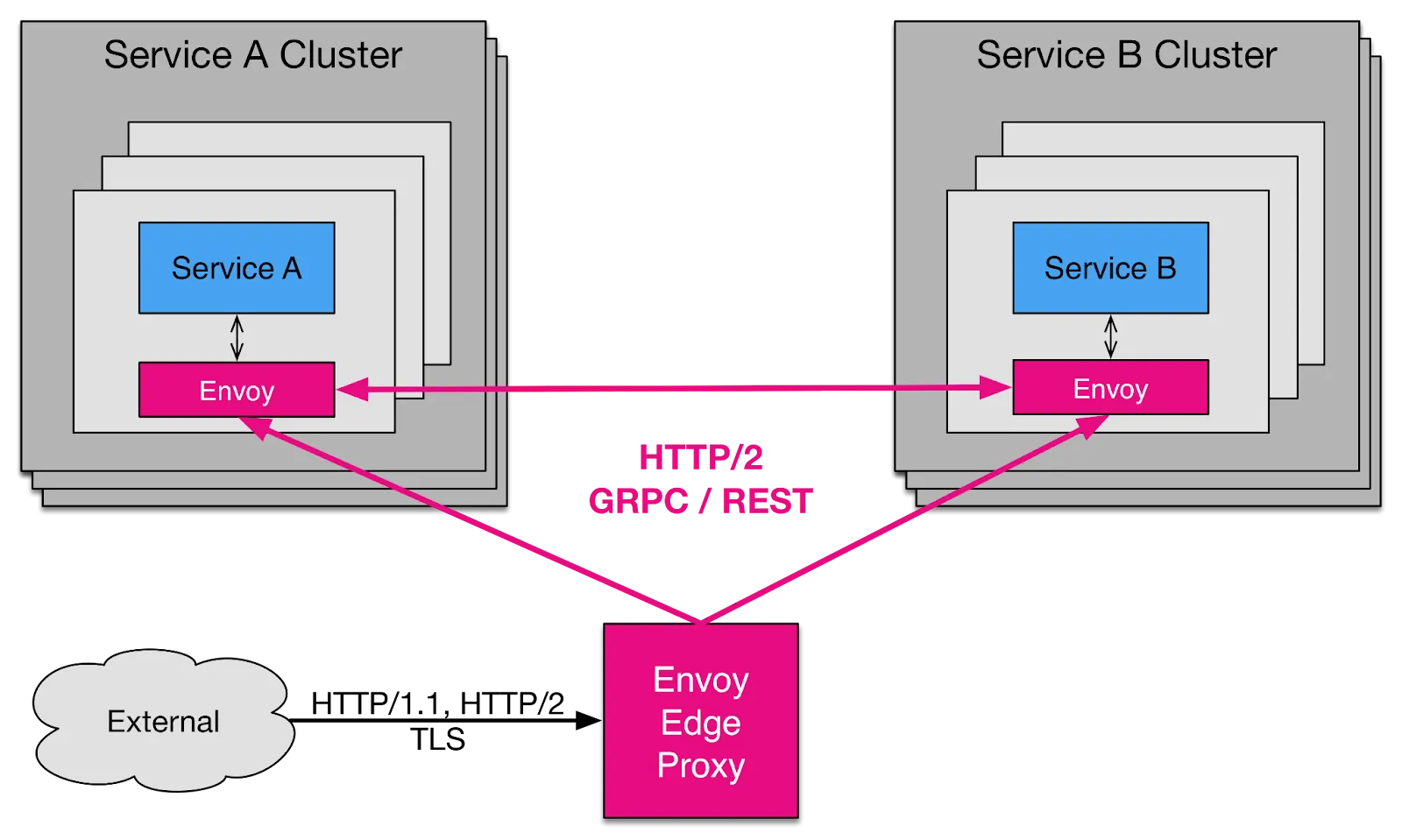
Envoy Proxy is a high-performance, open-source edge and service proxy designed for cloud-native applications and microservice architectures. Developed by Lyft, Envoy has become a cornerstone in modern infrastructure due to its flexibility, scalability, and rich set of features.
It operates as a communication bus and universal data plane for services, handling all inbound and outbound traffic, while providing observability, resilience, and security across distributed systems.
At its core, Envoy Proxy simplifies service-to-service communication. It decouples service clients from the complexities of networking, enabling developers to focus on application logic rather than building custom routing, load balancing, or monitoring systems. Envoy supports advanced features such as dynamic service discovery, health checking, HTTP/2 and gRPC support, circuit breaking, and rate limiting. These capabilities make it ideal for organizations adopting service mesh architectures, such as Istio or Consul, where Envoy often serves as the default sidecar proxy.
Key Features of Envoy Proxy
Envoy’s architecture makes it a versatile tool for building secure, reliable, and observable distributed systems. Its plug-in ecosystem, dynamic configuration, and performance optimizations have made it a standard component for enterprises deploying microservices at scale. By centralizing traffic management while providing fine-grained control, Envoy helps teams reduce operational complexity and improve system resilience.
Envoy Proxy functions as a high-performance communication layer for modern microservices, sitting between services to handle all inbound and outbound traffic. It can operate as a sidecar proxy alongside each service, at the edge of a network, or as a standalone service gateway. By intercepting traffic, Envoy provides features such as load balancing, service discovery, retries, rate limiting, and observability without requiring changes to the application code.
Client Request Interception
When a client sends a request, Envoy receives it first. The proxy evaluates the request against configured rules for routing, retries, and rate limiting.
Dynamic Routing
Envoy uses service discovery to determine the available instances of the target service. Based on routing rules, it selects an endpoint using strategies like least request, round-robin, or weighted routing.
Traffic Resilience
Before forwarding, Envoy applies circuit breakers, timeouts, and retry policies to ensure that downstream failures do not cascade. If a request fails, it can automatically retry according to predefined rules.
Observability and Metrics Collection
As traffic flows through Envoy, it logs telemetry including request counts, latency, errors, and response codes. This data feeds into dashboards, tracing systems, and alerting mechanisms.
Protocol Handling and Transformation
Envoy supports HTTP/1.1, HTTP/2, gRPC, and TCP. It can transform headers, inject metadata, or modify requests and responses dynamically.
Key Features
By operating as a transparent intermediary, Envoy enables developers to focus on business logic while providing enterprise-grade traffic control, resilience, and observability. Its dynamic configuration and extensibility make it suitable for highly scalable, distributed applications.
Key Metrics for Evaluating Gateway
| Criteria | What should you evaluate ? | Priority | TrueFoundry |
|---|---|---|---|
| Latency | Adds <10ms p95 overhead for time-to-first-token? | Must Have | ✅ Supported |
| Data Residency | Keeps logs within your region (EU/US)? | Depends on use case | ✅ Supported |
| Latency-Based Routing | Automatically reroutes based on real-time latency/failures? | Must Have | ✅ Supported |
| Key Rotation & Revocation | Rotate or revoke keys without downtime? | Must Have | ✅ Supported |
| Key Rotation & Revocation | Rotate or revoke keys without downtime? | Must Have | ✅ Supported |
| Key Rotation & Revocation | Rotate or revoke keys without downtime? | Must Have | ✅ Supported |
| Key Rotation & Revocation | Rotate or revoke keys without downtime? | Must Have | ✅ Supported |
| Key Rotation & Revocation | Rotate or revoke keys without downtime? | Must Have | ✅ Supported |

Envoy Proxy is a robust and widely adopted solution, but it is not a one-size-fits-all tool. Organizations often face challenges related to complexity, operational overhead, and scalability when deploying Envoy at enterprise scale.
Configuring and managing Envoy’s dynamic routing, policies, and telemetry can require deep expertise, which may slow down deployment and increase maintenance costs.
Additionally, Envoy’s core design focuses heavily on microservices communication and service mesh integration, which may not fully address certain enterprise needs. For example, teams seeking integrated AI traffic management, enhanced agent orchestration, or enterprise-grade GPU and workload observability may find Envoy insufficient out of the box. Similarly, managing multi-cloud or hybrid deployments at scale can be cumbersome with Envoy alone, especially when advanced security, governance, or compliance features are required.
Other considerations include performance and resource efficiency. While Envoy is high-performance, its rich feature set can introduce overhead for lightweight workloads or small-scale services.
Organizations also increasingly prioritize tools that unify observability, governance, and orchestration under a single platform rather than relying on separate configurations and external plugins.
Exploring alternatives allows teams to find solutions tailored to their operational priorities. Platforms such as TrueFoundry, Portkey, LiteLLM, AWS Bedrock, and Azure AI Foundry provide additional benefits, including centralized agent management, enhanced tracing, simplified multi-model orchestration, and enterprise-grade compliance. Choosing the right alternative ensures reduced complexity, better scalability, improved governance, and faster time-to-production for modern distributed applications.
Choosing the right gateway for your applications can make a huge difference in performance, security, and scalability. While Envoy Proxy remains a powerful and flexible option, many organizations look for alternatives that offer simpler management, enterprise-grade features, or integrated AI capabilities.
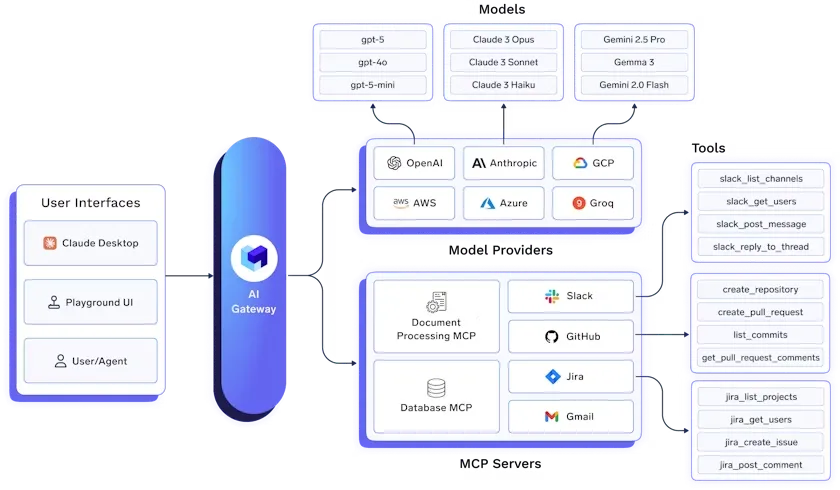
TrueFoundry offers an enterprise-grade AI Gateway designed to securely manage, route, and observe API and AI workloads at scale. The gateway centralizes LLM and service traffic, providing unified access across multiple AI models, including OpenAI, Claude, Gemini, Groq, Mistral, and more.
By integrating routing, observability, and governance, TrueFoundry simplifies traffic management while ensuring high performance and low latency for production workloads.
The platform enables organizations to orchestrate multi-model workloads seamlessly, centralize API key management, and implement strict team-based access control. Full observability allows monitoring of latency, token usage, error rates, and request volumes, with centralized logging to inspect requests and responses, ensuring compliance and rapid debugging.
Key Features:
With its AI Gateway, TrueFoundry ensures secure, reliable, and observable traffic management, making it a robust Envoy Proxy alternative for enterprises looking to streamline their API and AI workflows.
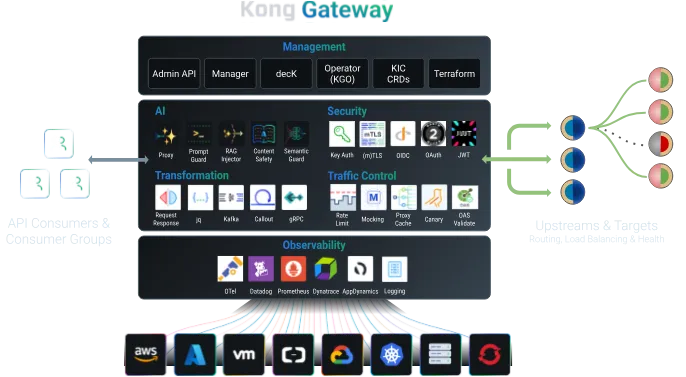
Kong AI Gateway is a high-performance API and AI gateway designed to simplify multi-LLM integration and API traffic management. It centralizes routing, security, observability, and policy enforcement for both AI workloads and traditional APIs.
Kong provides smart routing, semantic caching, and RAG pipeline integration, allowing enterprises to optimize costs, maintain high availability, and ensure low-latency responses. Its cloud and self-hosted options offer flexibility across hybrid and multi-cloud environments, making it a robust alternative to Envoy Proxy for enterprise traffic orchestration.
Key Features
Also explore: Top 5 Kong AI Alternatives
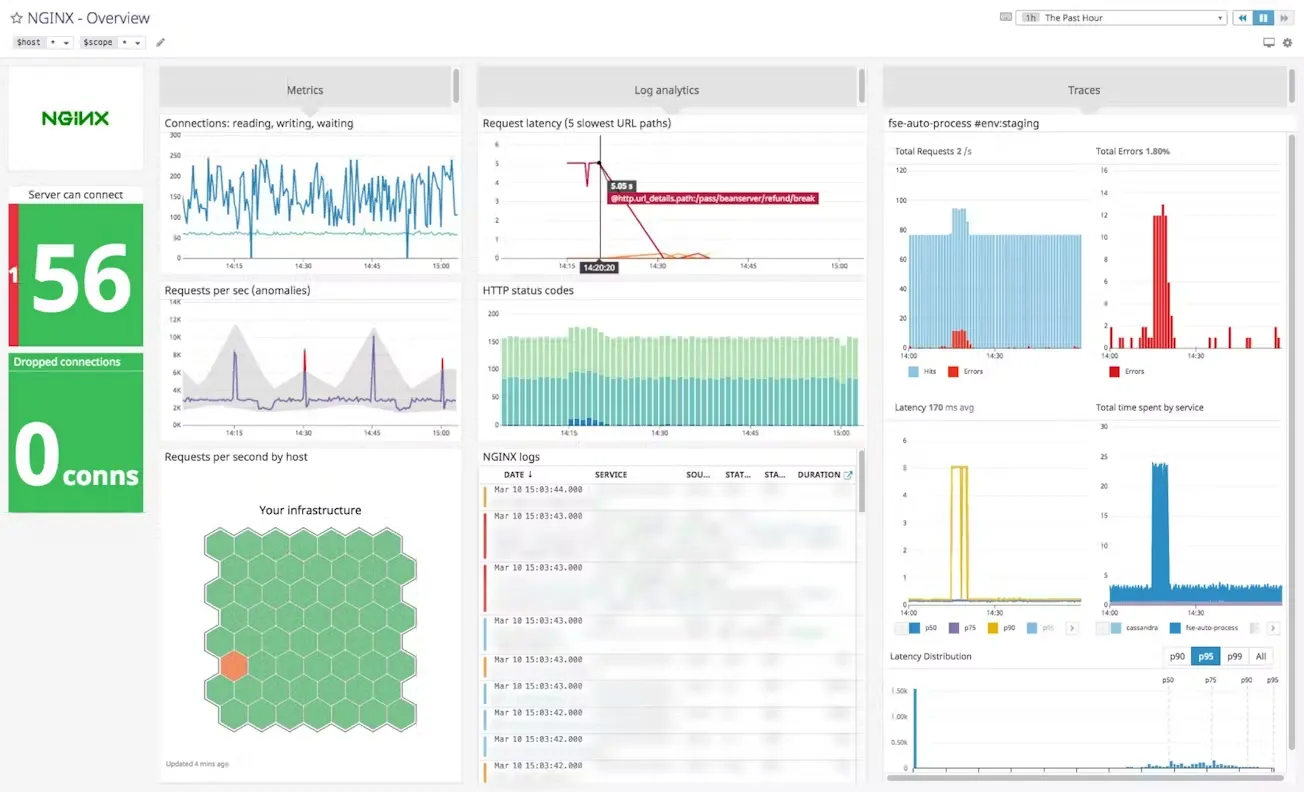
NGINX Plus is an advanced, commercial-grade version of NGINX that combines reverse proxy, load balancing, and API gateway capabilities. It provides enterprises with high-performance traffic management, seamless scaling, and robust observability. NGINX Plus is suitable for both traditional microservices and modern AI applications, offering centralized routing, caching, and security enforcement.
Its flexible architecture supports hybrid, on-prem, and cloud deployments, making it a reliable choice for managing complex API traffic in production.
Key Features
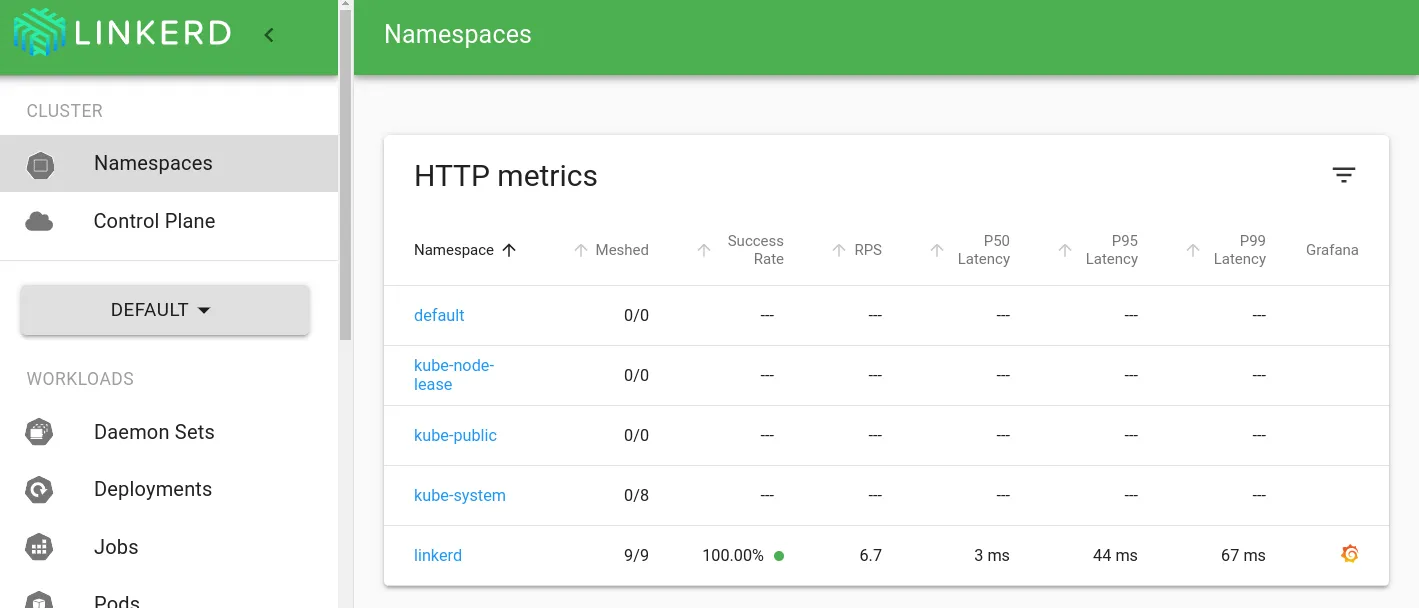
Linkerd هو شبكة خدمات خفيفة الوزن ومصممة للعمل في البيئات السحابية، ويهدف إلى تبسيط الاتصال بين الخدمات في بيئات Kubernetes والخدمات المصغرة. على عكس Envoy، يركز Linkerd على البساطة والحد الأدنى من التكوين والأداء العالي، مما يجعله مثاليًا للفرق التي ترغب في الاستفادة من شبكة الخدمات دون التعقيد التشغيلي.
الميزات الرئيسية:
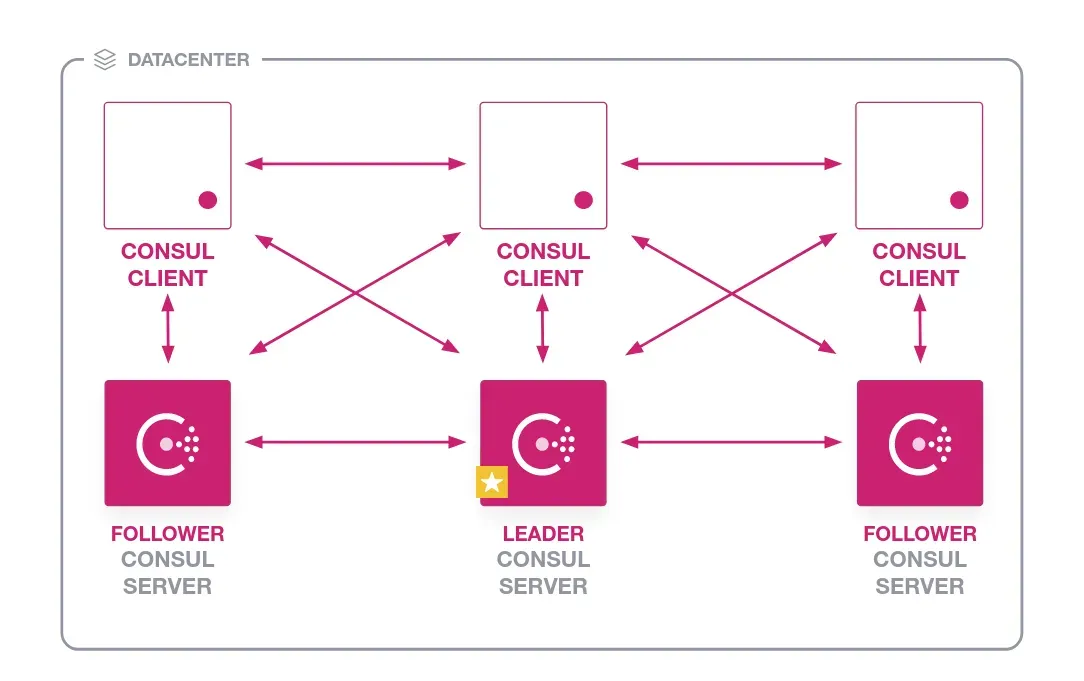
Consul Connect، وهو جزء من منصة Consul من HashiCorp، هو شبكة خدمات على مستوى المؤسسات تركز على الاتصال الآمن والموثوق بين الخدمات. يستخدم تشفير TLS المتبادل (mTLS) والتفويض القائم على الهوية لحماية حركة مرور الخدمات المصغرة، مما يوفر أمانًا وحوكمة على مستوى المؤسسات.
الميزات الرئيسية:
أثبت Envoy Proxy نفسه كوكيل حافة وخدمة متعدد الاستخدامات وعالي الأداء، لكن الشركات الحديثة غالبًا ما تتطلب إمكانات متخصصة مثل توجيه الذكاء الاصطناعي المتكامل، والمراقبة المتقدمة، وتطبيق السياسات المبسّط. وقد دفع هذا إلى اعتماد منصات بديلة تجمع بين إدارة حركة المرور مع أمان وقابلية توسع وحوكمة على مستوى المؤسسات.
تتميز TrueFoundry بتقديم بوابة مركزية للذكاء الاصطناعي وواجهة برمجة التطبيقات (API) مع مراقبة كاملة وتتبع وضوابط للسياسات، مما يجعلها مثالية لسير العمل المعقد وبيئات النماذج المتعددة. تكمل بوابة Kong AI هذا بتوجيه دلالي وتكامل خط أنابيب RAG وتنسيق نماذج اللغة الكبيرة المتعددة (multi-LLM) لعمليات نشر منخفضة الكمون وفعالة من حيث التكلفة.
تستمر البوابات التقليدية مثل NGINX Plus وAWS API Gateway وAzure API Management في تقديم موازنة تحميل موثوقة وتخزين مؤقت وإدارة مركزية لواجهة برمجة التطبيقات (API) لمجموعة واسعة من التطبيقات.
يعتمد اختيار البديل المناسب على الاحتياجات المحددة لمؤسستك، سواء كان ذلك حركة مرور تركز على الذكاء الاصطناعي، أو تكاملًا سحابيًا أصيلًا، أو امتثالًا وقابلية توسع على مستوى المؤسسات.
تشمل بدائل Envoy Proxy الشائعة Kong Gateway وNGINX Plus وLinkerd. بينما يتفوق Kong في إدارة واجهة برمجة التطبيقات (API)، يقدم Linkerd شبكة خدمات خفيفة الوزن لـ Kubernetes. TrueFoundry هو خيار متخصص للمؤسسات التي تحتاج إلى بوابة توحد حركة المرور التقليدية مع تنسيق وحوكمة نماذج اللغة الكبيرة المتقدمة.
نعم، يعمل Envoy كطبقة بيانات عالية الأداء لبوابات API، على الرغم من أنه يعمل بشكل أساسي كوكيل خدمة. بينما يتعامل مع موازنة التحميل الأساسية، فإنه يفتقر إلى ميزات الذكاء الاصطناعي عالية المستوى مثل التخزين المؤقت الدلالي وتحديد المعدل المستند إلى الرمز المميز. تعمل البوابات المتخصصة مثل TrueFoundry على توسيع هذه الإمكانات لإدارة حركة مرور نماذج اللغة الكبيرة (LLM) المعقدة والمتعددة المزودين.
العيوب الرئيسية هي منحنى التعلم الحاد ونقص الدعم الأصلي للمتطلبات الخاصة بالذكاء الاصطناعي. لا تتضمن تكوينات Envoy القياسية تحديد المعدل على مستوى الرمز المميز المدمج أو آليات التراجع التلقائية لـ LLM. غالبًا ما تختار فرق الهندسة بدائل متخصصة للحصول على مراقبة أعمق لحركة مرور الذكاء الاصطناعي التوليدي دون تكلفة الإدارة اليدوية للوكيل.
TrueFoundry هو بديل متفوق لأنه يوحد إدارة واجهة برمجة التطبيقات (API) التقليدية مع حوكمة خاصة بالذكاء الاصطناعي وزمن انتقال أقل من 3 مللي ثانية. يوفر تحكمًا دقيقًا في الوصول المستند إلى الدور (RBAC)، ومراقبة عميقة على مستوى الرمز المميز، وتتبع التكلفة داخل شبكتك الافتراضية الخاصة (VPC). تضمن هذه البنية الإقامة الكاملة للبيانات مع تبسيط تعقيد التوجيه الآمن متعدد النماذج لسير العمل الوكيل على مستوى الإنتاج.
TrueFoundry AI Gateway delivers ~3–4 ms latency, handles 350+ RPS on 1 vCPU, scales horizontally with ease, and is production-ready, while LiteLLM suffers from high latency, struggles beyond moderate RPS, lacks built-in scaling, and is best for light or prototype workloads.





أحدث الأخبار والمقالات والموارد تصلك مباشرة إلى بريدك الوارد
.png)


.png)
.png)
.png)

.png)
.png)
.png)
.png)
.png)
.png)
.png)


