


What Is ISO 42001 and Why Does It Matter?

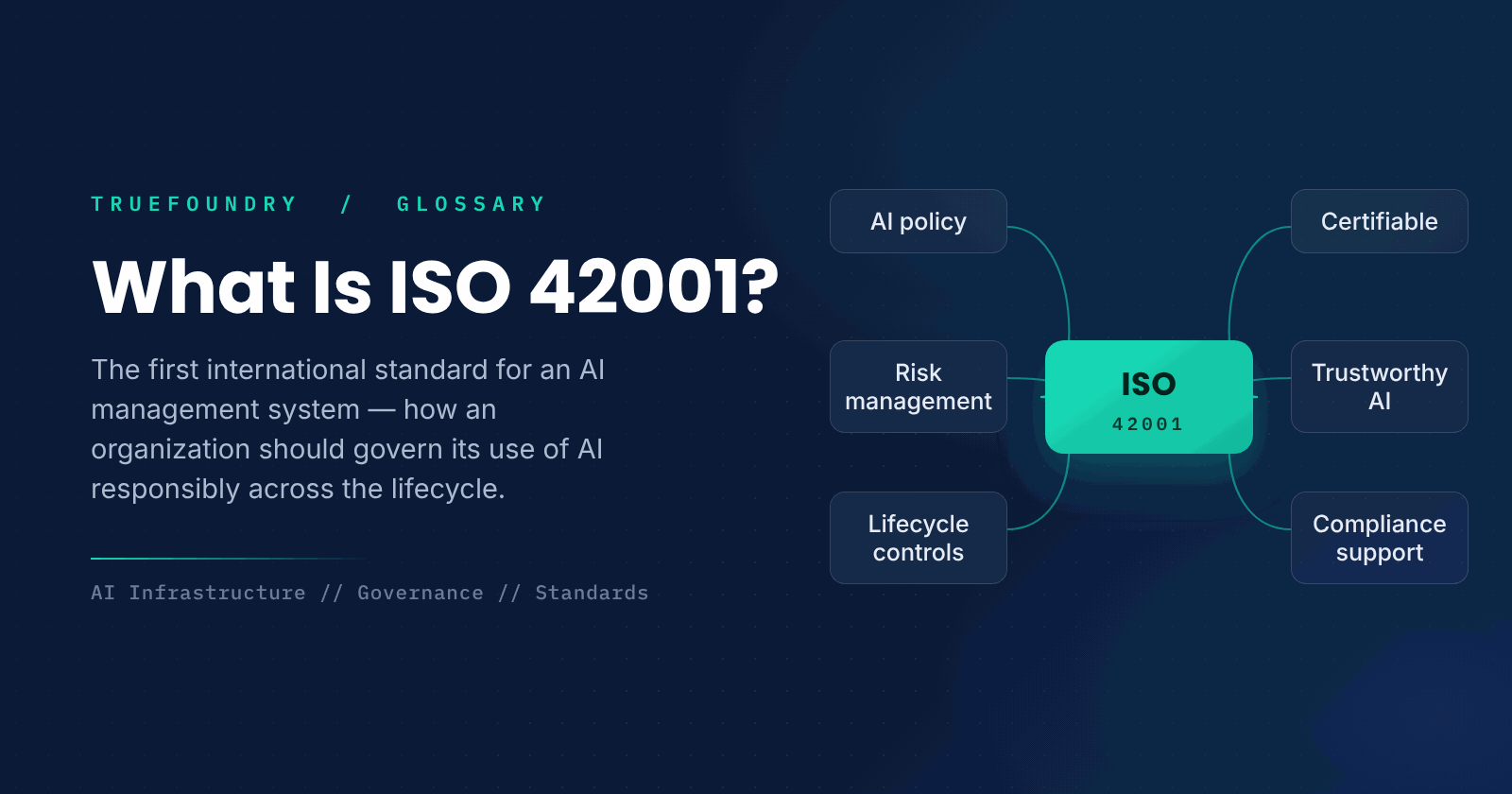
As organizations adopt AI, they face pressure to show that they use it responsibly and manage its risks. Until recently there was no agreed, international way to do that. ISO 42001 fills the gap: it is the first global standard for an AI management system, giving organizations a structured framework for governing their use of AI.
Rather than targeting one AI model or product, ISO 42001 defines how an organization as a whole should manage AI, from policies and roles to risk assessment and oversight across the AI lifecycle. Organizations can be certified against it to prove they govern AI responsibly. This guide explains what ISO 42001 is, what it requires, and why it matters.
We will cover the definition, what the standard covers, how certification works, and when it matters.
What is ISO 42001?
ISO 42001 is an international standard, published by the International Organization for Standardization, that specifies the requirements for an artificial intelligence management system. An AI management system is the set of policies, processes, and controls an organization uses to govern how it develops, deploys, and oversees AI, and ISO 42001 defines what a sound one must include.
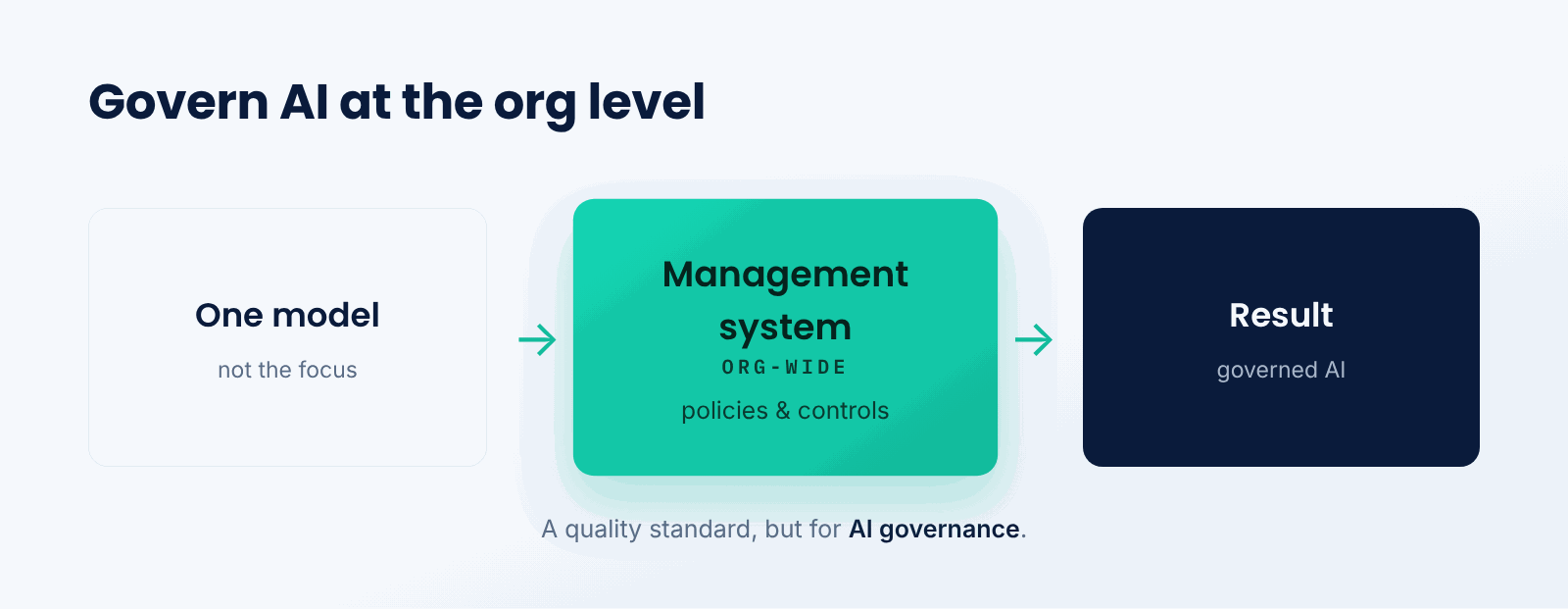
Think of it like a quality-management standard, but for AI governance. Just as some standards define how an organization should manage quality or information security, ISO 42001 defines how it should manage AI: the structure, responsibilities, and controls needed to do so responsibly and consistently.
The key idea is managing AI at the organizational level. ISO 42001 is not about a single algorithm; it is about the system of governance around all of an organization's AI.
What does ISO 42001 cover?
ISO 42001 sets requirements across the governance of AI throughout its lifecycle.
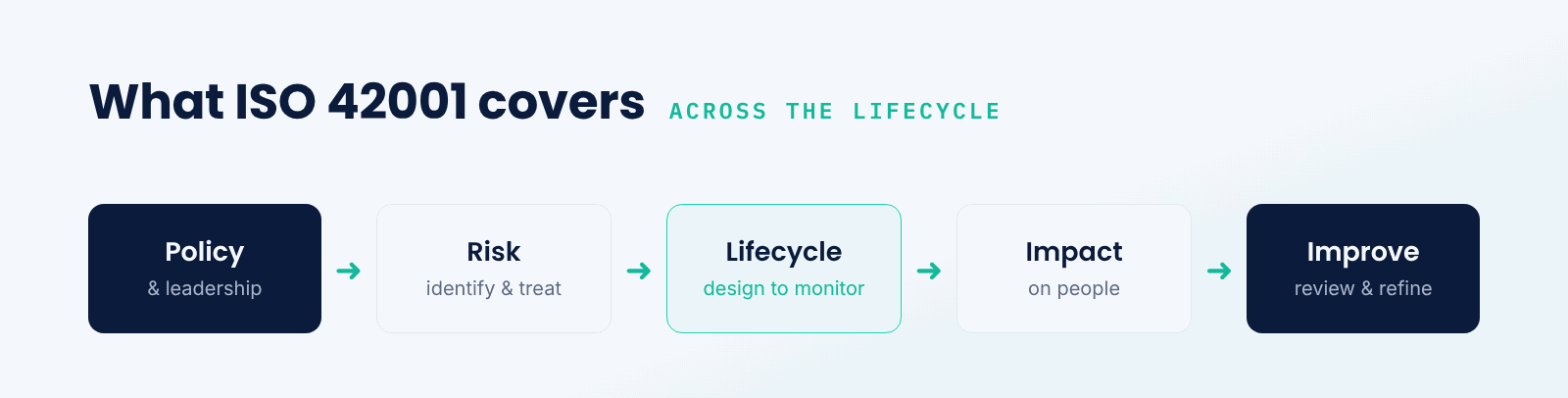
- Policy and leadership. Set AI policies and assign clear responsibility.
- Risk management. Identify and address risks AI poses to people and the organization.
- Lifecycle controls. Govern AI from design through deployment and monitoring.
- Impact assessment. Consider the effects of AI systems on individuals and society.
- Continual improvement. Review and improve the management system over time.
Like other management-system standards, ISO 42001 follows a plan-do-check-act approach: establish governance, operate it, monitor how well it works, and improve it. It emphasizes managing AI-specific risks, such as bias, transparency, and safety, within a repeatable organizational framework rather than ad hoc.
How does certification work?
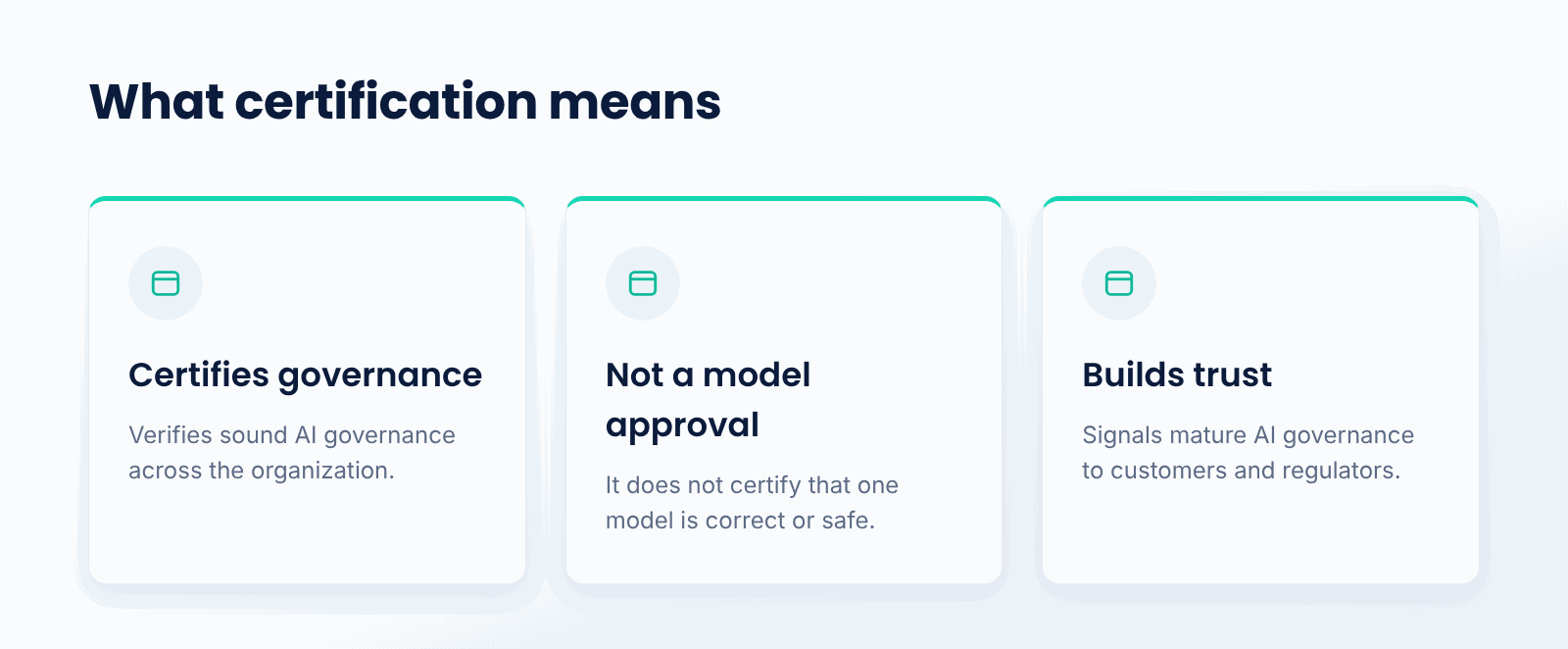
An organization implements an AI management system meeting the standard's requirements, then undergoes an audit by an accredited external body. If the auditor finds the system conforms, the organization is certified against ISO 42001, and periodic audits maintain the certification over time.
Certification is not about approving a particular AI model; it is about verifying that the organization has sound governance for its AI. This distinction matters: ISO 42001 certification signals mature, systematic AI governance, which can build trust with customers, partners, and regulators, and complements, rather than replaces, specific legal requirements such as AI regulations.
Why does ISO 42001 matter?
- Trust. It demonstrates responsible, well-governed AI to stakeholders.
- Structure. It gives a repeatable framework for AI governance.
- Risk management. It helps organizations manage AI risks systematically.
- Compliance support. It aligns with growing AI regulation.
- Differentiation. Certification can set an organization apart.
What are the challenges?
- Effort. Implementing a full management system takes work.
- Scope. It governs the organization, not any single model's correctness.
- Maintenance. Certification requires ongoing audits and upkeep.
- Not a guarantee. Good governance reduces but does not remove risk.
When should you consider ISO 42001?
Consider ISO 42001 if your organization develops or relies on AI and wants to demonstrate responsible governance, especially in regulated industries or when customers and partners expect it. It is valuable when AI is becoming central to your operations and you need a structured, credible way to manage its risks.
Smaller or early-stage AI efforts may not need formal certification yet, but the standard's principles are still useful guidance. As AI use and scrutiny grow, aligning with ISO 42001 becomes an increasingly worthwhile investment in trust and governance.
Key points about ISO 42001
- ISO 42001 is the first international standard for AI management systems.
- It defines how organizations should govern AI responsibly.
- It covers policy, risk, lifecycle controls, and improvement.
- Organizations can be certified against it by external audit.
- It certifies governance, not a particular model.
- It helps demonstrate trustworthy AI and supports compliance.
Conclusion
ISO 42001 is the first international standard for governing AI, defining the requirements for an organization's AI management system: its policies, risk management, lifecycle controls, and continual improvement. Organizations can be certified against it to show they manage AI responsibly and systematically. As AI adoption and scrutiny grow, it is becoming an important way to build trust and support compliance.
TrueFoundry helps teams deploy and govern AI on their own infrastructure, with the controls, monitoring, and audit trails that support responsible AI management. When demonstrating trustworthy AI governance matters, aligning with standards like ISO 42001 is part of getting there.

Govern, Deploy and Trace AI in Your Own Infrastructure
Frequently Asked Questions
What is ISO 42001 in simple terms?
It is the world's first international standard for managing AI responsibly. It outlines how an organization should govern its use of AI, covering policies, roles, risk management, and oversight, so it can demonstrate that it handles AI in a trustworthy, well-governed way.
What does ISO 42001 require?
Requirements for an AI management system: establishing AI policies and leadership accountability, managing AI risks, controlling AI throughout its lifecycle, assessing the impact of AI systems, and continually improving the whole system. It uses the plan-do-check-act cycle of other management standards.
How is an organization certified against ISO 42001?
The organization implements an AI management system that meets the standard, then is audited by an independent accredited body. If the system conforms, the organization is certified, and regular audits maintain the certification. It certifies the organization's governance, not any single AI model.
Does ISO 42001 certify a specific AI model?
No. It certifies that an organization has sound governance for its AI overall, not that a particular model is correct or safe. It verifies the system of policies, controls, and oversight around all of an organization's AI, rather than approving an individual algorithm.
When should an organization pursue ISO 42001?
When AI is becoming integral to its operations and it wants to demonstrate responsible governance, especially in regulated industries or when customers and partners expect it. Smaller efforts may not need certification yet, but the standard's principles are useful guidance regardless.


- © 2022 ENSEMBLE Technologies



Subscribe to our newsletter
The latest news, articles, and resources sent to your inbox


