


What Is AI FinOps and Why Does It Matter?

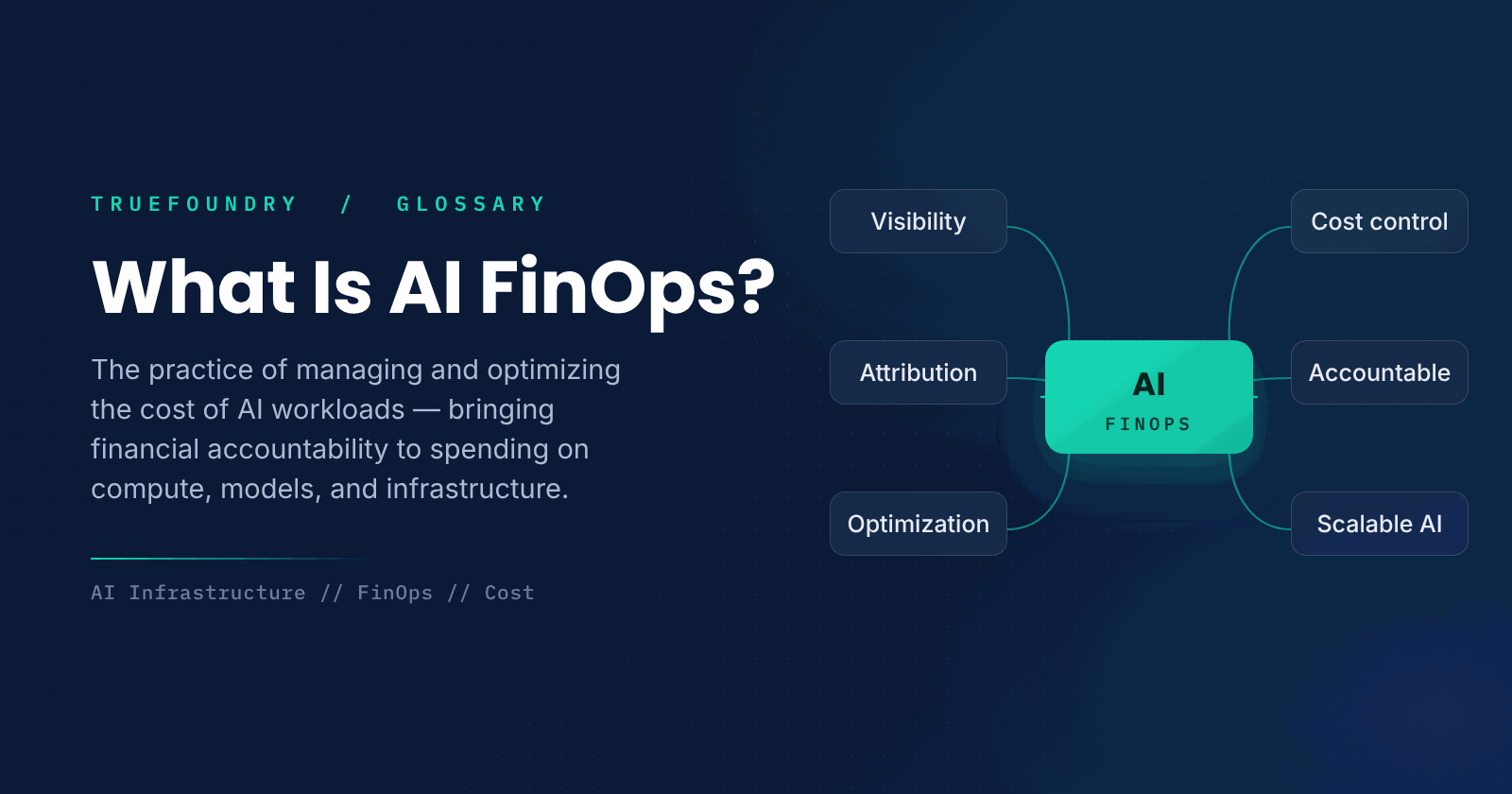
AI is powerful but expensive. GPUs, large models, and heavy inference can run up costs quickly, and without discipline those costs can spiral out of control. As organizations scale their use of AI, they face a new problem: understanding and managing what it all costs. AI FinOps is the practice that addresses this.
Borrowing from the broader discipline of FinOps, which brings financial accountability to cloud spending, AI FinOps focuses specifically on the cost of AI, from compute and models to data and infrastructure. It combines seeing where the money goes with practices to control and reduce it. This guide explains what AI FinOps is, how it works, and why it matters.
We will cover the definition, what it involves, how it relates to general FinOps, and when it matters.
What is AI FinOps?
AI FinOps is the discipline of managing, optimizing, and bringing accountability to the cost of artificial intelligence workloads. It covers the full span of AI spending, the compute to train and serve models, the models and APIs themselves, and the surrounding data and infrastructure, and pairs clear visibility into that spending with practices to keep it under control.
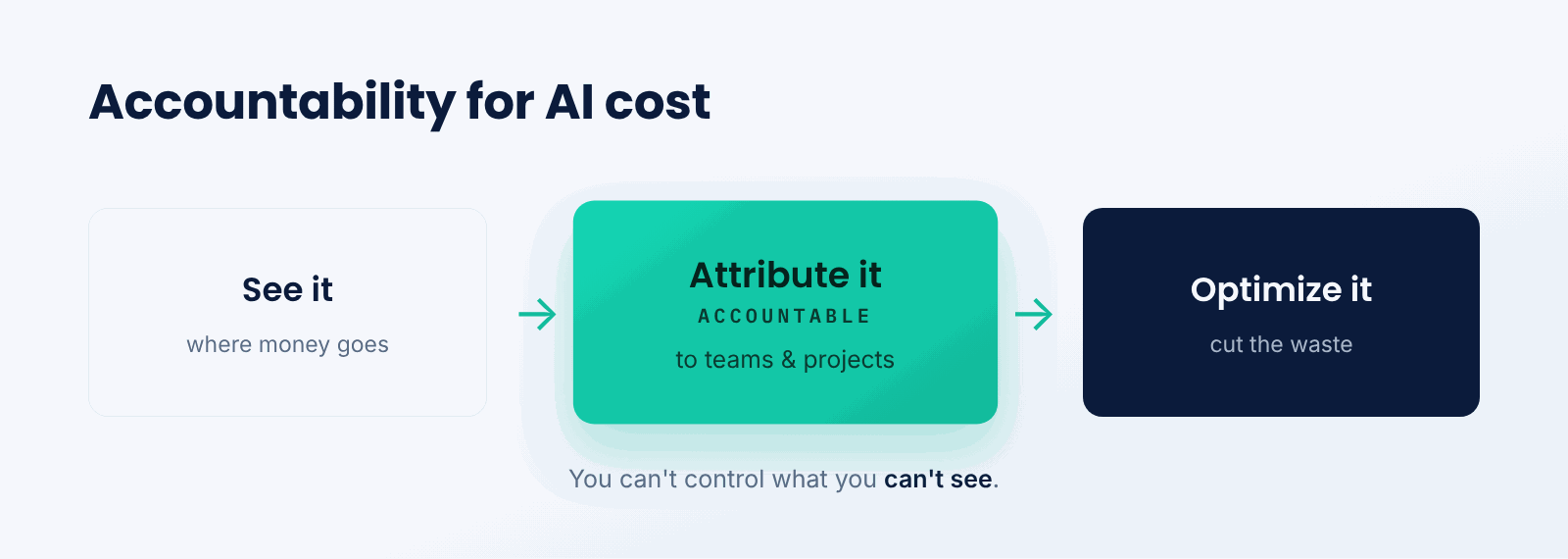
Think of it like budgeting and expense management for a household, but for AI. You cannot control what you cannot see, so first you track where the money goes, then you make deliberate choices to spend it well: cutting waste, right-sizing, and prioritizing what delivers value. AI FinOps brings that discipline to AI.
The key idea is financial accountability for AI. Rather than treating AI cost as an unavoidable mystery, AI FinOps makes it visible, attributable, and manageable, so spending aligns with value.
What does AI FinOps involve?
AI FinOps combines visibility, accountability, and optimization of AI cost.
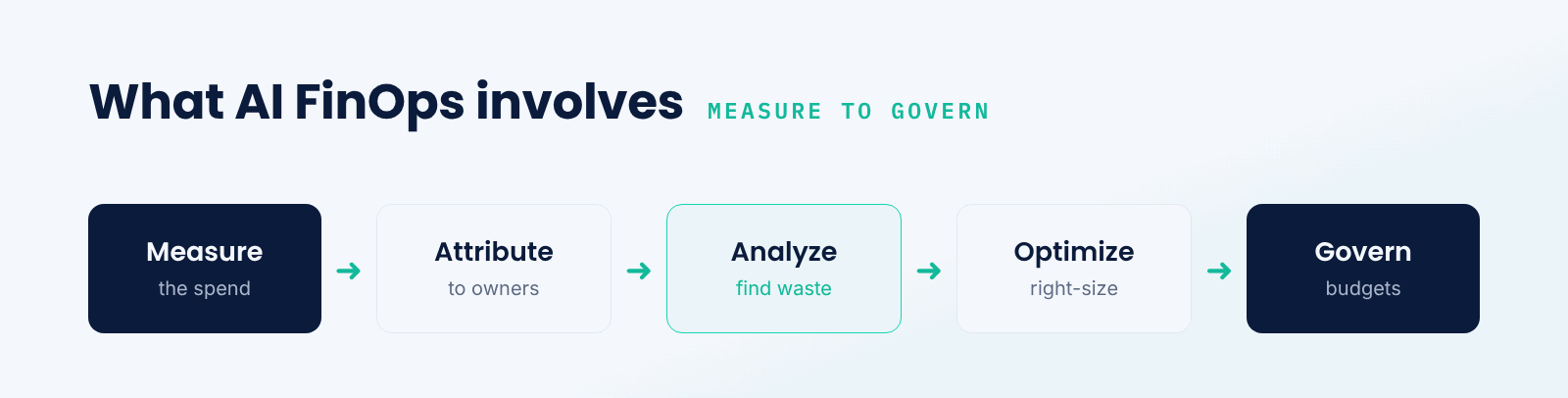
- Measure. Track AI spending across compute, models, and infrastructure.
- Attribute. Tie costs to teams, projects, or features.
- Analyze. Find where money is spent and where it is wasted.
- Optimize. Right-size resources, cut waste, and choose efficient options.
- Govern. Set budgets and monitor spending over time.
In practice this means knowing your cost per token or per training run, seeing which teams and workloads drive spend, and applying levers like using smaller models where they suffice, right-sizing GPUs, scaling to zero when idle, and avoiding wasted compute. The goal is to spend on what delivers value and cut what does not.
AI FinOps vs. general FinOps
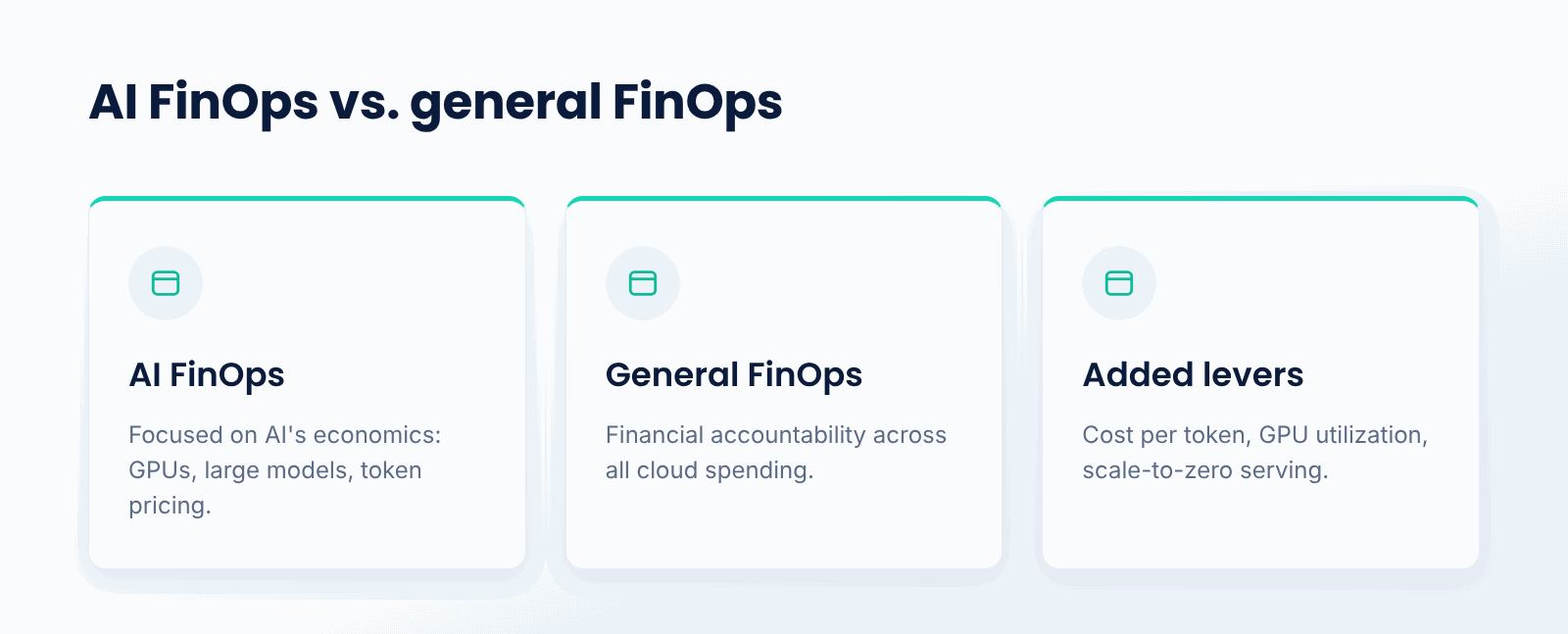
General FinOps is the practice of bringing financial accountability to cloud spending overall, giving teams visibility and shared responsibility for the costs of the resources they use. It is a broad discipline covering all cloud services.
AI FinOps applies the same principles specifically to AI, where the cost drivers are distinctive: expensive GPUs, large models, token-based pricing, and unpredictable training and inference loads. It adds AI-specific metrics and levers, like cost per token and GPU utilization, on top of the general FinOps mindset. It is FinOps focused on the particular economics of AI.
Why does AI FinOps matter?
- Cost control. It keeps AI spending from spiraling.
- Visibility. It shows exactly where AI money goes.
- Accountability. It ties cost to teams and projects.
- Efficiency. It cuts waste and right-sizes resources.
- Scalability. It lets AI grow without unsustainable bills.
What are the challenges?
- Complex costs. AI spending has many moving parts to track.
- Attribution. Tying cost to teams and workloads takes effort.
- Tradeoffs. Cutting cost must not undercut performance.
- Tooling. It needs good visibility into AI-specific spend.
When should you adopt AI FinOps?
Adopt AI FinOps as soon as AI spending becomes significant, which happens quickly once you train or serve models at any real scale. It is essential when multiple teams use AI, when GPU and inference costs are material, and when you need to scale AI while keeping budgets sustainable.
For small experiments with trivial cost, formal FinOps may be premature, but the mindset of tracking and optimizing spend is useful from the start. As AI becomes central and costly, AI FinOps becomes essential to keeping it affordable and accountable.
Key points about AI FinOps
- AI FinOps manages and optimizes the cost of AI workloads.
- It pairs cost visibility with practices to reduce spend.
- It attributes AI cost to teams and projects.
- It uses AI-specific metrics like cost per token and GPU use.
- It cuts waste and right-sizes resources.
- It lets AI scale without runaway bills.
Conclusion
AI FinOps brings financial accountability to AI, pairing clear visibility into where money goes, on compute, models, and infrastructure, with practices to control and reduce it. By measuring, attributing, and optimizing AI spend, it lets organizations scale AI without runaway bills. As AI grows more central and more expensive, AI FinOps is how teams keep it both powerful and affordable.
TrueFoundry helps teams run AI on their own infrastructure with the cost visibility and optimization that AI FinOps depends on, from GPU utilization to scale-to-zero serving. When keeping AI spending accountable matters, AI FinOps is the discipline, and the right tooling makes it practical.

Govern, Deploy and Trace AI in Your Own Infrastructure
Frequently Asked Questions
What is AI FinOps in simple terms?
It is the practice of managing and optimizing what AI costs. It gives you insight into where your AI money goes, on compute, models, and infrastructure, and uses practices to control and reduce that spending, so you can scale AI without the bills getting out of hand.
How is AI FinOps different from general FinOps?
General FinOps provides financial accountability for all cloud spending. AI FinOps uses the same concepts but targets AI specifically, where the cost drivers are distinctive, GPUs, model size, and token-based pricing, adding AI-specific metrics and levers like cost per token and GPU utilization.
What does AI FinOps involve?
Measuring AI spending across compute, models, and infrastructure; attributing it to teams and projects; analyzing where money is spent and wasted; optimizing through right-sizing resources and cutting waste; and governing with budgets and ongoing monitoring. The goal is to spend on what delivers value.
How does AI FinOps reduce costs?
Through visibility and deliberate levers: using smaller models where they suffice, right-sizing GPUs, scaling to zero when idle, trimming token usage, and eliminating wasted compute. Knowing precisely where money goes lets teams cut what does not add value without compromising performance.
When should an organization adopt AI FinOps?
As soon as AI spending becomes material, which happens quickly when training or serving at scale, when multiple teams use AI, or when GPU and inference costs are significant. For small experiments it may be premature, but the mindset of tracking spend is useful right away.


- © 2022 ENSEMBLE Technologies



Subscribe to our newsletter
The latest news, articles, and resources sent to your inbox


