
We’re sharing complimentary access to the full Gartner Hype Cycle for AI Governance 2026. Get your copy →

One AI gateway to see and govern every token, model call, MCP call and agent across Boost Mobile, DISH, Sling and enterprise satellite — the control plane a telecom giant is standing up before AI hits full scale.
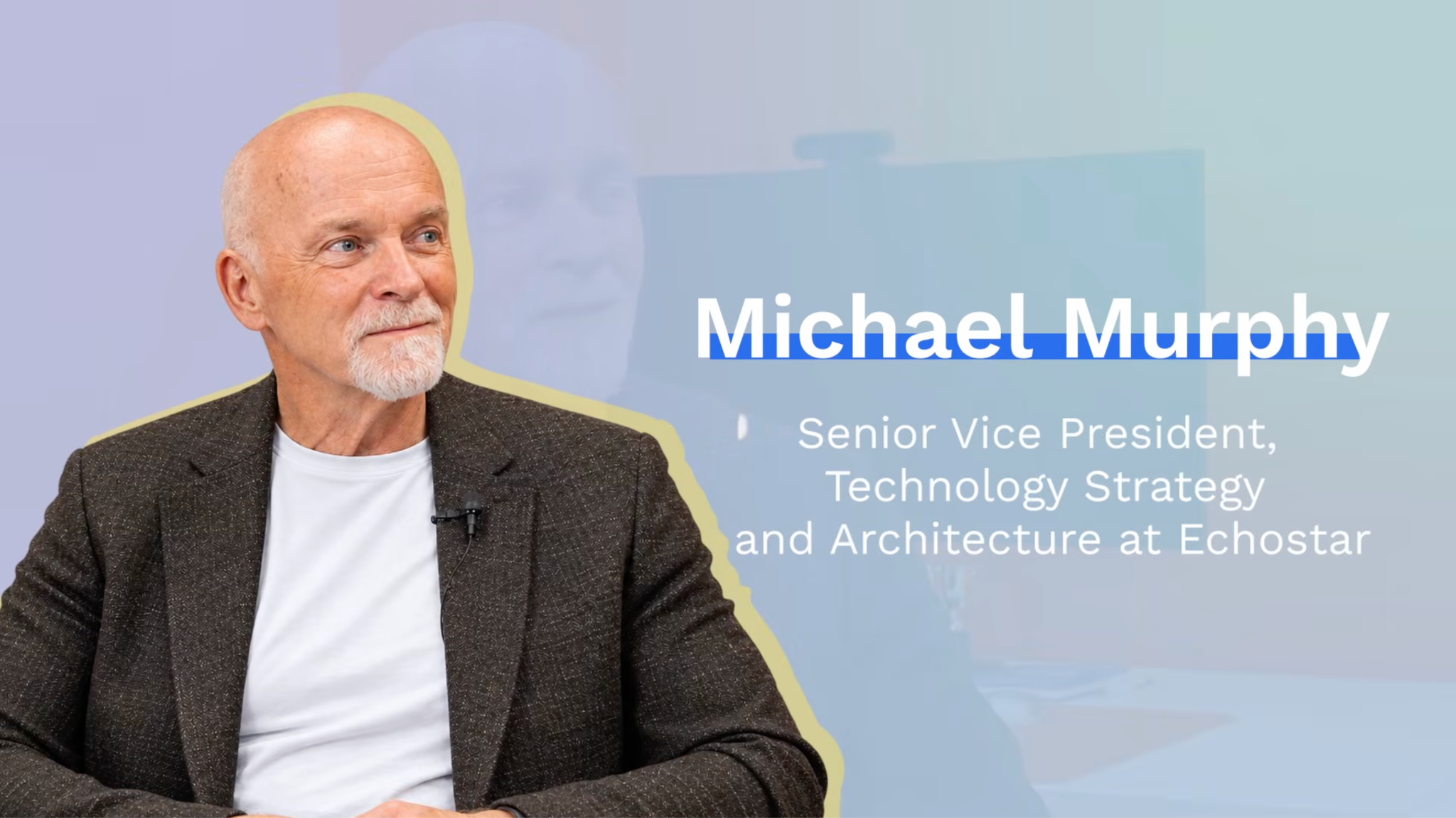
EchoStar is the parent company behind some of the best-known names in American connectivity and entertainment: Boost Mobile, its cloud-native 5G wireless network; DISH satellite TV; Sling streaming TV; and a portfolio of enterprise and satellite systems. Each brand runs on very different technology and operates with a degree of independence — which makes company-wide initiatives, especially in a fast-moving domain like AI, genuinely hard. EchoStar's Technology, Strategy & Architecture organization, led by Senior Vice President Mike Murphy, is responsible for the system architecture and vendor selection that tie these worlds together.
Murphy's team designed the architecture for the Boost Mobile network — a first-of-its-kind build combining a cloud-based core with an Open RAN access network. When EchoStar turned its attention to AI, the team saw the same problem in a new form.
In telecom, observability and governance are total: EchoStar can detect a churn-rate change of a hundredth of a percent and watch every device on the network from a network operations center. AI had none of that. So Murphy set out to build its equivalent.
There was no crisis — and that was exactly the point.
Fragmentation was already setting in. By early 2026, EchoStar was using virtually every AI platform in existence and roughly 20 different models, with use cases running across almost every team. All of that momentum was good. But it was happening in parallel, uncoordinated, with no shared layer underneath it.
No one could answer basic questions. When EchoStar's chairman asked a simple one — how many tokens does the company use per month, and what's the spend — the answer required pulling from seven different systems and took several days to assemble.
Scale was coming fast. The team could see 2027 bringing a substantial step-change in volume and a move toward more autonomous operations. Getting governance right before that wave, rather than after, was the whole thesis.
EchoStar's answer is an AI Network Operations Center (AI NOC) — a centralized observability and governance layer that mirrors the telecom NOC — built on TrueFoundry's AI gateway and control plane.
The goal is coverage: routing every AI request — model calls, MCP calls and agent calls — through a single gateway so EchoStar can see and control everything in one place, including the ability to redirect traffic between models or hit a kill switch if an agent goes rogue.
Rather than slow teams down, Murphy designed two parallel tracks. The fast track lets brands and teams keep moving and experimenting freely. The slow track is the governance and observability layer forming above them. Over time the two merge — and the slow track, once in place, actually accelerates AI adoption in a controlled way.
From day one, the non-negotiables were a resilient architecture with low latency — which translated into clean separation of control plane and data plane — plus registries and gateways for LLMs, MCPs and agents.
EchoStar needed the platform to adopt existing enterprise identity systems rather than mint new approvals for every human and agent. Murphy expects non-human identities — prompts and autonomous agents — to become the dominant source of traffic, so first-class support for them was critical.
Strong observability and a solid guardrail infrastructure — both vendor-provided and customizable — topped the requirements list, reflecting a telecom mindset: in a world where outages above a threshold must be reported to the FCC, EchoStar wants to demonstrate due diligence over cost and the behavior of humans and agents alike.
A stateful design lets EchoStar keep a human in the loop as it moves deliberately toward autonomous operations — advancing without going too fast.
The capability Murphy is most excited about is building EchoStar's own agent harness on top of the gateway — so the company can control its own agents, optimize cost, and avoid dependence on specific model providers, eventually trimming a generic harness down to only what EchoStar needs.
EchoStar ran a rigorous selection process: an RFI with 139 requirements issued to 11 vendors. Candidates were scored on technical response, financial response, and a third layer — soft factors — which, as the field narrowed, became decisive.
Many large players had bolted gateways on late in the cycle; others came at the problem from an API-gateway starting point. EchoStar wanted a vendor built AI-first — stateful, with guardrails, security, support for human and non-human agents, and a resilient architecture out of the box. Few vendors matched the full package.
The biggest surprise of the journey — still ongoing — has been the volume of tuning and customization needed to fit a great base platform into EchoStar's existing systems. Murphy credits the day-to-day partnership for making it work.
EchoStar is building the governance foundation for AI ahead of the curve, not in reaction to it. The company already reports AI's bottom-line impact in the hundreds of millions for the year, with the focus shifting toward top-line impact — new revenue, margin, even new businesses — next. The near-term target is clear: get all AI traffic flowing through the gateway so EchoStar has full observability and control, tracked on a running dashboard that climbs toward 100% coverage.
EchoStar is treating AI the way it treated its 5G network — as critical infrastructure that demands a deliberate architecture, total observability, and governance you can prove. By standing up an AI Network Operations Center on TrueFoundry before scale arrives, EchoStar is positioning itself to move toward autonomous operations on its own terms: fast where it can be, controlled where it must be.



The latest news, articles, and resources sent to your inbox


