Join the AI Security Webinar with Palo Alto. Register here

Enterprise Ready : VPC | On-Prem | Air-Gapped

Keep your AI Applications Running. Even During Outages.

TrueFailover is a resilience layer that ensures AI-powered applications stay online even during model outages, so business-critical AI workflows continue without interruption.

TrueFailover is a resilience layer that ensures AI-powered applications stay
online even during model outages, so business-critical AI workflows
continue without interruption.

Designed for AI reliability at enterprise scale

TrueFailover ensures AI systems remain operational under real-world failure conditions.

Never go offline

Ensure uninterrupted operations so AI workflows continue running during outages across customer-facing and internal systems.

Reduce dependency risk

Outages, rate limits, and degradation from any single external model, provider, or region no longer determine your system availability.

Catch silent failures

Prevent slow, unreliable AI responses caused by partial outages so users aren’t blocked by technically “up” but unusable systems.

Designed for AI reliability at enterprise scale

Automatically shift to healthy models or regions during failures, without requiring application teams to reroute traffic or modify code.

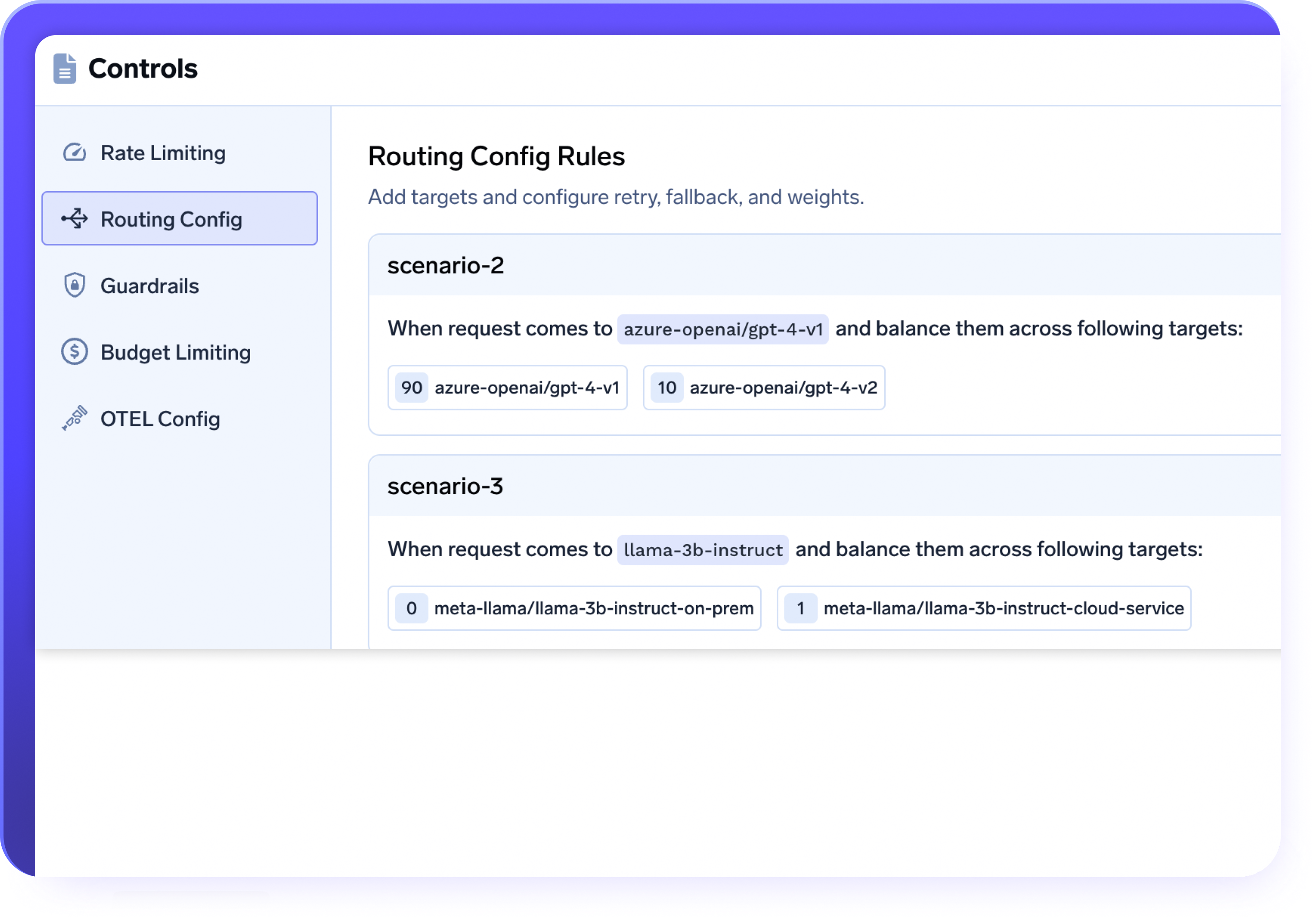
Multi-Model Failover

  • Keep AI applications running by automatically switching to alternate models when a primary model becomes unavailable or constrained
  • Avoid disruptions caused by reliance on a single model choice in production
MCP Gateway Server Registry

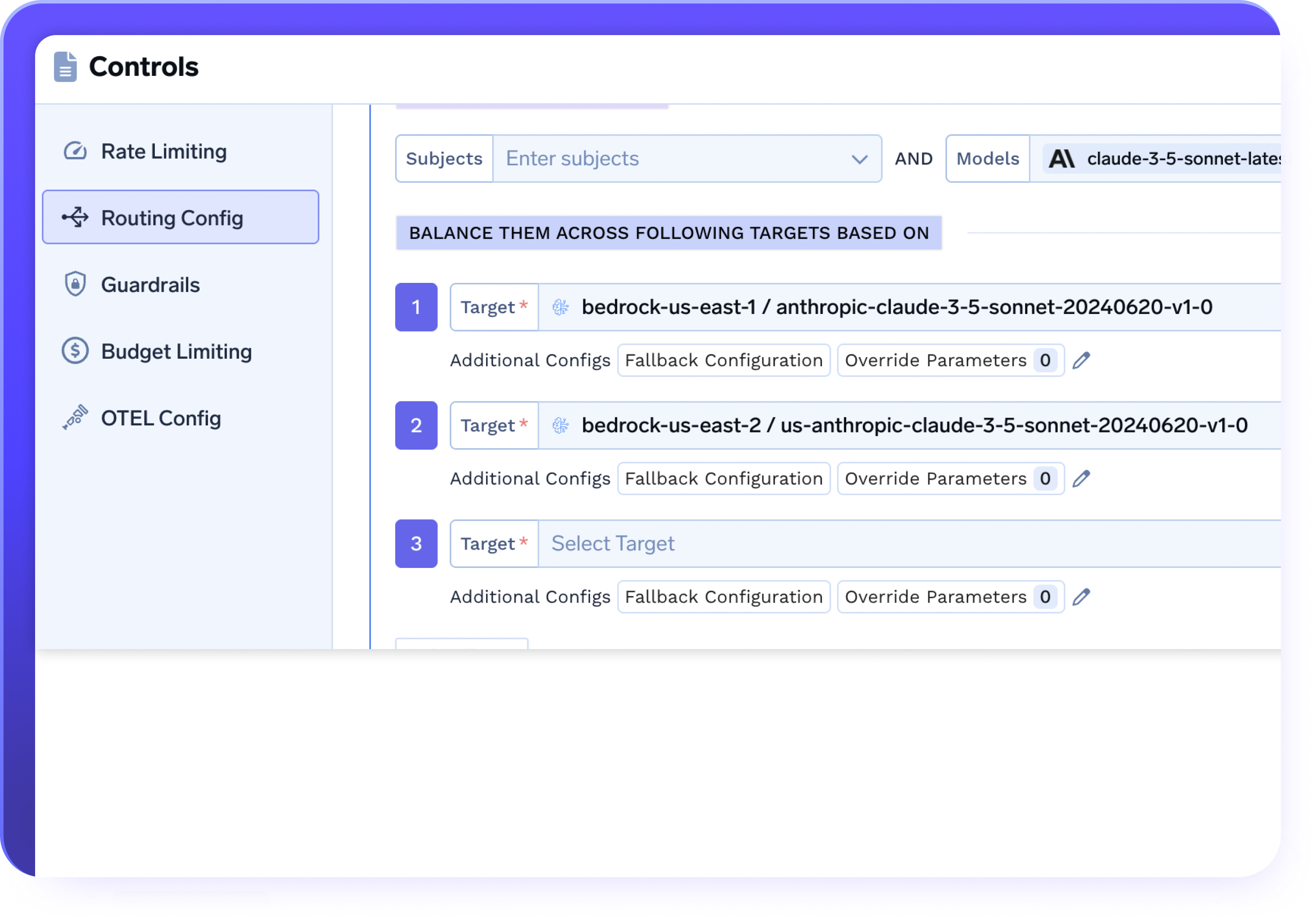
Multi-Region and Multi-Cloud Resilience

  • Maintain availability by routing AI workloads to healthy regions or environments when localized issues occur
  • Prevent regional outages from impacting users globally
MCP Gateway Server Registry

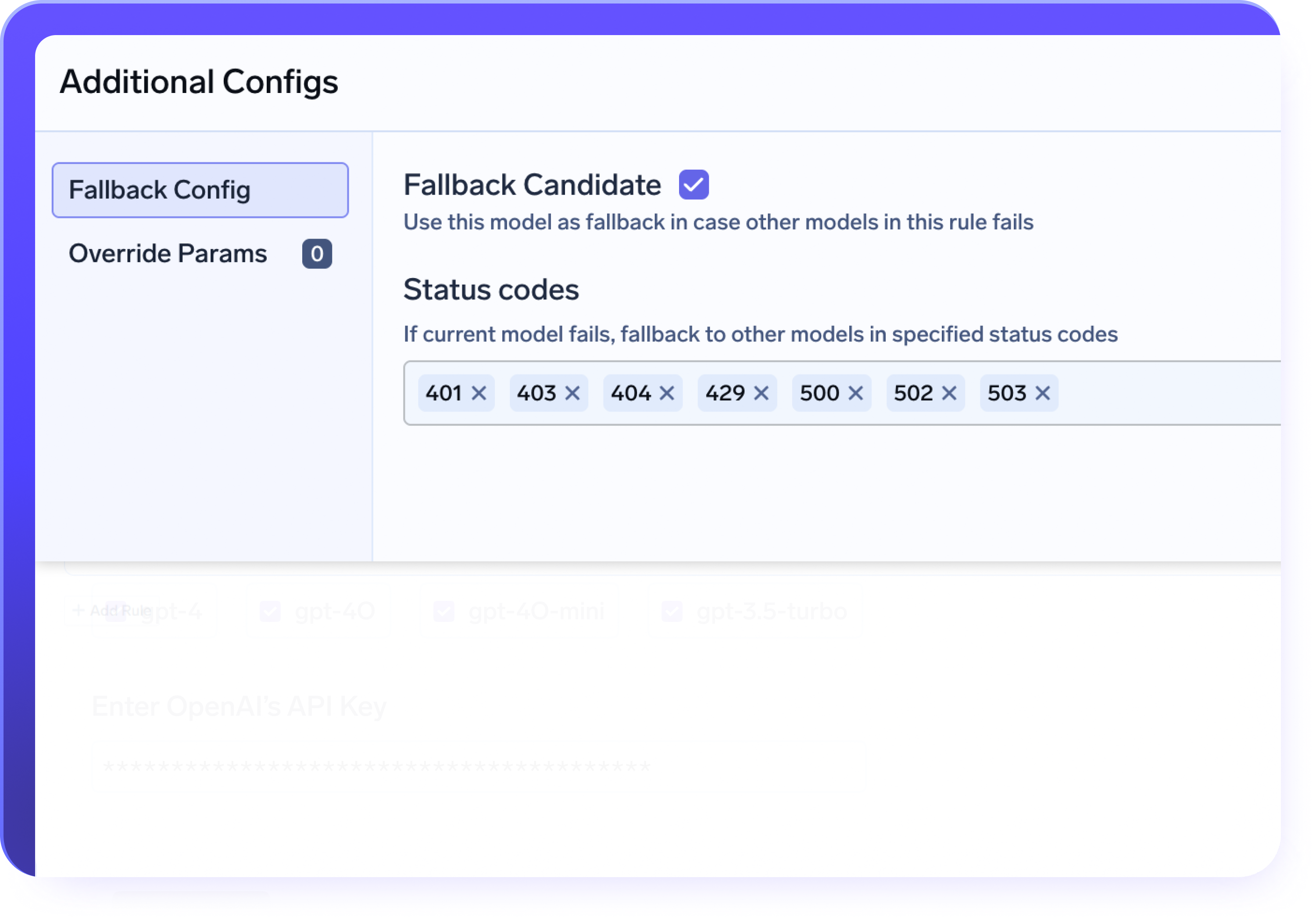
Continuity During Degradation

  • Automatically identify when AI systems are slowing down or underperforming, even if they haven’t fully failed
  • Reroute workloads to healthier alternatives so gradual degradation doesn’t impact users or workflows
MCP Gateway Server Registry

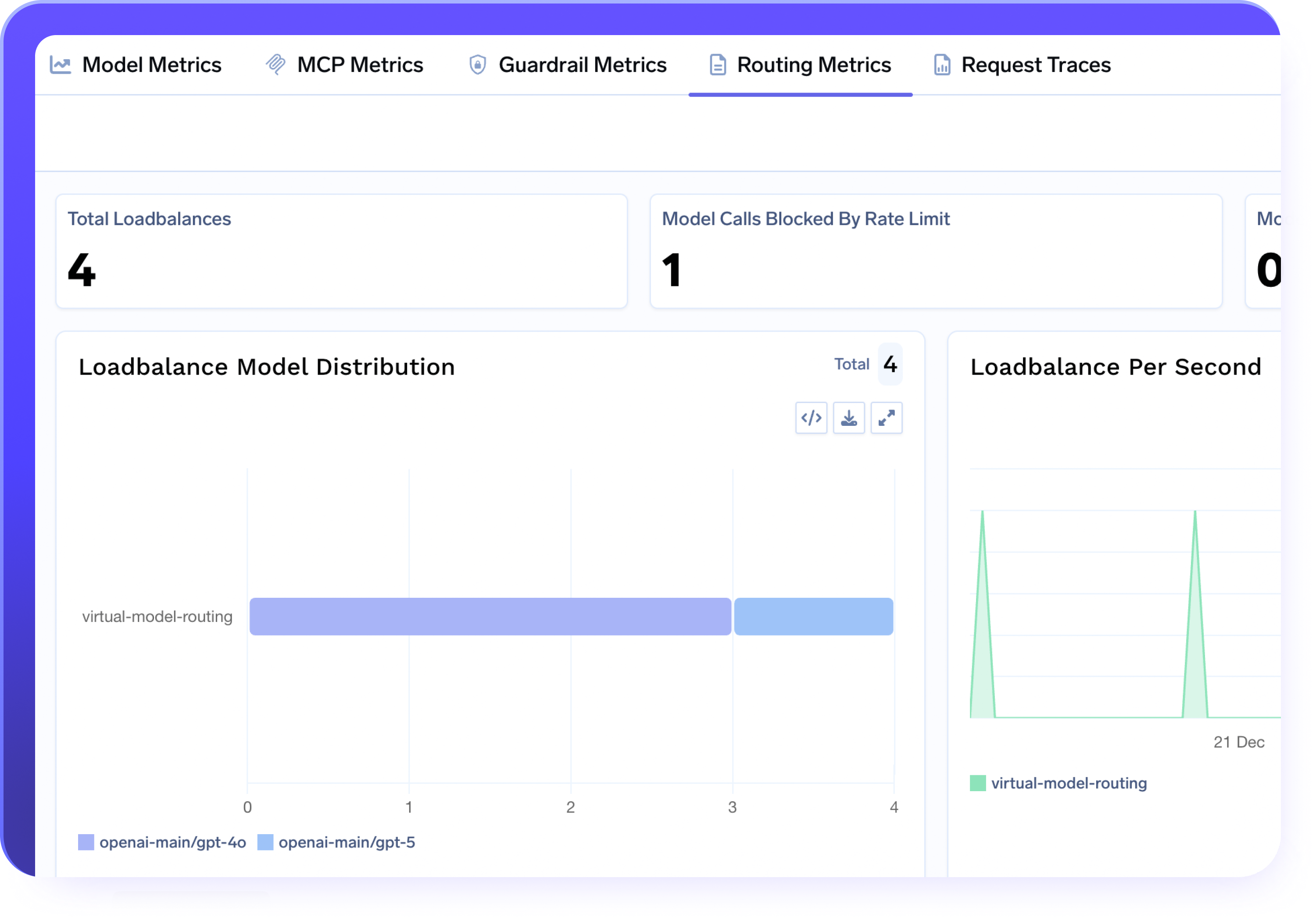
Observable Failover Decisions

  • Provide a complete, end-to-end view of what failed, how traffic was rerouted, and which systems absorbed the load during an incident
  • Enable platform and reliability teams to diagnose issues in minutes and validate failover behavior
MCP Gateway Server Registry

Maintain SLAs During Peak Demand

  • Trigger failover when service levels approach or breach defined SLA thresholds
  • Shift workloads to available alternatives when usage surges or external systems reach capacity
MCP Gateway Server Registry

Enterprise-Ready

Your data and models are securely housed within your cloud / on-prem infrastructure
  • Compliance & Security

    SOC 2, HIPAA, and GDPR standards to ensure robust data protection
  • Governance & Access Control

    SSO + Role-Based Access Control (RBAC) & Audit Logging
  • Enterprise Support & Reliability

    24/7 support with SLA-backed response SLAs
Deploy TrueFoundry in any environment

VPC, on-prem, air-gapped, or across multiple clouds.

No data leaves your domain. Enjoy complete sovereignty, isolation, and enterprise-grade compliance wherever TrueFoundry runs

Frequently asked questions

What is an MCP Gateway

An MCP Gateway is a centralized control plane that securely manages access, discovery, and orchestration of MCP Servers across an enterprise. It acts as the operational backbone for agentic AI systems by enabling AI agents and applications to interface with enterprise tools via a standardized protocol. With support for authentication, RBAC, observability, and workflow execution, the MCP Gateway makes connecting and scaling intelligent systems seamless and secure.

What is an MCP Server and how does it work with the MCP Gateway?

An MCP Server (Model Context Protocol Server) is a standardized interface layer that wraps around enterprise APIs or tools, making them easily discoverable and callable by AI agents. When integrated with an MCP Gateway, each MCP Server registers itself, becomes accessible through a unified endpoint, and inherits enterprise-grade features like RBAC, federated authentication (via Okta, Azure AD), and observability, making orchestration across tools like Slack, Jira, or internal APIs effortless.

How do I build and deploy an MCP Server?

You can build an MCP Server using TrueFoundry’s SDK or your preferred backend stack. MCP Servers are containerized and typically deployed on Kubernetes or cloud-native infrastructure. Once live, they register with the MCP Gateway and are made available for secure discovery and task execution via agents or users, streamlining the AI integration pipeline.

What are the key features of an MCP Gateway?

The MCP Gateway provides several key features for enterprises. It offers unified access to all registered MCP Servers, instant discovery via a central registry, and secure access control with OAuth 2.0 and federated identity providers. It enables agentic task execution across tools, offers enterprise-grade observability with request-level tracing and audit logs, supports out-of-the-box and custom integrations (e.g., Slack, Datadog, internal APIs, among others), and ensures high-performance operation across cloud, on-prem, and hybrid environments.

What are the benefits of using an MCP Gateway in enterprise environments?

There are various benefits of using an MCP Gateway in enterprise environments. It dramatically simplifies tool integrations, accelerates onboarding via prebuilt MCP Servers, and unifies security and compliance controls. It enables plug-and-play agentic workflows, supports distributed environments, and provides deep observability for cost and performance. The result is a scalable, secure, and maintainable AI system capable of handling real-time enterprise workloads with minimal engineering effort.

How does the MCP Gateway handle authorization and access control?

Authorization in an MCP Gateway is enforced through Role-Based Access Control (RBAC) policies integrated with enterprise Identity Providers such as Okta or Azure AD. Each MCP Server, endpoint, or tool function can be governed by specific access rules, ensuring only authorized users or agents can trigger actions or retrieve sensitive data.

Can I use my existing SSO or IdP with the MCP Gateway?

Yes, the MCP Gateway and all MCP Servers fully support existing enterprise identity providers. Federated login via Okta, Azure AD, or custom SSO setups is supported out-of-the-box, enabling seamless integration into your organization's existing authentication and compliance stack.

What enterprise tools can I connect using MCP Servers?

You can integrate both standard and proprietary tools. MCP Gateway offers prebuilt MCP Servers for platforms like Slack, Confluence, Datadog, and Sentry. Additionally, you can create custom MCP Servers to connect any internal service, REST API, or data platform, extending orchestration across your unique tech stack.

How does MCP Gateway enable agentic task execution?

Through the MCP Gateway, AI agents can autonomously discover, authenticate, and call MCP Servers. This enables them to execute multi-step workflows (e.g., “create a Jira ticket from Slack messages”), generate and run code, or orchestrate tools, all governed by standardized interactions and enterprise policies.

What kind of observability does the MCP Gateway offer?

The MCP Gateway provides full visibility into every interaction with MCP Servers. It supports end-to-end tracing, metadata tagging (e.g., team, user, tool), and audit logging for compliance. Enterprises can monitor latency, usage, errors, and cost attribution in real-time, ensuring traceability and control across AI workloads.

Is the MCP Gateway secure and scalable for enterprise deployment?

Absolutely. The MCP Gateway is designed for production-grade deployments. It supports federated SSO, OAuth 2.0, dynamic discovery, multi-region failover, and role-based security, all while operating at high throughput under real-time enterprise load. It’s built to power large-scale, AI-first systems with confidence.

GenAI infra- simple, faster, cheaper

Trusted by 30+ enterprises and Fortune 500 companies

Take a quick product tour
Start Product Tour
Product Tour