


احصل على وصول فوري إلى بيئة TrueFoundry مباشرة. انشر النماذج، ووجّه حركة مرور LLM، واستكشف المنصة بالكامل — بيئة الاختبار الخاصة بك جاهزة في ثوانٍ، ولا يلزم وجود بطاقة ائتمان.


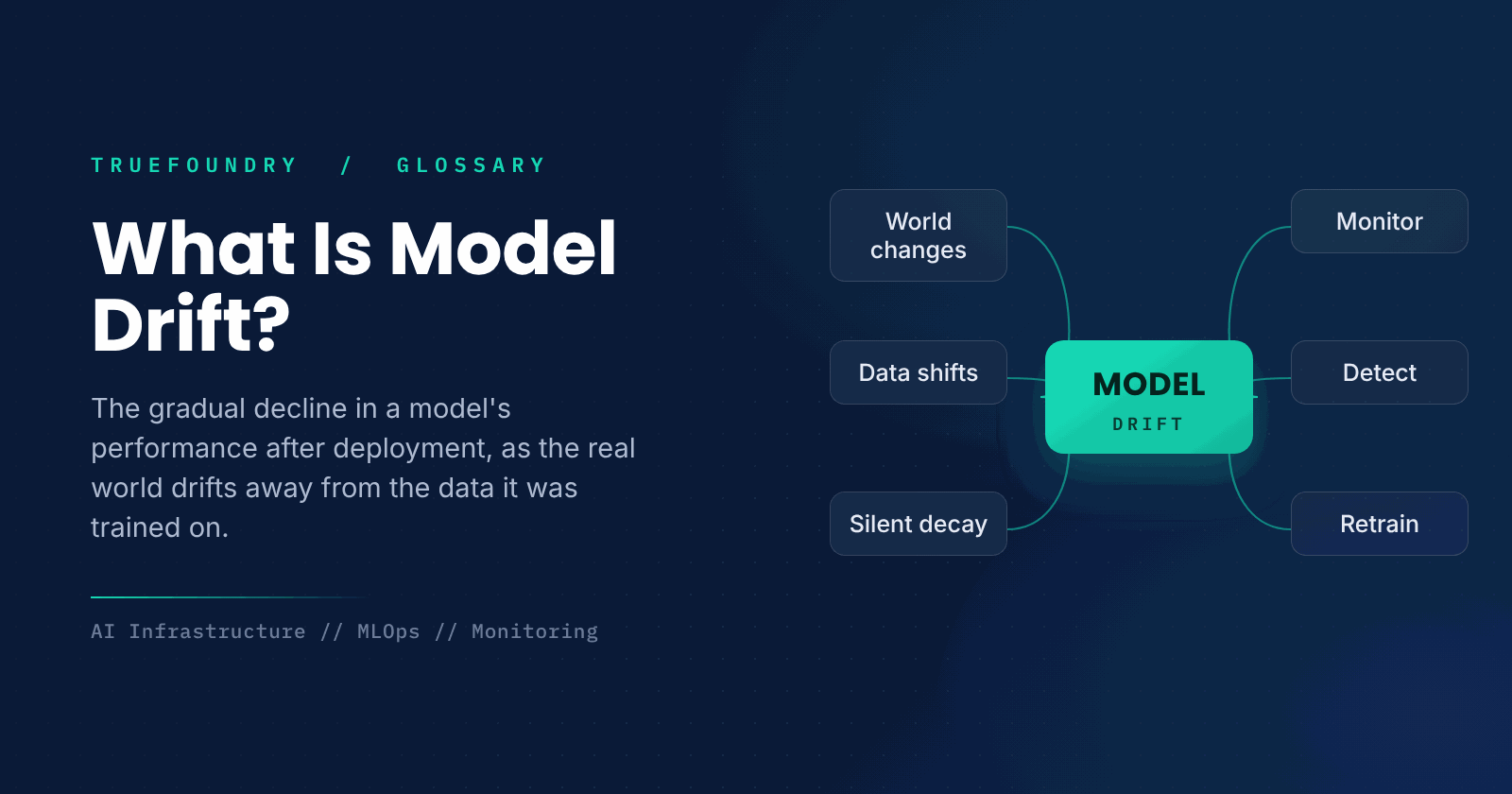
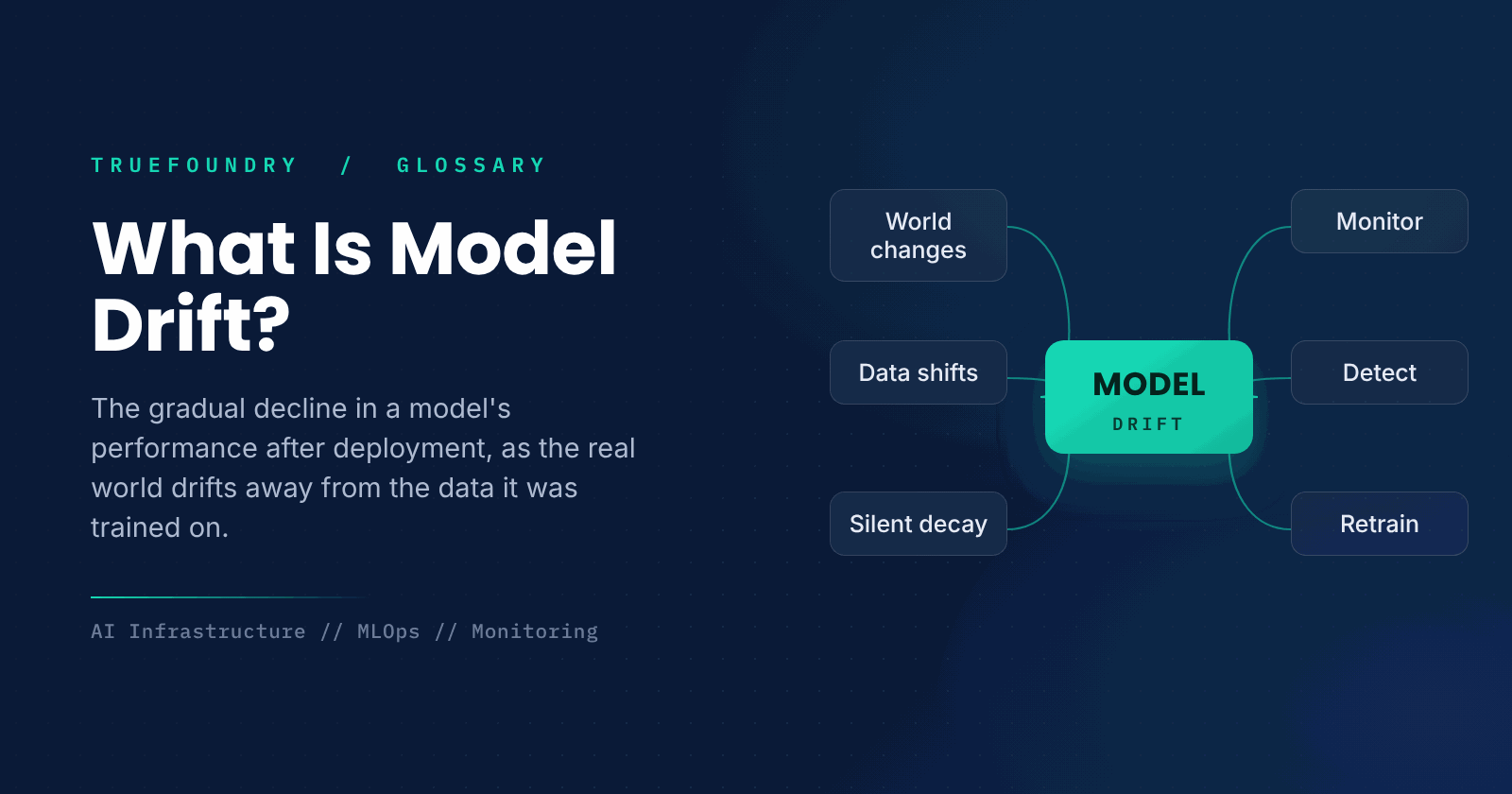
What Is Model Drift and Why Does It Matter?

Govern, Deploy and Trace AI in Your Own Infrastructure
Frequently Asked Questions
What is model drift in simple terms?
Model drift describes a deployed model whose accuracy decays over time due to a changing reality that falls out of alignment with the training data. The core premise is simple: everything else stays constant, while the world evolves and drifts away from the static model.
What causes model drift?
Changes between training and production. The inputs shift (data drift), the relationship between inputs and the correct answer changes (concept drift), user behavior evolves, or external events and upstream data changes alter what the model sees. Each factor degrades performance, and together they pose an ongoing threat.
How is model drift different from data drift?
Data drift describes a shift in the distribution of a model's inputs. Model drift describes the subsequent loss of performance, whatever the underlying driver. Data drift is one driver; model drift is the outcome you ultimately care about and measure.
How do you detect model drift?
By monitoring the model's performance against real-world outcomes and watching the input data's distribution for shifts. Alerts trip when key metrics cross certain thresholds. Input monitoring anticipates the effect, and accuracy monitoring quantifies the harm done.
How do you fix model drift?
Usually by training the model on new, representative data, capturing whatever changes in reality have happened since the last version shipped. Automation is fairly standard here too; teams build scheduled or drift-monitored pipelines for continuous retraining and redeployment.


- © 2022 ENSEMBLE Technologies



اشترك في نشرتنا الإخبارية
أحدث الأخبار والمقالات والموارد تصلك مباشرة إلى بريدك الوارد


