


احصل على وصول فوري إلى بيئة TrueFoundry مباشرة. انشر النماذج، ووجّه حركة مرور LLM، واستكشف المنصة بالكامل — بيئة الاختبار الخاصة بك جاهزة في ثوانٍ، ولا يلزم وجود بطاقة ائتمان.


What Is an AI Copilot and Why Does It Matter?

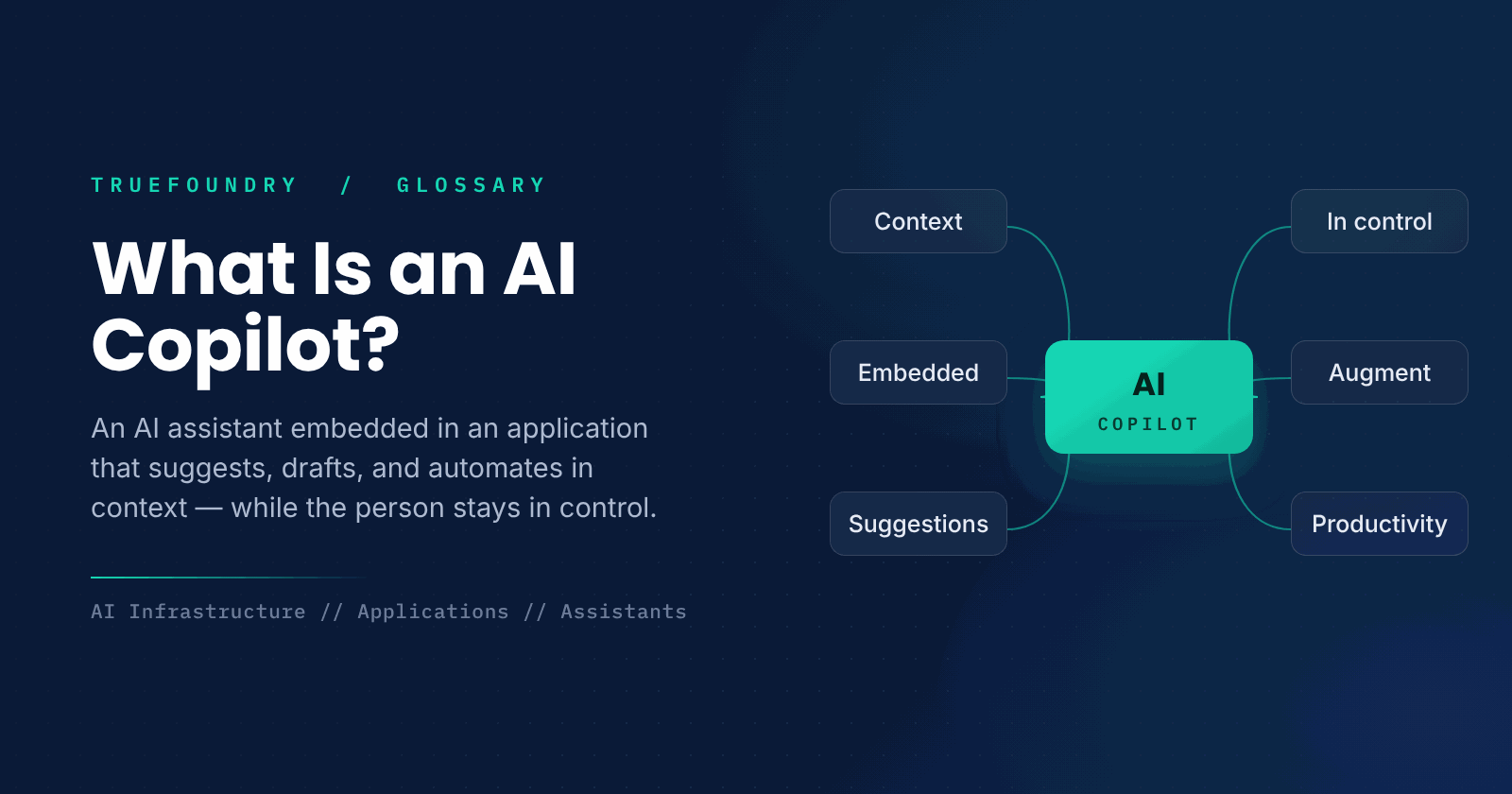
The most widespread way AI has entered everyday software is not as a standalone chatbot but as a copilot, an assistant built into the tools people already use. It shows up in the corner of a code editor, a document, or a dashboard, ready to suggest the next line, draft a section, or handle a tedious step, always with the user steering.
The copilot framing is deliberate. Like a co-pilot in a cockpit, the AI assists and advises while the human remains in command. This balance, powerful help without surrendering control, is why copilots have become one of the most popular and practical patterns for putting AI to work.
This guide explains what an AI copilot is, what makes it work, how it differs from an autonomous agent, and when the pattern fits.
What is an AI copilot?
An AI copilot is an AI assistant integrated directly into an application to help users accomplish tasks within it. It has context about what the user is doing, the document, the code, the data in view, and offers suggestions, drafts content, answers questions, or automates steps, while the user reviews, edits, and decides what to accept.
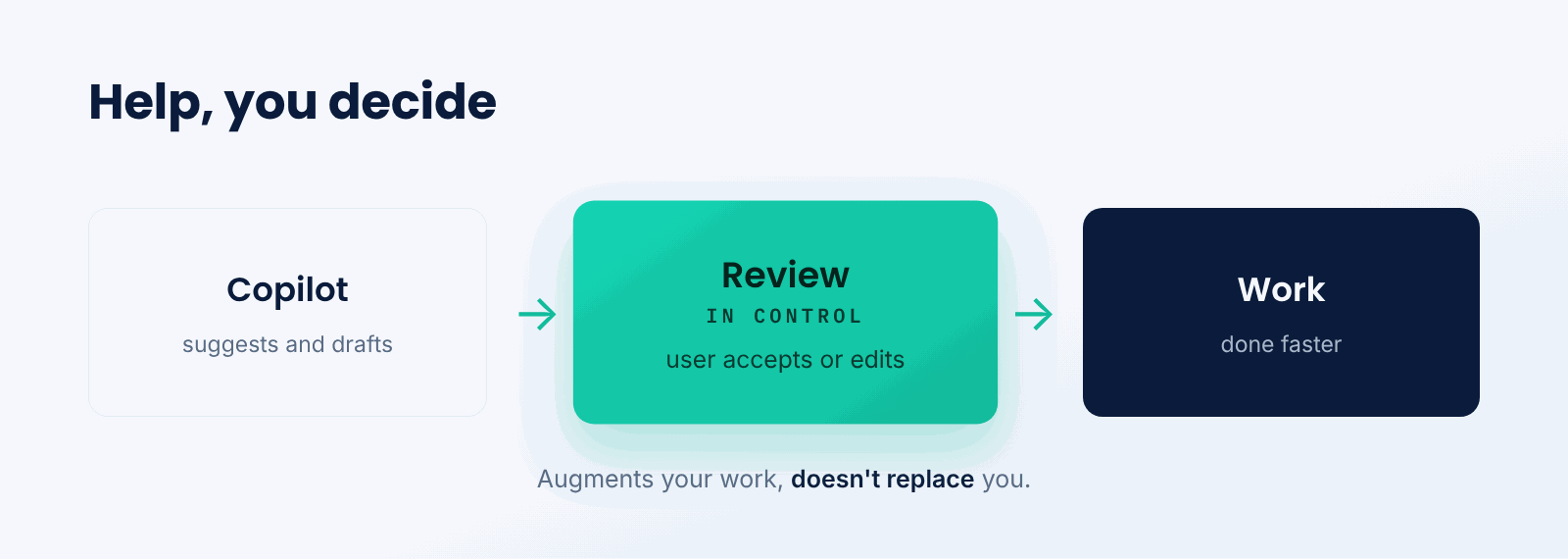
Think of it like an expert assistant sitting beside you as you work. They watch what you are doing, offer suggestions, draft things for your review, and take care of repetitive parts, but you remain the one making decisions and giving direction. A copilot plays that role inside the software itself.
The key idea is assistance in context with the human in control. The copilot understands the task at hand and helps directly within it, but it augments the user's work rather than taking over, leaving final judgment to the person.
What makes a copilot work?
Several ingredients combine to make a copilot genuinely useful.
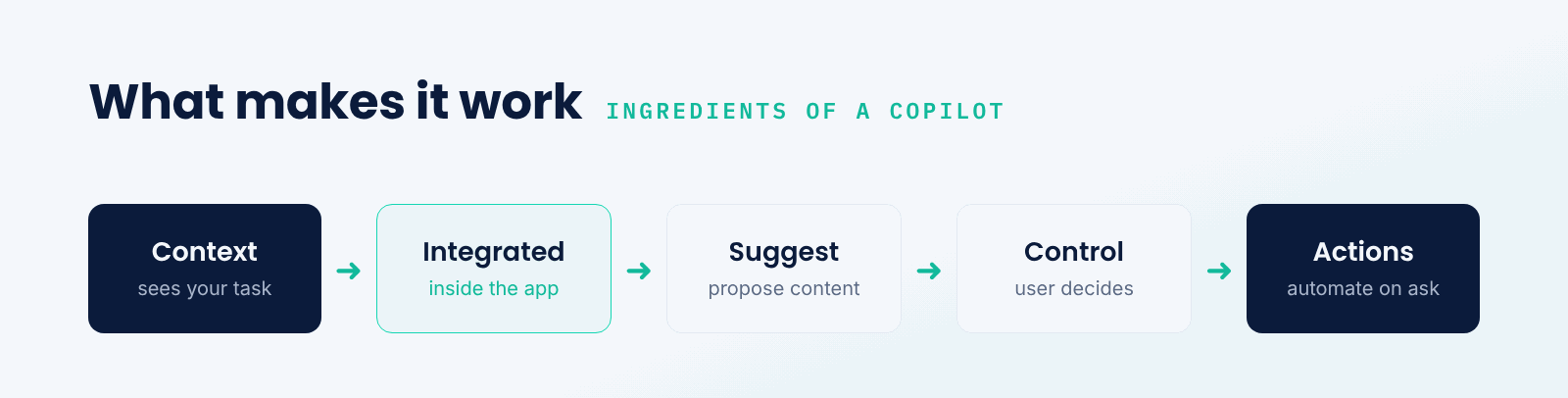
- Context. It sees the user's current document, code, or data.
- Integration. It lives inside the application, not a separate window.
- Suggestions. It proposes content or actions the user can accept or reject.
- Control. The user reviews and decides, keeping final say.
- Actions. It can automate steps when the user asks it to.
The combination of rich context and tight integration is what separates a copilot from a generic chatbot. Because it understands the specific task and works within the tool, its help is relevant and immediately usable, while the human-in-control design keeps it trustworthy.
Copilot vs. autonomous agent
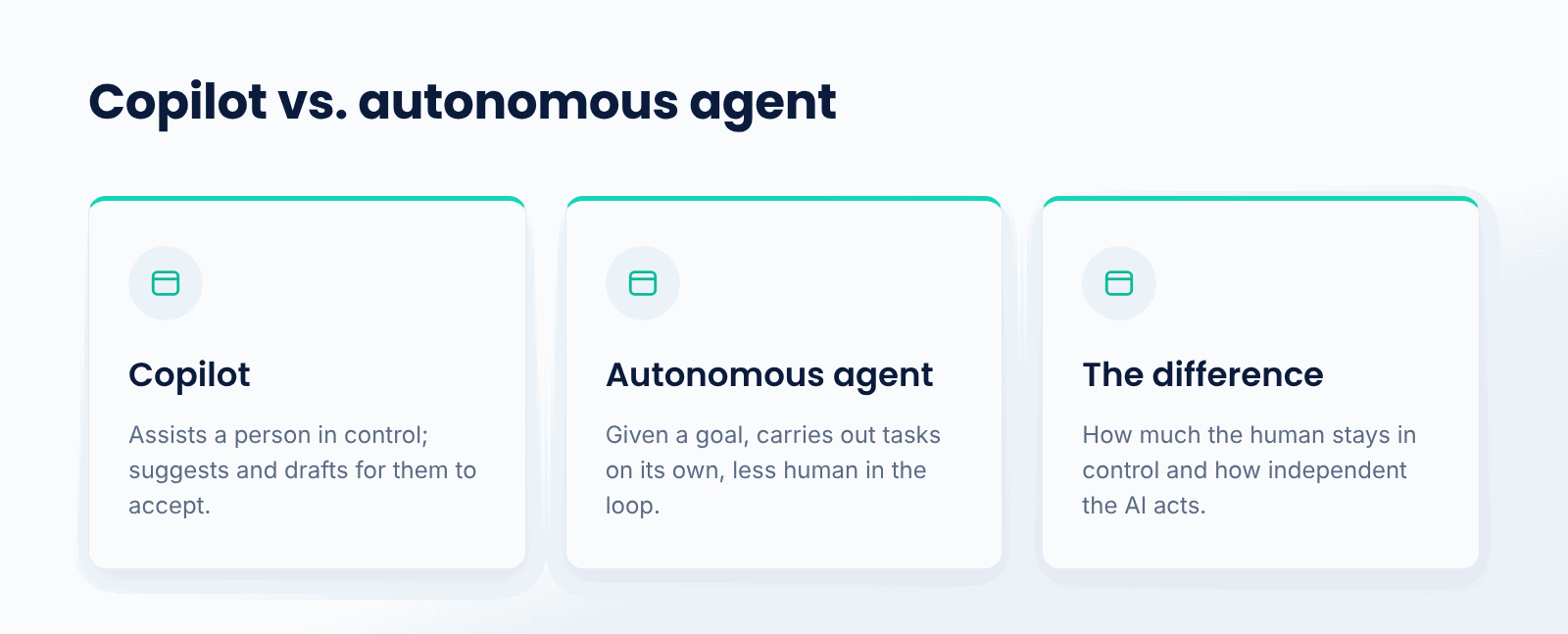
A copilot assists a person who stays in control, suggesting and drafting while the user decides. An autonomous agent is given a goal and carries out multi-step tasks on its own, with less moment-to-moment human involvement. The difference is how much the human is in the loop and how much independent action the AI takes.
Neither is universally better; they fit different needs. Copilots suit work where human judgment is essential and users want help, not replacement. Agents suit well-defined tasks that can be delegated. Many systems blend the two, with a copilot that can hand off specific steps to more autonomous behavior when appropriate.
Why do AI copilots matter?
- Productivity. They speed up work by handling suggestions and drafts.
- Low friction. They help inside existing tools, with nothing new to learn.
- Trust. Keeping the human in control makes AI help safer to adopt.
- Context-aware. They understand the task, so help is relevant.
- Adoption. They are a proven, practical way to add AI to software.
What are the tradeoffs?
- Review burden. Users must check suggestions, which takes effort.
- Overreliance. People may accept suggestions without enough scrutiny.
- Context limits. A copilot is only as good as the context it can see.
- Not autonomous. It assists rather than completing tasks unattended.
When should you build a copilot?
Build a copilot when users do work that benefits from AI help but where human judgment and control remain essential, such as writing, coding, analysis, or design. The pattern fits whenever augmenting the user, rather than replacing them, is the goal, and it integrates naturally into existing workflows.
If a task can be fully delegated and run end to end without a person in the loop, a more autonomous agent may be more appropriate. The copilot is the right choice specifically when you want to amplify a person's work while keeping them firmly in charge.
Key points about AI copilots
- A copilot is an AI assistant embedded in an application.
- It helps with suggestions, drafts, and automation in context.
- The human stays in control and makes final decisions.
- Context and integration make its help relevant.
- It augments rather than replaces the user.
- It differs from an autonomous agent in how much the human is in the loop.
Conclusion
An AI copilot is an assistant embedded in an application that helps users work through suggestions, drafts, and automation, while keeping the person in control. By combining task context with tight integration and a human-in-the-loop design, copilots deliver relevant, trustworthy help, which is why they have become a leading pattern for adding AI to software. They augment people rather than replacing them.
TrueFoundry helps teams build and serve the models and services that power AI copilots on their own infrastructure, from context retrieval to serving. As AI spreads through software, the copilot is one of the most practical ways to deliver it.
Govern, Deploy and Trace AI in Your Own Infrastructure
Frequently Asked Questions
What is an AI copilot in simple terms?
It is an AI assistant that integrates right into an existing application to help you complete your tasks, offering suggestions, drafting content, and automating actions inside the software itself, while you stay in control of what changes go through.
How is a copilot different from a chatbot?
The distinction to make clear is generic chatbot versus copilot. The first is a separate window that knows nothing of your task or data context. The second embeds directly into your app, so it can help you precisely where you need it, within the work you are doing.
How is a copilot different from an autonomous agent?
Copilots collaborate alongside humans who stay in charge, proposing and composing until the person signs off. Autonomous agents receive goals and accomplish tasks independently with limited human intervention. The distinction comes down to how much the person stays in the loop.
Why keep the human in control?
Because human judgment is often required, and involving the decision-maker makes this form of AI assistance more secure and trustworthy. The copilot accelerates the process and automates tedious tasks, but the user reviews suggestions and approves the final decisions.
When should I build a copilot instead of an agent?
When the work benefits from AI help but human judgment and control are essential, such as writing, coding, or analysis, a copilot is the right fit. If a task can be fully automated and run end to end without a person in the loop, delegation to a more autonomous agent might be a stronger choice.


- © 2022 ENSEMBLE Technologies



اشترك في نشرتنا الإخبارية
أحدث الأخبار والمقالات والموارد تصلك مباشرة إلى بريدك الوارد


