> ## Documentation Index
> Fetch the complete documentation index at: https://www.truefoundry.com/llms.txt
> Use this file to discover all available pages before exploring further.
# TrueFoundry Mocker Provider Setup Guide
> Set up a mock LLM provider for benchmarking, load testing, and performance evaluation
This guide walks you through setting up a benchmarking provider using the TrueFoundry platform for load testing and performance evaluation.
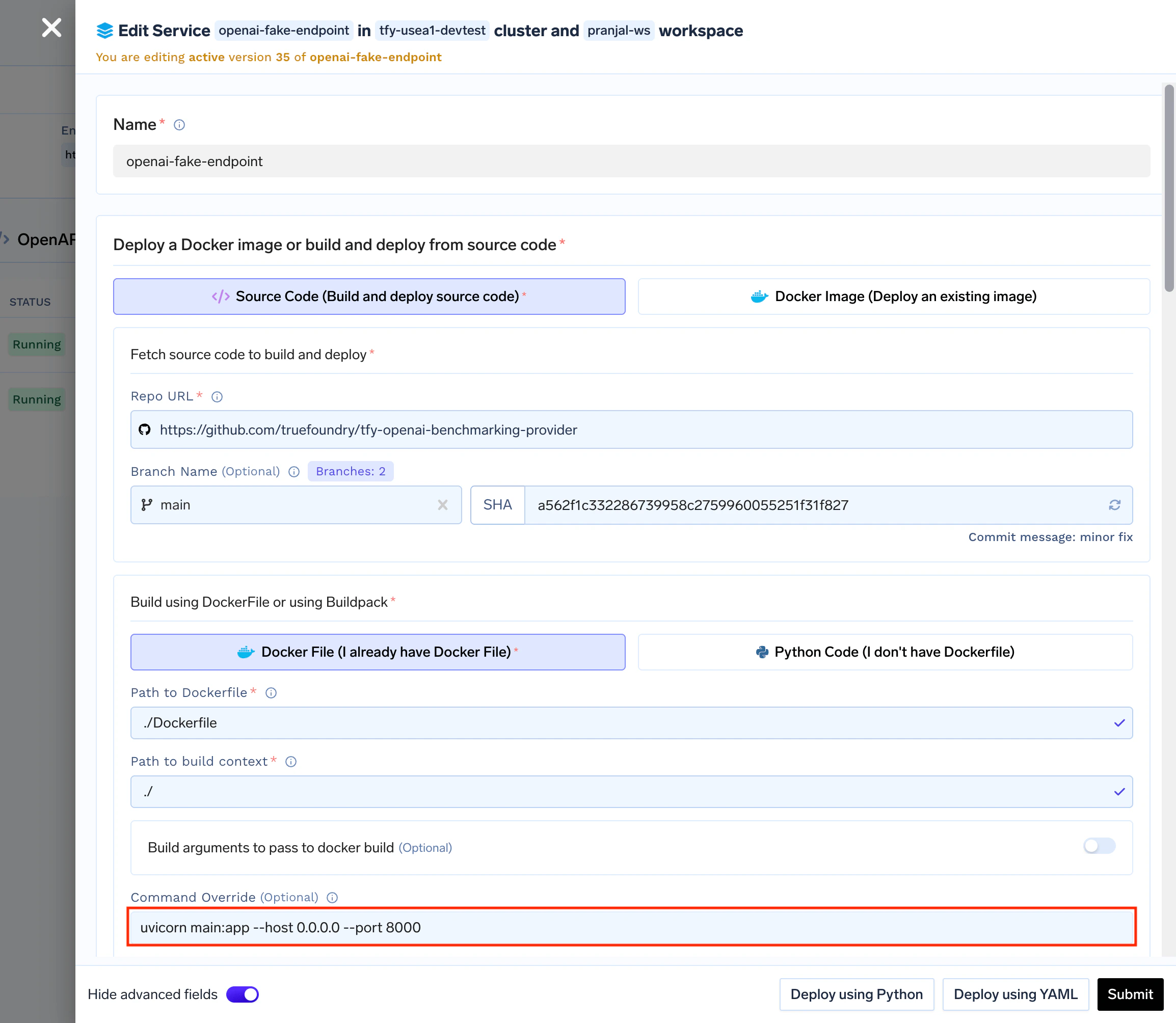
### 1. Deploy the Benchmarking Service
* Deploy this [repository](https://github.com/truefoundry/tfy-openai-benchmarking-provider) as a service on TrueFoundry.
* Configure environment variables:
1. `TOKEN_COUNT`: Number of tokens to return in responses (default: 100)
2. `LATENCY`: Latency in seconds (default: 0)
 ### 2. Create a Provider Account
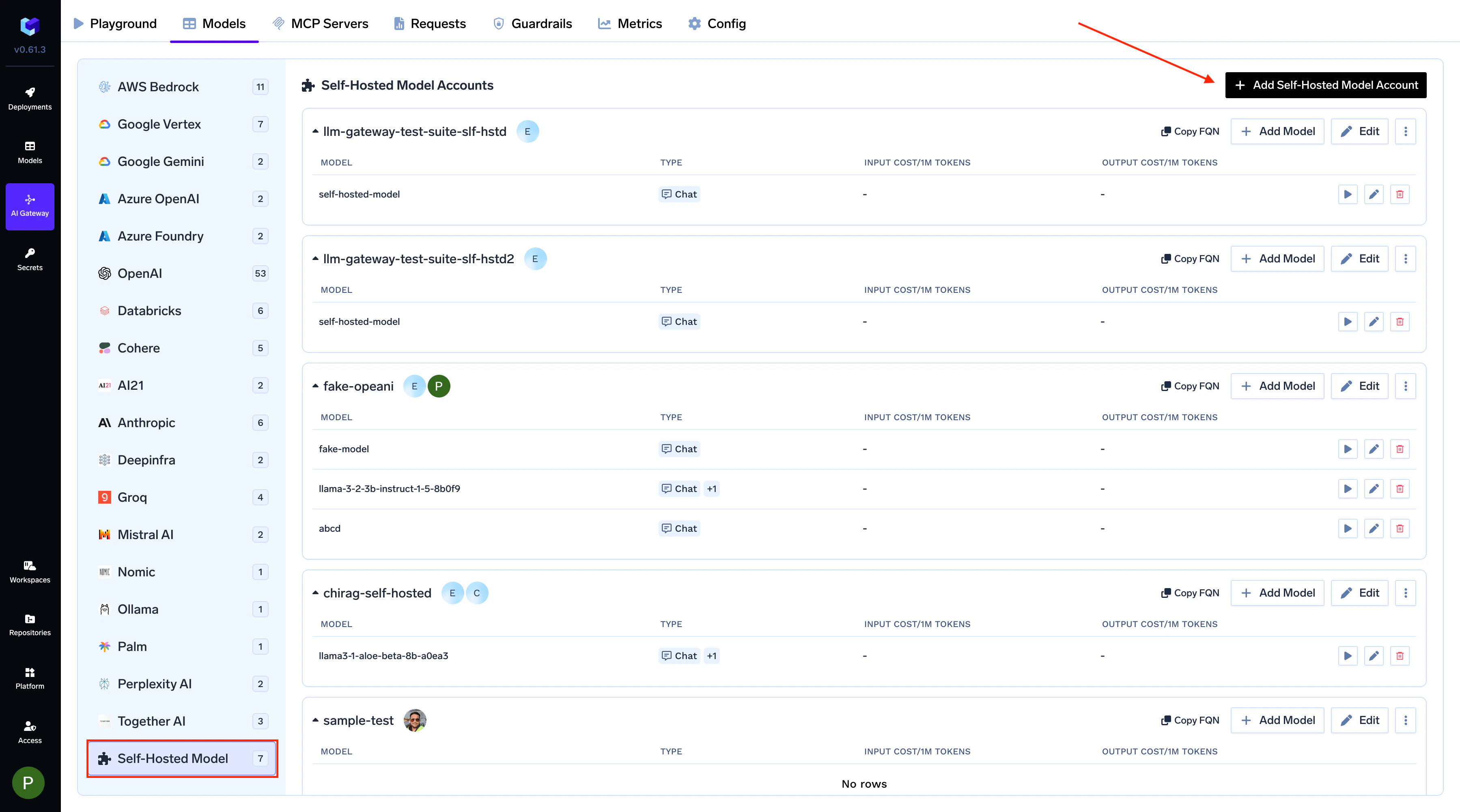
### 2.1. **Navigate to the AI Gateway**
* In the **TrueFoundry Dashboard**, go to **AI Gateway** → **Models**
* Select **Self Hosted Models** as your model provider
### 2. Create a Provider Account
### 2.1. **Navigate to the AI Gateway**
* In the **TrueFoundry Dashboard**, go to **AI Gateway** → **Models**
* Select **Self Hosted Models** as your model provider
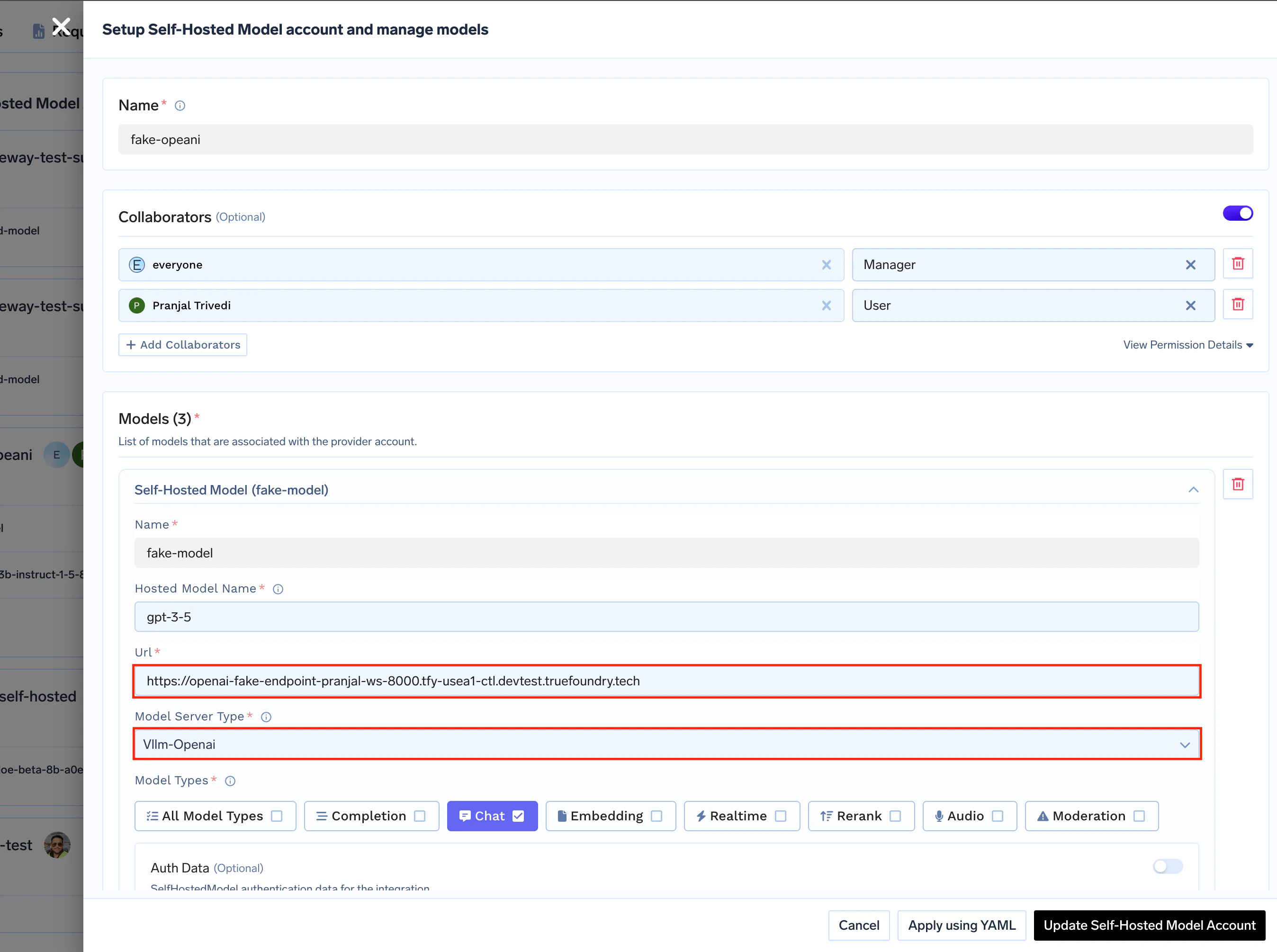
 ### 2.2. **Configure Models**
* **Model Type**: Select `Vllm-Openai`
* **Base URL**: Enter the URL of your deployed benchmarking service
* **Name**: Add a proper display name to your models
### 2.2. **Configure Models**
* **Model Type**: Select `Vllm-Openai`
* **Base URL**: Enter the URL of your deployed benchmarking service
* **Name**: Add a proper display name to your models
 ### 3. Generate Load Traffic
Create a client for producing traffic at your desired RPS (Requests Per Second). You can use any HTTP client or load testing tool such as:
* **Locust**: For advanced load testing scenarios
* **Custom scripts**: Using any HTTP client library
Make sure to keep the provider service on auto-scaling so it can handle high RPS traffic without getting throttled.
### 3. Generate Load Traffic
Create a client for producing traffic at your desired RPS (Requests Per Second). You can use any HTTP client or load testing tool such as:
* **Locust**: For advanced load testing scenarios
* **Custom scripts**: Using any HTTP client library
Make sure to keep the provider service on auto-scaling so it can handle high RPS traffic without getting throttled.